Michael Ealy, the "Think Like a Man" Interview
Really Ealy!
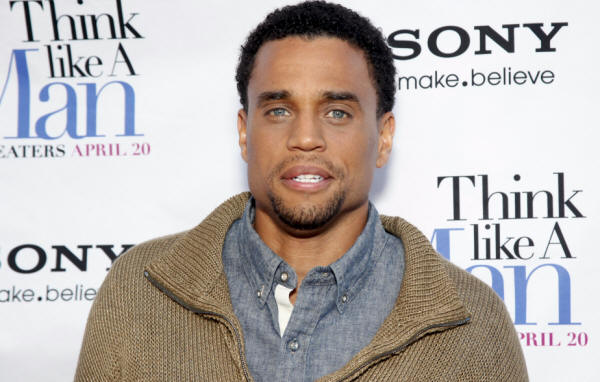
Born in Silver Spring, Maryland on August 3, 1973, Michael Ealy
majored in
English at the University of Maryland before heading to New York City where he
performed in several stage productions, including the off-Broadway hits Joe
Fearless and Whoa Jack. After finding his breakout screen role as Ricky Nash in
Barbershop and Barbershop 2, Michael rapidly rose through the ranks as one of
Hollywood’s emerging young actors.
Since then, he’s starred opposite Kate Beckinsale in Underworld Awakening and
opposite Matt Dillon, Idris Elba and Hayden Christensen in the action flick
Takers, and he was personally picked by Will Smith to play his younger brother
in Seven Pounds. He’s also portrayed a Buffalo Soldier in the Spike Lee World
War II epic Miracle at St. Anna, and appeared in For Colored Girls with Kimberly
Elise, Janet Jackson, Thandie Newton, Whoopi Goldberg and Phylicia Rashad.
On television, Michael is set to co-star in the new detective series, “Common
Law,” which debuts on the USA Network on May 11. His other TV credits include
stints on “The Good Wife,” “Californication” and “FlashForward.” As for
accolades, a stellar performance on the Showtime miniseries “Sleeper Cell”
earned him a Golden Globe nomination.
In addition, he was cast by Oprah Winfrey to star opposite Halle Berry in the
made-for-TV movie “Their Eyes Were Watching God,” landing the first of his three
NAACP Image Award nominations for his sterling performance in the picture. Here,
he talks about playing Dominic in his latest picture, Think Like a Man, Steve
Harvey’s battle-of-the-sexes comedy which is currently #1 at the box office .
 Michael Ealy The “Think Like a Man” Interview
with Kam Williams
Kam Williams: Hi Michael, thanks for the time.
Michael Ealy: Hey, Kam, how’s it going, dude?
KW: Great, thanks. What interested you in Think Like a Man?
ME: Honestly, it was the first romantic comedy that I liked. I’d kind of avoided
them for awhile because I never felt that any of them were really smart enough.
But when I read this script, I genuinely fell in love with the characters,
especially my own. So, I just wanted to be a part of it.
KW: Harriet Pakula Teweles asks: How flattering or unflattering to the image of
the black male are the “types” that the actors are asked to portray in this
film?
ME: That’s another great thing about this picture. Yes, the cast is
predominantly African-American, but color is never really an issue in the film.
It’s rarely brought up since, at the end of the day, these guys are going
through universal relationship issues that anybody can relate to. So, while the
characters like “The non-committer,” “The Player,” and “The Dreamer” might be
recognizable as common stereotypes, color isn’t involved.
KW: Attorney Bernadette Beekman asks: Did you do any preparation for your role
as a food service worker by spending time in restaurants?
ME: The irony is that I spent five years as a waiter at a restaurant in New York
City at the beginning of my acting career. So, I had a little bit of experience
in food service. Fortunately, I didn’t actually have to prepare anything on
camera in the movie, which saved me from having to take any cooking classes.
[Chuckles] But I always appreciate a good chef.
KW: How did your parents feel about your becoming a struggling actor after help
putting you through college? Did they ever pressure you to abandon acting for a
more practical profession?
ME: No. my parents, God bless ‘em, were very supportive of me and my decision to
pursue acting. Their dream for me and my sister was that we graduate from
college. And as soon as I fulfilled that, they were extremely supportive of what
I wanted to do next. I will always be grateful to them for that, because I
wouldn’t be where I am today without their help and encouragement.

KW: How hard was it working with an ensemble cast with so many big stars? Was it
hard to get a little elbow room to do your thing?
ME: No, it felt a lot like my first movie, Barbershop, which was also an
ensemble film, and which was also directed by Tim Story. So, it was sort of like
a ten-year reunion.
KW: Tell me a little about your new TV series, Common Law. Since it’s a cop
series revolving around black and white partners, it sounds a little like Psych,
which is also on the USA Network?
ME: [Chuckles] It’s nothing like Psych. It’s an action comedy about two
detectives who are really good at what they do. But they have different
approaches to the work and to life in general, and that creates conflict and
bickering and fights, sometimes. What happens is that their captain decides to
send them to couples’ counseling in order to keep them together, because they
always get their man. They basically just need a little help in getting along.
What makes it funny is that the characters end up having a lot of the same
issues as the married couples they’re in therapy with.
KW: Editor/legist Patricia Turnier asks: If you weren't acting, what career path
would you have chosen?
ME: I’d have been a teacher.
KW: Is there any question no one ever asks you, that you wish someone would?
ME: Wow! That’s a good question. [Pauses to reflect] I’m sure there is, but I
don’t know what that question is right now. [Chuckles]
KW: Much appreciated! The Tasha Smith question: Are you ever afraid?
ME: Sometimes, yeah.
KW: The Columbus Short question: Are you happy?
ME: Yeah.
KW: The Teri Emerson question: When was the last time you had a good laugh?
ME: A couple of days ago.
KW: What is your guiltiest pleasure?
ME: Ooh, sweets.
KW: The bookworm Troy Johnson question: What was the last book you read?
ME:
The Power of Now by Eckhart Tolle.
KW: What is your favorite dish to cook?
ME: I love breakfast. I can make a mean omelet.
KW: The Sanaa Lathan question: What excites you?
ME: Passion, ambition and talent.
KW: The Uduak Oduok question: Who is your favorite clothes designer?
ME: [Laughs] Man, I could get in trouble if I answer that one.
KW: Dante Lee, author of "Black Business Secrets,” asks: What was the best
business decision you ever made, and what was the worst?
ME: [LOL] When I bought my house in L.A., that was the best business decision I
ever made, until the housing market crashed, and it became the worst business
decision I ever made.
KW: When you look in the mirror, what do you see?
ME: I’m aging.
KW: If you could have one wish instantly granted, what would that be for?
ME: Healing for the people in my family with medical problems. Definitely…
definitely…
KW: The Kerry Washington question: If you were an animal, what animal would you
be?
ME: A lion!
KW: The Ling-Ju Yen question: What is your earliest childhood memory?
ME: My third birthday party.
KW: The Melissa Harris-Perry question: How did your first big heartbreak impact
who you are as a person?
ME: This is such a great question. For me, my first big heartbreak is actually
sports-related. My senior year, I became the starting wide-receiver on my
nationally-ranked, high school football team as a walk-on. We have a good
season, make it to the playoffs, and are on the verge of three-peating as state
champs, when the coach decides to go to a two tight-end offense which suddenly
makes me a non-factor.
Then, the team went out and got spanked on our home
field. I’ll never forget how I cried after the game, because I’d been denied the
opportunity to help the team in the championship game, even though I had played
a big role up to that point. It was like the coach forgot what had gotten us
there. So, I never got to hold the trophy or savor a state championship. And
I’ll never forget that first bitter heartbreak. I remember feeling devastated
and going to church the next Sunday.
My mom spoke to the pastor about it and,
from the pulpit, he asked the congregation to pray for me. That did make me feel
better, like I wasn’t alone. That was my first heartbreak. So, to answer your
question, my first heartbreak devastated me, but it was the support of my family
and my second family, my church family, that helped me understand that it wasn’t
my fault, and that everything was going to be alright. That helped me
tremendously later in life because in this business, as you surely know, Kam,
there are a lot of things beyond your control.
KW: The Judyth Piazza question: What key quality do you believe all successful
people share?
ME: [Reflects for a long time before responding] I’d say two qualities:
perseverance, because you can not be successful without confronting rejection
and, second, studying. You have to know your craft. I find that most people who
are very, very successful know their craft and have done the research.
KW: Two Pastor Alex Kendrick questions: When do you feel the most content?
KW: Between “Action!” and “Cut!”
KW: Secondly: What do you wish other people would note about you?
ME: That I don’t think as highly of myself as some people make me out to be. I
am so far from arrogant, because I have been through enough to know that
everything can go away in a moment. You know, I really don’t understand why
anyone would want to put me on a pedestal.
KW: Bernadette also asks: What is your favorite charity?
ME: I have a number of charities I work with. I’m a big advocate of two in New
York City, the Urban Arts Partnership and the Harlem’s Children’s Zone. What
Geoffrey Canada has built in Harlem is something special. Honestly, he’s a hero
of mine in a lot of ways. Really!
KW: I’ve tried to interview him, but have never been able to get him on the
phone. Can you hook me up?
ME: Yes, that man’s very, very hard to get in touch with. But he’s a good
friend, so I may be able to help.
KW: What advice do you have for anyone who wants to follow in your footsteps?
ME: Study your craft, first. Then explore the business side. If you can commit
to mastering both, then you’re ready to pursue acting as a living. I really want
people to understand that you can’t take shortcuts.
KW: The Tavis Smiley question: How do you want to be remembered?
ME: One of my heroes is Mr. Sidney Poitier. In his autobiography, “The Measure
of a Man,” he talks about the difference between being a great person and being
a great actor. I’m happiest when I’m acting, and I’ve dedicated my life to it.
Still, as much as I love acting, at the end of the day, I want to be remembered
as a great person, first, and as a great actor, second. I believe that acting is
a talent while being a great person encompasses so much more: being a good
father, a good husband and the ability to show compassion for others. There’s
nothing more rewarding than making a difference doing charity work or being able
to be there for a friend.
KW: Thanks again for the interview, Michael. It’s been an honor. Good luck with
Think Like a Man and with Common Law.
ME: Thank you, Kam. This was special. Your questions were phenomenal. A lot of
people clearly don’t do the same amount of preparation as you. So, I really
appreciate it.
Related Links
Michael Ealy The “Think Like a Man Too” Interview
Steve Harvey's "Think Like a Man" Interview
Think Like a Man (2012) - Film Review
Act Like a Lady, Think Like a Man - Book Review
Reader Comments (0)
Log In to Join the Conversation
Commenting is reserved for registered AALBC members to maintain high-quality discussions.
No comments yet. Be the first to share your thoughts!
Advertisement