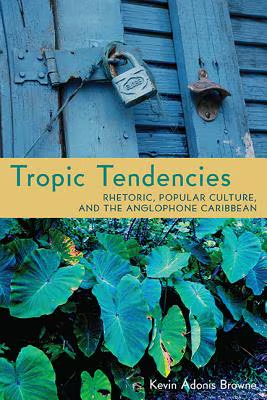
Tropic Tendencies: Rhetoric, Popular Culture, and the Anglophone Caribbean
Buy from AALBC
Add to Cart — $32.95More Book Details
Imprint: University of Pittsburgh Press
(Sep 19, 2013)
Nonfiction, Paperback, 264 pages
Publisher: University of Pittsburgh Press
ISBN: 9780822962595
Nonfiction, Paperback, 264 pages
Publisher: University of Pittsburgh Press
ISBN: 9780822962595
Categorized under:
 Bookshop
Description of Tropic Tendencies: Rhetoric, Popular Culture, and the Anglophone Caribbean
A legacy of slavery, abolition, colonialism, and class struggle has profoundly impacted the people and culture of the Caribbean. In Tropic Tendencies, Kevin Adonis Browne examines the development of an Anglophone Caribbean rhetorical tradition in response to the struggle to make meaning, maintain identity, negotiate across differences, and thrive in light of historical constraints and the need to participate in contemporary global culture. Browne bases his study on the concept of the "Caribbean carnivalesque" as the formative ethos driving cultural and rhetorical production in the region and beyond it. He finds that carnivalesque discourse operates as a "continuum of discursive substantiation" that increases the probability of achieving desired outcomes for both the rhetor and the audience. Browne also views the symbolic and material interplay of the masque and its widespread use to amplify efforts of resistance, assertion, and liberation. Browne analyzes rhetorical modes and strategies in a variety of forms, including music, dance, folklore, performance, sermons, fiction, poetry, photography, and digital media. He introduces chantwells, calypsonians, old talkers, jamettes, stickfighters, badjohns, and others as exemplary purveyors of Caribbean rhetoric and deconstructs their rhetorical displays. From novels by Earl Lovelace, he also extracts thematic references to kalinda, limbo, and dragon dances that demonstrate the author’s claim of an active vernacular sensibility. He then investigates the re-creation and reinvention of the carnivalesque in cyber culture, demonstrating the ways participants both flaunt and defy normative ideas of "Caribbeanness" in online and macro environments.