 Bookshop
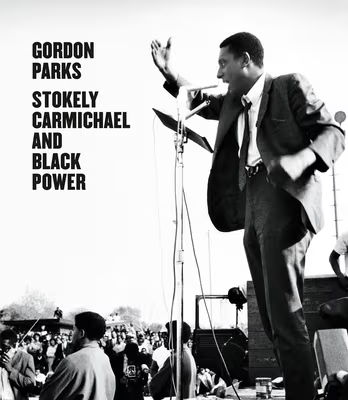
Description of Gordon Parks Stokely Carmichael and Black Power
A nuanced profile, in image and text, of the great Black Power leader at the exhilarating moment of the movement’s ascendancy
Gordon Parks’ 1967 Life magazine essay "Whip of Black Power" is a nuanced profile of the young, controversial civil rights leader Stokely Carmichael. As chairman of the Student Nonviolent Coordinating Committee, Carmichael gained national attention and inspired media backlash when he issued the call for Black Power in Greenwood, Mississippi, in June 1966. Parks shadowed him from the fall of 1966 to the spring of 1967, as Carmichael gave speeches, headed meetings and promoted the growing Black Power movement. Parks’ photos and writing addressed Carmichael’s intelligence and humor, presenting the whole man behind the headline-making speeches and revealing his own advocacy of Black Power and its message of self-determination and love.
Stokely Carmichael and Black Power delves into Parks’ groundbreaking presentation of Carmichael, with analysis of his images and accompanying text about the charismatic leader. Lisa Volpe explores Parks’ complex understanding of the movement and its leader, and Cedric Johnson frames Black Power within the heightened political moment of the late 1960s. Carmichael’s own voice is represented through a reprint of his important 1966 essay "What We Want."