An ISNI (International Standard Name Identifier) is a permanent, globally recognized identifier for the public identity of an author, contributor, publisher, or other creator. If an ISBN identifies a specific edition of a book, an ISNI identifies the person or organization responsible for creating or publishing it.
For publishers and author-publishers, ISNIs can improve the accuracy and discoverability of book metadata throughout the publishing ecosystem. They help libraries, booksellers, bibliographic databases, rights organizations, search engines, online retailers, and data aggregators distinguish one creator from another and correctly associate creators with their works.
Why ISNIs Matter
Names alone are unreliable identifiers. Multiple authors may share the same name, while a single author may appear in databases under different spellings, initials, married names, or professional names. An ISNI provides a persistent identifier that helps resolve these ambiguities.
- Improves author identification: Distinguishes authors with identical or similar names.
- Strengthens metadata: Helps connect an author with the correct books, editions, and other creative works.
- Improves discovery: Makes it easier for databases, libraries, retailers, search engines, and other discovery services to associate an author's works correctly.
- Supports rights and royalties: More precise creator identification can reduce errors in attribution, reporting, and rights management.
- Connects creators across platforms and industries: ISNIs are used beyond book publishing, including by libraries, archives, research institutions, music and film organizations, rights organizations, and data aggregators.
- Creates a persistent author identity: Unlike a website address, social media account, or publisher affiliation, an ISNI is intended to remain associated with the creator's public identity over time.
For publishers maintaining ONIX and other bibliographic metadata, an ISNI provides another authoritative identifier that can be associated with a contributor and distributed with information about their books.
How to Obtain an ISNI
1. Search for the author first.
Before registering for a new ISNI, search the existing ISNI database. Many established authors already have an ISNI because their identities and works have entered the system through publishers, libraries, bibliographic databases, or other data contributors.
Search the Bowker ISNI database
Search for variations of the author's name, including middle names or initials when applicable. If you find an existing record, verify that the associated identity and works belong to the correct person. Do not create a second ISNI simply because an existing record is incomplete.
2. Register if an ISNI does not already exist.
In the United States, Bowker is an authorized ISNI Registration Agency for the book industry. Authors, publishers, and author-publishers can request an ISNI through Bowker's online registration system.
Register for an ISNI through Bowker
As of August 21, 2026, each successful ISNI registration through Bowker has a one-time fee of $5. Check Bowker's website for current pricing before registering.
3. Provide accurate identifying information.
Provide enough information to distinguish the author from other creators with the same or similar names. Depending on the author, useful information may include:
- Professional or published name
- Alternative forms of the name
- Occupation or creative role
- Published works
- Publisher information
- Other established identifiers
- Author or publisher website
Rich, accurate metadata helps the ISNI system determine whether the identity already exists and, when appropriate, assign a new identifier.
4. Add the ISNI to your publishing metadata.
Once an ISNI has been assigned, publishers should add it to their author records and include it wherever contributor identifiers are maintained or distributed, including ONIX metadata when appropriate. Authors should also provide their ISNI to publishers and other organizations that maintain information about their books.
5. Use the same ISNI consistently.
An ISNI should follow the author's public identity throughout their career. Do not request a new identifier for every book, publisher, or edition. The ISBN identifies the book edition; the ISNI identifies the author's public identity.
What About Pen Names?
ISNI identifies public identities. An author who writes under a distinct pseudonym may therefore have separate ISNIs for separate public identities. This is particularly useful when an author deliberately maintains different professional identities for different types of work.
ISNIs on AALBC
AALBC uses ISNIs as part of its author metadata to help identify authors accurately and strengthen the connections between authors and their books. AALBC periodically searches for newly assigned author ISNIs and updates author profiles with this information.
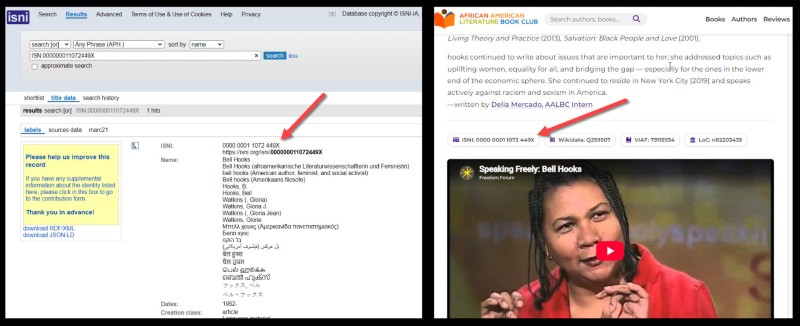
Authors and publishers should therefore make obtaining and maintaining an accurate ISNI part of their broader metadata strategy. Along with ISBNs and high-quality bibliographic metadata, ISNIs help ensure that books are connected to the correct creators throughout an increasingly interconnected publishing and discovery ecosystem.