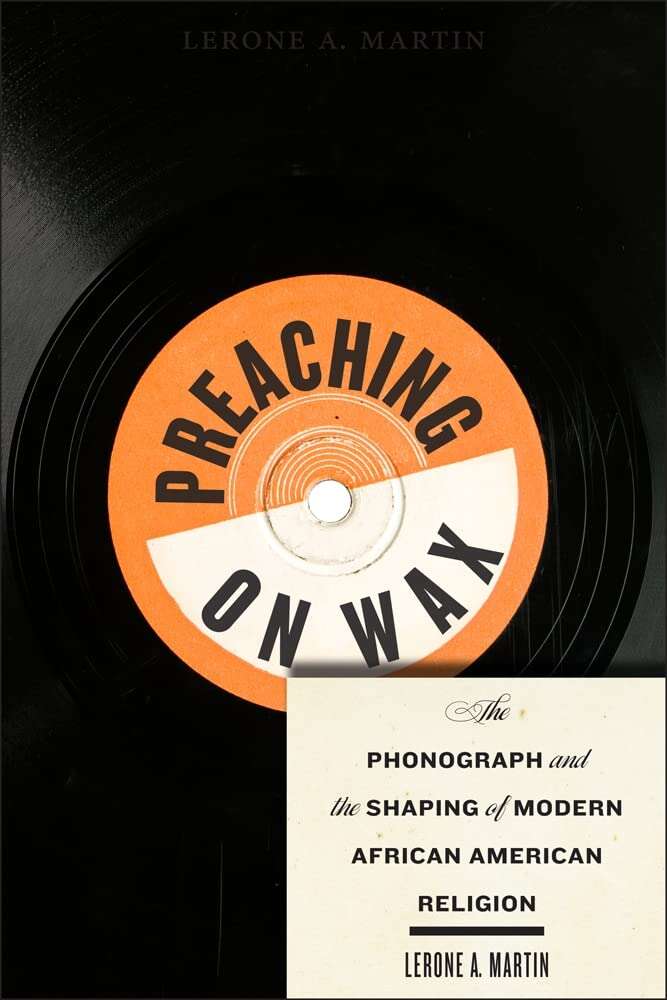
Preaching on Wax: The Phonograph and the Shaping of Modern African American Religion
Buy from AALBC
Add to Cart — $41.00More Book Details
Nonfiction, Paperback, 240 pages
Publisher: New York University Press
ISBN: 9781479890958
 Bookshop
Description of Preaching on Wax: The Phonograph and the Shaping of Modern African American Religion
The overlooked African American religious history of the phonograph industry
Winner of the 2015 Frank S. and Elizabeth D. Brewer Prize for outstanding scholarship in church history by a first-time author, presented by the American Society of Church History.
Certificate of Merit, 2015 Award for Excellence in Historical Recorded Sound Research, presented by the Association for Recorded Sound Collections.
From 1925 to 1941, approximately one hundred African American clergymen partnered with leading record labels such as Columbia, Paramount, and Victor-RCA to record and sell their sermons on wax. While white clerics of the era, such as Aimee Semple McPherson and Charles Fuller, became religious entrepreneurs and celebrities through their pioneering use of radio, Black clergy were largely excluded from the medium. Instead, they turned to the phonograph industry, collaborating with corporate leaders to package and distribute their gospel messages nationwide. Their recorded sermons were enthusiastically received by consumers, at times even outselling top jazz and blues artists such as Bessie Smith and Ma Rainey.
These “phonograph preachers” significantly shaped the development of Black religious life during the interwar period, playing a crucial role in the emergence of modern practices such as religious commodification, broadcasting, and celebrity ministry. Yet the fame and reach of these nationwide media ministries came at a cost, as these preachers became subject to the forces and constraints of corporate America.
In Preaching on Wax, Lerone A. Martin offers the first full-length account of this often-overlooked chapter in the religious history of the phonograph industry. He explains why a critical mass of African American ministers partnered with major record labels, how and why Black consumers eagerly purchased their recordings, and how this form of “phonograph religion” helped shape modern African American Christianity.