 Bookshop
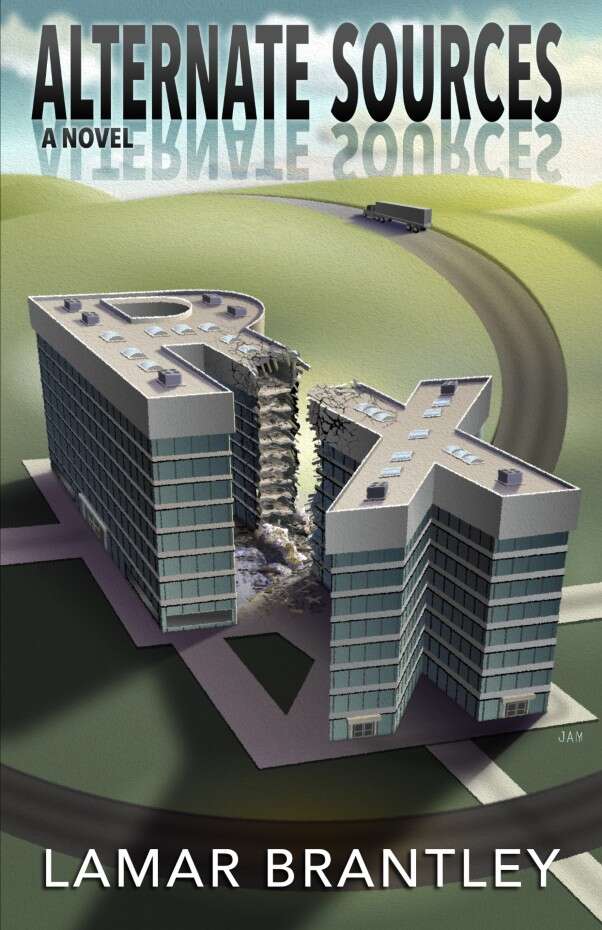
When picking up a prescription, you probably haven’t given much thought to how many hands the contents passed through before reaching the bottle. You may trust what the label says about its contents; trust that those contents have been properly handled and stored; and trust that the systems regulating the pharmaceutical industry have protected them along the way. Lamar Brantley’s Alternate Sources challenges those trusts by exploring what can happen when profit, greed, and criminal enterprise find their way into the pharmaceutical supply chain.
Set primarily within the pharmaceutical distribution industry, beginning in 1999 and unfolding over the next several years, Alternate Sources follows an expansive cast of executives, warehouse employees, regulators, criminals, and others connected to the buying and selling of prescription drugs. The story opens with a gripping sequence involving Carl, a truck driver, and a pharmaceutical warehouse robbery, suggesting a mystery that will propel the narrative forward. At the center of Davidson Enterprises’ corporate operation is Stanley Forsythe, an ambitious executive whose distribution company generates impressive profits by acquiring pharmaceuticals through the secondary, or “grey,” market. Those profits come with increasingly dangerous inquiries about where the drugs originate, how they’re handled, and whether they should be entering the legitimate supply chain.
One of the few people willing to ask those tough questions is Charlie Thomas, who serves as the novel’s moral center. She is intelligent, confrontational, flawed, and unwilling to quietly accept unethical practices. Charlie has moved to a new role within the distribution company, where she becomes increasingly aware of questionable suppliers, suspicious transactions, and procedures she believes could endanger patients.
Her attempts to impose greater oversight repeatedly put her at odds with Stanley and others more interested in preserving the company’s lucrative business model.
Brantley introduces readers to a little-known aspect of the pharmaceutical industry, illustrating how weaknesses within a legitimate distribution system can be exploited. Beneath the criminal conspiracy is an equally compelling examination of institutional greed. He demonstrates what happens when wrongdoing becomes normalized—not necessarily when everyone involved is inherently corrupt, but when money provides a powerful incentive to look the other way.
In the book, Brantley uses a quieter, character-driven form of suspense to build tension that proves just as effective as more action-oriented thrills. The suspense emerges through increasingly strained conversations, shifting alliances, and difficult questions that force characters into uncomfortable positions, providing some of the novel’s best moments of tension.
On the one hand, there are contrasts between the novel’s character-driven and plot-driven scenes. Chapters with Charlie, particularly with jazz musician Q, are written in a manner that is often lyrical and metaphor-rich, giving her personal life a warm, almost romantic texture. On the other, the warehouse, pharmaceutical, and investigative scenes are written with a more technical, documentary-like precision and come off as instructional rather than dramatic. The shift between those modes can feel abrupt and creates a pacing problem that will require the reader to adjust quickly from lush prose to dense procedural detail.
I found the premise of Alternate Sources intriguing; however, the narrative oftentimes wanders away from its most compelling material. When Brantley focuses on the vulnerabilities of the pharmaceutical supply chain and the people willing to exploit them, the novel is both engaging and unsettling. Alternate Sources is an ambitious novel with a fascinating plot, a memorable central character, and moments of genuine suspense, leaving readers with the lingering thoughts: How much do we really know about where our medicine comes from—and who can we trust to make sure it gets to us safely?