An Open Statement to the Fans of The Help by Association of Black Women Historians (ABWH)
An Open Statement to the Fans of The Help
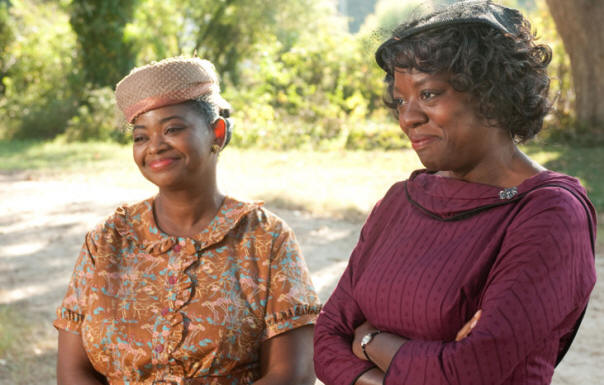
On behalf of the Association of Black Women Historians (ABWH), this statement provides historical context to address widespread stereotyping presented in both the film and novel version of The Help. The book has sold over three million copies, and heavy promotion of the movie will ensure its success at the box office. Despite efforts to market the book and the film as a progressive story of triumph over racial injustice, The Help distorts, ignores, and trivializes the experiences of black domestic workers. We are specifically concerned about the representations of black life and the lack of attention given to sexual harassment and civil rights activism.
During the 1960s, the era covered in The Help, legal segregation and economic inequalities limited black women's employment opportunities. Up to 90 per cent of working black women in the South labored as domestic servants in white homes. The Help's representation of these women is a disappointing resurrection of Mammy—a mythical stereotype of black women who were compelled, either by slavery or segregation, to serve white families. Portrayed as asexual, loyal, and contented caretakers of whites, the caricature of Mammy allowed mainstream America to ignore the systemic racism that bound black women to back-breaking, low paying jobs where employers routinely exploited them. The popularity of this most recent iteration is troubling because it reveals a contemporary nostalgia for the days when a black woman could only hope to clean the White House rather than reside in it.Both versions of The Help also misrepresent African American speech and culture. Set in the South, the appropriate regional accent gives way to a child-like, over-exaggerated "black" dialect. In the film, for example, the primary character, Aibileen, reassures a young white child that, "You is smat, you is kind, you is important." In the book, black women refer to the Lord as the "Law," an irreverent depiction of black vernacular. For centuries, black women and men have drawn strength from their community institutions. The black family, in particular provided support and the validation of personhood necessary to stand against adversity. We do not recognize the black community described in The Help where most of the black male characters are depicted as drunkards, abusive, or absent. Such distorted images are misleading and do not represent the historical realities of black masculinity and manhood.
Furthermore, African American domestic workers often suffered sexual
harassment as well as physical and verbal abuse in the homes of white
employers. For example, a recently discovered letter written by Civil Rights
activist Rosa Parks indicates that she, like many black domestic workers,
lived under the threat and sometimes reality of sexual assault. The film, on
the other hand, makes light of black women's fears and vulnerabilities
turning them into moments of comic relief.
Similarly, the film is woefully silent on the rich and vibrant history of
black Civil Rights activists in Mississippi. Granted, the assassination of
Medgar Evers, the first Mississippi based field secretary of the NAACP, gets
some attention. However, Evers' assassination sends Jackson's black
community frantically scurrying into the streets in utter chaos and
disorganized confusion—a far cry from the courage demonstrated by the black
men and women who continued his fight. Portraying the most dangerous racists
in 1960s Mississippi as a group of attractive, well dressed, society women,
while ignoring the reign of terror perpetuated by the Ku Klux Klan and the
White Citizens Council, limits racial injustice to individual acts of
meanness.
We respect the stellar performances of the African American actresses in
this film. Indeed, this statement is in no way a criticism of their talent.
It is, however, an attempt to provide context for this popular rendition of
black life in the Jim Crow South. In the end, The Help is not a story about
the millions of hardworking and dignified black women who labored in white
homes to support their families and communities. Rather, it is the
coming-of-age story of a white protagonist, who uses myths about the lives
of black women to make sense of her own. The Association of Black Women
Historians finds it unacceptable for either this book or this film to strip
black women's lives of historical accuracy for the sake of entertainment.
Ida E. Jones is National Director of ABWH and Assistant Curator at Howard
University. Daina Ramey Berry, Tiffany M. Gill, and Kali Nicole Gross are
Lifetime Members of ABWH and Associate Professors at the University of Texas
at Austin. Janice Sumler-Edmond is a Lifetime Member of ABWH and is a
Professor at Huston-Tillotson University.
ABWH Statement The Help
(pdf)

Suggested Reading:
 Fiction:
-
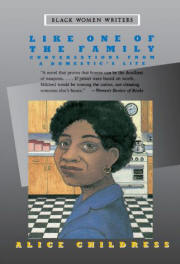
Like one of the Family: Conversations from A Domestic's Life
by Alice
Childress
-
The Book of the Night Women by Marlon James
-
Blanche on the Lam by Barbara Neeley
The Street by Ann Petry
- A Million Nightingales by Susan Straight
Non-Fiction:
-
Out of the House of Bondage: The Transformation of the Plantation Household
by Thavolia Glymph
-
To Joy My Freedom: Southern Black Women's Lives and Labors by Tera Hunter
-
Labor of Love Labor of Sorrow: Black Women, Work, and the Family, from
Slavery to the Present by Jacqueline Jones
-
Living In, Living Out: African
American Domestics and the Great Migration by Elizabeth Clark-Lewis
- Coming of Age in Mississippi by Anne Moody
Any questions, comments, or interview requests can be sent to:
ABWHTheHelp@gmail.com
Related Links
Best Selling author Martha Southgate says "The Help" paints a historically incorrect picture.
Related Links
More Articles from Guest Contributors
Mary J. Blige "The Help" Interview
http://aalbc.com/reviews/mary_j_blige.html
Read an AALBC.com Review of the film The Help
http://aalbc.com/reviews/the_help.html
Reader Comments (0)
Log In to Join the Conversation
Commenting is reserved for registered AALBC members to maintain high-quality discussions.
No comments yet. Be the first to share your thoughts!
Advertisement