Dr. Henry Louis Gates - The "Black in Latin America" Interview
Dr. Gates on His New PBS Series
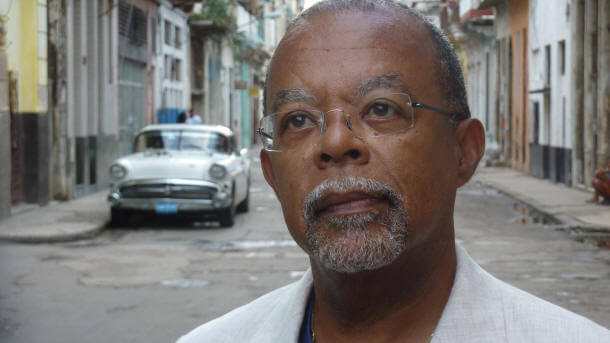
But prior to the media circus surrounding that "Beer Summit," Dr. Gates was
already well known as a tenured Professor at Harvard University, as well as
director of the W.E.B. Du Bois Institute for African and African-American
Research. He is the author of Faces of America, which expands on interviews
he conducted for his critically acclaimed PBS documentary series of the same
name, and Tradition and the Black Atlantic: Criticism in the African
Diaspora.
In addition, Professor Gates is the author of several works of literary
criticism, including Figures in Black: Words, Signs and the ‘Racial' Self;
The Signifying Monkey: A Theory of Afro-American Literary Criticism, winner
of the 1989 American Book Award; and Loose Canons: Notes on the Culture
Wars.
He is the author of Colored People: A Memoir, which traces his childhood
experiences in a small West Virginia town in the 1950s and 1960s; The Future
of the Race, co-authored with Cornel West; Thirteen Ways of Looking at a
Black Man; and In Search of Our Roots: How Nineteen Extraordinary
African-Americans Reclaimed Their Past, which won an NAACP Image Award in
2010.
An influential cultural critic, Professor Gates' publications include a 1994
cover story for Time magazine on the new black Renaissance in art, as well
as numerous articles for The New Yorker. In addition, he has edited several
anthologies, including The Norton Anthology of African American Literature,
and The Oxford-Schomburg Library of Nineteenth Century Black Women Writers,
and is the co-editor of Transition magazine.
For PBS, Professor Gates produced and hosted Wonders of the African World
(1999), America Beyond the Color Line (2004),
African American Lives
(2006),
Oprah's Roots (2007),
African American Lives 2 (2008), Looking for Lincoln
(2009) and Faces of America (2010). Here, he talks about his latest PBS
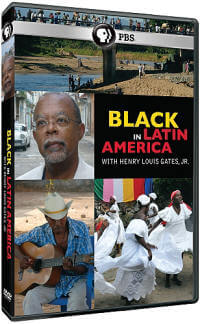
series, Black in Latin America.
Dr. Henry Louis Gates - The "Black in Latin America" Interview
with Kam Williams
 Kam Williams: Hi Dr. Gates, thanks for the time.
Dr. Henry Louis Gates: Thank you, Kam.
KW: I know that your father, Henry, Sr., passed away since we last
spoke, so I'd like to express my sincerest condolences on your loss.
HLG: Oh, thank you, man. We just had his memorial service this past Saturday
back home in Cumberland, Maryland. All his friends turned out. It was a
two-hour service. I spoke, my brother spoke, and our cousin Eddie spoke.
Then we buried his ashes next to my mom's. I loved him.
KW: I almost feel like I knew him because he played such a prominent
role in African American Lives. In terms of your new series, Boston-based
children's author Irene Smalls asks: What do you hope to accomplish with
Black in Latin America?
HLG: Between 1502 and 1866, 11.2 million Africans arrived in the New World.
And of that 11.2 million, only 450 thousand came to the United States. So,
in other words, the real African-American experience unfolded south of our
borders. And most of us don't know anything about that. It's an extension of
what scholars call "American Exceptionalism." We think that everything
revolves around the continental United States, including when we think about
the slave experience and about race and racism. But obviously, over 10.5
million black people landed in countries throughout the Caribbean and South
America. My goal with the series was to unveil that world to the average
American. Did you know that the first black president of a multi-racial
society was not Barack Obama but Vincente Guerrero, who became president of
Mexico in 1829? How come we don't know that? It's incredible!
KW: I was a Black Studies major as an undergrad, and after watching
all the episodes of Black in Latin America, I felt like I had never learned
so much from a TV series about black folks.
HLG: Oh, you couldn't have given me a nicer compliment than that. I was
hoping viewers might experience that aura of discovery.
KW: Teresa Emerson asks: How did you settle on the countries which
would be the subject of the series? Which one has the largest presence of
Africans outside of Africa: Brazil or Colombia?
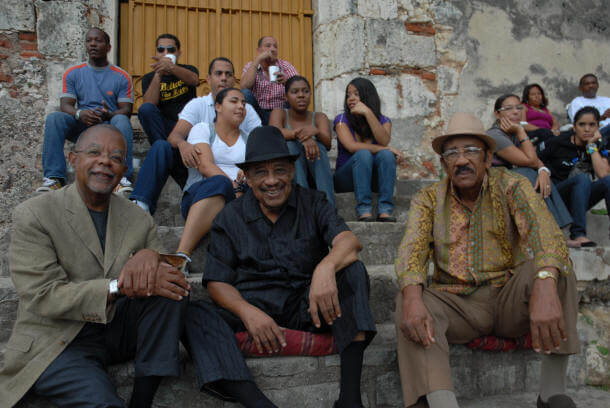
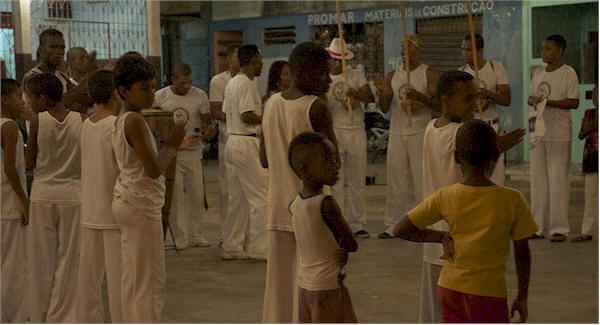
HLG: We picked the countries strategically, because we couldn't cover
everything in a 4-hour series. We had different categories, and one was
size. For instance, we passed on Columbia, the second largest, because we
went with Brazil, the largest. Brazil is also Portuguese, which we wanted to
contrast with the Hispanic experience. We picked Cuba, because it's so
fascinating and mysterious to Americans. So, I wanted to bring that country
to the fore. The island of Hispaniola was interesting because it's divided
into Haiti, where the people are very proud to be black and they speak
Creole and French, and the Dominican Republic, where the national motto was
that the country was Catholic, Spanish and white. Finally, we chose Mexico
and Peru. Why? Because nobody thinks about their ever having sizable black
populations. All anybody remembers are the Aztecs and the Incas. But they
had 700 thousand slaves combined, compared to America's 450 thousand. That's
astonishing! So, the series was designed to offer some amazing revelations
and to reeducate the American people.
KW: I found the episode about Haiti very informative, particularly
about how President Thomas Jefferson tried to sabotage its independence
movement.
HLG: Yeah, America systematically attempted to undermine it. Jefferson
called it a terrible republic and referred to the people as cannibals. Man,
that's cold. But Haiti has a long and noble history as a free civilization.
KW: I received more questions from readers than we have time for, so
I'm going to have to ask you to keep your answer brief so that we can get to
as many as possible.
HLG: Sorry, I'm a professor. I'm used to giving 50-minute lectures, man.
KW: Attorney Bernadette Beekman asks: Do you think Brazil has an
opportunity, given the upcoming Olympics, to show the world that it is
making progress in the area of the disparate treatment in society based on
the color of one's skin?
HLG: Yeah, I think it has an opportunity, but we have to remember that it
takes a long time to make profound social changes. What I fear is that any
quick fix will just be cosmetic and designed to pretend to racial democracy.
We're talking about the transformation of the identity of the working and
middle classes. I want to see black doctors, black lawyers and other black
professionals in much greater proportion than exists today.

KW: Dr. Karanja Ajanaku, editor of the Memphis Tri-State Defender,
says: You seem to be making the point that in the U.S., we are mostly
unaware, substantively, of "blacks" in Latin America. Would you speak to how
aware or unaware, substantively, "blacks" in Latin America are of
African–Americans?
HLG: Blacks in Latin America are keenly aware of African-American popular
culture, entertainers, athletes, Oprah Winfrey, movie stars and musicians.
The whole world is enthralled with hip-hop. They're listening to the same
music as our kids. And then there's Obama! Good Lord! But in terms of a more
profound understanding of the black experience in America, I'm not sure. I'd
guess that they would have a long way to go.
KW: Dr. Ajanaku also asks: Did you encounter any signs and/or
reasons to be hopeful that blacks in Latin America and Africa-Americans
could transcend the boundaries of country and culture and forge an economic
union of sorts that would be uplifting to both?
HLG: No, I didn't see any sign of that, because most of those folks' first
identity is a national one, as a Brazilian or a Cuban, not as a black
person. For instance, in the Dominican Republic episode, Juan Rodriguez says
he never even thought of himself as black until he visited New York. One of
the points of the series is that identity is a very complex and
ever-shifting matter. We might think that these people are obviously black,
but they might not identify themselves that way. During this whole trip, I
never met anybody who said they were black first and their nationality
second, in the way that African-Americans tend to say, "We're black first."
That's another important lesson of the series.
KW: Rod Williams asks: What was the single most common similarity
between the blacks in Latin America and those in North America?
HLG: That's an easy question. The poorest people in each of these societies
have the kinkiest hair, the thickest lips, the flattest noses and the
darkest skin. Poverty has been socially constructed around degree of obvious
Africanity. And that's quite sad.
KW: Rod's first follow-up is: What was the most noticeable
difference between the blacks in Latin America and those here?
HLG: That no Latin American society has simple black and white categories
which is very difficult for Americans to understand. Rather, they have many
gradations between who's black and who's white. So, race signifies
differently there than it does in the United States.
KW: Rod's other follow-up is: Did the colonizer have a role in these
similarities and differences?
HLG: Absolutely! Most of these countries engaged for a period of time in a
practice specifically called "Whitening" when they encouraged European
immigration in order to dilute the black element. Brazil subsidized 4
million white people to move there because it felt that the country was too
black. That's cold, man. Mexico, Cuba and the Dominican Republic took
similar measures. It was a conscious attempt to dilute the influence of
black people and black culture.
KW: Irene says: There has reportedly been a great deal of tension
between African-Americans and Latino immigrants. Can blacks and Latinos find
a common ground to work together in this country?
HLG: Yes, I believe so. I think that all Americans should speak Spanish,
just as I also think that all Americans should speak English. If blacks and
Latinos begin to form alliances across ethnicity and realize that they
should be voting as a bloc, they would have a tremendous amount of power.
But we can't expect them to be like us. Just because their skin is dark and
their hair is curly doesn't mean they're going to approach issues of race
and racism in the same way as someone born in the continental United States.
KW: Judyth Piazza asks: If you were a student getting ready to
attend college for the first time, what would you do differently, knowing
what you know now?
HLG: That's interesting. Me? I'd take a lot of classes in math, science and
computers, but I'd also take more courses about Africa, Latin America and
other Third World cultures, as well as Western Civilization, which is very
important, too.
KW: Judyth has another question: What key quality do you believe all
successful people share?
HLG: A belief that they can make a difference in the world. All successful
people have to believe in themselves and in the future. That's a very subtle
point. You have to believe in deferred gratification, that, "If I do this
today, it might not reap a benefit until the next generation, or the
generation after that, but it's still worth it." Too many black people today
have lost the capacity to defer gratification which was one of the qualities
which made our ancestors so great. You know what? My father supported us by
working at two jobs for 37 years. He worked hard and saved so Paul and
Henry, Jr. could become whatever they dreamed they wanted to do. He never
bought a Cadillac. In fact, my parents never even owned a car. So, I say
don't be fooled by appearances. Instead, penetrate and try to appreciate
what really matters and to understand how things really work. Unfortunately,
I gotta go, Kam.
KW: I understand. Thanks again, Dr. Gates.
HLG: It's been a pleasure, buddy.
Related Linksp>
Reader Comments (0)
Log In to Join the Conversation
Commenting is reserved for registered AALBC members to maintain high-quality discussions.
No comments yet. Be the first to share your thoughts!
Advertisement