Touré: Who’s Afraid of Post-Blackness? What It Means to Be Black Now
Touré - The “Who’s Afraid of Post-Blackness?” Interview
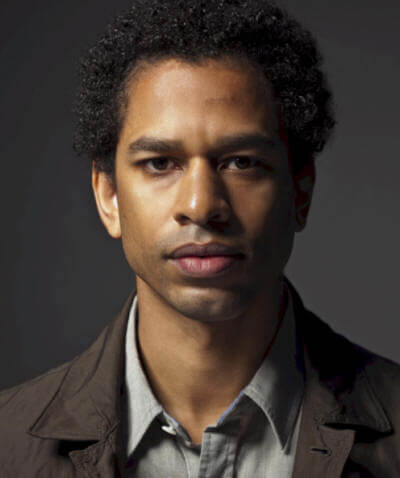
Born in Boston on March 20, 1971, Touré is a cultural critic for MSNBC,
as well as the host of a couple of shows on Fuse-TV: "Hip Hop Shop" and "On
the Record." A contributing editor at Rolling Stone, his articles appear
regularly in publications ranging from The New York Times to The Village
Voice to The New Yorker.
Touré is also the author of a collection of essays called "Never Drank the
Kool-Aid," a collection of short stories called "The Portable Promised
Land," and a novel titled "Soul City." Furthermore, he serves on the Rock &
Roll Hall of Fame Nominating Committee, and is a member of the Adjunct
Faculty of the City University of New York’s Graduate School of Journalism.
A devoted father, Touré lives in Fort Greene, Brooklyn with his wife, Rita,
and their two children, Hendrix and Fairuz. Here, he talks about his new
book, "Who’s Afraid of Post-Blackness?"
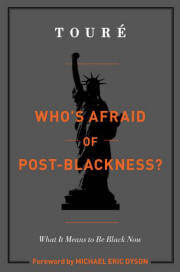 Who's
Afraid of Post-Blackness?: What It Means to Be Black Now
Who's
Afraid of Post-Blackness?: What It Means to Be Black Now
Click to order via Amazon
by Touré
Hardcover: 272 pages
Publisher: Free Press (September 13, 2011)
Language: English
ISBN-10: 1439177554
ISBN-13: 978-1439177556
Product Dimensions: 9.1 x 6.3 x 1.2 inches
Touré: The "Who’s Afraid of Post-Blackness?" Interview
with Kam Williams
Kam Williams: Hi Touré, thanks for the interview.
Touré: Hey, man, what’s happening?
KW: Not much. Nice to make your acquaintance.
T: Yours, too.
KW: I really enjoyed reading Who’s Afraid of Post-Blackness, and I have a
lot of my own questions for you, as well as a lot from my readers.
T: Whatever you want to talk about is totally cool.
KW: What inspired you to write the book? Let me guess, the incident in
college where somebody embarrassed you by saying, "Shut up, Touré! You ain’t
black!"
T: Yeah, that was definitely an inciting incident. I had already been
thinking very actively about what it means to be black since I was very
young. But that got me thinking about it with a different intensity on an
extremely deep, personal level. So, that sort of got the ball rolling, but
the more specific influence was the success of
Barack Obama which was an
indication to me that something had changed in terms of race and what it
meant to be black in America. We are not post-racial, but some things have
changed. For instance, I think the younger generation has a more progressive
attitude, and that definitely played to Barack’s favor.
KW: Harriet Pakula Teweles says: It's one thing for artists to feel that
blackness can mean anything. But how can so many in the period you describe
as post-blackness give up being boxed in by race if they have neither the
educational nor economic opportunities to leave the ghetto locality?
T: What I’m saying is that you have the ability to embody blackness however
you wish. I believe Harriet’s right that you see greater opportunity for
education and advancement as you go up the class scale, but America is the
land of rapid class ascension within a generation, within a decade, even
within a year. So, I don’t think this only applies to middle-class black
people. If you go into the ‘hood, you’ll encounter a huge variety in terms
of blackness.
KW: In the book, you talk about being from Boston, and how your parents
taught as a child you that some areas of the city were dangerous for blacks.
I learned that the hard way when I was in law school there in the Seventies,
like the time I was refused service in a pizzeria because I was black.
T: That highlights the stupidity of racism. You were simply saying: "I’m
just trying to give you money for the thing that you produce. I’m not
looking to start a fight; I’m trying to engage in the commerce that you do
every day." And they’re response was, "We don’t want your money, because
you’re black." Unbelievable!
KW: Troy Johnson asks: Do you see any value in the government census trying
to keep track of people by race: black, white, etcetera? If so, how can we
truly become post-racial??
T: I don’t think the goal is to become post-racial. I don’t want a world in
which we’re not thinking about race. I want a world where people are proud
to be who they are, and where everybody feels comfortable imposing the
beauty of their culture on America. The goal is that prejudice based around
those differences ends. Post-racialism is not the goal, because it’s not
even possible.
KW: Rene Harris says: One time during a Twitter interaction with you, you
freely used the actual n-word, but only referred to a slur against Jews as
the k-word. When I questioned you about it, you never answered. Care to
clarify now?
T: I remember that interaction. It transpired a long time ago before I made
a personal decision to not use the n-word anymore. Twitter is a very
particular venue where it can be very easy for someone to misunderstand
something that you’ve written. So, you have to be very careful when you are
dealing with really incendiary ideas. For me to use the n-word as a black
person is not going to be as potentially controversial as using the k-word.
It can be tricky, if someone reads my tone wrong. But there’s a big
difference between using a word and talking about that word.
KW: Judyth Piazza asks: What is something your fans may not know about you?
T: I don’t know how to answer that question.
KW: Judyth also asks: What key quality do you believe all successful people
share?
T: The ability to take a "no," because in order to become successful at
anything, you’re going to experience a lot of setbacks and a lot of doors
closing.
KW: Editor/Legist Patricia Turnier asks: What message do you want the public
to take away from your book?
T: Two things: First, I want the black people made to feel like outsiders
because they like opera or sushi or scuba diving to know that they’re not
weird and that they are black. You can do black and be black in any way you
choose. And secondly, I want the self-appointed, volunteer identity cops to
be frozen in their tracks, because they’re not really doing the race a
service. It’ time for them to take off their badges and let people be black
in whatever way they see fit.
KW: Patricia also says: In 1903, W.E.B. Du Bois said that "The problem of
the 20th Century would be the problem of the color line, the relation of the
darker to the lighter races of men in Asia and Africa, in America and the
islands of the seas." If Du Bois were alive today, do you think that he
would just cross out 20th and change it to 21st and consider it as relevant
today, or would he see another issue as the prevailing question of this
Century?
T: Well sure, it’s still a dominant issue in America. However, now, class
enters the equation and makes it a three-dimensional game, instead of a
two-dimensional game. So, the issue is only getting trickier and more
nuanced as class boundaries change, and as expectations and perceptions
change. Plus, there’s a growing class of mixed people who are going to bring
a variety of additional new perceptions.
KW: Finally, Patricia asks: What advice do you have for young people who are
interested in entering the field of journalism?
T: Oh God! Think about something else that might make you happy. I’m
serious. I don’t think the opportunities are there to make a comfortable
living in journalism anymore.
KW: Professor/film director/author Hisani Dubose asks: How did you first
become a Pop Culture consultant for CNN, and how did you go from there to
being a regular contributor?
T: I started off at Rolling Stone. From there, I was given an opportunity to
appear on CNN with Paula Zahn when she was hosting American Morning. That
went well, and they asked me back more and more, and eventually had me do a
panel three times a week called 90-Second Pop. After that I became a
correspondent.
KW: Is there any question no one ever asks you, that you wish someone would?
T: No.
KW: Do you have a good question you can give me that I can ask other
celebrities?
T: Yeah, who is the person that led you to become the person you are?
KW: Thanks. That’ll be known as the Touré question. The
Tasha Smith
question: Are you ever afraid?
T: I suppose, but not very often, because I always feel like there’s
something I can do to get out of any situation, sort of like MacGyver.
KW: The Columbus Short question: Are you happy?
T: Yeah, absolutely! I’ve got two great kids and a wonderful wife. And I
just published the best book that I’ve ever written. So, I’m very happy
right now.
KW: The Teri Emerson question: When was the last time you had a good laugh?
T: All the damn time! One of my kids said something earlier today that was
incredibly funny.
KW: What is your guiltiest pleasure?
T: Bacon. It’s not just for breakfast anymore. I know it’s wrong
health-wise. But even though it’s wrong, I don’t want to be right. At the
butcher store, they’ll sometimes talk me into a pork fillet which is like
eating a steak of bacon. That couldn’t be good for you.
KW: The bookworm Troy Johnson question: What was the last book you read?
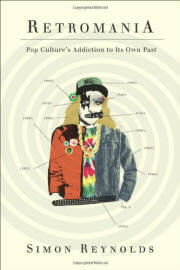 Retromania Click to Order via Amazon by Simon Reynolds |
KW: The music maven Heather Covington question: Who are you listening to on your iPod?
T: I spend a lot of time looking for new music, because I’m a very restless listener. Lately, I’ve been listening to Kanye West and Jay-Z, The Kills, The Weekend, The White Stripes, Abbe May, Cults, Danny Brown, Ariel Pink, Vampire Weekend, LCD Sound System, Tyler the Creator, The Black Keys, Jay Electronica, Childish Gambino and I brought back Amy Winehouse after she passed away.
KW: What is your favorite dish to cook?
T: I’m really not that good a cook. I can make a nice steak. But is frying a rib eye in a pan cooking? My favorite dish to eat might be fried chicken. I love eating fried chicken to death. It’s good, man!
KW: The Sanaa Lathan question: What excites you?
T: Everything! My kids… my wife… the future! The possibilities! The ability to connect with people through new ideas excites me. Great pieces of culture, be it music, TV or a movie. Great food! The thrill of spectator sports! Doing yoga… running… playing tennis… playing basketball… So many things.
KW: The Uduak Oduok question: Who is your favorite clothes designer?
T: I don’t have one.
KW: Dante Lee, author of "Black Business Secrets, asks: What was the best business decision you ever made?
T: I bought some shares of Google and Apple a few years ago. It’s going good so far.
KW: When you look in the mirror, what do you see?
T: Me. It’s always a bit of a surprise where we’re at today.
KW: If you could have one wish instantly granted, what would that be for?
T: [Mark] Zuckerberg money. I could handle all the rest after that.
KW: The Ling-Ju Yen question: What is your earliest childhood memory?
T: Standing in front of my father as he was getting ready to go to work one day, and saying, "You’re white," because he’s light-skinned. He answered, "No, I’m not." And I responded, "Do people think you’re white?" And he said, "No, they know." I accepted that, but as a very young person, I didn’t understand. I don’t know why that memory stands out.
KW: What advice do you have for anyone who wants to follow in your footsteps?
T: Read a lot, write a lot, try to experience a lot, and take a big bite from the buffet of life.
KW: The Tavis Smiley question: How do you want to be remembered?
T: Oh, man, I don’t know. That’s too hard to call, and it’s too early.
KW: Thanks again for the time, Touré, I really appreciate it.
T: I’m glad. Cool!
Reader Comments (0)
Log In to Join the Conversation
Commenting is reserved for registered AALBC members to maintain high-quality discussions.
No comments yet. Be the first to share your thoughts!
Advertisement