Dr. Condoleezza Rice - The “Ordinary, Extraordinary People” Interview
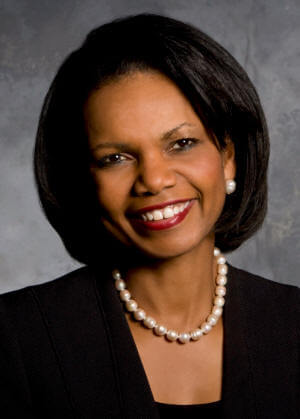
Dr. Condoleezza Rice was born in Birmingham, Alabama on November 14, 1954, the only child to bless the loving union of John and Angelena Rice. In spite of the considerable disadvantages she encountered just by virtue of growing up black in The South during the days of Jim Crow, she somehow managed to overachieve, first academically, and then career-wise.
Here, the previously-very private Dr. Rice reflects about her life while talking about Extraordinary, Ordinary People, her strikingly-revealing memoir about her childhood.

Extraordinary, Ordinary People: A Memoir Of Family
by Condoleezza Rice
Publication Date: Oct 12, 2010
List Price: $27.00 (store prices may vary)
Format: Hardcover
Classification: Nonfiction
Page Count: 342
ISBN13: 9780307587879
Imprint: Knopf
Publisher: Penguin Random House
Parent Company: Bertelsmann and Pearson PLC
Read Our Review of Extraordinary, Ordinary People: A Memoir Of Family
Dr. Condoleezza Rice - The "Ordinary, Extraordinary People"
Interview
with Kam Williams
Condoleezza Rice: Hi, this is Condi Rice.
Kam Williams: Dr. Rice, thanks so much for the time. I’m honored to be
speaking with you.
CR: Well, thank you. How are you?
KW: Very well, thanks. Do you know
Arnold Rampersad.
He’s a friend of mine who also teaches at Stanford?
CR: I certainly do, absolutely. He’s a really good person. A really good
person. As a matter of fact, he came to Stanford when I was Provost.
KW: Tell him hi, the next time you bump into him on campus.
CR: I will. And if you come out to visit him, please stop by to say hello.
KW: Absolutely. Did you have a chance to read my
review of your book?
CR: I did, thank you very much. It was very, very generous.
KW: That was my honest take. I really, really enjoyed it. My first
question is why did you decide to write a memoir focusing on your childhood,
as opposed to one about your illustrious political career?
CR: Well, I didn’t feel that I could do justice to this story of my parents
and their generation, and all that they did to make it possible for me to be
who I am, if I sort of just put it at the beginning of a book about my last
eight years in foreign policy. I will write that book, in fact, I’m working
on it now. But first, I wanted to answer the question I’m most frequently
asked: "How did you become who you are?" Well, you had to know John and
Angelena Rice. So, that’s what I wanted to help people do with this book.
KW: Children’s book author
Irene Smalls is curious about how hard it was to go
public with so many intimate aspects of your life?
CR: That’s an interesting question because I’m a very private person. But I
felt that if I wrote this book, I had to be willing at least to talk about
some of my struggles, whether in my personal life, health crises, or the
deaths of my parents, because there can too easily be a perception of me
that my life just went from A to Z uninterrupted, without any ups and downs,
and that’s not a fair representation.
KW: I really appreciated how the book really, fully humanized you, because
you shared so much of your personal feelings about the significant
touchstones in your life.
CR: Well, thank you. It was actually fun to write, because I went back to
interview people my parents had taught or who had worked with them, and I
learned a lot about them that I hadn’t known.
KW: Reverend Florine Thompson asks, "How has the Jim Crow Birmingham
experience affected your life? How has it defined who you are today? Did
this make you more determined to excel? Did it foster greater drive?"
CR: I believe that Reverend Thompson’s hit on something. My parents, I and a
lot of my friends growing up in that community had tremendous drive. There
was almost a sense of, "We’ll show them! We’ll show them that we can be
twice as good, despite everything." I think that was something that
motivated people who could have instead been consumed by bitterness and
fallen into victimhood. I chalk it up to my parents and grandparents and our
whole community that we saw the situation as a challenge to be overcome
rather than as something that might prevent us from succeeding.
KW: I remember your mentioning in the book that Freeman Hrabowski also
hailed from your neighborhood.
CR: Yes, Freeman, and Mary Bush, Sheryl McCarthy, and many others. That
community produced an abundance of accomplished kids.
KW: Reverend Thompson, asks "What role has spirituality played in your
growth and development over the years?"
CR: Spirituality and faith are at the core of who I am. I was born to deeply
religious parents who were able to give me that rock solid foundation in the
church and in my faith which really has served me so well.
KW: How so? What do you mean by that?
CR: It’s so much a part of me that it’s almost hard to describe myself in
the absence of it. I know that for me it means asking for guidance, and that
in the toughest times there’s a personal savior that I can rely on. And I’m
very grateful to my parents for giving me that.
KW: Director/author
Hisani Dubose says, "I have always wondered with the
outstanding qualifications you have, is there a way you can put your
education and experience to work outside of teaching or writing?"
CR: I really believe that you can. Not only do I think it is a part of
public service to help young people find their way, just as professors had
helped me find mine, but I’ve been very involved in K-12 education issues. I
started a program back in 1992 called the Center for a New Generation, an
afterschool enrichment program. I really do fervently believe that every
child deserves to have the kind of access to educational opportunities,
broadly defined, including music and sports, that I enjoyed. So, I’m trying
to do my part, and I believe that all of us with a privileged background who
are fortunate enough to have had that kind of access have a responsibility
to try to pass it on.
KW: FSU grad Laz Lyles would like to know what you enjoy doing in your spare
time.
CR: Well, I love to watch football. [Laughs] I actually really love to watch
almost any competition with a score at the end. I love sports. I play golf
now, which is relatively new for me. I only took it up about five years ago.
I also like playing piano, and I love being with my family and friends.
KW: Where do you find time for golf and all that, being such a workaholic?
CR: I’ve never really been a workaholic. I work very hard, but I also enjoy
playing. I think it’s important to have a balanced and well-rounded life.
KW: Larry Greenberg says, "I'm interested in Condoleezza Rice the musician.
Led Zeppelin was my favorite band when I was a kid, too. Do you have a
favorite Led Zeppelin song and can you play it?"
CR: I do have a favorite Zeppelin song, Larry,
Black Dog.
But it’s a little hard to play on the piano. [LOL] So, I stick to playing
Brahms, but I love listening to Led Zeppelin, and I’ve also been a big fan
of Earth Wind and Fire since the Seventies and of The Gap Band since the
Eighties.
KW: Harriet Pakula Teweles, asks, "What kind of music do you like to play on
the piano when you're playing for your own relaxation and enjoyment?
CR: I play classical music almost exclusively. I never mastered jazz or
gospel in the way that my mother did. She was a fine improvisational
musician. I pretty much have to stick to what’s written on the page.
Fortunately, I started very young, so I read music very well. And my
favorite composers to play are Brahms and Mozart.
KW: Yale grad Tommy Russell says, "I play piano just like you. What are you
currently playing and practicing? Is there a piece that you love but
struggle with? That would be Scherzo No. 1 in B minor by Chopin for me—I
can't play it as well as Vladimir Horowitz."
CR: [Chuckles] Oh yeah, I know that piece by Scherzo. It’s a very difficult
one. I play a lot chamber music, and I’m currently learning the three
Schumann Fantasy Pieces which I plan to play at a benefit concert in
Maryland with a good friend of mine from Boston who’s a professional
cellist. It’s for a great charity which puts good instruments into the
schools. The only playing I do in public these days is for charity concerts
like the one that I did for the Queen of Soul to get music into our schools.
I think it’s just horrible that music programs are disappearing. As for
something that’s hard for me to play, Tommy, before I leave this Earth I’m
hoping to play Brahms’ Second Piano Concerto.
KW: Harriet asks, "What was it like playing backup for Aretha Franklin? You
looked so great at the concert grand when you were accompanying her and so
comfortable when you were playing your solo. Have you ever speculated on
what your life might have been like, or might be like, as a concert pianist?
CR: Oh, that’s a really good question. First of all, it was really wonderful
playing with Aretha. I knew that she knew what she was doing, so all I had
to do was sit in the background and vamp a little bit. [Laughs] I didn’t
have to worry about that part of the program. But playing Mozart was far
more challenging, because I hadn’t played with an orchestra since I was 18
years-old. It was a great experience, but I had to work very hard t prepare
for that. Sure, I’ve speculated about what my life might have been like as a
musician, but I’m afraid I came to the conclusion that I probably would’ve
either been teaching piano or maybe gotten to play at Nordstrom’s department
store.
KW: Harriet notes that, "Wendy Wasserstein once explained to her mother how
hard it was to have a relationship after she'd won the Pulitzer Prize. What
kind of man is out there who can maintain a relationship of equals with a
Secretary of State?"
CR: Oh, I think there are plenty of men out there who are capable and
accomplished in their own realm. You don’t have to be in the same field.
I’ve often been asked, "Didn’t you want to get married?" And of course I
wanted to get married, but you have to fall in love and want to marry a
particular person. You don’t get married in the abstract. So, although there
were people I felt I might have married, it just never happened.
KW: Wise guy Jimmy Bayan asks, "Are you dating anyone? C'mon, ‘fess up!
Who’s the lucky guy? You can say. You’re a private citizen now!"
CR: [LOL] I am, Jimmy, and I believe in having a private life, too, so I’m
not going to answer that question.
KW: Tommy observes: "You say you always hoped to marry within your race. Can
you answer honestly, Ms. Rice, about your perception of the number of
eligible African-American bachelors in your circle? Is there a dearth of
black men?
CR: Well, of course, all of the statistics say there are fewer eligible
black men in my circle. But I’ve never thought of it that way. I believe
that if the right person came into my life that would have been terrific.
When I said I had always hoped to marry in my race, I really do mean that.
That doesn’t mean I absolutely wouldn’t marry outside of it, but there’s a
culture and traditions to maintain, and I have great pride in them, and I
always thought it would be wonderful to share that with somebody of my race.
KW: Movie theater manager Malik Hayes says, "Some time ago, there was talk
of you possibly becoming some type of advisor to a sports franchise. Did
that ever materialize?"
CR: Well, it hasn’t yet materialized that I went into sports management, but
I haven’t ruled it out yet, either. I only half-jokingly remarked that I’d
love to be the commissioner of the NFL. But as I recently told current
Commissioner Roger Goodell, that job looked a lot more appealing when I was
struggling with the Russians and the Iranians everyday. Now, from Northern
California, it looks a lot tougher. And it’s a job that he’s handling very
well, by the way.
KW: Attorney Bernadette Beekman, asks, "What do you think you can do about
improving the quality of the early care and education system in the United
States, especially as it relates to young African-American children in the
inner cities?"
CR: I think all of us have really got to redouble our efforts, first of all,
to pay attention to the K-12 crisis. The sad fact is that I can look at your
zip code and tell whether you’re going to get a good education. That’s not
fair. And secondly, I hope that all of us who were fortunate enough to have
benefited will put our time, our resources and our efforts into making sure
that kids, particularly kids without means, have a way to achieve.
KW: Reverend Thompson says, "You are a model of success to so many. Do you
see yourself as a role model?"
CR: I know that people look at my life and ask, "How can I achieve some of
those things?" So, I suppose in that sense, yes, I’m a role model. But I try
to think of myself more as a mentor, as somebody who I hope young people
feel comfortable approaching or writing to. I get letters from kids from all
over the country. I always try to answer them because there were people I
looked up to in my youth and just wanted to be in contact with. It’s also
important to realize that you find your role models in a lot of different
places. I’ve never believed that your role models have to look like you. You
can find them in all sort of colors, shapes and sizes.
KW: PJ Lorenz asks, "What was it like for you, as the first African-American
woman to become Secretary of State?
CR: I was very proud and grateful to be the first African-American woman in
the position. I thought it said a lot about our country that we had
back-to-back African-American Secretaries of State, Colin Powell and then
me. I also thought it said a lot about President Bush that he didn’t see
limits on the highest ranking diplomat in terms of color. It’s a hard job,
but really the best one in government.
KW: PJ adds, "After leaving office, reflecting back on those times, what if
anything, would you have done differently, and is there anything that you
feel particularly proud of, for having achieved?"
CR: Well, there are many things, whenever you look back, that you would’ve
done differently. We’re all human. We do our best at the time. I really wish
that we had passed a comprehensive immigration bill because that would’ve
really helped our country. We came close, but we couldn’t. I wish that after
the war against Saddam Hussein we had been more effective at rebuilding Iraq
quickly. I think had we done it from the provinces, in, rather than from
Baghdad, out, we might have been more successful. I’m very proud that
President Bush took on AIDS relief. It was the largest single response by
any country to a major international health crisis, and there are millions
of people who are alive today in Africa and other developing countries
because of that program. And I’m very proud that we stood for the
proposition that no man, woman or child should ever have to live in tyranny.
We believed in democracy and promoted it.
KW: AMC exec Keith Kremer says, "I’m curious to see what your report card is
for President Obama since he’s occupied the Oval Office."
CR: Oh, I don’t think it would be fair to grade him because I believe our
Presidents work hard and it’s the loneliest job in the world. I may not
agree with everything, but our President, just like President Bush did, is
trying to do his best under difficult circumstances.
KW: Is there any question no one ever asks you, that you wish someone would?
CR: Oh, I think I’ve been asked just about everything. [LOL]
KW: The Tasha Smith question: Are you ever
afraid?
CR: Sure. I’m not personally fearful, but I look out, and there are a number
of things that concern me, and I’m hopeful that we can overcome them.
KW: The Columbus Short question: Are you
happy?
CR: Very, I’m happy and content in my life, and I chalk that up to wonderful
parents and a wonderful God.
KW: The Teri Emerson question: When was the last time you had a good laugh?
CR: Laughs] I laugh almost everyday. I have a good sense of humor, so I’m
always finding something funny.
KW: The bookworm
Troy
Johnson question: What was the last book you read?
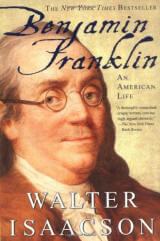 Benjamin Franklin: An American Life Click to Order via Amazon by Walter Issacson Paperback: 608 pages Publisher: Simon & Schuster (May 4, 2004) Benjamin Franklin is the founding father who winks at us, the one who seems made of flesh rather than marble. In this authoritative and engrossing full-scale biography, Walter Isaacson shows how the most fascinating of America's founders helped define our national character. |
KW: The music maven Heather Covington question: What are you listening to on your iPod?
CR: I was listening to some Motown while exercising.
KW: What is your favorite dish to cook?
CR: Fried chicken, and by the way I’m good at it, too. I make really good fried chicken. [Giggles]
KW: The Uduak Oduok question: Who is your favorite clothes designer?
CR: I have several, but I like to wear Akris, Oscar De La Renta and Giorgio Armani.
KW: If you could have one wish instantly granted, what would that be for?
CR: It would be that no child would ever feel that the American Dream is denied them.
KW: The Rudy Lewis question: Who’s at the top of your hero list?
CR: My parents.
KW: When you look in the mirror, what do you see?
CR: A very fortunate and blessed person who still has a lot of living to do.
KW: The Ling-Ju Yen question: What is your earliest childhood memory?
CR: Rebelling when my parents tried to send me to first grade when I was 3.
KW: The Boris Kodjoe question: What do you consider your biggest accomplishment?
CR: That I’ve found my place in life, that I’m passionate about it, that my talents and my passion have merged, and that I’m trying to do the best that I can.
KW: Well on that note, let me say congratulations on finding your place, and the best of luck with the book and all your other endeavors.
CR: Thanks so much, Kam.
Reader Comments (0)
Log In to Join the Conversation
Commenting is reserved for registered AALBC members to maintain high-quality discussions.
No comments yet. Be the first to share your thoughts!
Advertisement