 Bookshop
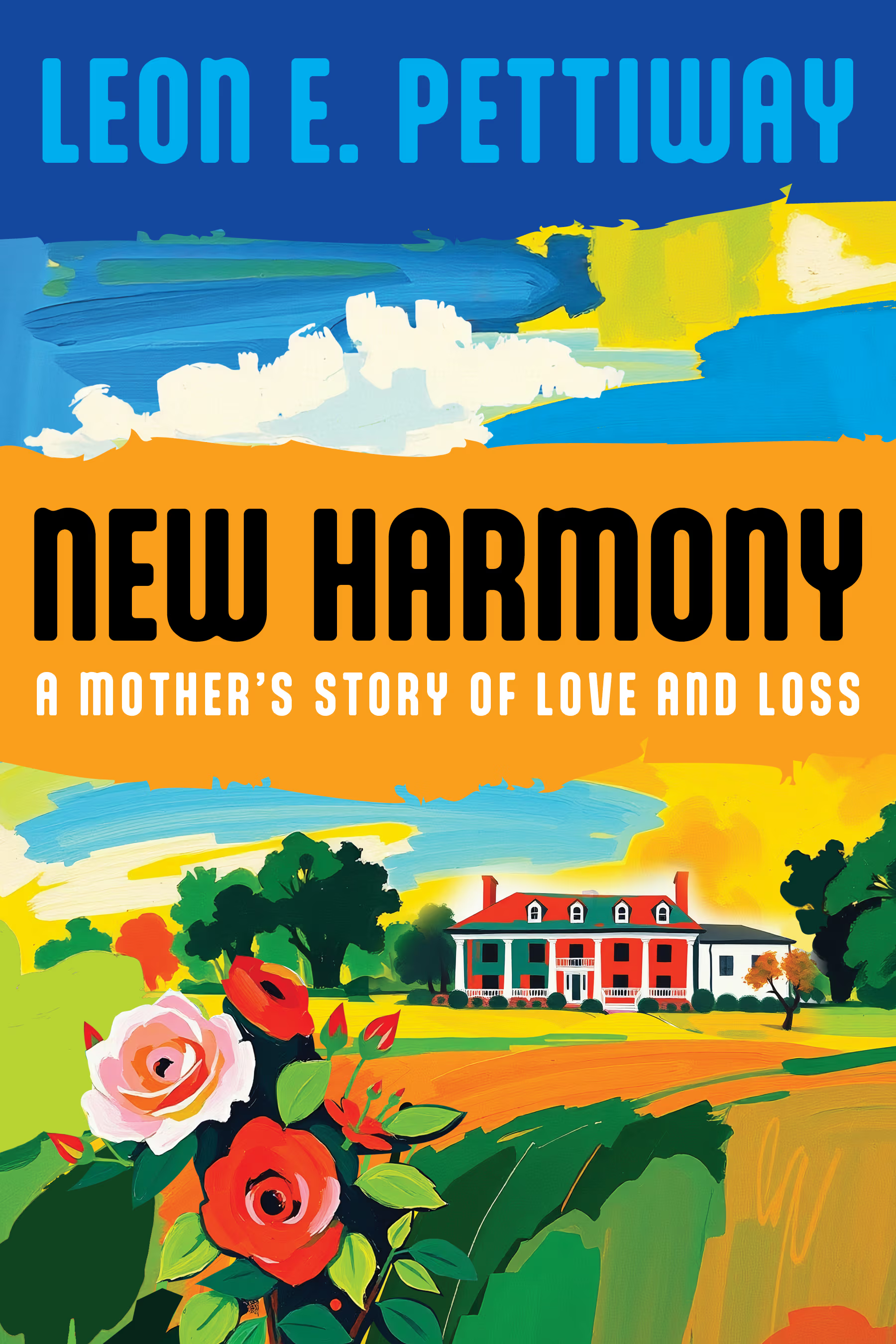
A complete reading of this debut novel by Leon E. Pettiway, a professor emeritus at Indiana University and an ordained Buddhist monk, takes readers to New Harmony, South Carolina, during the traumatic Jim Crow era. Margaret Butler, the protagonist, is a Black woman who speaks in a traditional Southern vernacular and recounts her life beginning from the time she was a ten-year-old girl growing up in a family of sharecroppers in 1915. The seminal events of her young life are told through a series of revealing tales of adolescence, adulthood, and motherhood.
At the centerpiece of this dramatic work of fiction titled New Harmony: A Mother’s Story of Love and Loss, a sense of angst and dread hangs like a dark cloud over Pettiway’s prose, with its emotional highs and lows, often musical and magical. The author digs deep into Margaret’s grief-stricken soul and the shattered Black New Harmony community in the haunting remembrance of the racially motivated murder of sixteen-year-old son, Thad, in 1949. Many Black families faced such tragic occurrences in Dixie where a beloved family member was killed by race hate. Pettiway cries on cue in several heartfelt scenes, especially the sorrowful homegoing of Margaret’s “baby boy” at Calvary Baptist Church, a needless loss of life.
Written in language that informs and delights, Pettiway explores Margaret’s other children: Tilda, Ruth, Helen, and Henry, displaying a wide variety of youthful antics. However, the writer does not neglect to display the complexities and confrontations and ongoing toxicity of racism and injustices within the Black and white communities. When Margaret lives in Pleasant Bluff Plantation, or Big House, of the powerful white Demmings family, we see how the qualities for survival and dignity of all Black women fight against the demeaning onslaught of discrimination and cruelty. The Demmings, including the unpredictable daughter White Candy, assured New Harmony was “charming, clean, and perfect.” Most Blacks understood the American South and its horrific cultural, social, and political codes that ruled daily life. And like many Black parents, Margaret tries to shield her children from Jim Crow, but hate often taints their lives.
Throughout the book, Margaret tells her life story with much detail and gives the reader a firsthand account of events and her emotions: “I was beyond sorrow. Children weren’t supposed to rest in the arms of Jesus before old folks, before their mammies and pappies. It wasn’t the natural order, but in New Harmony, perversion prevailed where ‘good was bad and ‘bad was good.’”
One thing of notice is that the book lacks many of the standard stereotypes even when dealing with the racist attitudes of whites. New Harmony stands out in terms of several universal truths, of familiar tales of identity, memory, perseverance, and physical action. A narrative gift by the author is the resilient fate and destiny of the community bound by blood and common history. As Margaret says, “Even in New Harmony, hope must thrive, and in the belly of condemnation and woundedness, hope seeds forgiveness. I prayed we’d all find some, as Mammy would say, ‘de’ reckly….’”
At the end of the book is a glossary of Southernisms, cultural terms in the storytelling, an assurance of confidence for the reader. Although my roots are in Mississippi, this effective guide provides readers with a leg up from confusion and misinterpretation, unlike the works of William Faulkner, Flannery O’ Connor, Alice Walker, or Eudora Welty. Language and dialogue are key here, for example: “Well, right then I knowed sump’tem be mighty wrong—when a white lady axes a colored woman tuh sit next to her—that’s when they axes for part of yo’ soul.”
In New Harmony, a stunning surprise emerges in a plot twist that is centered around traditional and cultural taboos in the heat of the Mason-Dixon sun. Overall, Pettiway’s full-bodied characters, detailed settings, and its narrative magic display that life for people of color can pound away at your character, your resolve. Finally, Pettiway’s initial entry on bookshelves is wholly unforgettable.