Tavis Smiley The “Death of a King” Interview
Tavis on Repositioning Dr. King as a Revolutionary
 Photo credit
WideVision Photography
Photo credit
WideVision Photography
Tavis Smiley is the host and managing editor of Tavis Smiley on PBS, and The Tavis Smiley Show from Public Radio International. He is also the author of 16 best-selling books. Here, he talks about his latest opus, “Death of a King.”
Tavis Smiley The “Death of a King” Interview
with Kam Williams
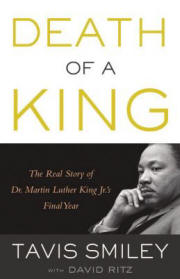
Death
of a King: The Real Story of Dr. Martin Luther King Jr.’s Final Year
Click to order via Amazon
Hardcover: 288 pages Little, Brown and Company (September 9, 2014)
Kam Williams: Hi Tavis, thanks for the time, brother.
Tavis Smiley: Always nice to speak with you, Kam.
KW: Attorney Bernadette Beekman says: I know that your book deals with the last year of King’s life when the tide was turning against him, such as the Black Panthers, Ralph Bunche, and others in the movement. Now Dr. King is viewed as a martyr. Was it difficult for those still living to now speak negatively about King?
TS: Good question, Bernadette. Now that he is a dead martyr, rarely do people speak negatively of him. My point is that it’s easy to celebrate and applaud dead martyrs. The problem is that when King was here and in our faces, and talking about inconvenient truths, like what he called the triple threat facing our democracy—racism, poverty and militarism—everybody turned on him. Yet, 50 years after his assassination, what do we see when we look at Ferguson, Missouri? Racism, poverty and militarism! We have deified King in death, so it’s easy for people to say nice things about him now. But in life, we demonized him.
KW: Harriet Pakula-Teweles says: An historical biography of the last year of Dr. King’s life, no matter how beautiful a tribute, is it really what we need to read now to get it right?
TS: Absolutely! The answer’s “Yes,” because we come to know who we really
are in life during the dark and difficult and desolate days of our journey.
If you think you respect and revere Dr. King, wait ‘til you read this book.
You’re going to feel that way even more so afterwards, because you’ll get to
see how he navigated the most difficult period of his life, the last year of
his life when everybody turned against him. That’s what fascinates me about
him. After reading this book, you’ll have a different appreciation of Dr.
King. It’s important to see him in his full complexity, and be honest about
the fact that we help to kill King because we abandoned him. And once we
abandoned him, we isolated him, which made it easy for someone to
assassinate him. It was a three-step process.
KW: Editor/Legist Patricia Turnier asks: Do you have any interest in
entering politics?
TS: Let me put it like this, “N, O, NO!” And put that in caps.
KW: Patricia also says: I think this is one of your best books. I just
finished reading it. I found your discussion of
Coretta Scott King’s
influence on her husband very interesting, as well as her contributions as
an activist, and her criticism of the Civil Rights Movement’s lack of focus,
and the roles played by women in combat. About your research process: Did
you make trips to Atlanta, Montgomery, the Lorraine Motel and other places
in Memphis?
TS: Yes, all of the above. The short answer is I traveled extensively, I
interviewed extensively, and I researched extensively. Still, I couldn’t
have done this book had it none been for the work of Dr. King’s three
principal biographers: Taylor Branch, David Garrow and Clayborne Carson.
Those guys did the heavy lifting which made it easier for me to do a book
just focusing on his final year. As for Coretta, she’s really an unsung
heroine. I’m glad that Patricia took away the critical role that Coretta
played not only in Dr. King’s life, but in the Movement. I’m glad that we
were able to weave that into the narrative effectively.
KW: Patricia says: You quote Dr. King asserting that “Our nation is sick
with racism, sick with militarism, sick with a system that perpetuates
poverty.” If Dr. King were still alive, what do you think his assessment of
present-day America would be?
TS: Excellent question! He’d pick up right where he left off, talking about
that triple threat of racism, poverty and militarism. Even in the era of the
first black president, racism is still the most intractable issue in this
country. Regarding poverty, half of all Americans are either in or near
poverty. Poverty is certainly worse for African-Americans now than it was
during King’s lifetime. And there’s a highway into poverty, but barely a
sidewalk out. This is not a skill problem, it’s a will problem, and King
would be challenging us about the lack of our will to eradicate poverty. On
militarism, the growth of the Military-Industrial Complex has been
exponential since his assassination. If he were here now, he’d have a strong
critique of the American empire’s militaristic approach to the world. And
frankly, he’d have a strong critique of the Obama administration on its use
of drones.
KW: Patricia says: You wrote that this book meant more to you than any of
your others. I consider it an homage to a legend. What do you think is the
most important part of Dr. King’s legacy?
TS: I think Dr. King is the greatest democratic, public intellectual that
America has ever produced. What’s interesting is that in the U.S., we regard
him as an icon, while elsewhere around the world he’s regarded as a
revolutionary. They saw him as the radical revolutionary that he really was.
Loving your enemy is a radical concept. Here at home, we’ve sanitized and
sterilized him, and failed to appreciate him as the revolutionary and
prophet that he really was.
KW: Chandra McQueen says: This year marks the 50th anniversary of Dr. King’s
winning the Nobel Peace Prize. Do you think
Obama is as deserving of his?
TS: I want to be as charitable as I can be, here. It’s been very difficult,
sometimes heartbreaking to watch this war President with a Nobel Peace
Prize, navigate his presidency.
KW: Have you considered having some of Smiley Books translated into other
languages?
TS: We’ve translated some, but we could do more.
KW: Sangeetha Subramanian asks: What was the most surprising fact you
uncovered when researching this book?
TS: That for all the surveillance and wiretapping Dr. King was kept under,
not one time was he ever heard contesting the humanity of another human
being.
KW: Vassar professor Mia Mask asks: What’s up with your campaign against
Obama? Isn’t it somewhat self-serving? What, if anything, have you and
Cornel West accomplished with your public criticism of the President?
TS: I am not engineering a campaign against Obama. My work and witness is
about holding our leaders accountable.
KW: What do you think is the state of black politics in terms of loyalty to
the Democratic Party?
TS: It’s the same old story. Democrats, too often, take blacks for granted,
and Republicans, too often, simply ignore black voters.
KW: David Roth says: I would love to have a chance to chat with you. I am
intrigued by the evolution of the post-civil disobedience African-American
identity. Please comment on what
Dr. Cornel West
refers to as the dousing of
the “Black prophetic fire” and the subsequent co-opting of the
“we-consciousness” of 19th and 20th Century black leaders by the
“me-consciousness” of the capitalistic society all Americans operate within.
Now that the majority of Black Americans has been assimilated, there is no
longer a singular, collective Black voice articulating the call for true
equality of opportunity and equal justice under the law, which has led to
the marginalizing of the people who raise their voices today.
TS: Dr. West is absolutely correct about the black prophetic tradition of
speaking truth to power being on life support.
KW: Kyle Moore asks: What has to be done to change to the political
stalemate we see in Washington?
TS: We need to elect leaders who understand that leadership is about loving
and serving people, not about self-advancement.
KW: L.A. “Realtor to the Stars” Jimmy Bayan says: You’ve been in Los Angeles
for 30 years. What is it that you still find so alluring about our City of
Angels?
TS: Great question, Jimmy. The City of Angels is a microcosm of the world,
and so living in L.A. makes me feel like a citizen of the world.
KW: Cousin Leon Marquis asks: What was the toughest question you ever had to
ask someone?
TS: That’s a question that every one of my guests would have a different
answer for, because they all think I ask tough questions. We’ll leave it at
that.
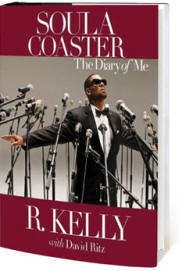
Soulacoaster: The Diary of Me
Click to order via Amazon
Hardcover (392 pages), Publisher: SmileyBooks (June 28, 2012)
KW: AALBC.com’s Publisher Troy Johnson asks: What happened with the R. Kelly book project?
TS: We published the book, but for any number of reasons, it didn’t sell enough to make the best-seller list. He was afforded an opportunity to tell his story, and the marketplace decided.
KW: Troy also says: I really enjoyed, and now miss, the Smiley and West radio program. Why was it cancelled? Any plans for a similar program in the future?
TS: It wasn’t canceled. Dr. West and I decided to step away from it, primarily because we both just have so many things going on. We’re both very busy people.
KW: Troy would like to know: What are the future plans of Smiley Books?
TS: We’re going to continue to publish books we think need to be read.
KW: Film critic Armond White simply asks: Why?
TS: Great question, Armond. I ask that myself everyday.
KW: Thanks for another great interview, Tavis.
TS: Thank you, Kam. I look forward to reading it.
Related Links
Tavis Smiley AALBC.com Author Profile
Tavis Smiley - The “FAIL UP” Interview
Tavis Smiley: The State of the Black Union Interview
Tavis Smiley - The "Been in the Storm Too Long" Interview
Tavis Smiley and Al Sharpton fight about Barack Obama
State of the Black Union 2009 Coverage
State of the Black Union 2008 Coverage
Reader Comments (0)
Log In to Join the Conversation
Commenting is reserved for registered AALBC members to maintain high-quality discussions.
No comments yet. Be the first to share your thoughts!
Advertisement