Bob Johnson: The “Urban Movie Channel” Interview
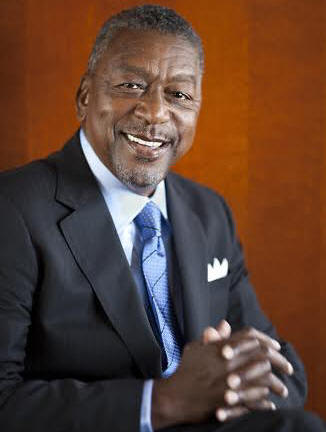
Robert L. “Bob” Johnson is the Founder and Chairman of The
RLJ Companies, an innovative business network that owns or holds interests in
businesses operating in hotel real estate, private equity, consumer financial
services, asset management, automobile dealerships, sports and entertainment,
and video lottery terminal (VLT) gaming.
Prior to forming The RLJ
Companies, Johnson was founder and chairman of Black Entertainment Television
(BET), the nation’s first and leading television network providing quality
entertainment, music, news, sports and public affairs programming for the
African American audience.
Johnson continues to attract and manage
capital and create value for investors, and in 2012, announced the successful
creation of RLJ Entertainment, Inc., one of the largest independent global
distributors of digital and video content. RLJ is the third company he's taken
public. In 1991, BET became the first African-American company to be traded on
the New York Stock Exchange. And RLJ Lodging Trust, a $2 billion market cap
hotel real estate investment trust (REIT), went public in 2011.
In 2001,
Johnson sold BET to Viacom for approximately $3 billion while remaining the
Chief Executive Officer through 2006. The following year, he was named one of
“The 25 Most Influential Business Leaders of the Past 25 Years” by USA Today.
In 2014, three of Johnson’s holding companies were featured on the Black
Enterprise 100s list: RML Automotive, LLC ranked 1st in a category of 60 in the
auto dealership rankings; and RLJ Equity Partners, LLC and RLJ Credit
Management, LLC ranked 12th and 14th respectively on the private equity firms
list.
Currently, Johnson serves on the following boards: RLJ Lodging
Trust; RLJ Entertainment, Inc.; KB Home; Lowe’s Companies, Inc.; Retirement
Clearinghouse; Strayer Education; Elevate Credit, Inc.; The Business Council;
and the Smithsonian Institution’s National Museum of African American History
and Culture.
Johnson holds a Master’s degree in Public Affairs from the
Woodrow Wilson School of Public and International Affairs at Princeton
University and a Bachelor of Arts in Social Studies from the University of
Illinois. Here, he talks about his recent launch of the Urban Movie Channel
(UMC), a premium subscription-based video streaming service exclusive to RLJ
Entertainment.
UMC is the first urban focused digital streaming channel
devoted to the acquisition of feature films, comedy specials, stage plays,
documentaries, music, and entertainment for the African American and urban
audiences. Access to the impressive on-demand streaming library is available
with online from mobile devices, and on the Roku platform.
From BET to Billionaire--and Beyond!
The “Urban Movie Channel”
Interview with Kam Williams
Kam Williams: Hi Bob, thanks for another opportunity to speak
with you.
Robert L. Johnson: I'm delighted,
Kam.
KW: When're you coming back to Princeton? I didn't see
you at the recent African-American alumni reunion here.
RLJ:
I spoke there many years ago, but I haven't been back in awhile.
KW:
I'll be mixing in questions from readers with my own. Let's start with one
from attorney Willard Alonzo Stanback about the Urban Movie Channel. He'd
like to know how you see this new platform being used in the new world of
multiple screens experiences. Will you be bringing your content to all of
the computer and other available functionality, such as social media and
interactive technology?
RLJ: UMC is an over the top, digital
streaming channel that is subscription-based, meaning that the consumer pays
to get the service. It is targeted to the Urban/African-American audience,
but we believe good entertainment is colorblind, so it is available to
everybody, essentially, who wants to go to the site. If you have a web
browser, you can get UMC. Our goal with UMC is to bring the creative talent
in the African-American community, which in many ways is underemployed, to
the consumers who desire to see the content that projects their images and
tells their stories. And it is designed to create an economic model where
members of the creative community can monetize their talent and where the
consumers will have a choice to purchase product and content that they can
see on any device, whether it's their flat screen TV, their mobile phone,
i-Pad , or any other device that can receive digital streaming content. We
believe that, given the choice, these consumers will see UMC as a service
they'd like to have along with Hulu, Netflix, Amazon Prime or HBO Go in
order to get content not available elsewhere, and at the price they want.
KW: Menelik Shabazz, who is based in Britain, asks: Are you
interested in extending your distribution vision to include Black World
Cinema?
RLJ: To this gentleman, I would say the answer is
“Absolutely yes!” The great thing about the digital world and the internet
is that you can instantly be available to a global marketplace. And there is
a tremendous amount of creative content in what I would call the
multicultural or diaspora of people of color that we believe would clearly
be attractive to audiences here in the U.S. And by the same token, content
produced here would be attractive to people around the world.
African-American creative content has proven its ability to travel. Jazz is
a universal music enjoyed around the globe, as well as are other
African-American cultural influences, such as hip-hop and rap music. We want
to make sure that happens with feature films and other content that hasn't
been exposed as much as the music in terms of its potential to appeal to a
wider audience. I also think this represents a unique business opportunity
in terms of the exchange of content between UMC and other platform
distributors around the globe, whereby we can share content distribution as
well as provide for distribution of content that would be acquired and
licensed.
KW: Sangeetha Subramanian asks: What can the
average person do to help improve diversity in entertainment media?
RLJ: Well, the most important thing that the average consumer can do is
to take advantage of the opening of the marketplace where you the consumer
controls what content you watch or gain access to. Because of the
availability of all sorts of platforms, you're no longer tied to cable, the
networks or the satellites. You can be your own programmer. And that's the
beauty of UMC. For the first time, urban content can flow directly to the
consumers without any gatekeepers. So you're not controlled by what
advertisers are willing to sponsor, by what studio heads decide to produce,
or by the cable operators who will force you to pay for content that you
don't want to see through their bunded channels. You are your own curator;
you are your own programmer. So, to me, the smartest thing any consumer can
do is subscribe to whatever it is you want to see. And the more people
subscribe to urban content, the more of it will be produced for your
enjoyment.
KW: Dr. Karanja Ajanaku asks: Mr. Johnson, do you
think there is any possibility whatsoever that African-Americans will
organize their consumption power in such a way that it can be leveraged?
RLJ: Well, to answer that question, Doctor, I'd say
African-Americans already organize their consumption power. They just don't
leverage it. For example, African-Americans as a whole watch more television
than any other population group in the country in terms of total hours spent
in front of the TV. African-Americans are heavy consumers of pay TV and
cable TV. African-Americans are early adopters of new technology, whether
it's Twitter, Facebook or Instagram. The key is that we have to make sure
that choices are available to us, so that our purchasing power will yield
content that we want to see. For example, there are two million
African-American cable subscribers who also take HBO and Showtime at a cost
of about $40 a month. That's a billion dollars of buying power. We'd like to
see some of that billion dollars of buying power go to UMC. We promise you
that that money will flow to the creative talent, both in front of and
behind the camera, to deliver programming that specifically appeals to your
viewing interest. So, this new technology, allowing you to leverage your
dollars, will change the way African-Americans access content and also
change the way that content is produced to appeal to African-Americans.
KW:
AALBC.com's Troy Johnson asks: Do you think it would be
possible for another Black owned media conglomerate, like BET, to emerge in
today’s environment?
RLJ: It's definitely possible, but it
would be very difficult to do in this environment. It was difficult when I
started BET. Today, the internet makes it possible for a lot of
African-American content to flow freely to the consumers since there are no
gatekeepers, and it is global in terms of its accessibility. We at RLJ
Entertainment are laying the foundation to be sort of a BET in the Digital
Age by creating the distribution platform of the Urban Movie Channel, by
licensing content from independent producers of urban content, by helping
them produce that content, and by promoting the awareness of it. We believe
that as a first mover in this space, RLJ Entertainment has the potential to
become a success story like BET and, obviously, I have a lot of experience
in making that happen.
KW: Ilene Proctor asks: How is your
focus today different from at the inception of your media empire?
RLJ: I think the difference is more the technology than the
focus. When I started BET, its carriage was totally dependent on the
development of cable television in the urban market. Its programming was
totally dependent upon getting programming primarily from the networks. Its
programming was dependent upon advertising support and cable carriage. And
the ability to market it was limited to either buying black radio or going
into urban oriented magazines like Ebony, Jet or Essence. Today, there are
no gatekeepers in the digital space. I don't need to talk to a cable
operator. I don't have to go to Ford Motor Company or Procter and Gamble for
advertising support. I don't need to approach the networks for programming.
There's tremendous talent out there producing programming. And I don't have
to spend a lot of money on radio to reach the local markets. I can promote
on Facebook and stream information on Youtube while the artists talk about
their films on Twitter. The avenues for getting the word out have expanded
vastly since when I started BET thanks to the technology revolution of the
internet and the Digital Age.
KW: Professor/Filmmaker/Author
Hisani Dubose asks: If you were an independent filmmaker today, would you go
after theatrical distribution, streaming, mobile or cable?
RLJ: I'd really focus on delivering my content in the digital space as a way
of getting a strong following that would recognize your creative
storytelling ability. Once you achieve that, you'll have a calling card to
go to the studios or TV networks to show the passion for your content as
reflected in your number of viewers. I would take advantage of that. The
costs of distribution and marketing are lower. I would certainly start there
and then move up to the other levels if you so desire. But I clearly think
the future is in digital distribution of content as opposed to the
traditional models. .
KW: These two questions are similar.
Publisher Reggie Kearney asks: What the best piece of advice you have to
share with a small business owner? And Editor Kris Seals asks: What advice
would you give someone who has a great concept, but needs resources to bring
it to fruition?
RLJ: I think that the greatest challenge
always facing small business owners, and I had it too when starting BET, is
access to capital. What you have to do is put together your business plan,
and identify potential strategic partners to approach operating in the same
business sector, because they are more likely than others to understand what
it is you're trying to achieve. Also, prepare a compelling story, focusing
on the bottom line, about how this business can be a successful enterprise.
Often, we become emotional about our businesses, and talk about what they
might mean to the community or to us in a personal sense. When you're
looking for investors, the real thing you want to focus on for investors is
what it means in terms of a return on their investment. You want to convince
them to have confidence in your integrity and your character and that you
will manage their investment well and that you will deliver value. After
you've done that, you can begin to share your passion with them about what
impact you envision making on your community or on society as a whole. But
first and foremost, remember that business people expect to get a return for
their risk capital, and they expect you to ve assured that you plan to work
as hard as you can to give them a return on their investment.
KW: Attorney Bernadette Beekman would like to know what was the
biggest professional risk you ever took?
RLJ: That's hard
to answer because I don't look at risks in terms of their size. You wouldn't
be an entrepreneur if you didn't take risks. If I were to point to anything,
it would be BET. BET was a risk when it started out since there wasn't any
cable TV in the big cities, advertisers didn't know about advertising on
cable, and people assumed African-Americans couldn't afford to subscribe to
cable.
Everything you do as an entrepreneur is a risk. But if you
look at them not as risks but as opportunities, you have an entirely
different point-of-view as to what constitutes a risk. I saw BET not as a
risk, but as an opportunity, and for me, that opportunity turned out to be a
very positive one.
KW: Environmental activist Grace Sinden
asks: Given your history of interest in politics and philanthropy, going
forward, what do you think is the most important thing a person can do to
make the world a better place?
RLJ: I have always have a
tilt towards what's in the best interest of minority Americans, particularly
African-Americans, and I think, in many ways, those concerns apply to the
country overall. I believe one of the best things we can do is elect very
intelligent, principled, committed people willing to sacrifice their
personal agenda for the country's agenda. In order to do that, you've got to
get to know your politicians and you have to consider your vote as a very
valuable asset that you use in a very selfish way.
KW:
Children's book author Irene Smalls asks: How can a young black child become
a Bob Johnson of today? What steps would you suggest?
RLJ:
Well, that's a tough question to answer. I believe that the most important
thing that most mothers want for their son or daughter is character. By
character, I mean understanding and accepting responsibility; being
respectful of themselves and others; getting the education they need to be
successful; striving to become a productive member of society; and
exhibiting a willingness to work hard to get ahead. All those things put
together. I think that any mother or father should try to inspire their
children to believe in themselves, to be willing to work for what they
receive rather than expect a handout, and to be proud of that work.
In
one of his speeches, Dr. Martin Luther King said something to the effect of,
“Don't be embarrassed by whatever labor you're undertaking. If you sweep the
streets, sweep the streets the way Michelangelo painted pictures.” In other
words, be committed to what you're doing. And if that's the case, you'll
more than likely get the recognition that will enable you to continue to
move up and better yourself, better your community and better your society.
KW: Editor/Legist Patricia Turnier is curious to know
whether you are thinking about writing your autobiography to inspire
aspiring entrepreneurs? That would be great because I'm always send way more
questions to ask you than we have time to get to.
RLJ:
No,one thing I've always said is that I'm never going to write a book.
Anyway, I do these interviews with you, Kam, so you can share them with your
readers as sort of mini-books.
KW: I appreciate that, Bob.
Thanks again for the time, and best of luck with the Urban Movie Channel.
RLJ: Anytime, Kam!
Bob Johnson - The Who's Your Caddy Interview
The Billion Dollar Bet: Robert Johnson and the inside Story of Black Entertainment Television - Book Review
Reader Comments (0)
Log In to Join the Conversation
Commenting is reserved for registered AALBC members to maintain high-quality discussions.
No comments yet. Be the first to share your thoughts!
Advertisement