Events happening today
-
ALL
DAY
10 February 2027
This event began 02/10/2025 and repeats every year forever
Two days later, spurred partly in reaction to Sumner’s more radical proposal, the Senate Judiciary Committee reported to the full Senate an abolition amendment combining the drafts by Ashley, Wilson, and Henderson.
TEXT FROM
Harper's Weekly 02/27/1864
CONGRESS. Senate.—February 10. Mr. Trumbull, from the Judi- ciary Committee, reported adversely to the joint resolu- tion for amending the Constitution just proposed by Mr. Sumner, which reads, “Every where within the limits of the United States and each State and Territory thereof all persons are equal before the law, so that no person can hold another as a slave.” Some time before Mr. Hender- son, of Missouri, had offered a joint resolution to a similar purport. In lieu of this the Committee presented the fol- lowing joint resolution for amending the Constitution: “Article 13, Section 1. Neither slavery nor involuntary servitude, except as a punishment for crime, whereof the party shall have been duly convicted, shall exist within the United States or any place subject to their jurisdiction. Section 2. Congress shall have power to enforce this arti- cle by appropriate legislation.” This article, if two-thirds of both Houses of Congress concur, is to be proposed to the Legislatures of the several States, and when ratified by three-fourths of these, to be valid as a part of the Constitu- tion.—Mr. Clark offered a resolution ratifying the Presi- dent's Emancipation Proclamation of January 1, 1863, and giving it the force of a statute: referred.—Mr. Brown of- fered amendments to the Enlistment bill, confirming the Emancipation Proclamation, abolishing slavery, and sub- jecting colored persons to enrollment under the same ap- portionment as other citizens.—The Military Committee reported adversely to Mr. Grimes's bill reducing the sal- aries of military officers not in the field or without com- mand.—Mr. Sumner brought up the case of a colored sur- geon of the army who had been ejected from a railroad car in the District, and offered a resolution directing the Com- mittee on the District to inquire into the expediency of a law securing to colored persons equal privileges with whites in the cars within the District. He said that this officer, who held a rank equal to that of Major, had been ejected from a street car because he was black. We had better break up all these railroads if we could not have them without such outrages, which did more to injure our cause abroad and at home than the loss of a battle. Mr. Hen- dricks thought the outrage was on the other side; there were cars for colored people, and this person declined to ride with people of his own color, and wished to force him- self upon white people; referring to remarks of Senators that it was no disgrace to ride with colored men, and that the outrage was as great as though a Senator of the United States had been ejected, he said that there seemed to be a determination to force social as well as political equality with the blacks upon the white race. The peo- ple of his State would never adopt that sentiment. Mr. Wilson rejoined that he had no wish to force negro equal- ity upon the Senator from Indiana; he wished only to let every man assume the station which God intended him to attain: resolution passed, 30 to 10.—The bill prohibiting Members of Congress and Heads of Departments from re- ceiving any compensation for acting as counsel, etc., in any case in which the United States are concerned, under penalty of fine, imprisonment, and disqualification for of- fice, came up and was debated: the clause relating to Members of Congress was stricken out, 26 to 14: laid over. —The bill equalizing the pay of all soldiers was brought up; debate arising upon the section giving colored soldiers equal pay with whites prior to the passage of the bill, its consideration was postponed.—February 11. Some busi- ness of minor importance was transacted.—The Post-office Committee reported a bill removing disqualifications on account of color in carrying the mail, and also declaring that no witness shall, in the United States Courts, be dis- qualified on account of color.—The Lieutenant-General bill from the House was brought up and discussed, the point being the amendment against making that officer Com- mander-in-chief, and striking out the name of General Grant. Senators opposed to this amendment said that to bestow the title without the command would be but an empty honor conferred upon one who now had the homage of the people: postponed.—February 12. The Senate was occupied with various business of no very general im- portance, except that the House bill making appropria- tion to meet deficiencies is amended by authorizing the appointment for a limited period of one thousand addition- al clerks, who may be females, at a salary not exceeding $600 a year.—February 13. The Secretary of War sent in a communication relative to military officers' commu- tations for quarters and fuel; there were 387 officers draw- ing such commutations, of whom 27 were generals, 52 col- onels and lieutenant-colonels, the remainder being of low- er ranks, 79 being paymasters.—A memorial from the Mil- waukee Chamber of Commerce was presented and referred, asking for a wagon-road through Central Minnesota to Idaho; it stated that within a few months $25,000,000 had been mined, which was now waiting egress through such a road with proper military protection.—The bill for regulating the pay of colored soldiers was brought up and discussed, the principal objection to it being its retrospect- ive feature; upon motion of Mr. Wilson it was amended so as to give them the same pay as others from January 1, 1864, instead of for the whole time they have been in service; Mr. Cowan then moved, as a substitute for the bill, that from the date of the passage of this Act all sol- diers of the United States of the same arm of the service should receive like compensation; he said that the negro had a legal status under the Constitution which protected him, and that, as he received the protection of the laws, he must be regarded as a citizen under the Constitution. Mr. Saulsbury said that if this was the basis of Mr. Cow- an's substitute he should oppose it; the old-fashioned term was “negro,” now these people were “colored citizens.” Pending action on Mr. Cowan's substitute the Senate ad- journed to Monday, February 15.—February 15. Mr. Foster introduced a bill defining the position and duties of chaplains in the army; it gives them the rank of major of infantry, allows them to hold pastoral charges, requires them to preach twice a week, hold religious meetings twice a week, and keep the libraries for the use of the soldiers.— The Enrollment bill, as amended by the House, was taken up and considered; the Senate refused to recede from its provisions.—The Deficiency bill from the House was pass- ed, with an amendment increasing the salaries of the As- sistant Secretaries of the Departments and Post-office to $3500 after the present fiscal year.—February 16. Bills granting lands for certain military roads in Oregon were passed.—Bill extending the statute of limitations in cases where the execution of the laws has been interrupted in consequence of the rebellion was introduced.—Mr. Doolit- tle introduced a bill regulating trade with Indian tribes; it prohibits, under penalty of fine, imprisonment, and for- feiture, the sale of spirits to Indians.—Mr. Lane, of Kan- sas, spoke at length in favor of the bill setting apart a por- tion of Texas for the use of persons of African descent.— Mr. Cowan's amendment to the Enlistment bill came up, giving equal pay, etc., to all soldiers. Mr. Davis pro- posed an amendment to the effect that colored troops should be disbanded, and colored men be employed in the army only as laborers and teamsters; that for slaves so employed loyal masters should be compensated; and if he died in service the master should receive the full value for him. Mr. Davis spoke at length in support of his amendment.—A message was received from the House announcing its adherence to its amendments of the En- rollment bill, and asking a Committee of Conference. The Senate resolved to adhere to its amendments, and authorized the Chair to appoint a Committee of Confer- ence. House.—February 10. Mr. Eliot, from the Select Com- mittee, reported a bill to establish a Bureau of Freedman's Affairs, to determine all questions relating to persons of African descent, and make regulations for their employ- ment and proper treatment on abandoned plantations. Mr. Clay, of Kentucky, wished to know whether his State was to be included in the operations of the bill, and whether plantations there were to be considered as aban- doned: he himself owned a plantation which had been aban- doned because Government did not protect it. Mr. Eliot replied that the bill did not propose to establish colonies in Kentucky; that in the case of plantations there, wheth- er they were to be considered as abandoned would depend upon whether the owners were loyal or disloyal; that in the case of Mr. Clay, a well-known loyal man, his planta- tion certainly would not be considered abandoned.—The Senate amendments to the Internal Revenue bill were re- ferred to the Committee on Ways and Means.—The En- rollment bill was taken up, and sundry amendments were proposed and rejected. Mr. Stevens offered an amend- ment enrolling all persons of African descent of military age; and when a slave is drafted $300 shall be paid to his owner, and the slave be freed. Debate ensued, mainly between members from the Border States: the main points being, on the one side, that slaves were property, and could not be taken for public purposes without compensa- tion; and, upon the other, that they were persons, and so owed military service: postponed.—February 11. After some routine business a Select Committee was voted, to in- quire into the expediency of increasing the facilities for the transportation of troops between New York and Washing- ton.—The Enrollment bill then came up. Mr. Stevens, at the request of Mr. Davis, withdrew the $300 feature from his amendment offered yesterday, and Mr. Davis offered another amendment, appointing a commission to pay to loyal masters a sum not exceeding $300 for slaves volun- teering in the army. Mr. Webster offered an amendment providing that the bounty of $100 now paid to drafted men shall be paid to any person to whom the person drafted may owe service or labor at the time of his muster into service, upon his freeing the person. These amendments were agreed to, after a long and somewhat desultory de- bate. In the course of this Mr. Davis said that he moved his amendment, not because he believed that compensa- tion was due to the master, but on account of the measures which Government had already taken. He believed that Government ought to take slaves for military purposes, because they owed military service. Mr. Anderson, of Kentucky, thought the amendment did not go far enough. In his own district a large majority of the young men had entered the rebel service, and at the next draft the district would owe 7000 men; unless the slaves of disloyal men were taken, those who had induced enlistments in the reb- el service would enjoy their property in peace, and the loyal white population must make up the deficiency; he would put the slaves of disloyal men in the army, but would not appropriate the slaves of loyal men. Mr. Web- ster, of Maryland, said that slaves were both persons and property. We needed colored men to aid in putting down the rebellion; any black man, having been a soldier, must be free; he would give freedom to the slave, and com- pensation to the master. Mr. Harris, of Maryland, denied the right of Government to enlist or enroll a slave; if taken, it could only be as property, and compensation must be made; he was opposed to employing negro troops; it would be a degradation to intrust our flag to negro hands. Mr. Kasson rejoined that the employment of negro soldiers was no new thing; the pension-rolls showed the names of black men by the side of whites; the statutes of the State of Virginia provided for the emancipation of slaves who fought in the War of the Revolution. Mr. Kelley said that we did not give compensation to the Northern father for his son, the wife for her husband, the children for the father taken from them by the conscription; the relation between slaveholder and slave was not more sacred than these. Slaves were persons, and as such owed military service to the country; they were never referred to as property in the Constitution; he was, however, ready to appropriate money to pay for slaves of loyal masters, who should consent to their volunteering. Other members spoke, on both sides, in the same general strain. Toward the close of the debate Mr. Fernando Wood said that while we were here proposing measures oppressive and destruc- tive, and clearly in violation of the Constitution, the Con- federates were proposing to discuss measures of peace, re- union, and reconciliation. Quoting from the Richmond Examiner, he said that resolutions were before the Con- federate Congress proposing that the Confederate States ask the United States to appoint delegates, to consider (1.) Whether they can not agree to the recognition of the Con- federacy; (2.) Whether, in this event, they can not agree upon a new Government; (3.) If this can not be done, whether they can not agree upon treaties offensive, defens- ive, and commercial; if these resolutions passed, the President of the Confederacy was to be requested to com- municate them to the Government at Washington, and, if the proposition was accepted, to issue a proclamation for the election of delegates to meet those appointed by the United States. Mr. Cox said that the proposition before the Congress at Richmond looked to peace on the basis of the old Union. He proposed that commissioners should be sent to Richmond; if Mr. Wood was sent, and if he did not come back within sixty days with a negotiation of peace, based on the old Union, with equality and sover- eignty of the States, he would pledge that gentleman and his friends as earnest supporters of the prosecution of the war. After various other propositions had been disposed of, Mr. Schenck offered a substitute for the bill, embracing the whole as it had been finally agreed upon.—Febru- ary 12. The Enrollment bill came up, and debate having been shut off by calling the previous question, and sundry propositions for adjournment and delay having been re- jected, it was pressed to a vote. The main amendment, providing for the enrollment of all persons of African de- scent of military age, paying the $100 bounty to the loy- al person to whom any drafted person may owe service or labor, upon his freeing the drafted person, and appointing a commission to award a compensation not exceeding $300 to any loyal person to whom a colored volunteer may owe service, was agreed to by 84 to 67. Mr. Schenck's substi- tute, embracing the entire bill as finally amended, was then taken up and voted upon: it passed by 93 to 60. The bill which thus passed the House embraces a great number of provisions, of which the following are the most essential: (§ 1.) The President may call out such number of men as the public exigencies may require: (§ 2.) The quota of each district to be as nearly as possible in propor- tion to the number of persons in it subject to draft, taking into account the number already furnished to the naval and military service; (§ 3.) If the quota of any State is not duly filled, drafts for any deficient district shall be order- ed until the deficiency shall be supplied; (§ 4.) Any en- rolled person may furnish a substitute; and if this substi- tute is not liable to draft or in the service, the principal will be exempt during the time for which the substitute would be exempt, but no one in military or naval service shall be accepted as a substitute; (§ 5.) All persons liable to draft shall be enrolled; this comprises in effect all able- bodied males below the age of 45, including aliens who have declared their intentions of becoming citizens, and all who, without having been in service two years during the present war, shall have been discharged; (§ 6.) Any person drafted may furnish a substitute at any time before the time fixed for his appearance at rendezvous; if the substitute is not liable to draft, the principal is exempt during the time of such non-liability, not exceeding the time for which the draft was made; if the substitute is li- able to draft, the principal is liable to future drafts; any person paying money for commutation is exempted only from the special quota; and in no case shall such exemp- tion extend beyond one year, at the end of which his name must be placed in enrollment; (§ 7.) Members of religious denominations whose rules prohibit the bearing of arms shall, when drafted, be considered non-combatants, and be assigned to duty in hospitals, or to the care of freed- men, or shall pay $300, the money to be applied to the benefit of sick or wounded soldiers; but no person shall be entitled to the benefit of this provision unless he shows that his conduct has been uniformly consistent with his professed principles; (§ 8.) No person of foreign birth who has voted or held office is exempt from draft on the ground of alienage; (§ 9.) Mariners or able seamen who may be drafted may, upon enlisting in the navy, be exempt from draft, under conditions which are prescribed; but the number of these transfer enlistments shall not exceed ten thousand; (§ 10, 11, 12.) Make provisions for carrying out the preceding section, the principal of which is that such transfer drafts shall be credited to the quota of the district, as though the person had been actually placed in the army; and that no pilot, engineer, master-at-arms, master, en- sign, or master's mate, having an appointment and duly acting as such in the naval service, shall be liable to draft while holding such appointment; (§ 13.) Declares the only exemptions to be those who are physically, mentally, or morally unfit for service; those who at the time of draft shall actually be in military or naval service; and those who, having been for two years in service, shall have been honorably discharged; (§ 14.) Repeals the clause in the existing Enrollment bill making two classes, the first con- sisting of unmarried persons and those married below the age of 35, the second class embracing all others; all per- sons liable to draft are thus consolidated into one class, and are equally liable to military duty; (§ 15-25.) Provide for the execution of the law, and impose heavy penalties for all fraudulent attempts at their violation or evasion on the part of persons liable to enrollment, or of any officers charged with carrying them into effect; (§ 26) Enacts that all able-bodied male persons of African descent, between the ages of 20 and 45, resident in the United States, wheth- er citizens or not, shall be enrolled; that when the slave of a loyal master is drafted and mustered into service, the master shall have a certificate thereof, and the bounty of $100 shall be paid to any person to whom the recruit, at the time of his being mustered into service, owes service or labor, on his freeing the recruit; that the Secretary of War shall appoint a commission in each Slave State rep- resented in Congress, who shall award to any loyal person to whom the colored volunteer owes service a sum not ex- ceeding $300, payable out of commutation money, upon the master freeing the slave; and that in all cases where slaves have been enlisted the provision as to bounty and compensation shall be the same as in the case of those to be enlisted; (§ 27.) Repeals all sections of the existing En- rollment act which are inconsistent with this.—The House then adjourned to Monday, February 15.—February 15. Several bills were introduced and reported from Com- mittees. The principal of these are to the following pur- port: Extending the time for withdrawing goods from pub- lic stores and warehouses; Granting lands to the Pacific Railroad and Telegraph Company; For a uniform system of bankruptcy; Establishing a branch mint in Idaho Ter- ritory; For constructing a ship canal around Niagara Falls.—Mr. Windom offered a joint resolution proposing to amend the Constitution so as to prohibit slavery in the United States and Territories: referred.—The Judiciary Committee were directed to inquire into the expediency of establishing an Executive Department, to be called that of the Revenue, to have charge of the Customs, Internal Revenue, and Currency.—Mr. Arnold offered a resolution declaring that “The Constitution of the United States should be so amended as to abolish slavery in the United States wherever it now exists, and to prohibit its extension in every part thereof forever.” A motion to lay on the table was rejected, 79 to 58, and the resolution passed, 78 to 62.—Mr. Stevens, from the Committee on Ways and Means, reported back the Senate's amendments to the In- ternal Revenue bill. The bill of the Senate, he said, was preferable to what had been agreed to in the House as to the tax on spirits, and the date of its going into effect. The Committee were of opinion that all taxes should be prospective; manufacturers had received a virtual pledge to this effect. As a revenue measure also the Senate bill was preferable. The amount of spirits on hand which the House proposed to tax did not amount to more than 10,000,000 gallons, upon which the tax would be $4,000,000; but practically not more than half of this would be taxed. The Senate bill would after the 1st of January yield $14,000,000 or $15,000,000. Mr. Fernando Wood said that the tax on spirits on hand would yield $10,000,000. He himself knew three men who had on hand nearly 5,000,000 gallons.—Mr. Davis, from Select Committee on Insurrec- tionary States, reported a bill giving to certain States whose Governments have been usurped or overthrown a republican form of government.—February 16. After routine business the question of reception and reference of the credentials of Mr. Johnson, who appeared as Represent- ative from Arkansas, was taken up. A discussion ensued, which elicited the fact that there was a wide difference in the views of Republican members upon the question whether there was really any State of Arkansas now ex- isting and entitled to be represented in Congress. Finally the whole subject was referred to the Committee on Elec- tions.—The Revenue bill was brought up with the amend- ments of the Senate. That imposing a duty of 70 cents upon all distilled or removed from July 1 to January 1, and 80 cents thereafter was disagreed with, 105 to 41; that striking out tax on all spirits now on hand was agreed with, 77 to 73; and that striking out the additional tax of 20 cents on adulterated spirits, sold as rum, brandy, etc., was agreed to.
Juneteenth Occurred [ 13th Amendment Certified JUNETEENTH - RMCommunityCalendar - African American Literature Book Club ]
Before the proposal by Henderson was legislated, Sumner of massachusett's tried to propose the following
All persons are equal before the law, so that no person can hold another as a slave; and the Congress shall have power to make all laws necessary and proper to carry this declaration into effect everywhere in the United States.
from
Although opposition to slavery was associated with the Republican Party, a faction of War Democrats not only supported wartime emancipation policies but also became favorable to a constitutional amendment abolishing the institution. On January 11, 1864, Senator John Henderson of Missouri, a War Democrat, submitted a joint resolution for a constitutional amendment abolishing slavery. The Senate Judiciary Committee, headed by Illinois Republican Lyman Trumbull, began considering the various versions of the abolition amendment. On February 8, Senator Charles Sumner of Massachusetts, a leading Radical Republican, submitted a constitutional amendment to not only abolish slavery but also guarantee equality under the law. Two days later, spurred partly in reaction to Sumner’s more radical proposal, the Senate Judiciary Committee reported to the full Senate an abolition amendment combining the drafts by Ashley, Wilson, and Henderson.
https://13thamendment.harpweek.com/hubpages/CommentaryPage.asp?Commentary=05ProposalPassage
Continue on site
https://books.google.com/books?id=Yx0zAQAAIAAJ&pg=PA582#v=onepage&q&f=false
RMCommunityCalendar 0 Comments · 0 Reviews
10 February 2027
This event began 02/10/2025 and repeats every year forever
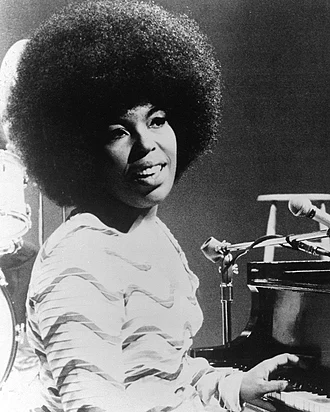
Everybody black love's roberta flack.
Her first album's first song is written by a Black man , the odd thing is, the album became financially viable because it was used in the Clint Eastwood film Play Misty for Me which is a psychological thriller, specifically the song "the first time I ever saw your face", he only spent two thousand dollars for the rights
COMPARED TO WHAT
I love to lie and lie to love I'm hangin' on they push and shove Possession is the motivation That is hangin' up the goddamn nation Looks like we always end up in a rut Everybody now Tryin' to make it real compared to what Slaughterhouse is killin' hogs Twisted children killin' frogs Poor dumb rednecks rollin' logs Tired old ladies kissin' dogs I hate the human love of that stinking mutt I can't use it Tryin' to make it real compared to what President he's got his war Folks don't know just what it's for Nobody gives us rhyme or reason Have one doubt they call it treason We're chicken feathers All without one nut goddamn it Tryin' to make it real compared to what Church on Sunday sleep and nod Tryin' to duck the wrath of God Preachers fillin' us with fright They all tryin' to teach us what they think is right They really got to be some kind of nut I can't use it Tryin' to make it real compared to what Where's that bee and where's that honey Where's my God and where's my money Unreal values a crass distortion Unwed mothers need abortion Kind of brings to mind old young King Tut He did it now Tried to make it real compared to what Tryin' to make it real compared to what
Songwriters: Gene Mcdaniels.
The First TIme I ever saw your face, written by Ewan Mccoll
the end credits to the film sudden impact, i admit, i like clint eastwood as an actor or director but i have never ben a fan of cop films or shows. he had to request this, the studios didn't want it, it shows how film studios essentially blockaded black artist from soundtracks even though black artists were financially successful or popular in the field
Her A capella Oh Freedom
https://youtu.be/kVvqvTzR94c?t=242
WHERE IS THE LOVE
Where is the love? Where is the love? Where is the love? Where is the love? Where is the love? Where is the love? Where is the love? Where is the love? You said you'd give to me Soon as you were free, will it ever be Where is the love? You told me that you didn't love him And you were gonna say goodbye But if you really didn't mean it Why did you have to lie? Where is the love? You said was mine all mine, till the end of time Was it just a lie Where is the love? If you had, had a sudden change of heart I wish that you would tell me so Don't leave me hangin' on the promises You've got to let me know Oh, how I wish I never met you I guess it must have been my fate To fall in love with someone else's love All I can do is wait That's all I can do Yeah, yeah, yeah Where is the love? Where is the love? Where is the love?
written by Ralph MacDonald and William Salter
FEEL LIKE MAKIN LOVE
[Verse 1] Strollin' in the park Watchin' winter turn to spring Walkin' in the dark Watchin' lovers do their thing [Hook] That's the time I feel like making love to you That's the time I feel like making dreams come true, oh baby [Verse 2] When you talk to me When you're moanin' sweet & low When you touch me And my feelings start to show, show, oh [Hook x2] That's the time I feel like making love to you That's the time I feel like making dreams come true, oh That's the time I feel like making love to you That's the time I feel like making dreams come true, oh baby [Verse 3] In a restaurant Holdin' hands by candlelight Wanna touch you Wantin' you with all my might, yeah [Hook x2] That's the time I feel like making love to you That's the time I feel like making dreams come true, oh That's the time I feel like making love to you That's the time I feel like making dreams come true, oh baby
written by Eugene McDaniels
THE CLOSER I GET TO YOU
The closer I get to you The more you'll make me see And giving me all you've got Your love has captured me Over and over again I tell myself that We could never be more than friends All the while inside I knew it was real The way you make me feel, oh I'm lying here next to you (oh, baby) And time just seems to fly, right over, right over, right over I'm needing you more and more, more, baby, more, baby, more So, let's give love a try Hey, sweeter than sweeter love grows And heaven's there for those Who fool the tricks of time And in our hearts the love we find True love In a special way, oh, baby, baby, baby The closer I get to you The more you make me see (all that I make you see, yeah) Pull me closer Sweet as the gravity I wanna be close to you, baby Sweet as the gravity, oh Sweet as the gravity, yeah, yeah, yeah Sweet as the gravity I want to be close to you Sweet as the gravity
James Mtume and Reggie Lucas
TOnight I celebrate my love for you, written by Gerry Goffin +michael masser
Roberta Flack is amazing, she doesn't have one song in any of her albums written by her exclusively. She is a very nice person. She gave so many black writers opportunity.
RMCommunityCalendar 0 Comments · 0 Reviews