
RMCommunityCalendar
Events happening today
-
ALL
DAY
14 January 2027
This event began 01/14/2025 and repeats every year forever
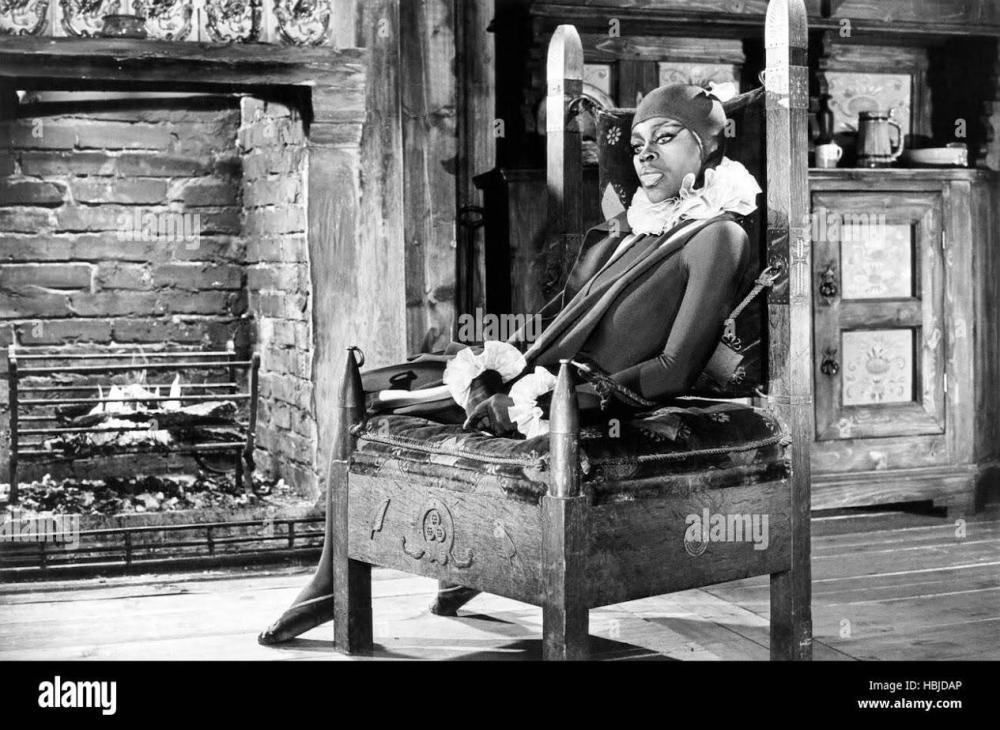
Cicely Tyson in the Blue Bird 1976
https://aalbc.com/tc/profile/6477-richardmurray/?status=2827&type=status
IF YOU DONT WANT TO CLICK THE STATUS LINK ABOVE
Have you ever seen the film? Cicely Tyson, Elizabeth Taylor, Ava Gardner, Jane Fonda were in a soviet-statian co produced film about children on a journey which will help them find the greater meaning in hearth plus home than gold plus ego.
The Blue Bird in 1940 starred Shirley Temple and had sondergaard who was originally cast as the wicked witch in 1939 wizard of oz
Cicely Tyson/Elizabeth Taylor/Jane Fonda/Ava Gardner were in a movie together in the 1970s and it is a fantasy children's film wow
https://ok.ru/video/2135063792291
and the blue bird has made it into modernity, a 2011 version was made I think it is interesting how these two films , film history has diverged since they first went to battle in the 40s
https://youtu.be/XXg1ArCr8b8?si=Sa5iTl2BVNCx1zZn
the baum photo gallery
https://photos.app.goo.gl/R3tuukJR4BdMvkHP7
the blue bird book- free to read
https://standardebooks.org/ebooks/maurice-maeterlinck_georgette-leblanc/the-blue-bird/alexander-teixeira-de-mattos
https://gutenberg.org/ebooks/8606
https://librivox.org/search?title=The+Blue+Bird&author=MAETERLINCK&reader=&keywords=&genre_id=0&status=all&project_type=either&recorded_language=&sort_order=catalog_date&search_page=1&search_form=advanced
I selected the play
https://gutenberg.org/cache/epub/8606/pg8606-images.html
The BLue Bird film in 1940 was made as a response to the wizard of oz 1939
https://www.deviantart.com/comments/1/1144642257/5184403693
RMCommunityCalendar 0 Comments · 0 Reviews
14 January 2027
This event began 01/14/2025 and repeats every year forever
Congrats to Black contestants in Miss America - January 14th 2025
https://aalbc.com/tc/topic/11420-the-miss-usa-pageant-the-surprising-number-of-black-contestants-2024/#findComment-71146
THE ORIGINAL POST STARTED BY CHEVDOVE @Chevdove
https://aalbc.com/tc/topic/11420-the-miss-usa-pageant-the-surprising-number-of-black-contestants-2024/#findComment-71123
IF YOU DONT WANT TO CLICK THE COMMENT ABOVE OR GO TO THE ORIGINAL POST ...
the following is the most well known black only female pageant in the usa
https://www.missblackamerica.com/
the wiki https://en.wikipedia.org/wiki/Miss_Black_America
what it needs is more money. This event has been going on for 55 years in a row. You can't complain about regular black folks making it happen, it was regular black folks who did. It wasn't black thespians or singers. It started in 1968 and not by diana ross or aretha franklin or cicely tyson.
Year Miss Black America Hometown and/or home state
1968 Saundra Williams Pennsylvania
1969 Gloria O. Smith New York
1970 Stephanie Clark DC
1971 Joyce Warner Florida
1972 Linda Barney New Jersey
1973 Arniece Russell New York
1974 Von Gretchen Shepard Los Angeles, California
1975 Donzeila Johnson Pennsylvania
1976 Twanna Kilgore Washington, D.C.
1977 Claire Ford Memphis, Tennessee
1978 Lydia Jackson Willingboro, New Jersey
1979 Varetta Shankle Mississippi
1980 Sharon Wright Chicago, Illinois
1981 Pamela Jenks Boston, Massachusetts
1982 Susan Wells Milwaukee, Wisconsin
1983 Sonya Robinson Milwaukee, Wisconsin
1984 Lydia S.Garrett Columbia, South Carolina
1985 Amina Fakir Detroit, Michigan
1986 Rachel Oliver Burlington, North Carolina
1987 Leila McBride Denver, Colorado
1988 Regina Wallace Florida
1989 Paula Gwynn Washington DC
1990 Rosie Jones Bridgeport, Connecticut
1991 Sharmell Sullivan Gary, Indiana
1992 Marilyn DeShields Virginia, Richmond
1994 Pilar Fort Detroit, Michigan
1995 Karen D. Wallace Oklahoma City, Oklahoma
1996 Basheerah Ahmad Choctaw, Oklahoma
2010 Ashley Anglin-Teen DC Metropolitan
2010 Kamilla Collier-Mullin, Adult DC Metropolitan
2010 Natasha Ashby - Teen Philadelphia, Pennsylvania
2010 Donielle Turner, Adult Philadelphia, Pennsylvania
2014 Alexandra Morton, Adult Baltimore, Maryland
2015 Jelisa Barringer, Adult Ohio
2016 Nicole Lynette Hibbert, Adult Delaware
2017 Brittany Lewis, Adult District of Columbia
2018 Ryann Richardson, Adult Brooklyn, New York
2022 Gabrielle Wilson, Adult Los Angeles, California
2023 Ashley Myatt, Adult Detroit, Michigan
2023 Elizabeth Dicker, Senior Newark, New Jersey
01/15/2026
https://aalbc.com/tc/topic/12290-have-you-ever-heard-of-miss-black-america /#findComment-79347
For more information please view and read the following
https://www.missblackamerica.com/
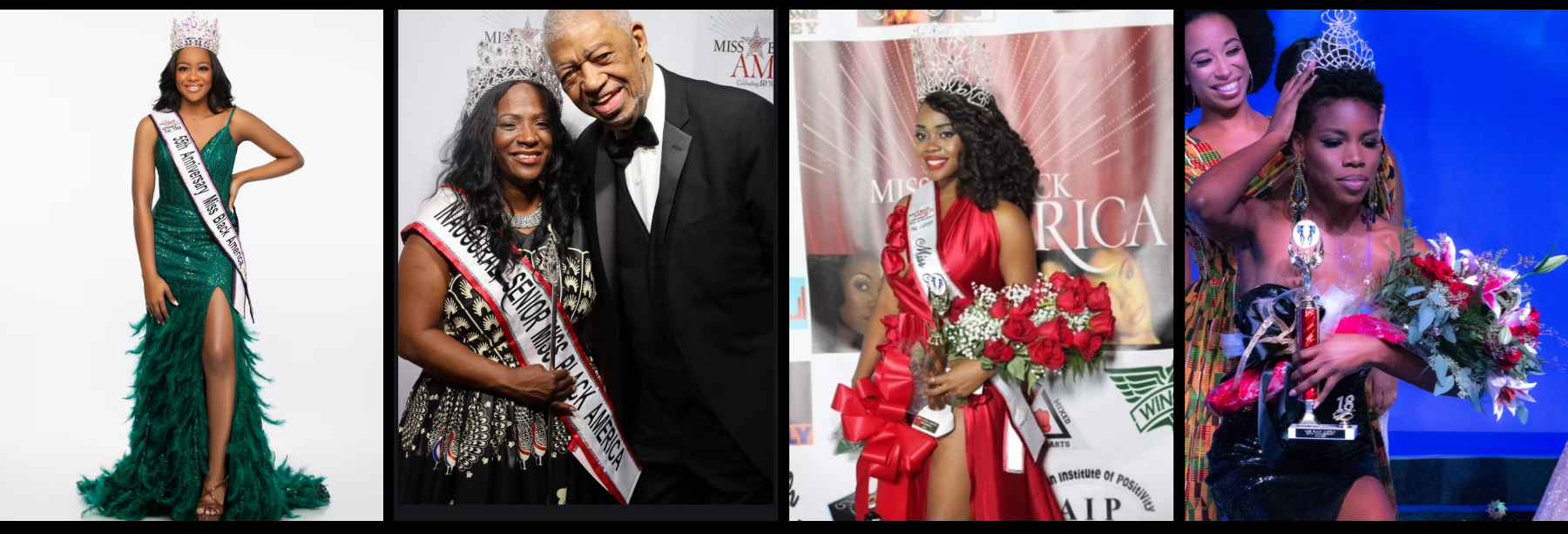
from 1968, here are some recent winners
If you know any black women, please share this with them, please
if you have questions you can contact them?
https://www.missblackamerica.com/contact
if you want to help
https://www.missblackamerica.com/donations
Troy they have an author's expos, I don't have the money but I imagine you do.
https://www.missblackamerica.com/author-s-expo-page
pdf info
https://a60cd4c2-9ac1-4f86-909b-8059577f3c6a.filesusr.com/ugd/5fe1f0_8f6b3a2fa6bd47dfb5359bf756393475.pdf
Sponsorship form
https://www.missblackamerica.com/sop-delegate-sponsorship
Are you the next Miss Black America?
Registration Now Open- Click The Following https://www.missblackamerica.com/pageant-registry
Little Miss Black America (7-12)
Miss Black America Teen (13-16)
Miss Black America (17-29)
Ms. Black America (29-54)
Senior Miss Black America (55 and Over).
All Age Groups, All Ages,
Register Today
Queens from seven (7) years old and over.
REGISTRATION DETAILS- no excuse for black dos women to enter
Pageant Registration
All Across the World We Are Beautiful!
You can be a Contestant in the next MBA Pageant TV Special!
Are you between the age of 17-29?
Or, are you a Miss Black America Teen between the ages of 13 -16?
A Little Miss Black America between the ages of 7-12?
Or a Senior Miss Black America who is 55+?
Complete the form at the link below
https://www.missblackamerica.com/pageant-registry
*Adults 17-29 Must be a High School Graduate or its Equivalent at the time of the National Pageant, MBA Teens must be Middle or High School students*
Miss Black America Pageant Positivity Cruise - February 14th, through February 22nd, 2026
1/15/2026
citation
https://aalbc.com/tc/topic/12290-have-you-ever-heard-of-miss-black-america /#findComment-79364
comment
Posted just now
@Pioneer1
1 hour ago, Pioneer1 said:
Not to take this thread in another direction but............
From the photos i have seen every winner of the Miss Black America pageant has been a black woman of medium to dark brown skin. Now I haven't seen photos of every winner. I haven't seen photos of every contestant.
But the direction you have taken this post about uplifting a black owned beauty pageant has many questions, you didn't provide answers for when you shifted directions.
1. How do you define actual Black ? You mentioned "actual Black" but don't give a clear definition of how can be determined actual Black. Moreover why should the operators of Miss Black America adhere to such a definition?
For example, if a woman with with two parents from india born in NYC with skin asians will call very dark, which is equivalent to what people in the USA call black, which is common among many Indian people, wants to run for Miss Black America, does she fit what you mean by Black? From a phenotypical perspective, said example woman is Black.
Here are three images of kalo or black , indian females, older woman, young woman, child. All three are black. I don't know if habshi, which is the equivalent to Descended of Enslaved. Cause some ancestral indian people are black. Like some ancestral statian people, native americans, are black. Native Americans from southern tribes, the caribbean, are phenotypically black and not african. So I know you know your thoughts and definitions but you have to display them. If for no other reason it makes the multilog easier, unless you want to argue.
2. How do you define not-black or mixed? You mentioned " non-Black and mixed people" but don't give a clear definition to either term. Is mixed by phenotype, skin color ? is mixed by phenotype of ancestors? If mixed is by phenotype of ancestors, is it a one drop rule or is it a just immediate parents?
For example, this is Fredi Washington. Who played the Peola character in the earliest film version of "immitation of life". She called herself black. She rejected hollywoods desire to have her lie about her background and claim she is white. And lived most of her life as a maid/nurse in Harlem. She definitely looked mixed. I call people like her yella. She is definitely more yella than Beyonce or Hally Berry or Dorothy Dandridge. And arguably even more yella than Hailee Steinfeld which says a lot. But she is black to me. From your definition she is mixed, so she couldn't apply for Miss Black America, correct?
3. Are you suggesting each candidate must be a citizen of the USA? I didn't read the rules of entry so I don't know how citizenship fits in Miss Black America. But a Black woman from Africa is Black so if she lives in the USA, why can't she run? Maybe she needs to be a USA citizen. I argue that is an even requirement, but is it mandatory?
1 hour ago, Pioneer1 said:
Too often you have non-Black and mixed people who "back door" their way into these events and end up being hoisted over and on top of the actual Black participants.
This is nothing but a product of self-hatred.
Looking at a woman who is obviously not Black or looks like she's almost White...and calling HER "the most beautiful" woman in the community.
One of my biggest problems with Beyonce wasn't Beyonce herself...but how she was often glorified as a symbol of "Black" female beauty.
Whenever the subject of comparing female celebrities by race, Whites and Latinos would promote the women they thought were the most beautiful but when it came to Black people.....a lot of bruthaz would promote women like Beyonce or Halle Berry back in the day.
Women who obviously weren't Black.
A lot of pro-FBA podcasters are promoting lightskinned women as "ideal" models for who an FBA is or what an FBA looks like.
They're pushing Beyonce and Angel Reese.
Expand
You didn't mention Hailee Steinfield. But, the issues you mention here are not about the participants but the organizers of events. The organizers of events aren't being self haters, the organizers of events are doing what you did in your reply, not be concise or specific in definitions. Expecting everyone else to somehow know what they are thinking or how they define. That isn't functional. If you wanted to block out certain black women... or any women, all you have to do is make the rules clear. But if the rules don't block out certain women from running then why shouldn't they run.
And as for the host of events or people whether black or non black, no matter their language or background, who have a positive bias towards the phenotype called white and a negative phenotype called blacks , black people who produce/pay for events need to know who they are hosting or if non blacks are producing, what can you expect from the host of a non black show but adulation to non black beauty even if the show is labeled for black beauty cause the owners are not black.
When you organize an event it is up to you to be clear, concise on definitions, not the people entering.
01/16/2026
https://aalbc.com/tc/topic/12290-have-you-ever-heard-of-miss-black-america /#findComment-79388
@aka Contrarian
12 hours ago, aka Contrarian said:
If Halle Berry and Beyonce self identify as ,"black" because one of their parents is black, then that's good enough for me and millions of other people who accept their decision.
They are women of color and the source of the color contained in their genes and DNA is a male negroid parent. ( just like Obama, our first black president. )
Nobody in America has been appointed as the arbitrator when it comes to declaring what constitutes blackness. Because there is no collective consciousness among negroid slave-descended Americans, there is no consensus on this issue and no individual can declare otherwise.
well said.
and all I can add is, this post was started with the purpose to uplift Miss Black America and by extension other Black Pagents, like Miss Black USA, thank you @Chevdove
The purpose of this post was never to create or debate an absolute definition of who is a black woman in the usa.
@Pioneer1 chose to segway from talking about miss black america, for which he had nothing to add, into talking about people in media, black or non black, whose job it is to get views/likes/attention and how they succeed by maintaining a consistency in narrative that suggest the most beautiful black women in the world happen to be black women with a certain phenotype, as close to a white european womans' as can be.
the problem being, the black pagents seem to have found a way through their rules to elevate black women who do not fit the identity of women championed in the media pioneer is so concerned with.
While the people in the media pioneer is so concerned with are working in a white owned space, the opposite of the black owned of the black beauty pageants.
So... your correct, Contrarian, but the issue of this post is uplifting the black beauty pageant and it is unfortunate how little uplifting was achieved. It says something about black discourse online, we are too concerned with arguments online.
01/18/2026
Citation
https://aalbc.com/tc/topic/12290-have-you-ever-heard-of-miss-black-america /#findComment-79451
@Pioneer1
10 hours ago, Pioneer1 said:
Your response actually did that....lol.
nice try, you changed the course
10 hours ago, Pioneer1 said:
my opinion organizations and contests like this should be used to UPLIFT Black women and improve their self esteem and especially the self esteem of Black girls growing up in this society.
How can this be done if an organization/contest routinely uplifts and promotes females who don't look like them as role models they should aspire to?
organizations and contest liek this do, the people you referred to are media people, none of them run pageants or anything similar
10 hours ago, Pioneer1 said:
Race is phenotypical...but is more than JUST skin color.
race is any factor, phenotypical is just one
10 hours ago, Pioneer1 said:
I'd call her Caucasian/White...lol.
even enough but fredi washington didn't, and more importantly, to the idea of beauty , we black dosers have to embrace our reality. We are a people who were once completely enslaved, that comes with a history of sexual abuse that leads to mixed babies, and the heritage of DOSers in the usa is for the mixed to be part of the black group. That is the heritage. rightly or wrongly.
Now to the future, it seems the latin american pardo/casta heritage is settling in the usa, and will finally be the factor to undo what the one drop rule set in. but until then, the yella woman is black.
10 hours ago, Pioneer1 said:
How can someone who is NOT an American even enter let alone "win" a contest designed FOR Americans?????
what determines a black american isn't universallly defined by blacks. the issue pioneer is you keep missing the lack of consensus, means every black in the usa doesn't see anything in one way.
10 hours ago, Pioneer1 said:
So how can a person not FROM here properly represent the beauty of those native here?
natives? you mean choctaw or seminole?
10 hours ago, Pioneer1 said:
If we're having a contest for the best tasting Chinese food.....would you bring tasty TACOS to the contest?
since chinese food in the usa is not actually chinese cusiine from asia, and has more in common with tacos why not?
10 hours ago, Pioneer1 said:
It's like having an athletic event for women without first defining WHO a woman actually is.
yeah but that happens in the usa, because this country is the king f lawsuits which kill events. and that is because the usa protects individualism and individualism by default means no one's definition is ever correct. a trasngender woman can sue to be in a contest for humans born with a vagina. You say short sighted, but I argue, an inevitable reality of the usa. you see this in the white populace, it is a pan statian reality
10 hours ago, Pioneer1 said:
ine WHO is Black, then soon you'll have White contestants being presented as "Black" and winning them to promote the idea that White skin, light hair, and light eyes are the most beautiful traits to be found among "Black" people.
I call it the "Beyonce Effect"
Where people who aren't Black are promoted as the "ideal Black".
I disagree 100% , again miss black america or miss black usa prove you wrong. In media things that black people/dosers actually own or control in the usa I find the advertised image of black women is usually not upheld through the lens of the yella women but through the cocoa women. but both are still black.
And as for all the black or non blacks in white owned media who emphasize the yella women over the cocoa women in the black populace, well, that is white owned media.
10 hours ago, Pioneer1 said:
Perhaps you are confusing healthy DISCOURSE with DISCORD.
even enough, though I rather posit I am being too demanding to the tone or function of discourse.
@aka Contrarian
7 hours ago, aka Contrarian said:
Seems to me, the closest thing to a typical black Miss America candidate who would not offend anyone would be a poised female of smooth medium brown complexion with a full well- coiffed head of dark hair whose facial features are arranged in compliance with the universal golden triangle standard, and whose body is well-proportioned.
miss america is run by whites...
miss black america + miss black usa are run by blacks and i don't think any of their winners or contestants are offensive. I know I am not alone in said thinking.
7 hours ago, aka Contrarian said:
Actually, however, I think role models are overrated. Why do little girls have to look to public figures to emulate. And do we know if this is as widespread a sentiment as celebrities clutching awards would have us believe? Ideally, a girl's mother or other female relative should be her role model.
And I'm further inclined to think that her peer group is who most young girls want to impress because that was the case with me and my friends.
I never fixated on celebrities as somebody I passionately wanted to look like. My friends and I just wanted to be the best versions of ourselves.
So says the cynical contrarian
unfortunately the media of the usa has become such a marketplace + battleground+ tool that it has grown in influence.
And some little girls are orphans, some little girls are abused by their blood kin, some little girls don't find enough of themselves in those at home. the reason a little girl can find inspiration worth emulating are many.
Ideally a little girl should be raised by her parents or the greater village to be herself, and figure out her role, not model off of anyone.
Interesting, I never wanted to impress anybody as a child.I only had one poster of a human figure on my wall.
1/18/2026
CITATION
https://aalbc.com/tc/topic/12290-have-you-ever-heard-of-miss-black-america /#findComment-79474
@aka Contrarian
I oppose that thinking , the word is perfect, a complete work, ompletion doesn't occur when all is good, that is imbalance. negativity must be part of anything for it to be truly perfect.
life is even, it is human beings who are not even. It is human beings that make living uneven plus inequal. it isn't nature or other lifeforms.
Nature promises balance. Humans beings imbalance.
01/19/2026
CITATION
https://aalbc.com/tc/topic/12290-have-you-ever-heard-of-miss-black-america /#findComment-79483
osted just now
@aka Contrarian
13 hours ago, aka Contrarian said:
no, right or wrong is not knowable in this issue, but maybe functionality is. Functionality defined as the quality of results.
Does thinking a perfect world mean all is good get more positive results than thinking a perfect world includes all things?
Does thinking a perfect world is an unattainable environment which humans have to embrace get more positive results than defining the perfect world as the world that is absent human involvement, which imperfects the world?
1/19/2026
Citation
https://aalbc.com/tc/topic/12290-have-you-ever-heard-of-miss-black-america /#findComment-79487
Posted just now
@aka Contrarian
1 hour ago, aka Contrarian said:
In a perfect world, as the adjective "perfect" suggests, there are no problems. Life is ideal.
You are free to challenge that definition, but you can't prove otherwise.
So, we have to agree to disagree.
perfect comes from the latin
per- meaning totally, ala perview is when something is viewed totally absent any part not viewed
fect - means work.
A total work has all in it. Perfect never suggest an absence. Problems are part of what makes the world whole, are part of the total world, absent problems the world can't be perfect, a total work.
What you call ideal, a thing of an idea, in not perfect. It is the idea of a world without problems, that is not a perfect world, that is an ideal world, an imbalanced world.
I have etymologically proven my position.
I have always opposed the USA heritage derived from the english of using words figuratively. It weakens all words.
We do like each other, as much as near total strangers can. We do not concur on definition.
1 hour ago, aka Contrarian said:
I am in the throes of disappointment over the CHICAGO BEARS, my favorite football team, losing a game they could've won, but for the coach calling questionable plays and the receivers either missing their assignments or dropping the passes from my "adopted" baby boy, Quarterback Caleb Williams, so I don't feel like plowing through a maze of verbiage to further debate the implications of a perfect world.
I'm mentally exhausted.
if you have a video collage of sweetness running about, give it a view and lift your spirits
1/19/2026
Citation
https://aalbc.com/tc/topic/12290-have-you-ever-heard-of-miss-black-america /#findComment-79492
osted just now
@aka Contrarian
1 hour ago, aka Contrarian said:
@richardmurrayI prefer the dictionary definition of the word "perfect" which you might want to check out.
I know of it, I have always felt the heritage webster started in the anglophone and unstraightly all humanity was an error. His implementation of a book of speaking based on figurative definitions was the beginning of a literal horror show in linguistics, cause now throughout humanity, most, an overhwhelming most, preference to the idea f figurative definition which only harms the positive quality in communication.
I wish someone black with money with my thinking had been around circa 1865 in the usa cause black people in the usa had a unique opportunity to have a much wiser sense of diction but.. it wasn't meant to be.
1 hour ago, aka Contrarian said:
And I assure you that watching old reels of Walter Payton in action will not lift my spirits about yesterday's loss.
Unfortunate, I hope you feel better sooner rather than later
1/19/2026
Citation
https://aalbc.com/tc/topic/12290-have-you-ever-heard-of-miss-black-america /#findComment-79494
d just now
@aka Contrarian
1 hour ago, aka Contrarian said:
I am not so inclined to dismiss popular usage. Language is fluid. Nothing illustrates this more than black slang and Ebonics.
If you had your way, what word would you replace "perfect" with? Or are you of the opinion that any such state as perfection exists?
Your sentiments in regard to Webster would explain your tendency to make up words.
It is rare i do the following but I will paraphrase the white enslavers commonly called the founding fathers, concerning the peoples use of things: the people are stupid.
Yeah black slang and ebonics while black people let the gullah dialect become endangered, the patios of new orleans be the same. Black people emphasize slangs we made, which are very figurative over , literally more potent forms like the gullah dialect or the patois of new orleans or florida.
It is a taste thing, admittedly.
Well, what word would I replace perfect with in the following phrase you wrote "In a perfect world, as the adjective "perfect" suggests, there are no problems. Life is ideal."
I would replace two words: a and perfect and make adjustments to the following "In my ideal world, no problems exist"
In a world I have an idea to no problems exist. Perfect meant a total work. As the zen say, it is the sunny side of the hill side the shady side of the hill. Problems must be in the world for it to be total.
Yes, oonmoptopia I spelled it wrong. It's funny when webster was a boy, in england, people couldn't comprehend each other in various regions of england because their diction was so various. This was the same in france or germany. Meaning when webster was a boy there wasn't popular usage of words in england. every single region spoke differently in england, often incomprehensibel to each other. He comes up with this idea of a "standard" book of rules of words and speech for the english language. a dictionary for english. Dictionaries are as old as the royal bloodline of the nile, but never before were they advertised as a standard. And then with the advent of public school which wasn't common either in humanity. School historically was something paid for by individuals, it wasn't for the public , it wasn't for all. but with the idea of the public school plus dictionaries came what you call, very correctly, the popular majority usage of certain words certain ways as de facto official. Webster himself, made up words:) but post webster, now we have popular usage. So, yes I don't feel obliged to adhere to webster. But I want to defend my individualism, I am not looking for a flock. I simply admit myself. The popular usage will remain, will be adhered, but I don't care if I am alone with 999,999 other people I will be my way.
1/19/2026
Citation
https://aalbc.com/tc/topic/12290-have-you-ever-heard-of-miss-black-america /#findComment-79500
2 hours ago, ProfD said:
Noah Webster did something i.e. fufilled a need. He codified the meaning of words.
Black folks are free to do the same thing if they want to preserve gullah, patois, ebonics or any other language & words.
Of the quote from Profd , I want it publicly said, I concur Webster did something. The rest of what Profd said I struck through as a lie or false praise or a misrepresentation of communal action.
THE FOLLOWING IS MY EXPANDED VERSION
@ProfD
Well...doing something does not mean a need is fulfilled. It means a want is fulfilled. Humans beings have been codifying words since the time of the earliest leaders of the nile. I don't comprehend how Webster doing something thousands or millions did between the ancients about the Nile and Webster warrants mention. Dictionaries as I said to aka contrarian which you didn't quote sadfully, predate webster by thousands of years. Webster is key because in england the idea of schooling for the public had taken root, the first public schools were thousands of years before england, but with the advent of the english empire, the public school of england and the dictionary it used from webster was pushed on a global populace, adding the influence of the usa , the child of the english empire, english is the lingua franca today in humanity. this is a quote of what i said that you freely chose not to quote to make a half truth to webster.
For my point which you disgard is that dictionaries shouldn't be used as standards. That is the truth. The reason why the ancients didn't was a thing called wisdom. Forcing a language to others is called slavery, and slavery doesn't work on rivals , so you can't relate to rivals forcing a tongue. ala why people in the usa say things, like, it is japanese.
I don't know if you know because your words I just quoted suggest you don't. Languages die throughout humanity all the time, including languages of those humans considered in power. It isn't about freedom. It is about a complex collage of things. Language use is a collective thing, it is not up to an individual, it is up to a group and it requires many people working together, which doesn't happen with a snap of a finger. Language preservation is centered on communal organization, not freedom. The negro spirituals are proof of this. Most black people couldn't read + were completely enslaved but knew the negro spirituals . This is why appalachian languages are dying among white people in the usa, gardless of white power. anyone looking at your words will think that preserving a language is like riding a bicycle, which i find insulting.
1/22/2026
Citation
https://aalbc.com/tc/topic/12290-have-you-ever-heard-of-miss-black-america /#findComment-79536
Posted just now
@Pioneer1
21 hours ago, Pioneer1 said:
Now, how can I change the course of YOUR thread???
this forum is a place of discourse, each topic is started by one but the path need not stay on the topic started.
21 hours ago, Pioneer1 said:
Just because mixed people are THROWN into the "Black" category by racists, that doesn't make it a scientific fact.
you use the word thrown, do you know all the people in your bloodline? you shouldn't if you are a DOSer, and if you are a DOSer then are you suggesting the people with a phenotype , you call mixed in 2026 who were completely enslave pre 1865 are what then?
21 hours ago, Pioneer1 said:
Truth and facts aren't based on "consensus".
true , that is true, BUT not all things can be defined explicitly. phenotypical labeling can not be reduced into a numerical form. Carbon is called element six but carbon is merely a name. it isn't a false name, but if I call carbon fingerplus, that isn't invalidated because it has no consensus.
21 hours ago, Pioneer1 said:
Is fire not hot unless enough people believe it and accept it to be?
but labeling someone black isn't explicit. Fire, all types of fire, come from chemical or physical reactions that generate a chemical reaction commonly called fire. But the name fire isn't explicit. In the same way, naming someone black isn't explicit. Fire like race is always real, but the labeling is not rigid, and you have prescribed the label black a specific way which is not bound by anyone else. Nor is my definition for black bound to anyone else. But both are real. And going beyond the two of us, it matters how the black group defines black.
21 hours ago, Pioneer1 said:
It's changed recently.
I remember when the only media that gave dark skinned women their propers WERE the White media.
Well.. When you say recently, Miss Black America started 1968. Again , Alice was enslaved 1963.. Malcolm was murdered 1965, mlk jr was murdered 1968... You say recently? when exactly? My reason for asking what time period because for me, Jim Crow was 1865 to 1980. Financially I don't see black ownership in that time period in the usa. YES, MAdame CJ walker was in the 1930s. But black people owned businesses in the lands that made up the USA before the USA was founded. Look at the American Revolution transcripts, I can't remember which off the top of my head.
https://aalbc.com/tc/events/7-rmcommunitycalendar/week/2025-11-22/
Black owned media that could reach wide swaths of black people in the usa for me truly started from 1980 onwards. Every black town or city, or black neighborhood in a white city had local black owned media but none were strong enough to stretch across. Black Newspapers are black newspapers, newspapers don't usually do fashion, that is magazines. I know, I checked to makebsure, Ebony was started in 1945 and Jet was started in 1951 but most black people didn't have the money to buy jet or ebony. Jet or Ebony original audience was the black 1% so... when you say black media between 1865 and 1980, what do you mean? and as for white media? well how was white media treating any black woman properly? when you say propers, you mean dark skin women as maids? that is proper?
Yes, I am little confused by your statement.
21 hours ago, Pioneer1 said:
For a long time Black media was pushing light skin and White featured as ideal with the occasional honey brown sista if she was pretty enough. The only time a real dark skinned sista could get on is if a White man though she was "exotic" looking enough.
And usually the dark skinned Black women they put on were from Africa or the West Indies...not the United States.
I clearly don't comprehend Black Media as you are using it. I need your help. What is Black Media to you? I ask because when you say black media, I don't think you see black media like I do. When I think black media I think black owned media, meaning the money or the producer is black. Black panther is not black media. it is white media with black people in it. BET is white owned, that is white media with black people in it. Black owned media is rare in the usa. BET was sold by a black man to whites, who then sold it to other whites, paramount to skydance. TVOne is black owned, by a black woman. I can't recall a black owned film production firm comparable to the likes of disney/paramount/warner bros et cetera. Like Obama being the black president of a white country. Black presence doesn't mean whites don't own or control. Black presence doesn't mean black people are enslaved to whites but it doesn't mean black people own or control.
You have made me think about this, if someone ask me , what is black media in the usa, throughout my life. I have very little to say.
I will brainstorm the following
BET for a very short time, so not BET.
Black Enterprise magazine, going strong.
I didn't know about miss black america or miss black usa to a mature adult, but going strong.
TVOne going strong.
The OWN network, though I don't know if Oprah actually owns the OWN network, so no OWN cause I am not certain.
Forty acres and a mule, spike lees production firm, though alot of his movies he doesn't majority finance,so I say no. I know Malcolm post production was financed by a collection of black people but the majority of production pre+filming was white. so , no forty acres and a mule
Milestone comics, but how much money did dwayne mcduffie and company actually provide. at the end of the day DC financed those comics so.. no milestone, and I love, Blood Syndicate. It is my favorite comic from the usa.
Amsterdam News, my local black newspaper, still going strng.
Harlem Week in NYC, still going strong but that is local
Jazzmobile, was once really great, but when billy taylor's spirit flew, that really reduced the vitality of jazzmobile, but it is still going on, albeit less potently.
a show like like it is was local but financed by ABC.
Killens Review is from MEdgar evers college, but again, Medgar evers gets alot of money as part of CUNY So white owned for me. it isn't a private college. and NYC, or NYS state's government is white, at least to me.
The Olmec company which made Sun man, but they closed down.
Ebony magazine or Jet MAgazine I admittedly, never saw my parents with an ebony or jet magazine. Some relatives would have them but it wasn't grandiose. and their firm went under and assets are owned by whites now to my knowledge, though I am not sure.
if I look at my life and what is black owned media in the usa, which is what I think of is Black Media, that I was aware of and still around.
Black Enterprise
Miss Black America+ Miss Black USA
TVOne
Amsterdam News
Harlem Week
Jazzmobile
independent local media efforts by blacks who had money at the time
So half of those things are local to me. all but two are regional, north east. Black enterprise or miss black america.
So, what region of the USA were you born in? Cause, the midwest and deep south have nothing in my view, even locally when it comes to black media. So..
I think dark skin black women locally in NYC have been very visible in local media. I remember many posters as a kid, local things, festivals fairs. That wouldn't reach far. Sun man was a toy but the audience was mostly NYC. So... What is black media to you ? Because once I comprehend how you view black media I can comprehend your statements better. In my life, white media is the dominant avenue for black presence in media, and I don't see any black presence in white media as indicative of anything black. Cosby show. Fresh prince of bel air. A number of those black romantic films. Yes, Black presence but we don't own those things. The truth is black people own very little in the usa, but again, that shouldn't be a financial shock if black people are honest about our financial history in the usa. Slavery + Jim Crow were very real. 1980 to 2026 is only forty six years and not even of financial opportunity but financial allowance. from 1492 to 1865, enslavement, and then 1865 to 1980, jim crow, the black populace was intentionally stopped or stymied by white power, by any means necessary, and the black populace had no violent means to stop it.
Now, I do argue black people needed to have a legal pro bono movement to somehow match all of the white crimes or illegalities against us by whites but that didn't happen.
01/23/2026
Citation
https://aalbc.com/tc/topic/12290-have-you-ever-heard-of-miss-black-america /#findComment-79566
Posted just now
@Troy
On 1/22/2026 at 9:40 PM, Troy said:
TLDR: but "beauty" pageants are a thing whose time has come and gone... and they really need to get rid of the ones featuring little girls.
Too long didn't read ... the multilog, ok:)
Well, I emailed the following to find out
https://www.pageantplanet.com/
But based on unverified statistics your wrong. Pageants have not come and gone. And I can see how. With the advent of robotic labor, a pageant is a thing a human must do that is competitive. Like human sports, human contest of physical beauty must involve, humans. Come and gone, i don't think so.
And with that role, the many pageants with little girls will remain.
The industry of pageants makes a lot of money, it will not go away because certain populaces distaste for them or the legal ramifications of the abuse in various instances.
@aka Contrarian thank you for your comment
1/24/2026
Citation
https://aalbc.com/tc/topic/12290-have-you-ever-heard-of-miss-black-america /#findComment-79578
@Troy
I was directed to the following location
https://www.pageantplanet.com/directory/category/pageant
I don't think pageants are even remotely dead or a thing whose time has "come and gone" . It is clear their time is now, even with all who oppose them. I argue that pageants need some sort of legal management.
1/24/2026
Citation
https://aalbc.com/tc/topic/12290-have-you-ever-heard-of-miss-black-america /#findComment-79632
osted just now
@Troy
3 hours ago, Troy said:
I think they should disappear but we clearly disagree on this. What do you think about the idea of a beauty pageant for men. We'd get to prance around on a stage in our speedos being judged by a bunch of women.
Well, I don't oppose beauty pageants or support beauty pageants. My only desire is if beauty pageants exist, black owned ones exist. And black owned beauty pageants do exist so I am content. I have no concern to beauty pageants as a warranted or unwarranted thing. I am only concerned with black people owning beauty pageants if they are present, or a black person being able to own a beauty pageant if none other are present.
If the question is what do I think about someone black wanting to own a beauty pageant for men ? That is their business. I support them and I hope they gain whatever they want.
If you are asking me, if I will invest in a beauty pageant, female or male or other, if I had money to invest? the answer is no. and I have never wanted to be a model. I had neighbors once, a black couple, both strip models. They made great money and had huge fandoms, relatively. But none of that is for me.
If you want to know off the top of my head what I rather be doing.
I rather work on designing a boat and showing that off sailing it.
@ProfD
18 minutes ago, ProfD said:
Off the top of my head...we could come up the Alcoholic Olympics. An event where people get drunk & try to do various things in competition to win prizes & money.
isn't that reality tv shows?
1/26/2026
Citation
https://aalbc.com/tc/topic/12290-have-you-ever-heard-of-miss-black-america /page/2/#findComment-79743
sted 3 minutes ago
@aka Contrarian
good point, mister universe is a beauty pageant, it isn't considered a beauty pageant for the connotative definition of beauty in the usa, which suggest beauty is homosexuality or femininity, not masculinity. But beauty is agender, And a pageant is merely an artful production, a page as in page of a book.
So literally, by literal definition, mister universe is as much a beauty pageant as miss america. It is only the poor use of language in the usa that suggests otherwise.
@ProfD + @Pioneer1
Good dialog between you two.
You both make excellent points.
Profd I think Pioneer point has value in that it alludes to black people with money, the black one percent, have financially assessed the market and didn't arrive with a positive result. I have witnessed offline first hand various black one percenters say they wouldn't do a certain fiscal enterprise because they didn't see it as financially feasible. Do I think with two black female beauty pageants in the usa , both at least over three decades old, a black male pageant in the usa can't work? no. But I do think it needs to be sold a certain way. And of course, the prizes matter. As a white person said on a documentary about miss america i recall from years back, I paraphrase, many people in the womens movement hated miss america but miss america sent many women to college. Maybe instead of college an investment opportunity. I know the percentage of black owned investment firms has risen sharply in recent years so this can be a way of helping both.
Pioneer, I think Profd point has value in that it alludes to black people with money , the black one percent, not wanting to take financial risks at certain level. I think many black people with money like investing where whites invest first with the idea that the whites safety net they can climb onto as well. Lebron James owns a part of liverpool that has returned a lot of money, this is because of Liverpool, the futebol club's fiscal scenario , it earns a lot of money as part of the collective bargaining with other teams in its league, it is in europe so the financial legal system is straight forward and not muddled like in the usa, thanks to Franklin deleanor roosevelt. But, Lebron has the money to own a wnba team or similar and isn't doing that because to be a majority owner means to risk your money. Many whites who own big sports teams, actually have debt lines they use. Most blacks with money don't have the same debt lines so it is a more potent risk. McCourt bought LA dodgers with debt money but sold it to an investment firm for a huge sum so he can pay back debt and have double or triple what he paid. But you need to be blunt, friends in the banking sector for that plan. Most black people with money don't have that.
IN AMENDMENT
in modern media entertainment most buyers are looking to sell. Sports teams/golf courses/ beauty pageants the idea is, you buy it now and it gains in media popularity and then you sell it later. with sports teams this works very well. The glazers bought Manchester United football club for circa a billion dollars usa in two thousand and five, now that club is speculated/viewed as worth on the market [honestly or dishonestly, rightly or wrongly] six billion and six hundred million dollars. so that is a six hundred percent increase in value in a twenty year period, a generation. WHich means thirty percent increase in value per year. Can a black male beauty pageant with no media legacy or heritage in an environment with gender definition problems get a thirty percent increase in speculative value per year? yes, is the simple answer, because all things are possible. But the honest answer is, who knows. How will men accept this contest? how will women? what if a cultural movement comes along that stymies the idea? Alot of questions exist that hinder financially safe investors touching it.
Thinking on this I argue, it might be financially wiser to add a boyfriend of miss black america or miss black usa element to those pageants, where the boyfriends of contestants have a small contest. The female contestants wouldn't have to have a bofriend to enter miss black america or miss black usa as they never needed it before, but for those that do, a miniature contest can happen. the winner of the boyfriend of miss black america or miss black usa earns with their partner a business investment opportunity with a black owned financial investment firm, where they are given money and the investment firm puts up equal value.
from 02052026
Citation
https://aalbc.com/tc/topic/12290-have-you-ever-heard-of-miss-black-america /page/2/#findComment-79983
@Chevdove
any photos of you in the bikini contest?:) haha
Thanks for sharing some of your experiences with the topic.
Vanessa Williams is also a harlemite of new york city, her father was a dentist if I am correct.
and yes, anything that exist, if black people want to control have to own their own. HAving something black own doesn't mean black people are forced to use it, but it means black people have an option that is black owned and has different rules.
@Pioneer1
I see:) i am dictatorial in my style, I stifle imagination with the structure of my posts ok
I your commentary did not attack or offend the post. Talking about who contest beauty pageants is within the topic of beauty pageants.
My point is that these two black owned beauty pageants have emphasized women who can not be deemed yella/white/mulatto while not excluding the range of all black women which are all shades of brown. And since they both exists in the usa, which is a white european country, I think they are fine examples of black ownership that is honest to the larger situation of black people.
My offense to your point, is that your talking about black media pundits, not the black owned beauty pageants. Said pundits are mostly male, who are on white owned media outlets usually, with their most beautiful black woman is the yellaist black woman narrative... I don't connect black male pundits in white owned media to black owned beauty pageants. It isn't that your wrong in assessing media pundits, but said pundits don't have any connection to the activities of the black beauty pageants. What matters is that the black owned beauty pageants in the usa exist which emphasize the value of the phenotypical aesthetic most black women in the usa have. The black pundits in white media may be more well known or heard than black owned beauty pageants but that means nothing. If I can find the black owned beauty pageants anybody black can and in them you have the most positive qualities. Black ownership/ unmixed black aesthetic/embrace of the statian black experience/ positive financial quality as both are decades old now. What more can you ask for in the usa? in my mind nothing.
02072026
Citation
https://aalbc.com/tc/topic/12290-have-you-ever-heard-of-miss-black-america /page/2/#findComment-80011
osted just now
@Pioneer1
5 hours ago, Pioneer1 said:
my focus was that we need to make sure the Black women were BLACK women.
Not identity thieves.
5 hours ago, Pioneer1 said:
They are brainwashed too.
See my point.
I do gather that maybe you comment to my post just to get me to comment back, but you speak of we and then identity theft and then brainwashing...
In my mind I have many questions, who is we ? who can determine if an identity is stolen or an identity is open? who can determine if someone is brainwashed or simply of an opposing position?
I realize that my discourse may seem overwhelming or lacking space for oppositional discourse, but
when I think of the black populace in the usa or beyond i dont think of a we. it is a set of many groups united only in skin or appearance, some larger in populace, some smaller in populace, but not a we, that can act as one whole unit.
when I think of the black populace in the usa or beyond, I see many identities, and not all are isolated, some are congruent to each other, and I don't know of any authority in the black populace to give a label to one of the indentities to any black person
when I think fo the black populace in the usa or beyond, who can determine is brainwashed. In my personal experience it isn't brianwashing but simply free choice that black people make that has led to frictions amongst black people. When the black DOS christian churches in majority supported the war on drugs, which was a governmental program to cover the government creating and supporting multiple illegal drug industries in the black populace for the jim crowian purpose of harming the black populace, it wasn't because of brainwashing, the black churches made a choice. The reason wasn't complicated. Black churches are not the oldest christian heritage in the black populace of the usa. the oldest christian heritage in the black populace of the usa is the negro spirituals of enslavement, a heritage which has no bible, cause black people weren't allowed to read, nor a physical church because black people weren't allowed to own land or have a home.
The black church heritage is the second oldest christian heritage in Black DOS history and is based on an integration with whites who wanted to grow their religious communities with black members, by building churches + schools for blacks. So, the black church heritage was born of blacks willing to make deals with whites and place the responsibility of the black populace in the usa on the black populace gardless of any white actions, like burning a black town to the ground or making towns of black people sick or imprisoning town of black people, all which happened more times than any court cases for it from 1865 to 1980.
I am not a brainwashing believer. I think humans make choices with full comprehension, I think too many humans want to force mass action, collective action and get frustrated when collective mass action is harder to achieve than they think it should and call it brainwashing.
I keep saying to you and profd, alot of other black people don't think the way you do, they are not wrong, they are not right, they are not brainwashed, you two like myself, must focus on finding and acting with likeminded black folk.
so I say all of that to say, I have nothing of value to add after your comment, but I rather focus on positives and what can happen. Black people who are not interested in building something with other black people solely, are who they are. I can accept them.
RMCommunityCalendar 0 Comments · 0 Reviews
14 January 2027
This event began 01/14/2025 and repeats every year forever
Lucy Worsley on Jack the Ripper -January 14th 2025
https://aalbc.com/tc/profile/6477-richardmurray/?status=2826&type=status
MY THOUGHTS
Learned some things about the killer who got away with it commonly known as Jack the Ripper. The environment of London where the murders happened I didn't know. The genesis of the Ripper murders for true crime is well explained. Very nicely done. For True Crimes... The blunt bloody mess of a crime is hidden underneath the media construct of motives and actors in the murder, the common populace financial or viewing endearment to stories that have real elements while laced with attention getting aspects to discuss safely in their homes, the ease of marketability to fantasy with a bit of truth keeps producers of content rehashing or reimagining the event until the murderer is the only element that has any truth.
TRANSCRIPT
♪ Lucy Worsley: On the 7th of October, 1888, London was in the middle of a media frenzy. [Bell dings, hoof beats clopping] A tabloid newspaper had published a murder map. ♪ It showed the locations where, just days earlier... several women had been brutally murdered. Spectators flocked like tourists to London's East End to visit the killing sites. ♪ True crime is now a modern-day obsession. But how did the case of Jack the Ripper, back in 1888, set the template for this dark world of entertainment based on violence? ♪ In this series, I'm re-investigating some of the most dramatic and brutal chapters in British history. Oh, yes. Here we go. Man: And now you're face-to-face with William the Conqueror. Woman: They know that sex sells and that violence sells. Lucy: These stories form part of our national mythology. They harbor mysteries that have intrigued us for centuries. It turns very dark here. Woman 2: Clearly showing us-- Lucy: Refugees. They're such graphic images of religious violence. But with the passage of time, we have new ways to unlock their secrets, using scientific advances and a modern perspective. He was what we would now call a foreign fighter. Lucy: I'm going to uncover forgotten witnesses. I'm going to reexamine old evidence and follow new clues... The human hand. to get closer to the truth. Man: It's like fake news. Lucy: You're questioning whether we can actually take that seriously as a piece of evidence? ♪ In the autumn of 1888, it seemed everyone was talking about one story. A murderer was on the loose in these streets in East London. The killer had already targeted and butchered several women, and the press could not get enough of the story. Here's that exact, same murder map from 1888. We're talking about a serial killer. Of course, we're talking about Jack the Ripper. The entire nation-- in fact, the world-- was gripped by this unsolved case. These murders are now more than 130 years old, and we're still obsessed. I should make it clear that this isn't yet another search for the identity of Jack the Ripper. Instead, I'd like to investigate how this case became the prototype for all the true-crime stories to follow. ♪ I've come to the other side of London, to Kensington Palace, the childhood home of Queen Victoria. This might seem like an unusual place to begin my investigation, but I've long studied Victoria's life, and there's some evidence in her personal diary I want to get my hands on. ♪ This is a page of her diary from the 4th of October, 1888. "Dreadful murders," she writes, "of unfortunate women of a bad class in London." I wonder what she means by "unfortunate women of a bad class." That sounds like a euphemism to me. But the case was clearly on the Queen's mind. ♪ Victoria even telegraphed her Prime Minister, Lord Salisbury, with some strongly worded advice. Her words were sent in code to prevent messengers reading the top secret information enclosed. ♪ Here, the Queen is scribbling in her own writing what she wants the telegram to say. "This new, most ghastly murder "shows the absolute necessity "for some very decided action. All these courts"-- she means the little streets of Whitechapel-- "must be lit "and our detectives improved. They are not what they should be." And then she goes on to give the Prime Minister a telling-off. "You promised," she said, "when the first murder happened, to consult with your colleagues." But, she says, these things have not been done. Queen Victoria is applying serious pressure on her Prime Minister to track down and capture the killer. She was appalled by these heinous crimes. But just how were these murders catapulted into the diary of a Queen? Hi. Can I come on? Thank you. [Air brakes hiss] From the 1860s, newspaper circulation expanded as more people learned to read and the tax on paper was abolished. ♪ Fleet Street was where the nation's news was crafted and debated. The top papers were all based here, and a new mass readership was born. [Printing press clanking] ♪ The case of Jack the Ripper would begin with Mary Ann Nichols, also known as Polly, and she knew this vibrant newspaper world very well. Her husband William got a job as a printer's machinist in Bouverie Street, just off Fleet Street. ♪ Just around the corner from Bouverie Street is the Church of Saint Bride's, the journalists' church, and it was here in 1864 that William Nichols and Mary Ann got married. I've got here a copy of a page from the parish register. Let's have a look. Oh, here we go. A marriage at Saint Bride's. There's William Nichols, profession printer, and there's Mary Ann Walker. It was her friends who called her Polly. She was just 18 at the time of this wedding, and it's curious to think that William Nichols had no idea that one day his new wife was going to become part of perhaps the biggest story that these Fleet Street journalists would ever see. Polly and William were married for 16 years, but after five children and accusations that William was having an affair, Polly walked out. By 1888, she was scraping by on the streets of Whitechapel. She would be brutally murdered there on the 31st of August. ♪ Today, Polly Nichols is recognized as the first victim in this notorious case. I think I can maybe get an insight into our true-crime obsession by tracking how the press portrayed Polly's death. I've come to the British Library, which holds a massive newspaper archive. ♪ Some of the police files from this case are missing. In fact, some of them were stolen, which means that newspaper accounts are one of the key sources that I need to consult. There's so much information here. It's incredibly detailed, but there is a problem. ♪ I am all too well aware that you can't always rely on journalists for balance and accuracy. They're more than capable of spinning a story. ♪ [Crank squeaking] This is the "Pall Mall Gazette" from the 31st of August. That's the day that Polly was killed. I think this is one of the very first mentions of her death, but she's not named. There didn't seem anything particular about Polly's death at first. See what happens in the paper the next day. Oh, yes. And here, she's actually named. "Mary Ann, or Polly, Nicholls." And they've dug a bit into her story, who she was. And this is not without judgment. It says here she was "the worse for drink." ♪ This is "The Star" newspaper. More sensationalist coverage, and they've called their article "The Whitechapel Horror" and they say, "These are the crimes of a man who must be a maniac." ♪ By the 8th of September, there's a real sense of the story escalating. It's made the front page of "The Illustrated Police News," and this is just extraordinary. There's been a reconstruction visually of everything that's happened so far. So here's the finding of the body. We've got the, uh, the doctors in the mortuary, the inquest, and here is poor Polly, laid out dead in her coffin. "The murdered woman at Whitechapel Mortuary." It is incredibly distasteful. [Scoffs] But this was a-- a really low-brow newspaper, and at the back, you'll find adverts for how to buy porn. [Whooshing] Newspapers were now competing to provide the most lurid coverage they could. And look. We've got gory illustrations of Polly's injuries on the front page. Blood and gore continue to characterize the true-crime genre today, but what drove the papers towards this sensationalism in 1888? Media moguls had invested heavily in the new rotary presses. These ones could churn out 10,000 newspapers in an hour. But margins were tight in this business. For anyone to make a profit, there had to be huge sales, so this meant that proprietors were after really splashy stories. [Clanking] To discover the vital ingredients of a really splashy story, I've enlisted a former crime reporter who's very familiar with the business. Lucy: Paul, why was it that the press got obsessed with this particular case? The Ripper case had all the kind of classic elements of a salacious tabloid story, didn't it? Because it had the element of sex to it, it was a whodunit, obviously, the murderer was on the loose. There was the conspiracy-theory element to it, that it could have been somebody from the elite, and then you just got this whole sense of moral outrage that something so vile could take place in London. Do you think it was quite new in the 1880s to read about this kind of story in the mainstream papers? The mainstream seemed to be working off the back of the popularity of the shilling shockers and the penny dreadfuls, those salacious fictions that were sold for a penny on street corners. And so they saw how popular they were, and crime started getting more into the mainstream press. Mm. That's a bit of a new development. Now, as a crime reporter today, how do you know what's ethical to print? Well, today, it's a lot easier because the press broadcasters, they have regulators, so they have rules to follow on accuracy, privacy, harassment, and things like that. It's not the kind of wild west that it was in the 1800s, and they were just thinking about, "How can we generate more readers?" It just seemed like a free for all if you look back on it. I guess there was so much here that was novel and exciting and, in a horrible sort of a way, thrilling to Victorian readers. It would have been thrilling. It would have been shocking. More people bought these newspapers when they led on these stories. And then, if you fast-forward to now, look at the popularity of true crime, the true-crime genre. There's still this sort of thirst for this kind of story. Lucy: Here was one of the first unsolved cases to connect with a mass audience. The Victorians already enjoyed mystery novels, and now this real-life case tapped into their fears about violence and kept the reader guessing. Having talks to pull, it does seem significant that this almost "perfect" crime story came along at a time when the newspaper business was changing and expanding. For the journalists involved, it must have been a really fast-moving, exciting world. ♪ And just nine days after Polly was killed, the journalists had another murder to write about. ♪ In 1869, Annie Chapman had married John, a coachman. John's job meant that Annie had a comfortable life. That's how they could afford to have this studio portrait taken. But Annie's relationship would turn sour. Caring for a disabled son and losing a 12-year-old daughter, Annie fell deep into alcoholism. When John died, any support Annie had was gone. [Flash powder whooshes] ♪ I think what I take away from the story of Annie is just how easy it was in Victorian London to fall far and fast. In 1888, there was no safety net for women like Annie-- no financial support, only the workhouse, and that was so grim that many women preferred living on the street. ♪ Annie was murdered in the early hours of the 8th of September, 1888. Her body was found around 6 a.m. in a backyard in Hanbury Street, Whitechapel. Rumors that these killings were linked intensified in September. Here's the "Pall Mall Gazette" on the 8th. They say, "Another murder" and "More to follow?" They're basically hinting that there's a serial killer on the loose. Polly and Annie's murders had troubling similarities. Both women were murdered after midnight in the same part of the East End, and both had had their throats slashed. I'd like to do some detective work of my own. What seems to link Polly and Annie is Whitechapel. Why do all roads lead here? ♪ Whitechapel today is a vibrant, diverse area on the edge of London's financial district. But according to the newspapers, at least, Victorian Whitechapel was a distinctly dangerous place. Overcrowding was common. Riots often happened. People poured in, desperate for jobs, though, as Whitechapel was near to the factories and the docks. We can safely assume that one of the reasons Polly and Annie came here was to look for work. ♪ This is where Polly was living in the summer of 1888-- number 56, Flower and Dean Street-- and...this is where she was killed-- Buck's Row, that was called. And Annie lived at Crossingham's Lodging House, which was at Number 35, Dorset Street, and her body was found in Hanbury Street, over here at number 29. ♪ When you look at the map of Whitechapel like this, it's only a mile across. There's something so intriguing about how such a small area of town managed to create such an enormous nationwide panic. ♪ This archway is all that's left of Flower and Dean Street, where Polly was staying. But don't be fooled by the street's floral name. It was said it was too dicey for a single policeman to go in there on his own. They had to patrol in pairs for protection. The newspapers named Flower and Dean Street as the foulest and most dangerous street in London. ♪ These sensational headlines about Whitechapel were meant to grab attention, but could mislead. As a historian, I want to check them against other sources. There's a set of groundbreaking maps which might give me an insight into the social conditions at the time. Let's just unfold them here. So these were done between 1886 and 1889, and the first section to be done was the East End, including Whitechapel. [Gasps] Here we go. Here we are. According to Charles Booth, who created this map, he says, "I am sick "to death of novelists and journalists painting these very lurid pictures of life in the East End." He says, "My work, my volumes are going "to strip it all back to sober facts and numbers and statistics and nothing else." Who was Booth? Can you tell me a bit about him? Yes. He was a very, very successful captain of industry. He was an absolutely brilliant employer. He ran the Booth Shipping Line, and he could not understand why there was so much unemployment in London and why all the charitable donations that are poured in for the unemployed just weren't hitting the target, so that's how his survey gets going. They're really rather beautiful with all the different colors. I think so. Quite sophisticated for the 1880s, I have to say. What do the colors mean? Now, starting at the bottom, black is a very unusual designation for a work of social science. Not only is it an indicator of chronic poverty, it also brings the angle of morality or character into it, which means "vicious, semi-criminal." Here is Dorset Street, jet-black. Oh, where's Flower and Dean Street? They're here, and Thrall Street and Fashion Street. That's another jet-black region. Why do you think that the victims of Jack the Ripper were drawn to live in this Whitechapel area, particularly these black streets? Mm. All of these streets were filled with common lodging houses, and Whitechapel has more than any other district. It is the place with the greatest concentration of this very cheap form of a roof over your head, and so it absolutely attracted people who were just, you know, financially not able to manage. Would we call it a hostel today, do you think? That's what I think. People lived out on the street a lot more in the poorer parts of London because you didn't want to have to be indoors unless you had to. So, when you're walking through it as a stranger, like Booth was, you're seeing life out on the street. But of course, living your life out on the street like that also puts you at risk. Absolutely right, which, of course, leads into the Ripper killings. How do you think the people who lived in the yellow-- upper-, middle-, and upper-class areas-- how do you think they felt about the people who lived in the black areas? I think a significant number of people in the upper-class streets headed east to do what would become known as slumming. So, after a night at the opera, for example, or a splendid meal in a restaurant, they would hire their carriages and ask to be taken into the sort of very darkest heart of East-End poverty. And we have quite a few anecdotal snippets from people saying that these tiny little streets and alleys ended up after hours being filled with the most intolerable people, braying and laughing in their sort of fantastic clothing, just treating the poor locals as they were--like they were animals to be looked at in a zoo or perhaps in the old days of Bedlam, when people went to laugh at the patients. So that was deeply resented. ♪ [Trotting hooves clopping] Lucy: It wasn't just the press whipping up the story. Newspaper readers were also complicit. Victorians wanted to experience London's underbelly for themselves and get a thrill out of its perceived dangers. ♪ True crime in general gives us that same thrill. [Horn honks] It's not just entertainment. It explores our deepest fears and anxieties about society. [Clock tower bell chimes, flash powder whooshes] [Siren wailing] By the 10th of September 1888, panic in London was rising. There had been a marked escalation in the level of violence inflicted by the killer, and he was still on the loose. Like had been done to Polly Nichols, Annie Chapman's throat had been cut. It's horrible. Also, her body had been disemboweled, and some of her organs were missing. The police were struggling to make any progress with the case, but there was something new that they could draw upon for help--science. ♪ As Annie's death was considered suspicious, a full autopsy was conducted. The information from this autopsy was revealed in open court on the order of the coroner, Dr. Wynn Baxter. Dr. Baxter was keen for transparency, but this meant the reporters put virtually every single salacious detail straight into the press, uncensored. ♪ He was of the opinion "that the person who cut the deceased's throat "took hold of her by the chin, and then commenced the incision from left to right." It's interesting about what was in her stomach, which was nothing. She was hungry. Poor lady. It's so intriguing to see the authorities grappling with this new situation. On the one hand, releasing so much medical information to people who weren't doctors would have increased the horror and the fear. On the other hand, though, it also unleashed in the general public a fascination with this wonderful new world of forensic science as a means of potentially catching killers. And that's something that's still with us to this day. ♪ It's no surprise that the newspapers took full advantage of this openness from the authorities, and sales rocketed. The Central News Agency in London began sending the story across the Atlantic via telegraph. Reporters now swarmed into Whitechapel in search of new stories to feed the wires. The press was starting to do something different. They were not just reporting on the crimes themselves. That was no longer enough. ♪ By the 10th of September, the story was dominating the Victorian equivalent of 24-hour rolling news. There were the morning, the evening, the Sunday editions of the papers to be filled. The police hadn't made any official statements, but journalists rushed in to fill that vacuum. They were now using Pitman's shorthand, invented earlier in the century, so they could very quickly take down the statements of any witnesses. And they were competing to get scoops-- another new word of the 19th century. The whole business had become a contest between the journalists to get their own exclusive angles and to put forward a convincing motive for the killings. So if the journalists were desperate to suggest a motive for the crime, I think I should examine how they and the police combed over Polly and Annie's personal lives. Could I have, uh, a pint of that one, please? I don't just want to visit the places these women died, but also where they lived. I've come to the Ten Bells Pub in Whitechapel, a place they used to visit. ♪ I'm meeting the author of "The Five," a biography of the lives of the five victims, and an expert on historical sex work. Hallie, what I've learnt so far is that Polly and Annie were vulnerable. They had no fixed address. they had addiction issues, but this isn't necessarily how society saw them at the time, is it? Well, society saw them in a number of different ways. I have here the police reports that were written up when the bodies of Polly, or Mary Ann Nichols, were found, and Annie Chapman. And it's very interesting because the police officer who filled in this document, under the heading of professional calling, wrote the word "prostitute," OK? There it is, in black and white. Yes, absolutely. Prostitute. So why--why did the policeman who completed this form call her a prostitute? You're questioning whether we can actually take that seriously as a piece of evidence, are you? Well, a lot of assumptions were made-- [chuckles]-- at the time about what a dispossessed woman actually was. It's a real sliding scale at this time. If she was actually engaged in selling sex, if she was engaged in, you know, living with a man who was supporting her who she wasn't married to, you know, and Victorian society just liked to tar all of these women with the same brush. They were all the same thing. There was really no nuance applied. I mean, and there is--this word, "prostitute" was used so loosely, including by people who claimed to be experts in it. So, in the 1870s, somebody sort of published this supposedly authoritative treatise on prostitution in London and claimed there were 80,000 prostitutes in London. But if you read it, if you go beyond that statistic, which gets repeated over and over again, you see that he included in that estimate any woman living out of wedlock with a man. No way. So, you know, that-- and that number then gets repeated by historians through time, saying, "This is how big the prostitution problem was in London," but it's taken totally out of context. That's a very broad definition. Right? Ha ha ha! Exactly. It was impossible to tell who among the lodging-house community of women were prostitutes and who were just ordinary, poor women. It was just so blurred. Hallie, how was this issue probed in Polly's inquest? Well, it's very interesting because-- and we have here Polly Nichols' inquest, and the coroner's court was very keen to put her under moral scrutiny, as if to blame her for her own murder. And so they had her father, obviously, testify, and a number of questions were asked of him, and one of the questions was, "Was she fast?" So was she immoral? Well, did she run around with bad people? And he said, "No, I never heard of anything of that sort." But the coroner was really intent on kind of proving in some ways that she sort of got what she deserved. Julia, do you think that Victorians were "keen" to think of these women as sex workers? Because do you think that, in the Victorian mind, explains the crime that otherwise seemed motiveless? Julia: In a way, yes. In the 1880s, it's this moment when more and more women are on the street, and so the police and moralists are going, "Oh, how do we tell the difference, you know, how do we now know?" We used to know, if you're on the street at a certain hour, that means you're a woman of ill repute. Now that more and more women are coming to the West End for theater, for restaurants, for pleasure, these things that women weren't really allowed to do, those old rules don't apply anymore. So we jumped right into the middle of this culture war about what prostitution means. I think "culture war" is, you know, it's-- it wouldn't be a word they'd use, but I think it's a word that we could--yeah... It certainly makes sense, yeah. definitely apply to this moment. Lucy: What started as a news story about two murders had become a story about moral outrage. The press, taking their lead from the authorities, were all too keen to attach blame to the victims. So it seems that all too quickly, Polly and Annie got reduced to this one little word of "prostitute." And, sadly, I feel like this way of looking at women hasn't been left behind in the Victorian age. ♪ From the 10th until the 29th of September 1888, there were few developments in the case. Even in this age of sensational journalism, there was a limit to how long newspapers could spin things out. The story was running out of steam. It might have become just a footnote in history... but then everything changed. ♪ On the 30th of September, 1888, what became known as the "Double Event" unfolded. It involved a Swedish woman, Elizabeth Stride. She'd been shunned for having an illegitimate child and wanted a fresh start. But by 1888, Elizabeth found herself in Whitechapel and reliant on charity. ♪ As an immigrant, Elizabeth had registered at the Swedish church, which today is here in Harcourt Street. ♪ Now, the church often gave financial assistance to Swedish people in London who found themselves in need, and one of those people was Elizabeth Stride. This is a record from the archives of the church of payments made, and it's for the third quarter of 1888. Oh, yes. Here she is. "Stride, Elisabeth." She's received... a shilling. Ooh, and look at this. Here's a coincidence. A very strange one. Down at the bottom, this page of the accounts has been signed off by the priest ten days later, on the 30th of September... and that was the very day Elizabeth was killed. ♪ Elizabeth wasn't the only woman in danger that night. Having left an abusive relationship, Catherine Eddowes found herself dependent on alcohol, and in and out of the pawn shop. ♪ On the evening of the 30th of September, within the same hour and less than a mile apart, both Elizabeth and Catherine were killed. Elizabeth Stride was last seen at 12:45 a.m. in a narrow street called Dutfield's Yard. She was murdered about 15 minutes later. Catherine Eddowes was last seen at 1:30 a.m., and her body was found just before 2:00. It was under a mile from Elizabeth's in Mitre Square. Four women had now been killed within a single month in the vicinity of Whitechapel. ♪ Before the double murder of Elizabeth and Catherine could even reach the front page, something else shocking had taken place. A letter, purporting to be from the killer, arrived at the offices at the Central News Agency. This letter would be a turning point in the legacy of this story and the true-crime genre. ♪ Now, this letter is such an important piece of evidence in this case, and I've got a really rare opportunity to see it. Yes, the real thing, here at the National Archives. ♪ This is one of the most famous letters in history. [Gasps] Wow. Lucy, voice-over: I'm showing this letter to a criminologist who works with violent offenders. Is he convinced that this letter is really from the pen of the killer? "Dear Boss, "I keep on hearing the police have caught me, "but they won't fix me just yet. "I have laughed where they look so clever "and talk about being on the right track. "I am down on whores and I shan't quit ripping them till I do get buckled." Hang on. That's so powerful. "I am down-- I am down on whores," he says. What the writer's doing here is giving us something that this case did not have, which is a motive: "I'm down on whores." In my own work, one of the things that people ask all the time: "Why did they do it?" That the assumption is that the individual had some issue with prostitutes. "My knife's so nice and sharp "I want to get to work right away if I get a chance. Good luck. Yours truly..." [Scoffs] "Jack the Ripper." "Jack the Ripper." The first time in history those words appear. Yup, he wants to say, "Yeah, "I'm probably walking around you, I'm there." Yes. "You can see me all the time." Yeah. But actually, nobody knew who he was. What do you think the significance of the red ink is, Martin? It's quite simple. It becomes symbolic of blood. There's a line here. It says, uh, "I saved some of the proper red stuff in a ginger beer bottle." That means the blood from the supposed killing. Yeah, what--my thing is, if you mutilated someone in the way that the autopsy reports are, I'd like to know, how do you suddenly stop and scrape a lot of blood, or a vial of blood into--it says "a ginger beer bottle..." "to write with, but it went thick like glue and I can't use it." Well, even if it was glutinous, if it was fairly--you'd still be able to write with it. Depends on the implement you're using. So you think this description of what the killer is supposed to have done, it doesn't stack up. It doesn't ring true to you as something that would have really happened, putting blood into a ginger beer bottle with a plan to write a letter with it later? In terms of my work, having worked with people who have done horrendous things, what tends to happen is when the crime happens, the emotional impact of witnessing what they've done has significant impact. They don't satirize what they've done because if you really want to tell someone you've killed someone, you don't have to really go out of your way to write it in red... True. unless you're going to make a point with it. Do you think it's a bit odd that they've sent it to the Central News office, rather than the police? Of course I do, because you and I both know the moment you send a letter to a newspaper boss and they read it, they're just looking at sales. So the moment you get this, you're thinking, "I can make a lot out of this," and then the police will start thinking, "Well, how come we didn't know about this first?" That still happens to this day. It's like fake news. So whoever did this knew that they were going to generate publicity. Hmm. They knew. You think the letter is basically a fake? Writers are very, very good at fabricating the truth to make you believe it, and we're looking at this retrospectively, but I should imagine they could get away with it because there wasn't the forensic awareness to be able to prove it, because if they did, we wouldn't be sitting here talking about it now. What are the repercussions? This is a very, very clever way to fuel the kind of obsession with dangerous individuals. We get caught up in "Who is it? What did they look like?" When we look at crime fiction, we love the bad person. Actors love the bad person. Everybody loves the bad person. If you presented the reality about what victims went through, as a society, we'd have to respond differently to their act. ♪ Whoever wrote it came up with this really potent brand of The Ripper. It's impossible now for us to even think about a serial killer without thinking about Jack, and all that from a letter that was written by somebody who I believe had nothing to do with the actual deaths of Polly and Annie. ♪ Today, most people agree that the Jack-the-Ripper letter is a hoax, sent by a Central News Agency journalist named by a former Scotland Yard detective as Tom Bulling. But every time there's a serial killer on the loose, the name Ripper still gets trotted out. ♪ So, between the 1st and the 4th of October, 1888, both the deaths of Elizabeth and Catherine and the letter purporting to be from Jack were reported in the papers. The case was now notorious worldwide, and the manhunt for Jack the Ripper was now on, and anyone could join in. Lots of these newspaper readers now turned armchair detectives, and they did the Victorian equivalent of wading into debates online. They wrote in letters with suggestions about the case to the police and to the papers. I've asked the National Archives to send me some examples so I can get an idea of where these armchair detectives were going to take the Ripper story next. Here we go. These are good. Some people were trying to help and were well-intentioned. This letter from Thomas Blair of Scotland-- [chuckles]--has what he thinks is a good plan. He proposes that police officers "be selected "of short stature, "and as far as possible, "of effeminate appearance, but of known courage." "And they are to be dressed as females "of the class from whom the victims are selected, "and sent out onto the streets at night to entrap the murderer." Not sure that's a very sensible plan. Then others were just malicious, kind of copycats, fearmongering. There was one letter from somebody called "George at the High Rip Gang." He said he was going to get to work in the West End, cutting up gilded ladies and duchesses, the posh women there, while his pal Jack continued his work in the East. And here's a letter clearly intended to cause trouble and fear. This person obviously knows about the "Dear Boss" letter. They've written in the same red ink, and it begins, "Dear Sir, "I shall be in Whitechapel on the 20th "of this month-- And will begin some very delicate work." "Yours till death, "Jack the Ripper. Catch me if you can." ♪ The public's investment in solving this crime mirrors the way that modern audiences engage with unsolved cases today. But these self-appointed Sherlocks flooded the Victorian police with false leads and triggered public hysteria. ♪ [Woman exhales] Lucy: By the end of October 1888, the newspapers were reporting that women traveling at night were half-mad with fear and carrying knives and guns. ♪ A woman named Mary Jane Kelly, concerned about the murderer, offered up her home to the vulnerable sex workers she knew in Whitechapel. Ten days later, she herself was murdered. [Woman exhales] Lucy: Because of the victim's profile and the way she was killed, she's believed to be the final victim of Jack the Ripper. [Woman exhales] ♪ Mary Jane's remains were discovered at 13 Miller's Court on the 9th of November, 1888. She could only be identified by her ear and her eye. ♪ Attention shifted to Shoreditch Town Hall, as it was announced as the location for Mary Jane's coroner's inquest. ♪ Reporters were poised to revel once again in the hideous forensic evidence, but they would be disappointed. I can see here from the transcripts that the new coroner, Dr. Macdonald, wasn't happy with having all the gory details of what had been done to Mary Jane revealed in the open court. That was quite unlike his predecessor, Dr. Baxter. It says here, "Dr. Macdonald's own opinion is "that it's very unnecessary to go through "the same evidence time after time. He felt it ought to be discussed in a closed police court. So this meant that unlike the inquest of Polly Nichols, which lasted for five days, the inquest into the body of Mary Jane Kelly only lasted for one. ♪ After Mary Jane's funeral on the 19th of November, the police tried to stifle media coverage by withholding further details, but with the papers not getting what they wanted, some of them turned their attention on the police themselves, and the women of Whitechapel were getting desperate. This article in the "Morning Post" perhaps explains why Queen Victoria knew so much about the case. It's a report of a petition that's been sent to her by 4,000 women, and they have written, "Madam, "we, the women of East London, "feel horror at the dreadful sins that have been lately committed in our midst." ♪ The newspapers' justification for their blood-and-guts approach to the Ripper story was that it would attract more readers, raise awareness, and generate change. But did this approach actually work? Lucy: Which cell do you fancy, Roz? Roz: Ooh, I think maybe Cell 4. OK. Looks like a good bet. Lucy, voice-over: My cellmate for the day is the author of the book "Violent Victorians." I hope she has the answer. Roz, what did the journalists say that the detectives hadn't been doing or had been doing wrong? Now, they were highly critical of the detectives and the way the whole investigation was run. One paper in particular was the "Pall Mall Gazette"... Oh, yes. which I have with me here. "Police not available." It says that the detectives are at fault, hopelessly at fault because... what's the explanation? Yeah. It just says that they're--they're useless. "The comment of a Whitechapel costermonger, 'The police can't find nothink.'" To be honest, they were doing all they could with the resources that were available to them. What we've also got to remember is the police had a lot of interference, outside interference with their investigation. Ah. So, as well as the vigilante groups that were established, who'd roam around the East End, they also got thousands of letters from members of the public, people pretending to be Jack or giving them information. They had to sift through all of those. So one thing the journalists were doing was criticizing the police. That filled up column inches. What else was there? So the newspapers at this time, they were already running this kind of critique of both the police and the investigation, as well as society. It's because this is the era of New Journalism, and the idea of social reform in New Journalism is very, very important. And I have this wonderful cartoon here from "Punch" to show you... that just sums it all up beautifully. "The Nemesis of Neglect." Neglect. Yeah. Gosh. This figure is called Crime, and he's holding a knife and he is kind of saying Jack the Ripper is this--this specter of crime that's arisen from poverty-stricken, dirty conditions at the East End. Jack the Ripper was representative of everything that was wrong with the East End of London. Once the story of Jack the Ripper shines a searchlight onto Whitechapel, and all these middle-class people get concerned about conditions in the area, does anything change? It does, Lucy. There are a number of things that the reformers want as a result of the Jack the Ripper murders: they want better lighting, they also want more police supervision, they want more police patrolling, and finally, what they want, they want to get rid of those common lodging houses that they see as being the center of the slum, being where all of the misery and the problems of the East End emerge from, and so, to do that, they-- they suggest a program of slum clearance and in their place to build tenements. Now, of course, the problem there is that the new tenements they build are not necessarily for the people who were using the lodging houses in Flower and Dean Street. Slum clearance in the 19th century tends to just exacerbate overcrowding and slum conditions in other neighborhoods as people are pushed out. Ah, so you build some fancy new buildings, and no one can afford the rent, so they go--where do they go? Further east. Lucy, voice-over: Exploring social justice is still a theme of true crime today. We often justify the pleasure we take in the gory details by arguing that this has a higher purpose. The Victorian Ripper coverage did draw attention to the harsh realities of life in the East End. But none of our five women-- Polly, Annie, Elizabeth, Catherine, or Mary Jane-- would have qualified for the new social housing. ♪ I believe the story of Jack the Ripper in 1888 set the template for a new kind of entertainment based on murder: how a crime story is constructed, commercialized, and then consumed. ♪ All the ingredients are here: the unknown killer, the dark city, the fallen women, the forensics, the police failings. But I've learnt that this isn't the truth. It's a kind of dark media fantasy, and it concentrates our attention on the anti-hero of the story--the killer, at the expense of the humanity of his victims. ♪
RMCommunityCalendar 0 Comments · 0 Reviews
14 January 2027
This event began 01/14/2025 and repeats every year forever
The porn industry has always been active or alive, the key is where is it legal or allowed to be legal. The financial beauty of onlyfans or similar, plus why the video porn industry diminished, is the privacy or intimacy of onlyfans or similar; they are alot more safe for women, are not on the street thus are safe from law enforcement of the street, or all the visual desires men have can be sated for a price. Someone asked an interesting question, cited below. The problem with the general video market and this goes to the larger issue with fiction , is humanity is in a cinema verite era. Life film. Yes, a person can watch a free film but seeing the live action is the thrill, this is unique, this is personal, this isn't for the exact mass consumption and that plays into the ego of the male buyers, or buyers in general.
The key isn't the porn in itself, you can get that for free, the key is the personalization of the porn. I recall a pole dancer, a black woman with a very supple athletic body, once said, though i paraphrase, the key isn't dancing on the pole, but getting the customer to think you are dancing on the pole for him.
Yes, a porn star in a movie can sleep with ten men with penile implants pounding away and do it smiling with giddy sounds, a great performance; but it isn't one to one, it isn't personal. A porn star on onlyfans, who doesn't have the physical condition to handle multiple penile implanted men pounding, or is unskilled as a thespian to provide the sound or face for convincing joyous revelry , can offer that personalization , that illusion to one to one, like the phone sex but with visual media, that a recorded film to the masses can't.
I was unable to confirm the numbers but this explains a big path for all the arts commercially. Art that somehow interacts with customers is the commercial key in the near future. Kim Kardashian and similar in the past who were in many ways mocked comprehended the power of the future of cinema verite, where the recorded will be manipulatable, the common can be generated through computer programming, it gives greater value to the real, even if the real is scripted or engineered.
A QUESTION
This can’t be real. Do people realize that they have free porn sites??
https://x.com/Ohearn22/status/1878118399676486068
VIDEO
VIDEO TRANSCRIPT
1.4 Million women in the United States of America are active users of onlyfans
1.2 million are between 18 and 24
I decided to google the number of onlyfans workers
And when i tell you guys this number, I want you to remember, sex work is an industry for young women, and so the majority of this number will come from gen z
I found out 1.4 Million women in the United States of America are active users of onlyfans
1.2 million are between 18 and 24
What percent of women, how many women in the usa are between 18 to 24. I find out roughly ten million women. So , just from onlyfans members, ten percent of women in that age group are only fans members. So there is only ten million women between 18 to 25. Then i decided to think more about the consumers. who is consuming onlyfans. And, I found out that 82 million American men subscribe to onlyfans. To think about that number is. How many people are in the united states of America? 165 million men are in the usa. So they are telling me 82 million from 162 million are subscribed to onlyfans. Of the 82 million men subscribed to onlyfans 90 percent are married. And 87 % users are male , and 68% of users are white. So the average onlyfans customer is a white married man
VIDEO CITATION
https://x.com/OfficialTrigga7/status/1878050225752887458
VIDEO ORIGINAL
https://www.tiktok.com/@justpearlythingspodcast/video/7454375207340444974?is_from_webapp=1&sender_device=pc&web_id=7453919654784943662
REFERRED FROM
Former WNBA star Liz Cambage retired
& joined Onlyfans & says she made more money her first week on onlyfans than her entire WNBA career
https://x.com/DailyLoud/status/1877850539615989897
Prior entry
https://aalbc.com/tc/topic/11405-economiccorner006/
POST URL
https://aalbc.com/tc/topic/11422-economiccorner007/
PRIOR EDITION
https://aalbc.com/tc/events/event/142-economic-corner-6-january-6th-2025 /
NEXT EDITION
https://aalbc.com/tc/events/event/144-economic-corner-8-january-15th-2025/
RMCommunityCalendar 0 Comments · 0 Reviews