
RMCommunityCalendar
Events happening today
-
ALL
DAY
05 February 2027
This event began 02/05/2026 and repeats every year forever
PREFACE
Enjoy this speech on tolerance to the Stranger, commonly called the immigrant today, with the argument that one who does not tolerate or treat positively the stranger if a stranger themselves would cry inhumanity at being treated as said one treats the stranger.
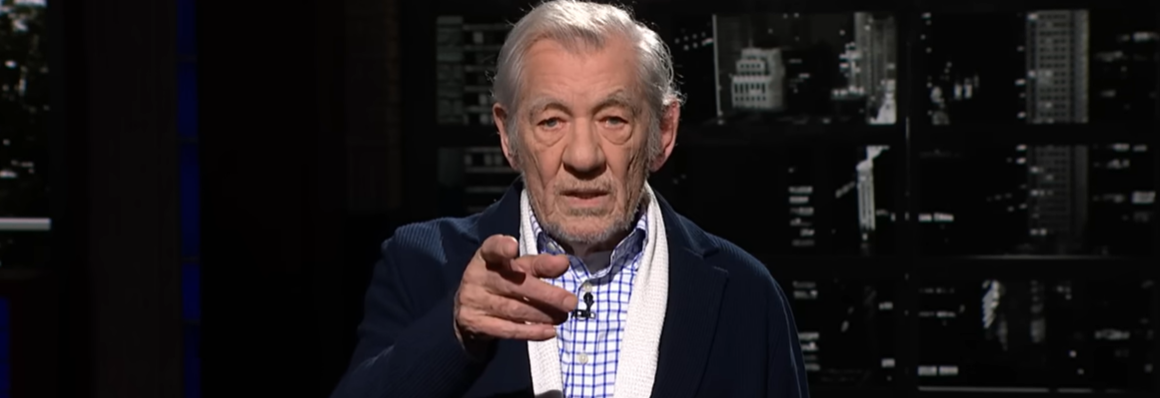
IAN MCKELLAN AS THOMAS MORE
Video transcript
20:51 Um 20:53 Shakespeare uh wrote many plays, 37 of 20:56 them by himself, but he also contributed 20:58 to other people's shows. uh and uh one 21:02 of the speeches he wrote for a play 21:04 called Thomas Moore 21:06 uh has been preserved and it's the only 21:10 sample of his actual handwriting of some 21:13 of the words of a play by him and it's 21:16 not in the Fulier Library. It's in the 21:18 British Library. You can see it. It's on 21:21 display there in London. And it happened 21:23 that the play was never performed during 21:25 Shakespeare's lifetime because it was 21:26 thought to be a bit sedicious. 21:29 It had its actual premiere on stage in 21:34 1964 was the 400th anniversary of 21:36 Shakespeare's birth and I played Thomas 21:39 Moore. So you are looking at a man 21:43 [applause] 21:45 who uh who created a part by William 21:48 Shakespeare. 21:48 So this is handwritten. They know this 21:50 is his handwriting of this monologue 21:52 that you did 21:53 of a of a speech you probably don't know 21:56 but you ought to because it's a 21:57 wonderful 21:58 I don't know that. Would you mind? Would 22:00 you mind doing it for us? 22:03 [cheering] 22:05 [applause] 22:05 No, I wouldn't. I I wouldn't mind 22:07 because you'll enjoy it. 22:11 All right. Live theater. 22:13 Yes. 22:14 What's it [cheering] what's what's 22:14 what's the setting? What's it take place 22:16 in the play? 22:17 Uh it it this it's all happening 400 22:20 years ago. Uh and in London, there's a 22:22 there's a riot happening. There's a mob 22:24 out in the streets and they're 22:26 complaining about the the presence of 22:29 strangers in London, by which they mean 22:32 the recent uh immigrants who've arrived 22:36 there. And they're shouting the odds and 22:39 complaining and saying that the 22:41 immigrants should be sent back home 22:43 wherever they came from. And uh the 22:47 authorities send out this young lawyer, 22:49 Thomas Moore, to put down the riot, 22:50 which he does in two ways. one by saying 22:54 that you can't riot like this. It's 22:56 against the law. So, shut up, be quiet. 22:59 Uh and also being by Shakespeare with an 23:01 appeal uh to their humanity. 23:05 So, in order to set it up, we really 23:07 need somebody to shout that the 23:08 strangers should be removed. Could 23:11 someone do that? 23:14 Grant them removed. 23:19 And grant that this your noise hath chid 23:22 down all the majesty of England. Imagine 23:24 that you see the wretched strangers, 23:26 their babies at their backs, with their 23:29 poor luggage, plotting to the ports and 23:31 coasts for transportation, 23:34 and that you sit as kings in your 23:36 desires, authority quite silenced by 23:38 your brawl, and you in rough of your 23:41 opinions clothed. What had you got? 23:46 I'll tell you, 23:48 you had taught how insulence and strong 23:50 hands should prevail, how order should 23:52 be quelled. 23:54 And by this pattern, not one of you 23:55 should live an aged man. For other 23:57 ruffians, as their fancies wrought with 23:59 self-same hands, self-reason, and 24:02 self-right, 24:04 would shark on you, and men like 24:06 ravenous fishes feed on one another. 24:10 You'll put down strangers, kill them. 24:16 Cut their throats, 24:19 possess their houses. 24:22 Oh, desperate as you are, wash your foul 24:24 minds with tears. 24:26 And those same hands that you, like 24:28 rebels, lift against the peace, lift up 24:30 for peace. And your unreverent knees, 24:32 make them your feet to kneel to be 24:34 forgiven. 24:37 And say now the king, 24:40 as he is clement, if the offender mourn, 24:42 should so much come too short of your 24:44 great trespasses but to banish you 24:48 with thee would you go? 24:52 What country by the nature of your error 24:54 should give you harbor? Go you to France 24:57 or Fllanders, to any German province, 25:00 Spain or Portugal, anywhere that not 25:02 adheres to England. Why? 25:07 You must needs be strangers. 25:11 Would you be pleased 25:14 to find a nation of such barbarous 25:16 temper that breaking out in hideous 25:18 violence would not afford you an abroad 25:21 on earth? 25:23 Quet their detested knives against your 25:25 throats. 25:27 spurn you like dogs, and like as if that 25:30 God owned not, nor made not you, nor 25:33 that the elements were not all 25:35 appropriate to your comforts, but 25:38 chartered unto them. 25:42 What would you think 25:44 to be thus used? 25:49 This 25:50 is the strangest case and this your 25:56 mountedness 25:57 in humanity. 26:02 William Shakespeare 400 years ago. 26:05 [cheering] 26:10 [cheering and applause] 26:12 Thank you. 26:15 Tickets [cheering] to an art are 26:16 available now in the town. Everybody, 26:19 we'll be right back with a performance 26:21 by Earth. 26:25 [music] 26:34 [music] 26:37 [cheering]
Monolog official
"Grant them removed, and grant that this your noise Hath chid down all the majesty of England; Imagine that you see the wretched strangers, Their babies at their backs with their poor luggage, Plodding to the ports and coasts for transportation, And that you sit as kings in your desires, Authority quite silenced by your brawl, And you in rough of your opinions clothed; What had you got? I'll tell you: you had taught How insolence and strong hand should prevail, How order should be quelled; and by this pattern Not one of you should live an aged man, For other ruffians, as their fancies wrought, With self same hand, self reasons, and self right, Would shark on you, and men like ravenous fishes Would feed on one another. O, desperate as you are, Wash your foul minds with tears, and those same hands, That you like rebels lift against the peace, Lift up for peace, and your unreverent knees, Make them your feet to kneel to be forgiven! You'll put down strangers, Kill them, cut their throats, possess their houses, And lead the majesty of law in liom, To slip him like a hound. Say now the king (As he is clement, if th' offender mourn) Should so much come to short of your great trespass As but to banish you, whether would you go? What country, by the nature of your error, Should give you harbor? go you to France or Flanders, To any German province, to Spain or Portugal, Nay, any where that not adheres to England,— Why, you must needs be strangers: Would you be pleased To find a nation of such barbarous temper, That, breaking out in hideous violence, Would not afford you an abode on earth, Whet their detested knives against your throats, Spurn you like dogs, and like as if that God Owed not nor made not you, nor that the claimants Were not all appropriate to your comforts, But chartered unto them, what would you think To be thus used? this is the strangers case; And this your mountainish inhumanity."
referral
https://www.out.com/gay-tv-shows/sir-ian-mckellen-shakespeare-stephen-colbert#rebelltitem3
BACKGROUND
Thomas More wasn't recorded as being staged during shakespeares life. The earliest recordings of it being staged are as follows.
1922 a three-night student production by the Birkbeck College, University of London, in December 1938 40 students at the King's School, Canterbury, 4–6 November , with P. D. V. Strallen in the title role. 1954 22–29 June at the London Theatre Centre for the Advance Players Association. It was first performed in Elizabethan costumes and then in modern dress, with Michael Beint as More 1964 McKellen also played the role at the Nottingham Playhouse 10 June–4 July
Shakespeare's only surviving playscript now online The Booke of Sir Thomas Moore does not immediately spring to mind as among Shakespeare's masterpieces. So what do we know about it? 8 July 2020 Blog series Medieval manuscripts blog Author Julian Harrison, British Library The Booke of Sir Thomas Moore does not immediately spring to mind as among Shakespeare's masterpieces. This late 16th or early 17th-century play is not always included among the Shakespearean canon, and it was not until the 1800s that it was even associated with the Bard of Avon. So what is the connection with William Shakespeare, the author of the more distinguished Hamlet, Macbeth and Romeo and Juliet? A page of The Booke of Sir Thomas Moore, arguably in Shakespeare's handwriting In 1871, William Shakespeare's handwriting was identified on this page of The Booke of Sir Thomas Moore: Harley MS 7368, f. 9r. A clue is presented by the handwriting of the surviving manuscript (Harley MS 7368). There are 22 leaves in question, 13 of which are original, 7 are inserted leaves, and 2 are pasted slips. What is immediately apparent is that Thomas Moore was the work of several dramatists. The primary hand is that of Anthony Munday (d. 1633), and he was possibly assisted by the printer, Henry Chettle (d. 1603–07), with further contributions by Thomas Dekker (d. 1632), and perhaps by Thomas Heywood (d. 1641). The handwriting of yet another scribe in the manuscript, known by scholars as the unspectacularly named 'Hand D', is possibly none other than Shakespeare himself. Finally, the manuscript is known to have been censored in turn by Edmund Tilney (d. 1610), Master of the Revels. The division of the handwriting can be set out as follows. 'Hand D' (probably Shakespeare) contributed an addition on ff. 8r–9v, supplying lines 1–165 of Scene 6. ‘Hand S’: Anthony Munday ‘Hand A’: probably Henry Chettle ‘Hand B’: probably Thomas Heywood ‘Hand C’: an unidentified professional scribe ‘Hand D’: probably William Shakespeare ‘Hand E’: probably Thomas Dekker It was not at all unusual for early modern dramatists to collaborate in this way. William Shakespeare is known to have written in partnership with John Fletcher (d. 1625) and others, and it would have been logical for Munday to have turned to his fellow playwrights to advise and assist him when revising his play about Sir Thomas More (1478–1535), the early Tudor Lord Chancellor, humanist and martyr. What is exceptional here, of course, is that Harley MS 7368 is the only identifiable example of Shakespeare's contribution to a playscript surviving in manuscript. None of his other plays have been transmitted to us in this way. What is more, in these pages we can perhaps see the master playwright at work, musing, composing and correcting his text: a window into Shakespeare's dramatic art, as it were. Text on brown paper. Harley MS 7368, f. 8v.jpg Another page from Shakespeare's probable contribution to The Booke of Sir Thomas Moore: Harley MS 7368, f. 8v. Harley MS 7368, f. 8v.jpg There is a remarkable sub-text to William Shakespeare's contribution to Thomas Moore. Andrew Dickson, in an article ('Wretched Strangers') for the British Library's Discovering Literature site, has noted how William Shakespeare was presumably called upon by Munday to write the most emotional passage in the play, known as the 'insurrection scene'. Drawing upon events in 1517, when rioting Londoners demanded that immigrants be expelled from England, Shakespeare portrayed Sir Thomas More, as mayor of London, pleading with the crowd to accept the asylum seekers. Imagine that you see the wretched strangers, Their babies at their backs, with their poor luggage, Plodding to th’ ports and coasts for transportation, And that you sit as kings in your desires, Authority quite silenced by your brawl ... This was all the more remarkable when one realises that similar xenophobic riots had occurred in London in the 1590s and 1600s. Was Shakespeare making a case in The Book of Thomas Moore for racial tolerance? By putting words into Thomas More's mouth, was he making a barbed attack upon the prejudice of his own day? The Book of Thomas Moore was probably never performed in the time of its authors. The Elizabethan censor, Edmund Tilney, took serious dislike to the playscript, and it seems to have been banned from public performance. The manuscript instead passed into the Harley library and was then sold to the British nation in 1753; it might have remained in oblivion were it not that Shakespeare's style, and hence his own handwriting, was first recognised in the 'insurrection scene' in 1871.
referral
https://www.bl.uk/stories/blogs/posts/shakespeares-only-surviving-playscript
Photos of shaekspeare's script, aka don't give your child guff about their handwriting again
MORE ABOUT THE PLAY
Referral
https://en.wikipedia.org/wiki/Sir_Thomas_More_(play)
RMCommunityCalendar 0 Comments · 0 Reviews
05 February 2027
This event began 02/05/2026 and repeats every year forever
RMCommunityCalendar 0 Comments · 0 Reviews