 Bookshop
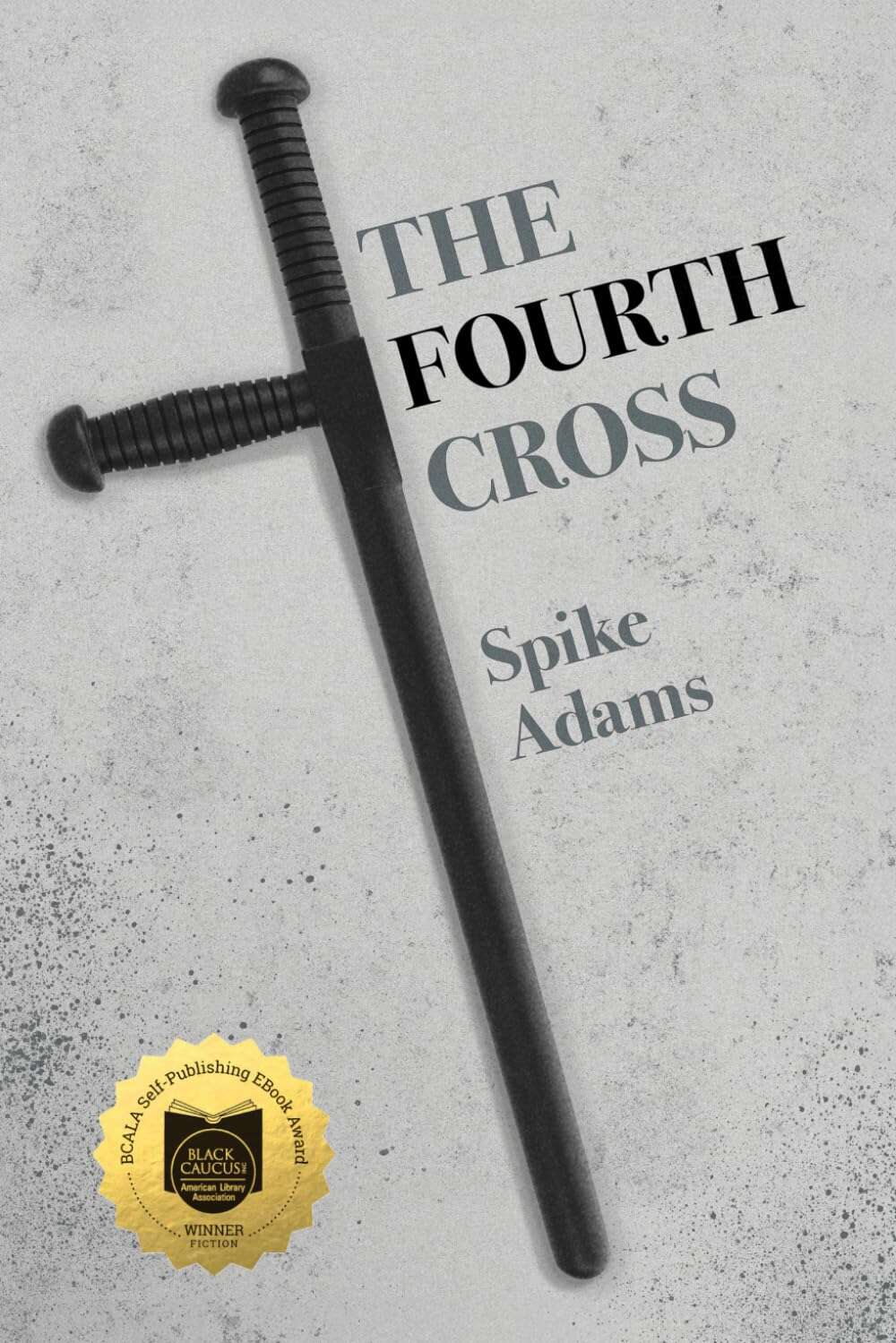
In the winner-take-all age of Trump, many writers and artists are frustrated by the political and cultural consequences of a fading American empire. With this in mind, author Spike Adams’s debut novel, The Fourth Cross, chronicles the evolution of racial prejudice from the brutal restrictions of Jim Crow to the present trends of a white supremacy regime crippling Washington. Unlike many standard courtroom yarns by Scott Turow and John Grisham, Adams’s plot stirs the heart by presenting to the reader attorneys and judges, as well as overworked public defenders, as people who believe every person deserves equal rights and treatment regardless of race, gender, and economic status.
Adams, a retired Colorado judge and trial attorney, had an exceptional legal career in the Public Defender’s Office representing several felony cases before entering private practice. He totally knows the judicial universe and drew from his experiences to write his novel. The author stresses an essential point of the plot by following many Black and Latino teens who once in the system start from a juvenile case and later switch to an adult center.
When seventeen-year-old Tyrene Horn is charged with assault on the bullying son of a racist cop, his mother, Patricia, gets déjà vu as she recalls her arrest for slashing her abusive husband. In fact, the cast and the methods of a warped social justice system are similar, even down to the prejudiced officers. Patricia Horn spent nine months in jail awaiting her day in court. For this narrative, former Judge Adams understands how the court works. With rich characterization, Adams puts several truths in Patricia’s mouth as she questions the facts the police think they have and the evidence they choose to believe. She adds it’s not about the police finding the truth, but getting a conviction instead.
Although the experiences with Patricia and her son in the judicial system are center stage, it is the culturally twisted notions of fair play and legal freedoms that tarnish all who come within its grasp. The author isolates one of the critical roles, that of the corrupt, bigoted cop. “We let your kind into our schools to get an education,” says Officer Quisling, a flatfoot with a history of dealing with the Horns. “You disrupt our classrooms, bring down the neighborhood, and attack our students…You niggers ain’t nothing but animals. Your boy won’t have a prayer in court. I’ll make sure of that.”
Reading this novel, there are some harrowing truths in ripping the scab off this open wound that are immediately memorable, specific, and real. The judge says money talks as the few white violators possess well-dressed elite attorneys and the majority Black offenders have very little representation. This hyper-sense of realism, supported by excellent narrative clout, places the reader in the courtroom right behind the lawyers and defendants and get hooked into the court trappings.
In court, there is no umpire. Adams pits the cruel, vulgar veteran police officer against the biased father of the attacked son, who is determined to smash Tyrene’s life. He gets support from another officer, whose white supremacist views are well known. It seems like everything is against the slim Black boy. There is also the chief prosecutor, who has a personal vendetta against Tyrene’s defense attorney. A powerful white man is not beyond rigging the case as an opportunity for retribution. The goal is to have the teenager tried as an adult and give the maximum sentence. Adams displays the deals and compromises of managing cases when some DA officials recognize the bumbling police probe and weigh the possibility of dropping the assault case.
In one of the book’s closing chapters, the Reverend Gabriel Davis, who offers much needed comfort to a shattered community, sums up the major roadblocks to legal opportunity and justice; “I understand white weakness. White supremacy is like the sirens’ call in the legend of Ulysses. Few can resist. Few can understand it because it offers privilege, advantage, and power.”
For the most part, the history of this country and our legal system are showcased here, with racism and prejudice viewed from all sides. Adams’s novel features effective writing, a dramatic storyline, and protest prose at its best. While The Fourth Cross earned the 2026 Black Caucus ALA Literary Award for Fiction, readers will enjoy the battle royal in the court, the lie that endures in time, and the unexpected miracle.