Books Selected for Oprah’s Book Club
Oprah’s Book Club 2.0 launched in June of 2012 and is a joint venture between Oprah Winfrey, OWN, and O: The Oprah Magazine. Below are the authors of African descent selected for the club in 2020.
2 Selections found for 2020
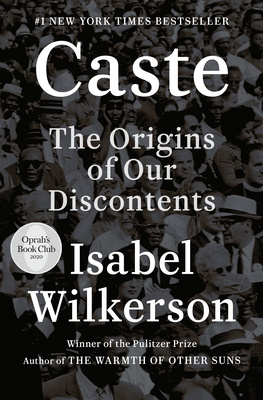
Caste: The Origins of Our Discontents
Buy from AALBC
- Support an Independent Home for Black Books
- Free shipping on orders over $75
- Book club and bulk-order discounts
- Buy the Libro Audiobook
- Borrow from Library
Other Online Retailers
More Book Details
Nonfiction, Hardcover, 496 pages
Publisher: Penguin Random House
ISBN: 9780593230251
The Pulitzer Prize-winning, bestselling author of The Warmth of Other Suns examines the unspoken caste system that has shaped America and shows how our lives today are still defined by a hierarchy of human divisions. "[Caste] should be at the top of every American s reading list." Chicago Tribune "As we go about our daily lives, caste is the wordless usher in a darkened theater, flashlight cast down in the aisles, guiding us to our assigned seats for a performance. The hierarchy of caste is not about feelings or morality. It is about power which groups have it and which do not." In this brilliant book, Isabel Wilkerson gives us a masterful portrait of an unseen phenomenon in America as she explores, through an immersive, deeply researched narrative and stories about real people, how America today and throughout its history has been shaped by a hidden caste system, a rigid hierarchy of human rankings. Beyond race, class, or other factors, there is a powerful caste system that influences people s lives and behavior and the nation s fate. Linking the caste systems of America, India, and Nazi Germany, Wilkerson explores eight pillars that underlie caste systems across civilizations, including divine will, bloodlines, stigma, and more. Using riveting stories about people including Martin Luther King, Jr., baseball s Satchel Paige, a single father and his toddler son, Wilkerson herself, and many others she shows the ways that the insidious undertow of caste is experienced every day. She documents how the Nazis studied the racial systems in America to plan their out-cast of the Jews; she discusses why the cruel logic of caste requires that there be a bottom rung for those in the middle to measure themselves against; she writes about the surprising health costs of caste, in depression and life expectancy, and the effects of this hierarchy on our culture and politics. Finally, she points forward to ways America can move beyond the artificial and destructive separations of human divisions, toward hope in our common humanity. Beautifully written, original, and revealing, Caste: The Origins of Our Discontents is an eye-opening story of people and history, and a reexamination of what lies under the surface of ordinary lives and of American life today.
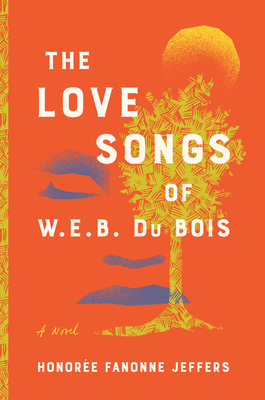
The Love Songs of W.E.B. Du Bois
Buy from AALBC
- Support an Independent Home for Black Books
- Free shipping on orders over $75
- Book club and bulk-order discounts
- Borrow from Library
Other Online Retailers
More Book Details
Fiction, Hardcover, 816 pages
Publisher: HarperCollins
ISBN: 9780062942937
I was so enraptured by the story of this modern Black family, and how author Honorée Fanonne Jeffers wove the larger fabric of historical trauma through the family s silence through generations Oprah Winfrey, Announcing The Love Songs of W.E.B. Du Bois as the Next Oprah s Book Club Selection
The Love Songs of W.E.B. Du Bois, the ambitious and uncompromising debut novel from National Book Award-nominated poet Honorée Fanonne Jeffers, takes readers into the intimate lives of Black and Indigenous women who have fought racism and sexism to weave their experiences into America s larger tapestry. Fashioning a microcosm of our fraught national history, Jeffers crafts a complex narrative of forced accommodation, courageous resistance, and resilience, as she deftly chronicles the journey of one American family through centuries from the white appropriation of native lands to the African slave trade, from the Civil War to the Civil Rights Movement and beyond. Jeffers frames her wholly original narrative with Sorrow Songs a term borrowed from W.E.B. Dubois: ancestral memories that unfold as beautifully-rendered, almost mythic tales.
The novel centers on Ailey Pearl Garfield as she pushes against the expectations of her African American middle-class upbringing. On the path to fulfilling her family s wish for her to become a doctor, Ailey attends an historically Black college in Georgia, not far from the rural homestead where her ancestors were once enslaved. Ailey straddles the present and the past as she reconnects with this side of her heritage, whose traditions clash with those of her imperious, light-skinned paternal grandmother, to whom skin tone is paramount. As Ailey struggles to learn who she is and what she wants, she must reckon with the complicated racial history that has shaped her family, uncovering buried truths about her ancestors both invigorating and difficult.
In creating this world, Jeffers has drawn on stories from her own family. Remembering childhood summers spent in Georgia with her grandmother, she recalls, I wasn t a child who played well with others. I preferred to sit still in corners and eavesdrop on elder relatives. I first learned of slavery and lynching, and the difficult history of this country not from books, but from eavesdropping on old, Black folks. After I became a creative writing major, I kept returning to the ancestral land of my mother and grandmother, and I began writing about a southern, Black family that had survived the horrors of historical racism and white supremacy.
Advertisement