
RMCommunityCalendar
Events happening today
-
ALL
DAY
15 February 2027
This event began 02/15/2025 and repeats every year forever
Economic Corner - what is the truth of investment in the sport industry in the usa?
Key points
One hundred and fifty million is the most recent value of starting a WNBA franchise , fifty million initially and then one hundred million through promised infrastructure plans.
The WNBA franchise in Chicago was started for five million dollars, in Oprah Winfrey's beloved town, by a white man who had less money than Oprah, and was absent any promises of future investment.
No major league, major league defined as a team determined the primary athletic tier, from the NFL to the National Women's Hockey League has a black owner. For example, baseball has a black owner in the minor leagues of baseball.
Opportunities to invest in the sporting world in the usa and become the owner to a franchise exist that are affordable. The Black populace in the usa through individuals or group of individuals have the annual revenue or saved wealth to make the investments.
Now some restrictions, most sport organizations in the usa, demand owners be single individuals. There are cases of ownership groups but they are not common. Sometimes investment firms or corporations are allowed to own a team, like RedBull owns RedBull NY but the process of a large set of individuals to become a corporation and then to own a team is a longer process time wise, and in that time will challenge the devotion of the members.
So based on womens sport leagues financial growth, black individuals of the highest financial caste have already missed out on financial growth of circa ninety six percent. That is financial failure.
*
Why aren't the Black wealthy, the black one percent, investing in sport to become owners of franchises in the usa?
What is the truth of investment in the sport industry in the usa?
*
If an opportunity to invest to become an owner exist, if you have the money to make the investment safely, then the question is why don't you ?
Only five answers exist, and I will list them first.
They aren't investing because:
1.they don't know the opportunity exist
2.they know the opportunity exist and want to but can't do it alone
3.they know the opportunity exist and want to but can't get a group
4.they know the opportunity exist and don't want to because they are interested in investing in other fields
5.they know the opportunity exist and don't want to because they are interested in investing in the sporting field but want a safer investment
*
All are possible.
1.I know of blacks who don't like sports for various reasons so I can believe some don't know , they have such a dislike of sport that the thought is away from them.
2.Five million is a lot of money and the average Black millionaire in the usa can't risk five million dollars. so I can see many can't do it alone. And adding the modern heritage, a lack of communalism in the black populace in the usa, reaching out to a financially wealthy black stranger does not seem common.
4. I know of a black former nba player who owns a tech firm another who owns a car dealership network. So, just because a black person is involved in sport doesn't mean they want to invest in sport and that is fine. Again, it is called free market capitalism for a reason. It isn't slave market capitalism. You are free to invest how or where you want, that is the point.
5. I don't have private financial data to the black wealthy, one million or more saved or earned, in the usa. But, from white owned media, most black sports investment is as shareholders, not majority owners. So based on advertising, most black wealthy seem convinced in safer bets in the sporting world. I will rephrase, black wealthy like hedging their bets where white wealthy can cover for them. The positive angle is Lebron James for example. He invested in one percent of Liverpool football club. Now, the investment group from boston that owns the red sox and bought Liverpool is looking to sell. Upon the sale, Lebron can cash in and earn more than he put in or keep it in and ride the growth for longer. I can think of many shareholder investments in sport by the Black wealthy. Looking to sell is a common tactic in modern sport, buy and wait for a few years and then sell where you cash in or keep your money in and have it grow. After a sale to some buyer somewhere for more money who has a similar plan, to sell after a set of years, or isn't looking to sell and has a non financial agenda. I have seen this with some WNBA teams with ownership groups who never want to sell the club , just want it is a long term investment to leave to the next generation it seems. The negative angle is the preaching from black millionaires or better to the black financial poor or common in the usa concerning becoming investors when black millionaires or better are not willing to invest? If Black financial speakers don't complain about black wealthy evading ownership and becoming shareholders, then said black financial speakers need to not speak on black poor or non wealthy not willing to risk their pennies. The bigger issue is, if you don't own , you don't control. Minority investment, minority shareholding , is a great way to make money off of others risk but a terrible way to control things, cause you can't control any firm unless you are a majority shareholder or owner.
3. you may have noticed I put this last. The one thing I rarely hear, i did hear about Tony Parker with a set of other athletes investing as a group into Olympique Lyonnais, is group investments in sport.
I remember when Isiah Thomas owned the remade CBA, and I wondered who else invested with him. I never found out but I do wonder about many black wealthy people and their collaborative abilities with other blacks. I can believe Oprah Winfrey can't make a group to easily cause it is public knowledge she has many who don't like her in the black one percent. But it is clear the Black one percent need more internal interlinking.
URL
https://www.thestar.com/business/edward-rogers-argued-against-a-toronto-wnba-franchise-but-tanenbaum-went-ahead-and-got-one/article_dde69db8-1dea-11ef-8828-3fa01376cfbd.html
Edward Rogers argued against a Toronto WNBA franchise — but Tanenbaum went ahead and got one. Who was right?
Fifteen years after being denied a Toronto women’s team by the NBA, economic experts say Kilmer Sports Ventures’ $50 million purchase of a WNBA franchise will likely be a slam dunk.
Updated Dec. 12, 2024 at 1:47 p.m.
May 31, 2024
By Josh RubinBusiness Reporter
What did Larry Tanenbaum see in a WNBA franchise that Edward Rogers didn’t?
Plenty, say sports business experts and women’s sports advocates, who argue the franchise granted to the Toronto businessman and sports industry investor will be a big success — at least off the court.
“I think it’s going to be a success. I think the franchise is going to be worth $100 million, $150 million in the next few years, pick a number,” said long-time sports industry executive Richard Peddie.
Tanenbaum, through his firm Kilmer Sports Ventures, was recently awarded an expansion franchise in the premier women’s pro basketball league in exchange for a franchise fee of $50 million (U.S.). As part of the deal with the league, Kilmer also agreed to other financial commitments — including renovations and building a practice facility — which a league source says brings the total value of the deal to $150 million (U.S.).
More than fifteen years ago, when he was CEO of Maple Leaf Sports & Entertainment, Peddie was a big proponent of the organization’s push to get a WNBA franchise. He and Tanenbaum — who still owns a chunk of MLSE — were shot down by then-NBA commissioner David Stern.
Tanenbaum, said Peddie, never really gave up his hope of a team. That vision clearly wasn’t shared by Edward Rogers and Tony Staffieri, the chair and CEO, respectively of Rogers Communications, one of MLSE’s parent companies, along with BCE Inc. and Kilmer.
As reported by the Star, Rogers and Staffieri argued against MLSE bidding for a WNBA team, despite an internal MLSE business case which projected the team would eventually become profitable.
Expansion franchises in any league can have a shaky few years when they start. But there’s already ample precedent in Toronto for a new team proving to be a good investment, said Peddie.
“You think about Toronto FC. There were people who thought us buying Toronto FC for $10 million was crazy, was the stupidest idea going. Now, some people would say it’s worth $700 million. That’s where Larry’s coming from,” said Peddie. “When we bought Toronto FC, we weren’t projecting it to make any money right off the bat. But we were amazingly profitable in the first couple of years.”
Victor Matheson, a professor of economics at College of the Holy Cross in Massachusetts who specializes in the economic impact of the sports industry, says there are plenty of reasons to expect Toronto’s WNBA team will be a financial success, including the precedent set by the NBA’s Raptors.
“Toronto certainly has a chance to be a good market for the WNBA. The reason we know this is that obviously it’s been a great market for the NBA — a lot of success with the Raptors,” said Matheson, who added that Toronto also has a track record of supporting high-level women’s sports. “The Canadian women’s soccer team has done fantastically. And there was just a spectacular inaugural season in the PWHL.”
So why wouldn’t those factors be obvious to other potential investors in addition to Tanenbaum? A failure of imagination, said Matheson.
“I think what a lot of owners and broadcasters have lacked is the imagination to realize what a hit women’s sports can be,” said Matheson. “They say ‘well, why should we even try to ask for a lot of money for TV rights, or why should even think about paying a bunch of money for TV rights. I can’t imagine anyone going and watching these games,’ so they don’t even try.”
Having the star power of rookie Indiana Fever point guard Caitlin Clark in the WNBA is helping everyone from sponsors, teams and the league itself get that spark of imagination, Matheson said. The season-opening game of the WNBA’s Connecticut Sun against Clark’s Fever was a sellout, with more than 9,000 fans, the team’s highest attendance in 20 years.
“They weren’t just paying the $10-$15 WNBA price, but scalping tickets for $50 or $100 apiece. As soon as people see things like that, they can start to imagine that ‘hey, this is something that really could work,’” said Matheson.
The fact that big-time sports investment has traditionally been male-dominated has also played a role in the failure of imagination, says Allison Sandmeyer- Graves, CEO of Canadian Women and Sport, an advocacy organization.
“It’s a safe bet that was a factor,” said Sandmeyer-Graves. “When you start from a place of not respecting women’s sports, it’s really hard to see the value in it.”
Recent surveys done for CWS, said Sandmeyer-Graves, give plenty of cause for optimism that Toronto’s as-yet unnamed team will be a financial success. Sandmeyer-Graves pointed to results which found that 17 million Canadians called themselves fans of women’s sports. And the gender breakdown wasn’t what some people might have assumed.
“What was really cool in the research we just released was to see actually, fans of women’s sports are almost 50-50 men and women, and it’s even a little bit higher for men,” said Sandmeyer-Graves.
And, she added, the surveys were done before the inaugural season of the Professional Women’s Hockey League, which has a franchise in Toronto.
“So it’s not just the novelty of the first season of this new league, said Sandmeyer-Graves. “There’s latent demand in Canada for women’s sports that hasn’t been fully met.”
Still, there will inevitably be bumps in the road, just like there are with any start-up franchise. Detractors, she argued, won’t be playing fair if they use those bumps to try and shoot down the team’s long-term prospects.
“I think we need to give this team the same grace and patience that we have given to other teams in the past. So often, when it’s not a success straight out of the gate, it’s seen as just more evidence that women’s sports just aren’t successful,” said Sandmeyer-Graves, adding that Tanenbaum seems like a patient investor who’s in it for the long haul.
“I’m not saying MLSE wouldn’t have been the right fit, but clearly, they didn’t feel like they were the right fit. … Where it goes in five years, we’ll see. But it seems like they’re starting off on the right foot.”
Josh Rubin is a Toronto-based business reporter. Follow him on Twitter: @starbeer.
Prior Economic Corner: https://aalbc.com/tc/topic/11475-economiccorner012/
IN AMENDMENT
What is annual average cost [players/stadium/staff/utilities] of the least costly to operate professional, meaning paid athlete, sport team in the city you live in?
The following is content in normal weight font unverified . I did a general search, "average yearly cost of LEAGUE NAME team"
New York City has all the major leagues and many minor.
The cheapest team is a Premier Women's Hockey Alliance or Roller Derby, the womens football alliance team in nyc folded. Now, white people say Washington DC/Atlanta/Charlotte are the three cities with the most black millionaires. Jackson Missisippi is the only city in the usa with over eighty percent black population. But NYC has a larger population of black people than any city in the usa by a distance. So the question is are any of the sports franchises with the lowest annual cost cheap enough for a black multimillionaire in new york city to risk? i argue yes, but to each their own.
WNBA
The average yearly cost of an WNBA team is estimated to be around $13.2 million1. The average team is worth an estimated $96 million
Premiere Lacross Leauge
The average yearly cost of a Premier Lacrosse League team is estimated to be around $10 million1. The revenue per employee for Premier Lacrosse League is $203.2K2. The company operates in the Spectator Sports industry3.
Premier Womens Hockey League
The average yearly cost of a PWHL team is around $56,500 USD2. The league requires each team to average between $45,900 and $60,500 per contract in lieu of a salary cap1. The minimum salary for PWHL players is currently $35,000
USL League 2 team
The average yearly cost of owning and running a USL League 2 team ranges from $600K to $1M2. The initial franchise fee to buy into a USL 2 franchise is $75,000, which can be split into payments of ~$25K each year for three years3. Expansion fees in the USL Championship are $12 million in 20205.
Womens Football Alliance- the gridiron
The average yearly cost of a Women's Football Alliance (WFA) team is estimated to be around $20,0001. This budget covers expenses such as field rental, equipment, uniforms, videography, web hosting, and some travel. If teams participate in the playoffs, the cost can be higher2.
Frontier league baseball team
The average yearly cost of a Frontier League baseball team is around $75,000, with a salary cap of $72,000 per team125. Most players earn between $1,000 and $2,000 a month during the summer2. The highest paid players can earn up to $4,000 a month2.
Major league cricket
The average yearly cost of a Major League Cricket (MLC) team is estimated to be slightly above $1.1 million2. The salary cap per team is $1,150,000, of which $320,000 is spent on American players
Overwatch league
The average yearly cost of an Overwatch League team is approximately $1 million14. Team owners bought into the Overwatch League for $20 million per slot ahead of its launch in 20183. The average annual pay for an Overwatch League player in the United States is $121,7652.
Roller Derby
Travel costs: Gotham Girls Roller Derby $58,260 Gotham paid out 23,051 in 2011. Not sure where you got the other number from.
Websites that state cities with the large numbers of black millionaires
https://propertyclub.nyc/article/richest-black-neighborhoods-in-america#:~:text=Washington D.C. has the most Black millionaires in,of government and military jobs in the area.
https://blackelites.com/top-cities-in-the-u-s-with-the-highest-number-of-black-millionaires/
Why Black Millionaires aren't investing in sport
POST URL
https://aalbc.com/tc/topic/11479-economiccorner013/
PRIOR EDITION
https://aalbc.com/tc/events/event/193-economic-corner-12-02122025/
NEXT EDITION
https://aalbc.com/tc/events/event/195-economic-corner-14-02152025/
02152026
New Sports Leagues started in 2025
Article
10 Of The Top Emerging Sports Leagues To Keep An Eye On In 2025 The convergence of sports, media, and technology has created a lot of opportunities. As a result, several new leagues are popping up across the world. In the past 10 years, there have been over 20 leagues started in over 15 sports. While this is great for underrepresented fans and sports, the unfortunate truth is that most of them won’t survive long-term. Here are 10 leagues we believe have a good chance and why: Unrivaled Basketball Co-founded by WNBA stars Napheesa Collier and Breanna Stewart, Unrivaled Basketball is a new 3v3 women’s professional basketball league that is set to launch in January 2025. With the recent boom in women’s basketball, the league has already generated a ton of social impressions and engagement plus they’ve already surpassed projected financial targets. With a strong leadership team and a superstar lineup of players, this league has the foundation to last a long time. TMRW Sports Golf has been booming since the pandemic and the anticipation for TMRW Sports is as high as it’s ever been. Founded by Mike McCarley, Tiger Woods, and Rory McIlroy, TMRW Sports aims to create new ways to connect sports fans with technology and culture. The league is already valued at $500M and has a strong cap table. This plus their unique approach to a sport growing in popularity is a recipe for success. Pro League Network If there is one thing fans like doing, it’s betting and Pro League Network is building out the perfect ecosystem for it. Pro League Network owns, produces, monetizes, and distributes several super-niche sports including: SlapFIGHT CarJitsu Tyre Wrestling STR33T If they can continue to generate unique, entertaining ideas and content, they’ll be around for a while. League One Volleyball League One Volleyball (LOVB) was founded in 2020 by Katlyn Gao, Peter Hirschmann, and Olympian Kevin Wong as a network of youth volleyball clubs across the US. In September 2022, they raised $16.75M in a Series A funding round, headlined by Billie Jean King and Kevin Durant. A year later, the company raised $35M in a Series B round led by Lindsey Vonn, Jayson Tatum, and Candace Parker. Pro volleyball has never seen a league like this before yet the sport is growing in popularity amongst young women and has a ton of athlete star power backing it. Major League Pickleball Pickleball is all the rave these days. One of the fastest-growing sports in the US is headlined by a well-put-together league in Major League Pickleball (MLP) that has only been in existence since 2021. The league has 24 co-ed teams that are backed by some of the best athletes, entertainers, and businesspeople in the world. Given that pickleball appeals to the masses, has an easy learning curve, and is not too taxing on the body, we’re willing to bet that the MLP will be growing like crazy over the next couple of years. United Soccer League Soccer is the most popular sport in the world, but has yet to take off in the US. The United Soccer League (USL) is one of the leagues that will help change that for both men and women. Founded in 1986, the United Soccer League is the largest and fastest-growing pre-professional and professional soccer organization in the country. It has seven divisions with over 150 teams and is growing YoY. With the World Cup coming in 2026, the USL is one league that is without a doubt going to boom. Drone Racing League I know what you’re thinking. Drone racing? But get this… There is a reason that Infinite Reality bought the Drone Racing League for $250M. Founded in 2015, DRL claims to reach more than one billion annual digital video views and a global broadcast footprint of 320 million households through top sports networks and streaming distribution agreements. The league also previously received investments from notable sports, media, and technology entities, including: RSE Ventures Liberty Media Exor ISOS Capital WWE T-Mobile Ventures CAA Ventures Lux Capital Lerer Hippeau Courtside Ventures Sky Hearst Ventures Immersive experiences are just getting started and DRL is well positioned to be a leader in this category. The Professional Women’s Hockey League The Professional Women’s Hockey League (PWHL) was only founded a little over a year ago but already has hundreds of thousands of followers across Twitter, Instagram, TikTok, and YouTube. Right after the league’s inaugural year ended, there was talk of adding 2 expansion teams for the 2025-26 season. The league already has great traction in Canada, where hockey is most popular, but we wouldn’t be surprised if we start to see that success trickle down to North America as well. Kings League In just a year since its inception, the Kings League recorded higher viewership than La Liga and the Premier League on TikTok, making it the most-watched football league on the platform. The league, which is a seven-a-side soccer league, was founded by legendary soccer star Gerard Pique who had a vision of leveraging content creators and their audience to create a unique fan experience for soccer. Content creator-led leagues are interesting because there is already a built-in audience and distribution which is half the battle. If you can get and sustain attention in sports, you’re well on your way to building a successful league. Grand Slam Track Michael Johnson is one of the greatest track stars of all time. But his legacy will likely be tied to his next venture Grand Slam Track. The brand new league will host four annual Slams in 2025 and has a total of $12.6M prize money across the events. Olympic track athletes are widely known for not making a ton of money despite their popularity and appeal. This model flips track and field on its head by bringing together the world’s fastest athletes for a chance to win big bucks. Given that sprinting is one of the oldest, most beloved sports globally, Grand Slam Track could be onto something.
U.R.L.
https://blog.vettedsports.com/10-of-the-top-emerging-sports-leagues-to-keep-an-eye-on-in-2025/
https://www.unrivaled.basketball/
https://www.tmrwsportsgroup.com/
https://www.thepwhl.com/en/
https://kingsleague.pro/en/americas
https://www.grandslamtrack.com/
RMCommunityCalendar 0 Comments · 0 Reviews
15 February 2027
This event began 02/15/2025 and repeats every year forever
Economic Corner 14 - the black farmer of the usa
MY THOUGHTS
In 1920 , white records have 925,708 Black Farmers, this doesn't include Black people still share cropping or farming through prison labor. Remember Alice [ https://aalbc.com/tc/profile/6477-richardmurray/?status=1830&type=status ; https://aalbc.com/tc/profile/6477-richardmurray/?status=1925&type=status ] How many Black people were actually farming in 1920 that did not own their own land, but were entrapped in legal while criminal situations?
By 2017 the recorded number of Black Farmers in the USA is 48,697. That is 5.260514114602013%
Ten percent of 925,708 is 92,570.8 so it is clear the numbers are not false. As the brother in the video said, when the war between the states ended the biggest problem is black people in the usa had no where to go[no lands whites havent been to], no revenue or products to get there[no wealthy blacks that could invest in some long journey like white jews later], and had no government willing to ship them[ala the English government that shipped tons of undesirables to the place they called the new world]
So, Black people in the usa at the end of the war between the states had to live side their slavers... former slavers, now just abusers. It is illegal to enslave, but it isn't illegal to hinder or harm or stall or restrict as long as no shackles are involved or no evidence of physical harm can be found or will be found by the legal authorities who just happen to be nonblack.
But,the Black Farmers need two things primarily. They need more but I will speak to immediacy. 1) they need financial support 2)They need a venue they have access to alone.
The numbers are clear, white power, white violence, attacked the black farming industry, from the end of the war between the states to today and the local/county/state governments of the south where DOS farms are, were and are completely complicit in the attacks, whether legal or not.
I could had argued Black Farmers need protection but here is the problem for the Black Farmer, specifically the Black DOS farmer. The federal government is the only aspect of government in the usa that is willing to help and that is only because of federal rules, the states/county/local governments are all against them. And you can't move a farm.
so even though I say money+an excusive market is needed, neither will keep Black Farms from being attacked.
Going aside other Economic Corners, Black Farmers could be given exclusive rights to producing the foods for the eateries in a black owned sports league or set of teams. but first the teams will have to be owned and they will have to be privately owned. I am 100% certain a publicly traded firm or a firm that earns government funds will be sued if it uses food exclusively from Black Farmers, simply because the history of white farmers is to lawsuit any gain by black farmers.
I saw the video below and a black farmer said he needed $20,000... where are the black one percent ? $20,000 is not some mountain of money for 2025 Black One Percent. Beyonce/Lebron/Oprah earn far more than $20,000 a day right?
So, the Black Farmers have been crying out for help since 1865, where are the Black One Percent to help them?
VIDEO
ARTICLE
Black farmers fight to keep their land, cultivate next generation
“It’s about fairness,” John Boyd Jr., a farmer and fierce advocate, said.
ByMonica DelaRosa, Alison Lynn, and Anthony Rivas
June 18, 2021, 10:47 AM
John Boyd Jr., a fourth-generation farmer, grew up close to his 1,000-acre farm in southern Virginia where he now grows soybeans, wheat and livestock.
Boyd, of Baskerville, Virginia, is also the founder of the non-profit National Black Farmers Association, which educates and advocates for Black farmers’ civil rights, land retention and access to public and private loans, among other initiatives.
Boyd and his father farmed together for 30 years and his grandparents were sharecroppers after the abolition of slavery in 1865.
“I know there were slaves and sharecroppers that helped build these barns here,” Boyd told ABC News. “You can see the logs were hand-carved by wooden axes. … Just looking at that reminds me of history, where I came from and where we have to go in this country.”
As part of his efforts with the NBFA, Boyd has worked to attract more Black people who are interested in farming, as well as to protect their rights and their land, even riding a mule-drawn wagon and driving a tractor to Washington, D.C., to lobby Congress.
“The most powerful tool you can possess, only secondary to Jesus Christ, is land ownership,” he said.
To be a farmer in the U.S. is to be part of an aging but crucial industry. Black farmers, especially, have seen their numbers plummet from nearly 1 million at the turn of the 20th century to only about 50,000 today, according to the U.S. Department of Agriculture. While the reasons are complex, they ultimately come down to economics, migration -- mainly to northern urban areas -- and discrimination and racism, according to the Duke Sanford World Food Policy Center.
In 2017, Black farmers were older than the overall population of U.S. farmers, according to the 2017 agricultural census, which said that their farms were smaller and the value of their agricultural sales were less than 1% of the U.S. total. Due to more complete data collection, the census found that the number of Black producers was 5% higher than in 2012, but the number of Black-operated farms dropped by 3%. In all, 57% of Black-operated farms had sales and government payments of less than $5,000 per year, according to the census, while 7% percent had sales and payments of $50,000 or more when compared with 25% of all farms.
A rich history of farming
Black people have a rich history in farming predating slavery. Leah Penniman, co-director of Soul Fire Farm in Petersburg, New York, said that the Mende and Wolof people of West Africa were expert rice farmers kidnapped from their homes and taken to the Carolinas.
“Our ancestral grandmothers had the courageous audacity to braid seeds into their hair,” Penniman told ABC News, adding that they were transported in slave ships with okra, cowpea, egusi melon, sorghum, millet and eggplant seeds.
Hundreds of years later, when enslaved people were given freedom, they were also promised no more than 40 acres of Confederate land along the Atlantic coast, a plan from the federal government that came to be known widely by the phrase “40 acres and a mule.”
The government’s promise was broken soon after President Abraham Lincoln was assassinated, when his successor, Andrew Johnson, overturned the order and the land was given back to its original owners.
“If ‘40 acres and a mule’ had been a promise kept, that [land] would be worth almost $7 trillion today,” Penniman said.
Many of the former slaves became sharecroppers, often renting land from their former owners.
“It didn’t just stop when we were freed,” said Boyd. “Where were we free to go? We didn’t have any money. We didn’t have any resources. So, many Blacks stayed on these farms like my forefathers. … That’s how Blacks got land in the first place.”
Boyd said the challenge for Black farmers has been holding onto the land and believes the federal government has failed to adequately support farmers of color.
“The last plantation,” as he calls the USDA, is “the very agency that’s supposed to be lending me a hand up, [and it is] the very agency putting Black farmers out of business.”
Boyd said that even up until the 1980s, he would see the word “negro” on USDA applications and that at his area’s USDA office, the only day they would see Black farmers was on Wednesdays.
“We named it Black Wednesday,” he said.
The USDA said in a statement to ABC News that it did include the word "negro" on the application Boyd referenced until at least 1988 and that it used the terms "Black" or "African American" since then. It also said the "scenario" Boyd recalled with regard to Wednesdays "is a reprehensible one, but we have no information to support the claim."
"It is clear that for much of the history of the USDA, Black, Hispanic, Native American, Asian American and other minority farmers have faced discrimination -- sometimes overt and sometimes through deeply embedded rules and policies -- that have prevented them from achieving as much as their counterparts who do not face these documented acts of discrimination," the USDA said in its statement. "We are committed to building a different USDA, one that is committed to equality and justice, celebrates diversity and is inclusive of all customers."
Boyd said that since 1995, “a half-trillion dollars -- with a ‘T’ -- have been paid out to large-scale farmers in this country in the form of just subsidies” by the USDA.
"That doesn’t include farm ownership loans, farm equipment loans, any of those things, and little to none has went to Black farmers," he said.
In 1999, the USDA settled the class action lawsuit Pigford v. Glickman, and eventually paid more than $1 billion to Black farmers, who claimed they were unfairly denied loans and other government assistance.
“It’s about fairness,” Boyd said. “It’s about dignity and respect.”
For Black farmers, the tide is showing signs of turning. In March, President Joe Biden signed the American Rescue Plan Act, a nearly $2 trillion law that directed $5 billion to farmers of color. Georgia Sen. Raphael Warnock, a Democrat, co-sponsored the bill, which is meant to provide additional relief to Americans impacted by the COVID-19 pandemic.
“The COVID-19 pandemic both illuminated and exacerbated long-standing health disparities and economic disparities,” Warnock told ABC News.
Lestor Bonner, a Vietnam War veteran and fifth-generation farm owner, said that in 1893, his great-grandfather bought the farm that he now works on. He said there’s only 136 acres left and that he needs $20,000 to save it from foreclosure. The relief money, he said, could help jumpstart his business after a difficult year living through the COVID-19 pandemic.
Bonner said he thought he would have the money by now “so I could get a crop in the ground this year,” he told ABC News.
As part of the American Rescue Plan Act, the USDA had set up a loan forgiveness program that would have helped Bonner pay off his outstanding loans, as well as pay for supplies and equipment to help him continue farming. But this month, a federal judge in Wisconsin ordered the government agency to stop forgiving loans, saying the program unconstitutionally uses race as a factor in determining who is eligible.
Penniman says her organization’s mission is to help Black farmers hold onto their land, as well as to introduce young Black potential farmers to the occupation (the average age of Black farmers is over 60).
“We have between one and 2,000 folks who come through for these courses every single year at the farm to learn everything from taking care of the soil to planting a seed,” she said.
Penniman said that many important agricultural techniques, including many of the practices in organic farming, like raised beds, composting and cover-cropping “come out of an Afro-indigenous tradition.”
Boyd, for his part, said he’s “proud and excited to see young people” taking an interest in land ownership and farming.
“There’s a new generation of Black farmers. I love that win,” he said. “So, I welcome them to the fight and welcome them as farmers and stewards of the land and contributors to agriculture and the fruit base in this country. That’s what my fight is all about.”
https://abcnews.go.com/US/black-farmers-fight-land-cultivate-generation/story?id=78338282
IN AMENDMENT
https://www.youtube.com/watch?v=mWpUNrv6_P0
TRANSCRIPT
0:00 the systematic exclusion of the black 0:02 farmer has been an ongoing fight since 0:04 the days of lincoln 0:05 and no one knows that fight better than 0:08 the one man who's been in the trenches 0:09 for the last 30 years fighting the 0:12 united states government for the rights 0:14 of black farmers look at these yes you 0:17 guys do a big crop this is an ocean this 0:20 is a beautiful crop i don't think i've 0:21 had a crop like this probably in 20 0:23 years 0:24 meet john boyd jr a fourth generation 0:27 farmer and founder of the national black 0:30 farmers association 0:31 his 1993 lawsuit against the united 0:34 states department of agriculture led to 0:36 their first ever settlement with an 0:38 individual 0:39 and the subsequent class-action lawsuit 0:41 resulted in the largest ever settlement 0:43 from the federal government 0:45 but only a fraction of those represented 0:47 farmers have been paid out so i'm here 0:50 on his soybean farm in boyton virginia 0:52 to hear how the fight's going 0:55 they look brown well these are beautiful 0:57 i'm gonna get you to open one too okay 0:58 here i come what's your method you break 1:00 it right down the middle you hold it 1:01 like that okay 1:03 and you press it right down the middle 1:05 it's like a little pee you can actually 1:07 chew them 1:08 oh 1:09 you see our taste it's sort of nutty too 1:11 and it really is dense it's like almost 1:13 it's like it it like sticks in your 1:14 teeth in a good way 1:16 like fudge almost it's meaty 1:19 it is it's meaty and it's soy burgers 1:22 yeah yeah mixed soybeans up in 1:24 everything 1:25 if we're going to talk about soybeans 1:27 gotta talk about george washington 1:29 carfur because in the 19th century after 1:31 years of cotton and tobacco crop 1:33 cultivation the soil was completely 1:35 depleted so the hyper-intelligent george 1:38 washington carver taught farmers about 1:40 the importance of crop rotation and 1:42 showed them that planting peanut crops 1:44 will help replenish much needed nitrogen 1:47 in the soil 1:48 but then the southern farms were left 1:50 with a surplus of peanuts so george 1:53 washington carver had to come to the 1:54 rescue once again 1:56 dr carver went into his lab and didn't 1:58 come out until he published a paper 2:00 entitled how to grow the peanut and 105 2:03 ways of preparing it for human 2:04 consumption 2:06 the peanut was the new cash crop and 2:08 both he and the little legume were 2:10 credited as having saved the southern 2:11 farm economy 2:13 both white and black farms alike 2:17 so if black farmers like george 2:18 washington carver were innovative 2:20 preservationists why don't we see more 2:22 black farmers in america today 2:25 the decline in the black farmer 2:28 had a few facets to it one was the great 2:31 migration and then you had horrific laws 2:34 of jim crow 2:35 where blacks weren't able to uh 2:38 obtain credit oh 2:40 yeah uh under the dakar administration 2:43 they came up with the farmer's home 2:44 administration that was supposed to help 2:46 blacks get loans and it did it did the 2:49 opposite we're getting farm ownership 2:51 loans you work in farm operating loans 2:54 i take a step into the united states 2:56 department of agriculture and i stepped 2:58 back in time 2:59 387 days to process 3:02 a black farm loan request in less than 3:05 30 days to process a white farmer's loan 3:08 request 3:09 in the top 10 percent getters and u.s 3:12 farm subsidies get over 1 million 3:14 dollars per farmer 3:16 and the average subsidy to a black farm 3:18 is 222 dollars 3:22 no comparison we're not even in the same 3:25 uh league and we haven't even made it to 3:27 that book 3:28 and as that process became more more 3:30 difficult more blacks left left farming 3:33 you see both federal and local 3:35 governments have worked very 3:37 specifically to deprive obstruct and 3:39 prevent land ownership by black people 3:42 local banks can deny loans local 3:44 governments can write legislation that 3:46 bolsters those banks racist practices 3:49 and the same thing happens on a federal 3:51 level too which has resulted in 3:53 catastrophic losses within the black 3:55 farming community 3:58 so we experienced that from the 3:59 government and and banks 4:02 but we also faced that at local markets 4:05 there was a time period where tobacco 4:08 brought a higher price when i sold it 4:10 through my white neighbor than it did 4:12 when i sold it on my own 4:14 oh 4:15 are you serious yeah what year 4:18 ah this is in the 90s 4:20 yeah 4:21 and the i think you mad it makes me so 4:24 mad well it makes me it makes me mad 4:29 it gave me the drive and the motivation 4:31 to want to fix it yes 4:34 and 4:35 that's what i sought out to do and 4:36 that's what i've been doing for the past 4:38 30 years 4:39 when black farmers sued the usda for 4:41 racial discrimination in 1993 and won 4:44 they proved in court that the federal 4:46 government was systematically denying 4:49 loans and financial support to black 4:51 farmers 4:52 that led to the largest civil rights 4:54 settlement in u.s history but that 4:56 settlement money has only made it to 4:58 roughly 20 000 farmers of the 100 000 5:01 plus 5:02 that were represented in this suit 5:04 why 5:05 because bureaucratic red tape has caused 5:07 the proverbial can to just keep getting 5:10 kicked and rebundled under new bailout 5:12 packages 5:18 [Music] 5:32 you English (auto-generated)
IN AMENDMENT
https://www.youtube.com/watch?v=aO2kWD1EjuM
TRANSCRIPT
0:02 we're back with more of the exploitation 0:05 of black farmers in America now several 0:08 of them have sued and recently received 0:10 back pay after it was discovered by the 0:13 U.S labor department that immigrant 0:15 workers white immigrant workers were 0:17 being given more money than the black 0:19 farmers and the black farmers were doing 0:21 the exact same job it's a disturbing 0:23 reality for many black American farmers 0:26 whose numbers are dwindling by the day 0:28 still with us is John Boyd Jr he's the 0:31 founder and president of the national 0:32 black Farmers Association now John when 0:36 you were here uh we wanted to address 0:38 some of the concerns we've had this 0:40 conversation but we want to go deeper 0:41 recently we saw that a federal judge 0:44 dismissed your lawsuit about the four 0:46 billion dollar debt relief program for 0:49 black Farmers essentially that was 0:50 President Biden including a specific uh 0:54 element of that package that was 0:55 supposed to provide relief to Black 0:57 Farmers he reneged on that promise you 1:00 uh and attorney cromp and others file 1:02 suit and now it's been dismissed where 1:04 do you go next in this case 1:07 well we have filed an appeal uh to 1:11 appeal that decision and and federal 1:13 court and I'm hopeful that the courts 1:15 will take a deeper look at I'm going to 1:17 use your words a deeper look into what 1:18 really happened uh to Black Farmers you 1:21 know every time uh that we're promised 1:23 something in this country uh as black 1:26 people and in this case black Farmers 1:28 they find a way not to get us through 1:31 the resources that are promised to us we 1:33 were promised a hundred and twenty 1:35 percent debt relief for that's for every 1:36 uh black farmer who is eligible and 1:39 other farmers of color uh that means 100 1:41 debt relief 20 uh to pay the taxes and 1:46 Congress repealed it under the 1:49 leadership of uh President Biden and and 1:52 recently he just we lost a big decision 1:55 and affirmative action people black 1:57 people going backwards we need to wake 1:59 up here we lost a big decision and on 2:01 affirmative action and the President 2:03 says he's going to dig deeper uh to come 2:06 up with something from on the stroke of 2:08 repent from from his desk to help get 2:11 around a possible on the actual debt 2:14 relief measure for for college tuition 2:17 and all of these things we need him to 2:19 use this stroke of the pen to help get 2:21 around the issues that facing America's 2:23 black farmers and uh you know why I 2:26 wasn't at the same outrage when this 2:28 Administration went back on its word to 2:30 do that we're always overlooked and the 2:34 fixed problem in this country and we 2:36 were the nation's uh first first black 2:39 occupation here in the country for black 2:41 people so I turned to I turned my fight 2:43 to the federal courts hoping that we can 2:46 get some uh resolve there if not I'm 2:49 going to take my fight to the upcoming 2:51 presidential election 2:53 and to let Americans know that we've 2:56 been left out and uh for people on the 2:59 hill telling me Boyd you got to take 3:01 this one on the chin uh you don't have a 3:03 way out on this uh I'm gonna take my 3:06 fight right out here to the American 3:07 people and let the American people make 3:09 the decision on how we were treated as 3:12 as voters in this country because we 3:15 voted probably 99 for our president uh 3:18 bidener hasn't been a sit-down meeting 3:20 with the president 3:21 and there hasn't been a seat a sit down 3:24 meeting with his act secretary I mean 3:26 come on people that's a given for a body 3:28 of people who voted in a block uh to 3:31 support this Administration well and 3:33 also John Boyd an Administration and a 3:36 president that said during his 3:37 inauguration speech that he did owe 3:39 Black America to your point of his debt 3:42 uh that he owes the black electorate uh 3:44 as to the result of him even being the 3:47 46th president of the United States 3:49 something else I want to bring up is 3:51 something you said in our previous 3:52 conversation before the break here you 3:54 said that Black America needs to realize 3:56 that we've got more work to do talk 3:59 about how important it is that black 4:01 America kind of connects the dots what's 4:03 happening and the distributment of black 4:05 Farmers what's happening with the 4:06 gutting of affirmative action what's 4:08 happening with black people 4:09 disproportionately caring more student 4:11 loan debt that they will not get relief 4:13 from in your 4:15 experience because you are a man of 4:17 significant lived American Experience do 4:19 you believe that what's happening right 4:21 now John Boyd is a backlash of what some 4:25 Americans some white Americans uh some 4:28 federal government leaders feel has been 4:30 too much quote progress of Black Folk in 4:32 this country 4:34 I believe it's a continuation a slow uh 4:40 drag now or takedown uh might I describe 4:43 it as what's happened to us as uh black 4:46 Farmers didn't just start with uh 4:49 President Biden where uh openly 4:52 supported him and got on early early on 4:54 it took a chance with this uh president 4:56 early on when there were many candidates 4:58 in the race I supported this president 5:00 from the administration to 5:02 Administration from Congress to Congress 5:04 we failed to fix the problem at the 5:07 United States Department of Agriculture 5:09 and his farm lending programs around the 5:12 country and and AG lending and the top 5:15 10 agriculture companies these are all 5:18 issues that we're facing every day we 5:20 are those big names that were that 5:23 haven't down you know my number to talk 5:25 about this get educated on it and to see 5:28 how they can lend their voice now 5:31 sometimes people is not your checkbook 5:32 sometimes it's your voice saying that I 5:36 support the the black Farmers Movement 5:38 we support uh the lawsuit we support 5:40 these black Farmers getting Justice well 5:42 listen John boy Junior what we know is 5:43 you are not going to take anything on 5:45 the chin you're not going to take 5:46 anything lying down nor should you and 5:48 here at the grill we look forward to 5:49 helping you amplify
IN AMENDMENT
In July of 2024, the National Black Farmers Association, helmed by President John Boyd, Jr., secured a $2.2 billion payout for discrimination in farm lending by the United States Department of Agriculture (USDA). This victory is historic: it marks official acknowledgement and restitution for Black farmers, who for generations, have faced unrelenting discrimination in the farming industry.
https://www.brookings.edu/events/denied-no-more-a-conversation-with-john-boyd-president-of-the-national-black-farmers-association/
Prior Economic corner : https://aalbc.com/tc/topic/11479-economiccorner013
The Black Farmer in the USA
POST URL
https://aalbc.com/tc/topic/11483-economiccorner014/
PRIOR EDITION
https://aalbc.com/tc/events/event/194-economic-corner-13-02152025/
NEXT EDITION
https://aalbc.com/tc/events/event/197-economic-corner-15-02172025/
02162026
Citation
https://aalbc.com/tc/topic/12471-economic-corner-14 /#findComment-80139
@ProfD
I wonder has Black Enterprise, the black owned fiscal magazine, ever made a study on black owned groceries/eateries sources. I think that would answer what is truly going on between black farmers and black grocers/eateries or HBCUs. Remember public schools are not black, a public school is a government enterprise, even if all the teachers+ students+ administrators are black, the logistics tend to be controlled by a school board, which is white. For example in NYC, public schools buy food as a collective bulk, a huge contract, but the scale allows for the price to be cheaper, if each school in nyc bought food on its own that would raise the cost of food extremely high. To your point, I ponder about black farms and hbcus. Just from a regional perspective, black farms are 90% former confederate states. so, if you have a black grocer in new york city or los angeles, it wouldn't be financially feasible to get beef from a black farm in the carolinas over beef from pennsylvania or southern california or the midwest , relatively. the greater distance alone raises the price. But I do think from texas to virginia, every single black grocer/restaurant/historical black college or university/black private high school or elementary school should get food content from black farmers in the same south. Maybe they already do? it is possible. I know of black grocers /restaurants in new york city who get content from black farms from the south or caribbean even though they arguably can get a cheaper product with the same quality by proximity from a white farmer in the midatlantic states.
02182026
citation
https://aalbc.com/tc/topic/12471-economic-corner-14 /#findComment-80181
osted just now
@ProfD
On 2/16/2026 at 6:04 PM, ProfD said:
I believe Black farmers are surviving by selling their produce in the same market as white farmers.
It takes all hands on deck to feed a country with 340 million people running around in it.
Obesity is a very real problem here. Folks are eating...a LOT.
I can see it, i still would love to know the details, share it in the corner.
yeah, it is interesting obesity isn't a problem in new york city as percentage of the cities populace, while obesity in some towns/counties , rural places, has a high obesity. White man says obesity in nyc is 28% while the biggest states with obesity is the rural, the deep south...west virginia/missisippi/louisiana/alabama...
It is an interesting balance. Hunger is a deeper problem in the NYC's of the usa while obesity is the bigger problem in the rural states. the distribution of farming goods, clearly needs to change. It isn't that the usa doesn't make enough food, but he way in which that food is distributed clearly is inefficient, and the market is manipulated by whomever not to serve the needs of said 340 million wisely.
nyc
https://a816-dohbesp.nyc.gov/IndicatorPublic/data-explorer/overweight/?id=2063#display=summary
states
https://www.usnews.com/news/best-states/slideshows/the-most-obese-states-in-america
RMCommunityCalendar 0 Comments · 0 Reviews
15 February 2027
This event began 02/15/2025 and repeats every year forever
Estimations of Change 02/15/2025
How some wait to get a change back.
https://aalbc.com/tc/profile/6477-richardmurray/?status=2843&type=status
Estimations
The Priest of Kemet after Akhenaten died
Some people in Scotland including Robert Burns after he wrote "Such a Parcel of Rogues in a Nation"
The Daughters of the American Revolution raised on the tales of the glory in the former confederate states
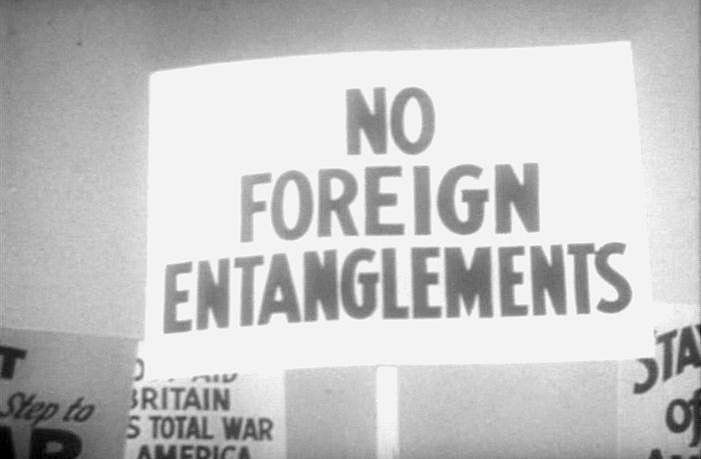
The Isolationist who opposed Woodrow Wilson
The non black business and communities at the advent of the civil rights act of 1963
*
All have one thing in common, they disliked a change and worked all their lives to undo the change.
One of the problems in humanity in the Statian imperial phase of the white European global imperial era is the idea of change being holistically beneficial. No change is ever beneficial to all, no change. In the same way no permanence is ever beneficial to all.
*
The Tariffs are coming from decades of complaints by a group, mostly non black while not exclusively non black, made up of a collection of groups in the usa: pro deletion of any legal statement to black rights /pro isolation/ pro intracommunal finance between states. The Tariffs from the usa to others + the Diversity Equity Inclusivity D.E.I. deletion or reductions show this clearly.
Ever since the end of the war between the states,a group of non blacks in the united states of America have worked to delete the presence/notion/idea of black empowerment/rights/equality to non blacks.
Ever since Woodrow Wilson, a group of hyper allegiants in the usa have worked to disconnect the U.S.A. from alliances to any other country. They have opposed the United Nations, the World Bank, North Atlantic Treaty Organization, North American Free Trade Alliance and all other alliances that force the usa to act in tandem to another government.
*
Most humans at some point in their life go through a change they don't want in their community or the larger environment where they live. It isn't right to live with the change or wrong to fight against the change, or vice versa. Humans are free to choose, but when a change occurs that surprises you, it can be a train derailment unlike any other, buckle up.
*
IN AMENDMENT
some people in the usa waited decades for this day to happen or are witnessing their parents or grandparents dream come true in the current presidency, Isolation has not been supported as strongly in the usa since before woodrow wilson, that is over one hundred years ago... the daughters of the american revolution are cheering in their graves that the community of those willing to oppose betterment for blacks is still going strong. ... The second term of shaking is upon us all, I ponder the future
...
well underestimation of others is balanced by overestimation of oneself. It is unwise to do either. I think many, in the democratic party at the least, didn't or don't realize how many in the usa , for various reasons, don't like the global system the usa centers or the racial changes the democratic party has championed. I remember the election, the current president's supporters cheered loudest when he talked of the things he is doing now. They didn't just cheer they voted.
02162026
Citation
https://aalbc.com/tc/topic/12472-estimations-of-change /#findComment-80140
osted just now
@ProfD
12 hours ago, ProfD said:
Change is inevitable over the course of a lifetime. Humans adapt to changes accordingly.
yes, change is possible from day to day let alone the course of a lifetime. And human beings do react/act in response to changes. But said reactions are not always accordingly while said reactions are never right or wrong. Negative or positive? yes, but not right or wrong and in the context of the usa, this is a huge topic. the usa has the most internally multiracial gathering of humans beings under any government in humanity. Which means by default changes in the usa, as whites in the usa have been learning [ slower than all others but more and more ]since 1492 , tend to be against all groups/communities/gatherings benefit. The examples are plenty in the usa. White individuals who are less aligned to the white populace while more aligned to their individual desires have less problems with the largess of mexicans/chinese/indians in the usa. White individuals who are more aligned to white communal life by default have more problems with the largess of the non white europeans whose lives by default weaken the positive potential of the white community to do for its own. Modern day Harlem is majority non black, black individuals in harlem whose personal life could handle the changes brought on by the non black in harlem have survived or thrived. Black individuals in harlem whose personal life was attached and needed the environment when harlem was majority black have been pushed out or have succumbed to a misery in harlem. Immigrant individuals post immigration act of 1965 who can survive being the only person like them in some place within the usa have done better. Immigrant individuals post immigration act of 1965 who needed a simulation of their monoracial environment from whence they came are going through ever increasing problems , culminating in immigration and customs enforcement parking themselves in immigrant communities in cities knowing most in the community are adherents to some illegality. NAtive American individuals from the european colonial age have always done better when able to live alone or as a small group among the hordes of second peoples. Native American individuals tied to the first peoples way of life , as one of my heroes Tecumseh, have lived a life of terror from 1492 to 2026 and counting.
But no matter how any of the peoples mentioned react to change, no reaction is right or wrong, nor according. By default, change is the most unaccording thing. IT is interesting, you chose the incomplete phrase, humans adapt to changes accordingly. Adapt means to fit. Accord means to be in line. Thus whenever I have heard that phrase " humans adapt to changes accordingly" or read it most recently, it is interesting, philosophically, how incomplete the phrase is. Human reaction to change includes adaptation + lack of adaption. to speak only of human adaptation is to partially ignore the fact that a human does not have to adapt /fit the changes. and changes being according/liking or even or harmonius is only for those that choose to fit/adapt. The heritage of Black descended of enslaved speaking as such comes from black enslaved parents from 1492 who like 99% of thier descendents in the european colonial phase of the usa or the usa itself till 1980, had nothing to give black children, sometimes not even time, so provided lessons, sharp, inflexible, which served survival functions for the black child as an individual. ala to a black child, "you must adapt to changes accordingly" That language is a very old Black DOS heritage, brewed through centuries of being terrorized by whites, unable to collectively do anything, forced to survive as individuals with constant negative changes imposed by others, beyond any black individual to control or deter, no matter said black individuals happiness.
02162026
Citation
https://aalbc.com/tc/topic/12472-estimations-of-change /#findComment-80149
osted just now
@ProfD
3 hours ago, ProfD said:
Despite the multiracial make-up of the USA...white folks still run it.
For the record I never said white people didn't control the usa. It makes perfect sense that white people control the usa since they started it. again, most native americans or black descended of enslaved people at the time of the creation of the usa were fighting to stop it from being created and even in the war of 1812, decades after the usa was founded, most native americans or black descended of enslaved were opposed to the usa and fought for it to be deleted and made part of the english empire again. so... it makes perfect sense today that white people run a government they wanted.
3 hours ago, ProfD said:
The poorest white folks still have more privilege & access to safety nets than non-whites.
Whites who have a problem with immigrants really need to take their issues up with the white folks who use them for cheap labor & maximized profits. Rich getting richer.
white priviledge makes perfect sense. The greater question is what black fool thinks it shouldn't be that way in the usa today? I can't think of any reason why whites in the usa shouldn't have more power/advantage/positivity in the usa than the non white, regardless of its makeup.
the heritage of fiscally poor whites in the usa of attacking the nonwhite to gain is very strong. the fiscally poor whites don't want to risk breaking white unityby attacking the fiscally wealthy whites, though they don't comprehend the white unity of the past has already been broken
3 hours ago, ProfD said:
Humans have been adapting to changes accordingly throughout their existence on the planet.
Whether it is relocation, climate, environment, natural disasters, etc., humans have to adapt in order to survive.
my point is that is a half truth, history proves humans can block changes , or delete changes, it is a lie to only look at those who adapted, those who didn't adapt but stopped change also occurred as equally. That is my point to the Black DOS heritage. Black DOSers in the USA were and are forced to adapt to what changes the non black want, historically, but that is not de facto for all peoples, including black peoples in human history.
I think it is false to glorify adaption to change. Adapting to change is not evil, but nor is it a good. IT is an option humans have.
RMCommunityCalendar 0 Comments · 0 Reviews