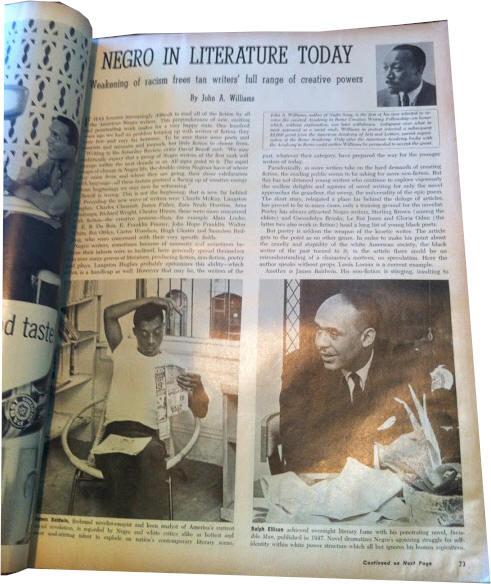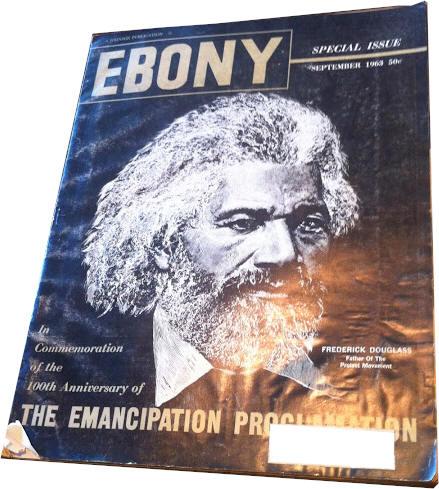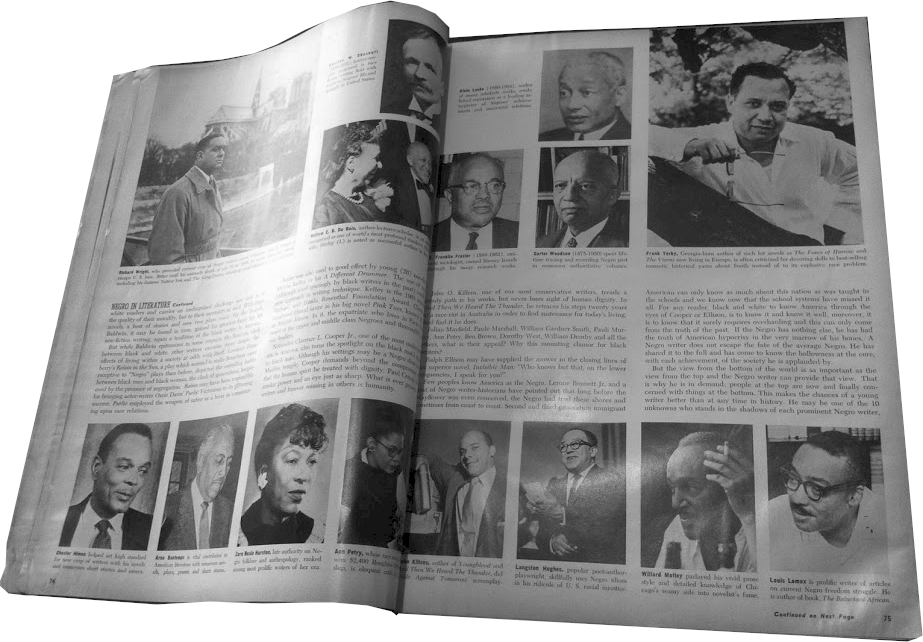
During a recent “vacation” I took to reading old issues of Ebony Magazine. I have a collection of about 30 issues from the ’50s and ’60s. The images below are from the September 1963 issue. I found the magazine simply fascinating. Google has made this issue available online.
Interestingly, I see no indication that Ebony has provided an online archive on their website. I still find it amazing, annoying even, that Google profits from Ebony’s content while Ebony loses out on traffic and associated revenue. Of course, I’ve been critical of Ebony’s online presence in the past, but it still irks me when they blow opportunities by failing to take advantage of their wealth of information.
Run a Google search on Ebony Magazine September 1963, and see how many pages deep you have to go before you even see a link to Ebony Magazine’s own website.
The quality of writing was superb for a magazine marketed to a Black mass audience. The whole idea that these types of articles (long form, written above an 8th grade reading level, not celebrity or scandal-driven) don’t appeal to Black readers in 2014 does not hold water — particularly with so many more Black people holding college degrees in 2014 compared to 1963.
The article depicted below, “Negro in Literature Today,” was written by John A. Williams. Williams offered a terrific, now historical, snapshot about the best Black writers in 1963. Most of the authors cited are profiled here on AALBC.com, but there were a couple of writers I was unfamiliar with, but rest assured I will profile them here on AALBC.com shortly.
I can’t imagine Ebony or any mainstream magazine publishing a piece like this today.
While the content was strong, the advertised products often left a lot to be desired. Advertisements for cigarettes and hard liquor dominated. I was also surprised to see ads for skin lightening creams. The dichotomy between the advertisements and the content was much more stark back then.
Cynique [discussion forum participant], in some ways I envy your generation. Don’t get me wrong — you can keep the overt racism and segregation you had to deal with — but I think the Black community was better served by their institutions (publications, churches, civil rights organizations, HBCUs, etc). What do you think? [Read her response]