Black Panther Founder, Bobby Seale
Seizing the Time with the Black Panther Founder
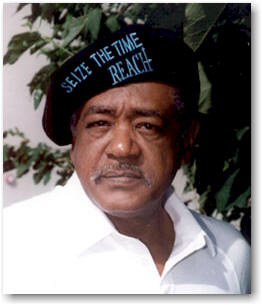
Robert George Seale was born on October 22, 1936 in Dallas, Texas where,
from the age of six, he was raised by his father to be a
carpenter-builder and a hunter-fisherman. During WWII, the family
migrated to Northern California where Bobby graduated from Berkeley High
with plans of becoming an architect.
However, those plans were put on hold when he instead enlisted in the
Air Force, serving for almost four years, till being discharged for
insubordination. He then moved to Los Angeles to take a shot at showbiz
as a stand-up comedian and as a jazz musician, before returning to the
Bay Area in 1961.
The next year, while working the night shift, full-time in the aerospace
industry, Bobby attended Merritt College as an Engineering Design major.
It was during this period of his life that he would meet
Huey Newton and
develop a passion for grassroots organizing and progressive politics.
After identifying some pressing needs of black America, the two decided
to create a grass roots community-based organization. On October 15,
1966, they founded the Black Panthers, outlining the new political
party’s 10-Point Platform, and naming Bobby its Chairman, and Huey its
Minister of Defense, after flipping a coin.
The organization membership rolls surged in the wake of the
assassination of Dr. Martin Luther King, when most young
African-Americans began to question the wisdom of the late civil rights
leader’s philosophy of civil disobedience and passive resistance. But
the government would come down hard on the Panthers, using the FBI’s
notorious Counter-Intelligence Program (COINTELPRO) along with local
authorities to discredit, kill, frame, imprison and otherwise neutralize
its members and sympathizers.
Although Bobby would himself spend over two years in jail on a variety
of trumped-up charges, he was ultimately vindicated in every case. The
most famous trial he was ever associated, dubbed the Chicago 8, began
after his arrest along with 7 other activists for conspiracy and
inciting to riot at the Democratic Convention in Chicago during the
Summer of 1968.
The proceedings became something of a shameful spectacle when the judge
had Bobby bound, shackled and gagged in the courtroom for repeatedly
demanding that he be allowed to exercise his Constitutional right to
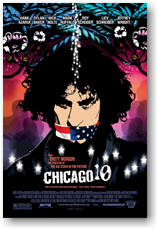
represent himself. Here, he reflects on the new animated docudrama about
the trial called Chicago 10, and on his enduring career as an unwavering
advocate of the rights of the disenfranchised and the downtrodden.
|
|
Bobby Seale
The Chicago 10 Interview
with Kam Williams
KW: Hey, Bobby, it’s an honor to speak with you. Thanks for the time.
BS: Thank you, Kam. How do you spell your name?
KW: K-A-M. It’s short for Kamau, an African name.
BS: Oh, I see, not C-A-M but K-A-M.
KW: Yeah. So, what did you think of the film, Chicago 10?
BS: Well, it needed my voice.
KW: I take it you would’ve preferred to do your own voice for the
animation, instead of having Jeffrey Wright do you.
BS: Sure, the director [Brett Morgen] has since admitted to me that when
he heard I was 70 years-old, he didn't even consider me. He expected
that I was going to be an old guy with a shaky voice going, ’Well, you
know, back in the day’’ I said, ’No, brother,’ and got to reciting
strings of historical facts about the Black Panther Party, and he said,
’My God! You run off at the mouth like you're 19!’
KW: I guess it must be strange to hear someone else doing you,
especially since you have such a distinct, and recognizable voice.
BS: Well, it’s alright, thought I feel he should have at least made a
better effort to contact me and consult me about the film and about the
history, regardless of how he ultimately made the movie. Plus, I had
produced my own documentary, so I’m aware of a lot of the factors that
go into making a halfway decent movie. I think I could’ve made a hellified contribution in terms of the storyline.
KW: I even had a problem with the title. I felt it should be called The
Chicago 8, as the defendants were known collectively, not Chicago 10.
BS: I think it was a bad title, too. It should have been The Chicago 7
or The Chicago 8, preferably, the latter, because that’s the historical
reference point for the average person who knows something about the
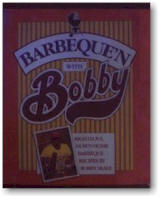
Sixties. It reminds me how in 1988 I put a bad title on my own cookbook,
calling it just ’Barbeque’n with Bobby.’ Only in small letters at the
bottom did it say ’recipes by Bobby Seale.’ The title should have been Barbeque’n with Bobby Seale, because 100 million people know my name.
So, that was bad marketing on my part.
|
by Bobby Seale
Publisher: Ten Speed Press |
KW: Other than the title and not using your voice, what did you think of
Chicago 10?
BS: I thought it was pretty good, for a doc. It could have been about
ten minutes longer to include more about what happened to me when I was
in lockup, because I was in jail the whole time of the trial. The other
seven defendants were out on bail, except for Jerry Rubin for three
weeks.
KW: Why do you think Judge Hoffman had you bound and gagged, and had
your trial separated? Do you think he got an order from above, from
someone like J. Edgar Hoover?
BS: Nah, he just couldn't handle me. He kept trying to say that William Kunstler was my lawyer. I kept telling him that Kunstler was not my
lawyer. He and I went around and around arguing about that.
KW: Charles Garry was your attorney, right?
BS: Yeah, but Charles Garry was in the hospital recovering from a gall
bladder operation. So, I had made a motion to defend myself at the
beginning of the trial, before the jury had heard even one shred of
evidence, since my lawyer wasn't there. Every time anyone would mention
my name in the courtroom, I would jump up out of my chair and yell, ’I
object! I object, because my lawyer, Charles R. Garry, is not present.’
He’d order me, ’Sit down, Mr. Seale.’ And I'd respond, ’No, I want the
record to reflect that I am objecting, and I am going to continue to
object because you denied me my right to defend myself.’ So, he chained,
shackled and gagged me for three days, until finally the press went
against him.
|
|
KW: Did you behave yourself after the restraints came off?
BS: No. For instance, after the defense attorneys finished
cross-examining an FBI agent on the witness stand, the judge would say,
’Are there any more questions?’ I would jump up and say, ’Well, I want
cross-examine the witness.’ And I'd walk over to the lectern and say,
’Looka here, what the hell were you doing following me around in the
first damn place?’ I wasn't a learned lawyer, but I but I was still
doing my best to defend myself by asking logical questions. The judge
would interrupt and say, ’No, no, no, you don't have to answer him’ And
I'd ask, ’Why not? Why shouldn’t he have to answer the question? I’ve
been denied the right to defend myself. Somebody has to answer these
pointed questions if I’m going to be given a fair chance to prove my
innocence.’ At that point, Hoffman decided to charge me with 16 counts
of contempt, and to sever my trial from that of the others. So, really,
he got rid of me because he couldn't handle me.
KW: Do you think he would have had you bound, gagged and shackled, if
you weren’t black?
BS: I don't know. That’s hard to say. The fact that I was a Black
Panther, a political revolutionary, had a lot more to do with the
mentality of Judge Julius Hoffman, and his, quote-unquote, putting Bobby
Seale the Black Panther leader down. In other words, J. Edgar Hoover,
the FBI, the right-wing, the prosecution, the Nixon Administration,
etcetera had all declared me and the other defendants a threat to the
internal security of America. The government hated us. And Hoffman knew
this. So, his thinking in gagging me was ’I’m going to gag this Black
Panther.’
KW: I was fifteen in the 1968, and like the typical black teenager, the
Panthers became my heroes after Martin Luther King was assassinated. We
saw where non-violence and passive resistance would get a pacifist
begging for equality in a racist society.
BS: Before King was killed, my friend Huey was in jail. To that point, I
had only organized about 400 Black Panther Party members up and down the
West Coast, between San Diego and Seattle. There were no other branches
or chapters elsewhere in the country. Alright? Then, in April, 1968 King
is murdered, and by late May, when schools start letting out, I begin
getting a flood of people into the organization, folks flying from
cities all over the nation into Oakland to talk to me and the central
committee about setting up new chapters in their hometowns. Young black
people were reacting to the fact that Dr. Martin Luther King had been
killed. That tragedy enabled my organization to spread across the
country. By November, I had 5,000 members and 49 branches. That’s 49
cities that we operated offices of the Black Panther Party in. We had
the Free Breakfast for Children Program, free Sickle Cell Anemia Testing
and Free Preventative Medical Healthcare Clinics in every last one of
them. These programs organized and unified people on the grassroots
level in the black communities where we operated. And it is a real
threat to the power structure, when you can organize and unify people
around something concrete. Do you see what I’m getting at?
KW: Yeah.
BS: So, here is the Counter-Intelligence Program of the FBI (COINTELPRO)
doing everything it can to distort and stereotype us. They don't tell
you that I was an engineer on the Gemini missile program, and an
architect, and a stand-up comedian. All they said was that I was a
hoodlum and a thug. They never said that Huey Newton had finished two
years of law school by the time that we created the Black Panthers. They
don't say that I was actually employed by the City of Oakland when we
created the Black Panther Party.
KW: Do you think the Panther 10-Point Program is as relevant today as it
was then?
BS: Yes, as profoundly relevant. In fact, Congresswoman Barbara Lee, who
worked with my organization for five years back then, says that the
Black Panther Party’s 10-Point Program is just as relevant today as it
was years ago. And we could add some points to this son of a gun.
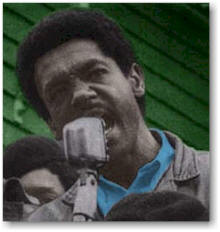
Archival footage of Bobby Seale The Black Panther Party’s Ten
Point Program
KW: The big sister of a friend of mine was married to one of the Panther
21 arrested in NYC in 1969. I remember him telling me they had all been
framed on bogus charges. Did you ever determine exactly when the FBI
began infiltrating the Panthers and to what lengths it went to bring
down the organization?
BS: First of all, let’s say it this way. The FBI’s Counter-Intelligence
Program would work hand-in-hand with police departments, literally
planning attacks on Black Panther Party offices throughout the United
States of America. They did this over a period of time. They also used
provocateurs, and had agents infiltrating the organization. And they
would issue press releases every month or so which they would send to
politicians and the press in cities where we were operating. But the
most profound thing the FBI did was being complicit in the murder of
Fred Hampton and Mark Clark in Chicago, working with a special police
division. The FBI was complicit in setting up that operation in December
of 1969. A former FBI Agent named Wesley Swearingen even admitted it in
a book published by South End Press called ’FBI Secrets.’ He also shows
how the FBI was involved in the killings of Black Panthers John Huggins
and Bunchy Carter at UCLA in January of 1969. COINTELPRO was trying to
terrorize us out of existence. They didn't say you're under arrest on a
bullhorn and ask for us to surrender. They just came in shooting. By the
end of ’69, every Black Panther Party office in this country had been
attacked.
KW: In 1969, there was also a lot of tension in L.A. between the
Panthers and Ron Karenga’s black nationalist organization, US.
BS: It was half generated by COINTELPRO. The FBI admitted it in the
Senate investigation hearings.
KW: Would you say the FBI succeeded in bringing you down?
|
|
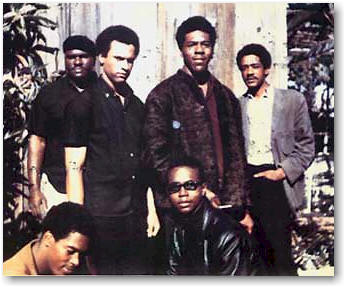
BS: No, we weathered everything they threw at us. At a certain point,
the U.S. Senate started investigating their attacks on us. When the FBI
couldn't give a good explanation as to why they were attacking all our
offices, the raids finally stopped.
KW: Meanwhile, how were you holding up behind bars?
BS: In the end, I won all my cases. They had to let me out after holding
me for two years in jail without bail. Lots of people think I went to
prison. I never went to prison. I was in jail without bail. After I won
all the cases, they had to release me. And from 1971 to 1974 there were
no shootouts. We maintained our programs and ran for political office.
So, the Black Panther Party was not destroyed in that sense, but our
Constitutional, democratic, civil, human, and life rights had been
violated.
KW: What would you have done differently, had you known the government
was going to come down on you like that?
BS: What would I have done differently? I don't know. I’ve tried to
assess that. You know that racists are going to attack you. When we
started out, we accept the fact that sooner or later they were going to
try to kill us. But we decided not to let that deter us. We chose to
stand on the right to self-defense as best we could. And it just so
happened that they came down on us. Ultimately, 28 of my Black Panther
Party members were killed in various attacks by or shootouts with the
police. And in those confrontations, at least a dozen black police
officers were killed. I still have 10 political prisoners in jail to
this day behind some of those dead cops, when they were just defending
themselves against those policemen. They were convicted of first-degree
murder, but they were really only defending themselves. I wish I could
get amnesty for them, and get my political prisoner friends out. At any
rate, I can't obsess about what I would have done if I knew they were
going to come down on me, because I did kinda know they were going to
come down on us. They were coming down on the black community in the
first place via institutional racism, rampant police brutality and so
on.
KW: What do you think of the New Black Panthers? Their philosophy
strikes me as being totally different from yours.
BS: Thumbs down! They hijacked our name. They do not represent what we
represent. Our program was about all power to all the people. We had a
progressive program’ a relevant humanistic program’ a true human
liberation program. I have no time for the so-called New Black Panthers.
We have invited them to three different Black Panther reunions, and
every time they act stupider and stupider. I’m tired of them and have
not time for them. It’s gotten to the point where we believe that their
leadership is nothing but government operatives. They spout stuff that
we were not about. The rank-and-file New Black Panthers probably don't
even know this. It’s like a COINTELPRO operation. I think the leadership
is working for the government to spout a bunch of black racist remarks
and attitudes, saying they support Al-Qaeda and that sort of crap. I’m
very skeptical. I feel for the young brothers who don't know this is
what’s happening. They should get out of that group. They act so silly
and stupid. For instance, they took that famous picture of me and Huey
standing in front of the original Black Panther Party office, and cut my
head off and replaced it with Brother Khalid Muhammad’s. In other words,
they want to hijack our reunions. They’re arrogant, and I have no time
for that. So, I told them, ’don't talk to me. And don't try to act bad,
just because you’ve got some little pistols under your coats there,
because if you jump up in people’s faces here, they will defend
themselves.’ In fact, I said, ’Your damn leadership Ain't nothing but a
bunch of CIA a-holes.’ That’s what I believe.
KW: Yet, I always see some spokesman for them on Fox.
BS: Fox News never calls up Bobby Seale to articulate a stance in
opposition to right-wing conservatives. To me, giving the New Black
Panthers a platform on Fox is a subtle tactic to scare people. As far as
I’m concerned, any extremist organization whether it’s Al-Qaeda, the Ku
Klux Klan, or any other a-holes who indiscriminately murder and blow-up
innocent people, need to be routed out and dealt with. If they claim to
be fighting for human liberation, they’re liars, because when you start
killing indiscriminately on that level, you have totally stepped outside
the civility of what human liberation is all about.
KW: Were you politicized while serving in the Air Force?
BS: Oh, no. I didn't know politics back then. They put me in the
stockade twice. I had been an honor student. But I ran into racism in
the military and didn't know how to handle it. I'd knock a racist out.
So, they put me in the stockade.
|
by Jomo Kenyatta
ISBN: 0394702107 |
KW: So, what would you say politicized you?
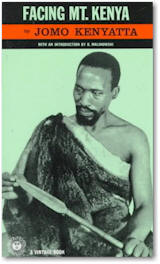
BS: The first thing that began to politicize me was Jomo Kenyatta’s
’Facing Mount Kenya.’ I started reading that in the Spring semester of
1962. From there, I went to hear Martin Luther King speak. In the early
part of ’63, I was working on the freedom of Nelson Mandela and on
ending apartheid. Next, I was listening to Malcolm X after he’d left the
Nation of Islam. I was thinking about joining his new organization, the
OAAU, but that never happened, because he wound up getting assassinated
before I had an opportunity. I was steeped in African-American history
and in and out of many different organizations in the Oakland area. I
was a programmatic organizer. I quit my engineering job after three
years to work at the grassroots level. I wasn't married and had no kids,
so I was able to do those things.
KW: What was at the heart of your and Huey Newton’s creating the
Panthers?
BS: Patrolling the police, the breakfast and job programs were all
political moves, but our overall objective was to organize a mass
membership organization and to evolve a political, electoral, community
unity in the black community. That was my objective.
KW: Do you think the government would have come down as hard on you if
you hadn’t exercised your right to bear arms?
BS: Yeah, because they came down hard on peaceful protesters. They were
already shooting, killing, murdering and brutalizing peaceful
protesters, so what’s the difference?
KW: How do you think you managed to survive the Sixties when so many
black leaders either ended up dead, in prison or in exile?
BS: I think they thought it was best to put Bobby Seale in jail and to
try to convict him than to kill him, because killing him might make him
a martyr and cause his organization to grow some more.
KW: What do you think of
Barack Obama?
BS: I like Obama very much. He’s representative of a lot of changes
which are necessary for the country. He might just be another guy who
has been handed the keys by the corporate establishment. But if he can
make it to President and actually use the bully pulpit to become a
driving force for some progressive legislation related to human
liberation, then that’s all the better.
KW: How would you describe yourself politically today?
BS: I am still a progressive, political revolutionary. I am a
revolutionary humanist, like I was in the Sixties. Do you understand
what I mean by revolution? Revolution is about the need to re-evolve
political, economic and social justice and power back into the hands of
the people, preferably through legislation and policies that make human
sense. That’s what revolution is about. Revolution is not about
shootouts.
KW: The
Tasha Smith question: Are you ever afraid?
BS: What do you mean by afraid? I’m too old to be running around being
afraid. I been through a lot of [expletive] in my life. Beat up’ choked
unconscious by cops, etcetera.
KW: Is there any question no reporter has ever asked you, that you
wished one would?
BS: Yeah, Where’s my eldest son?
KW: Where is he?
BS: In Iraq. He just got shipped there on June 19th. He’s been in the
Army Reserves from the age of 18 to 30. He was going to leave, but he
agreed to reenlist if they would make him a Military Police Officer,
because that would help him get a higher paying job he wanted as a
security guard with a bio-tech company. And right after that Bush
started that damn, dumb-ass Iraq War. And my son just got shipped to
Iraq for the first time.
KW: Are you able to sleep, or are you always worried now?
BS: Sure, I’m able to sleep. But I got a kid in Iraq, and I just don't
want him to be killed over there. I call him and email him and tell him
I’m behind you and the troops, but not behind Bush. I also have a son
who’s a doctor, and a daughter who’s 30. She’s finished school and needs
to get married. I’m hoping she’ll find somebody really nice soon. But
she’s got her job, and her principles, and her independence, which are
all important in terms of her personalized liberation.
So, what else do you want ask? How much my income is?
KW: I wasn't planning to but, okay, how much money do you make?
BS: How do you think I survive?
KW: By giving lectures and writing books.
BS: Yep, college lectures. I do about 20 lectures a year. I haven't
written any books for a while, although I have two books in the works.
I’ve almost finished ’The Eighth Defendant.’ I’m looking for a top
publisher who’ll give me a half-million dollar advance for it. I need a
big advance to make my family secure. Are you going to write include
that in the article?
KW: Yep. I’m going to write-up every word of this conversation.
BS: Have you heard about the Spielberg film? He’s make a drama call The
Trial of the Chicago 7. Guess who he has playing me?
KW:
Jeffrey Wright again?
BS: Nope, Will Smith. And Kevin Spacey will be playing one of the
attorneys.
This is going to be a big Hollywood production. So, I need to publish
’The Eighth Defendant.’ by the time the movie is released.
KW: Bookworm Troy Johnson wants to know, what was the last book you read?
|
by A. Leon Higginbotham ISBN:
0195122887 |
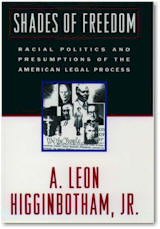
BS: The last book I read, digested and loved was ’Shades of Love’ by Leon Higginbotham.
KW: I haven't read that one, but I loved his book ’In the Matter of
Color.’ Do you still live in Philly?
BS: No, man, I’m living in Oakland. I lived in Philly for a while
because my wife was from Philadelphia, and she had a home and everything
there. But we moved back to my home in Oakland, California four or five
years ago. In fact, we really started coming back about eight years ago
when my daughter began studying at San Francisco State University. She
graduated, let me see, about five years ago now.
KW: You can look for this article in a couple of your local papers. I
write for, the Oakland Globe and the Oakland Post.
BS: Paul Cobb’s paper.
KW: Yep, the Post is the paper whose editor,
Chauncey Bailey, was
murdered on the street about a year ago for writing an expose’. I had
just spoken to him a couple of days before.
BS: Yeah, that was a tragedy.
KW: Well, Bobby, thanks for your lifelong commitment to oppressed
people, and thanks for the great interview.
BS: you're welcome. Thanks a lot.
Related links
Bobby Seale Website
http://www.bobbyseale.com/
CHICAGO 10 will
have its broadcast premiere on Tuesday, October 22, at 9 PM ET
(Check Local Listings) as the season opener of the award’winning PBS
series Independent Lens, hosted by Terrence Howard. For more
information, visit:
http://www.pbs.org/independentlens/about.html
Reader Comments (0)
Log In to Join the Conversation
Commenting is reserved for registered AALBC members to maintain high-quality discussions.
No comments yet. Be the first to share your thoughts!
Advertisement