Ziggy Marley The “Marley” Interview
Kam Williams: Hi Ziggy, thanks for the interview.
Ziggy Marley: Thank you, Kam.
 KW: Do you remember Ras Karbi, who played with your dad in Jamaica before
embarking on a solo career?
KW: Do you remember Ras Karbi, who played with your dad in Jamaica before
embarking on a solo career?
ZM: Jah, mon.
KW: Well, during my brief career as a musician back in the Seventies, I got
to play on an album with Ras after he moved to the States.
ZM: Nice, nice.
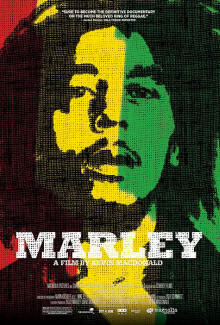
KW: I loved the movie Marley. It taught me so much I never knew about your
father. Why did you decide to make it?
ZM: It came from a personal need for me, as Bob’s eldest son, to be a part
of a film about my father. There have been a lot of other projects presuming
to tell his story, but I thought it was time for one coming from his family,
not from some third party claiming to be the authority on Bob Marley or
reggae. The only thing that would be me more authentic than this would be
Bob himself.
KW: It’s definitely a very rich and spiritual film which humanized him in
ways I never expected.
ZM: Jah, mon, we want people to feel that human connection, that emotional
connection, that real connection, and Kevin [director Kevin Macdonald] did a
great job of achieving that.
KW: Wesley Derbyshire asks: How do you think your father’s music has made a
lasting effect on the world?
ZM: My father’s music gives hope to people and also inspires them to break
the bonds of injustice and to be positive in life. I’ve seen that everywhere
I go, especially in poor countries and poor neighborhoods. Even in speaking
to actual freedom fighters from South Africa to Ethiopia, they always told
me how influential the music was in their struggles.
 KW: Attorney Bernadette Beekman asks: What is the most significant life
lesson you learned from your father?
KW: Attorney Bernadette Beekman asks: What is the most significant life
lesson you learned from your father?
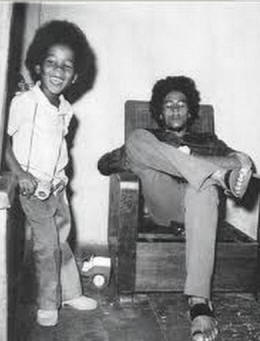
ZM: Everything I’ve taken away from my father has been significant. So, I
can’t say that any one lesson is the most significant. By being around him,
I learned that there is a purpose in life, and that if we are inspired to
help people, we should do it. And that there is a spiritual side to life as
well as to music, and that we are here for a bigger purpose than just
ourselves. Those are some very significant ideas of my father’s that I have
carried with me all my life and still cherish to this day.
KW: Harriet Pakula Teweles asks: What was it like growing up as the son of
such a famous icon?
ZM: I’d divide it into two periods. Bob wasn’t as big an icon as he later
became after he died. When he was alive, he just acted like what he was, a
musician that people loved. He never behaved in any superficial or iconic
way. He was just being himself. There wasn’t anything special or different
about our lives. In Jamaica, everybody’s the same. The second period began
after he passed away, when his iconic stature grew and everywhere we went
people would show us a lot of love as Bob Marley’s kids. That was very
positive for us.
KW: Marcia Evans asks: How long did you live in Trenchtown?
ZM: I was born in Trenchtown and spent my early years there as a toddler.
When my dad made more money, we moved out of the ghetto to a better
neighborhood with better schools. Eventually, he purchased the home on Hope
Road from [Island Records producer] Chris Blackwell, which also became his
headquarters.
KW: Film student Jamaal Green says: First and foremost, I would like to say
love and respect to you and your family for providing the world with
generations of great music and good vibes. With the debut of the
documentary
Marley, is there a possibility of someday making a dramatic film about the
life of the "Honor Rebel" Bob Marley? If so I would love to apply for the
job.
ZM: [LOL] Jamaal, you just might be able to direct it. It’s going to take a
few years to get there, so you might be perfect, if you’re available at that
time. But it’s not something that we’re focusing on right now. When we are
ready, it will have to be a magnificent piece of work.
KW: Editor/legist Patricia Turnier asks: Who would you like to portray your
father, if you make a movie about him?
ZM: That’s an issue. We don’t know.
KW: How about you?
ZM: I wouldn’t play him, but we haven’t looked that deeply into it yet.
KW: Patricia, who is Haitian-Canadian, was also wondering whether the movie
Marley will be available subtitled in French, her native language.
ZM: I hope that the distributors will make the movie available in whatever
subtitles are needed in different areas.
KW: Patricia’s has a couple more questions: Do you enjoy listening to your
own CDs?
ZM: Umm… not really.
KW: And, what message do you think people will take away from?
ZM: I don’t think there’s a specific message. I want people to feel an
emotional connection to Bob, a human connection as a friend, as family.
KW: Your dad gave you the nickname, Ziggy, meaning Marijuana. And you are an
advocate for the legalization of pot. Why is that, because you consider it a
sacred herb or a recreational drug?
ZM: My interest in it is actually a much wider spectrum than merely smoking
Marijuana. It’s all about the use of hemp for clothing, for building
materials, and as a bio fuel, as an environmental alternative in the
industrial sense. Plus, the seeds have nutritional value. That’s what I’m
interested in bringing to light, because everybody just talks about the
smoking, the smoking, the smoking. I’m trying to get across to people that
if we in this world are serious about the Green Revolution and saving the
planet, then this plant has to be a part of the discussion, because it is
the most suitable natural resource with thousands of beneficial uses.
KW: What is your favorite dish to cook?
ZM: Right now, just oatmeal.
KW: When you look in the mirror, what do you see?
ZM: I don’t know what I see… [Pauses to reflect] I see a body. I see a body.
KW: If you could have one wish instantly granted, what would that be for?
ZM: Peace in the world.
KW: The Ling-Ju Yen question: What is your earliest childhood memory?
ZM: Playing on the streets of Trenchtown.
KW: The Kerry Washington question: If you were an animal, what animal would
you be?
ZM: A snake.
KW: Bernadette also asks: What is your favorite charity?
ZM: I’m into anything that really helps children.
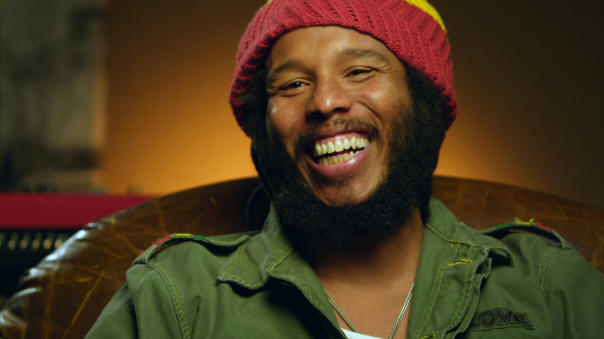 Ziggy Marley in a scene from MARLEY, a Magnolia
Pictures release. Photo courtesy of Magnolia Pictures.
Ziggy Marley in a scene from MARLEY, a Magnolia
Pictures release. Photo courtesy of Magnolia Pictures.
KW: The Judyth Piazza question: What key quality do you believe all
successful people share?
ZM: Successful people… [Ponders the question] That’s kind of a trick
question, because it depends on how one defines success? Success means
different things to different people. To me, the greatest quality of
successful human beings is the ability to love.
KW: The Melissa Harris-Perry question: How did your first big heartbreak
impact who you are as a person?
ZM: It makes you stronger. Yeah, it makes you stronger.
KW: Dante Lee, author of “Black Business Secrets,” asks: What was the best
business decision you ever made, and what was the worst?
ZM: My best business decision was to be independent as a musician and
artist. My worst was compromising on certain aspects of a deal for the sake
of other members of my group when I shouldn’t have, because I was right in
the end.
KW: The Tavis Smiley question: How do you want to be remembered?
ZM: To tell you the truth, I don’t know. I don’t think about it. [Laughs]
KW: Thanks again for the time, Ziggy, and best of luck with the film and the
concert tour.
ZM: Thank you, brother.
Reader Comments (0)
Log In to Join the Conversation
Commenting is reserved for registered AALBC members to maintain high-quality discussions.
No comments yet. Be the first to share your thoughts!
Advertisement