


- Open Club
- 2 members
- Rules
- All Calendars
- AALBC.com's Literary Events Calendar
- BlackGamesElite: BGE Calendar
- DOS earliest literature: Recent News
- RMCALENDARS: RMWorkCalendar
- RMCALENDARS: Black Artist Birthday Calendar
- RMCALENDARS: RMCommunityCalendar
- RMCALENDARS: Black Artist of Tumblr Calendar
- RMCALENDARS: MidnightHour Calendar
- With 'RMCommunityCalendar'
- Download iCalendar export
- Subscribe to iCalendar feed
ALL
DAY
-

05 October 2038 15 October 2038
Vimeo Submit your short film for a chance at $60,000This event began 10/05/2026 and repeats every year forever
Filmmakers, don't let this one pass you by!
You've got 10 days left to submit your short film project for a shot at $60,000 cash, plus gear, mentorship, and distribution.
If you've been sitting on a great idea, now's the time to get it down on paper (digitally, of course) and hit submit.
Submit your film
https://vimeo.com/shortfilmgrant
5 winners will receive…
•$60,000 cash — toward an original short film
•Equipment loans — Panavision camera packages for production, with storage provided by OWC
•One-on-one mentorship — sessions with the jury and the Vimeo Curation Team on scriptwriting, editing, festival strategy, financing, distribution, and more
•Promotion & distribution — online release with dedicated promotion on Vimeo
•In-person screening — a Vimeo-hosted community screening
•Vimeo products — a one-year Vimeo Advanced subscription
Submissions close Friday, October 16th at 11:59 PM ET sharp. Don't be late.
The grant is made possible thanks to generous support from Panavision, OWC, AJA Video Systems, and ShotDeck.
We can't wait to see what you submit,
The Vimeo Curation Team
Follow along: @vimeostaffpicks on Instagram
My storyboard films, which do you think is the best?
https://richardmurrayhumblr.tumblr.com/animatics
vote for the one you like the most
https://docs.google.com/forms/d/e/1FAIpQLScLzU-9i7HfBAf7uZy-YSeWP7_JjdTukZAvmNt_T-n3MDPQ-A/viewform?usp=publish-editor
-
08 October 2038 14 October 2038
Indigenous People's DayThis event began 10/08/2025 and repeats every year forever
I want to honor the legend of Jonas Caballo. Who fought against the USA in the Seminole wars in Florida, fought again the White and non Black indigenous citizens or residents in the USA in the trail of tears, fought the borderland groups on either side of the USA /Mexico border to find a home for his people, that still exist in northern mexico , today.
One of my favorite ancestors.
Columbus day is the second monday in october, so indigenous peoples day has to be the same day, but the second monday in october is one day from october 8th to october 14th , every year.
His descendants are considered indigenous tribe
https://www.milenio.com/estados/declaran-pueblo-indigena-tribu-negros-mascogos
TEXT
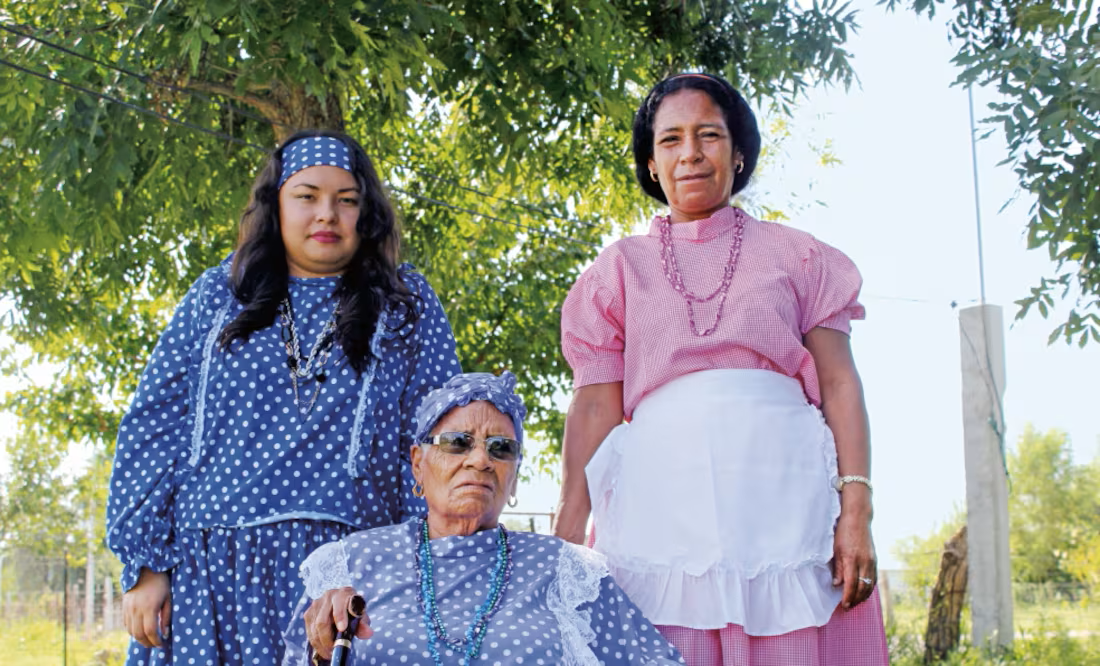
The Negro Mascogos Tribe is declared an indigenous people The governor of Coahuila emphasized that this is important primarily because they deserve it and it is a commitment that Mexico has made regarding human rights. Ana Ponce Saltillo, Coahuila / 09.05.2017 14:57:24 Governor Rubén Moreira Valdez issued the decree declaring the Negro Mascogos Tribe an Indigenous People of Coahuila. In the community of "Nacimiento de los Negros Mascogos" in Múzquiz, the governor met with this tribe and representatives from different levels of government to make the appointment. He emphasized that it is important primarily because they deserve it, and because it is a commitment Mexico has made regarding human rights and to providing dignified conditions for Afro-descendant peoples. [OBJECT] "Normally, people think about the states of Oaxaca, Guerrero, and Veracruz, where there are Afro-descendant settlements, but the north is rarely mentioned, and today we have to feel proud of that," he said. "Today, the history of the Mascogo people, as well as the Kickapoo, the Chinese emigration, and the caravaners, is already in our textbooks, in the third-grade textbook," he added. Moreira Valdez said he hopes that after this decree, people will be able to access benefits from the National Institute of Indigenous Peoples and considered that this is the fight that must be started, since the Mascogo deserve to receive the resources that the country allocates to indigenous tribes. "It's not a concession, it's not a matter of whether you want it or not. It's there in their budgets. And they've delayed this allocation for one reason or another. But I hope that with this decree, for the 2018 budget, the Mascogos will be included among those communities that receive resources, because they deserve them, that's true," he specified. "But also because Coahuila contributes much more to the budget than it receives. Of what we contribute, we should be receiving 40 percent, 30 percent of what we contribute. If we have access to those resources, we will surely improve in this regard," he emphasized.
Some thoughts on the Mascagos
https://letraslibres.com/wp-content/uploads/2023/10/convivio-zaid-mex.pdf
TEXT
Mascogos by Gabriel Zaid The Mascogos arrived in Mexico fleeing from American slavery. The current inhabitants have lost some typically black features, but they adhere to their traditional festivals, songs, clothing, and dishes with a certain affirmative militancy of their identity. A few Black people arrived in Mexico with Hernán Cortés. They continued arriving from the Antilles, and almost three centuries later (in 1810), there were 10,000 Black people and 624,000 Afro-mestizo people, compared to 15,000 Europeans, 3.7 million Indigenous people, and 1.8 million other mestizos, for a total of 6.1 million inhabitants. In Coahuila, the total did not reach 17,000 in 1803 (Gonzalo Aguirre Beltrán, The Black Population of Mexico. Ethnohistorical Study, 3rd ed., revised and expanded, Fondo de Cultura Económica, 1989, pp. 19 and 233). Mexico had a president of Black, Indigenous, and Spanish descent: Vicente Guerrero (almost two centuries before Barack Obama assumed the presidency of the United States). Not only that: President Guerrero decreed the abolition of slavery in 1829 (decades before the United States Congress did so in 1865). During that 36-year period, seeking refuge in Mexico was an opportunity to escape slavery or persecution. Refugees arrived illegally. But in 1852, John Horse (leader of the Black Mascogos, who was of Black, Indigenous, and Spanish descent, like President Guerrero) and Wild Cat (leader of the Seminoles) obtained permission from President Mariano Arista to settle in El Nacimiento, Coahuila, near the border, in exchange for defending it from Apache and Comanche raids. In that rural town in the municipality of Múzquiz, located in the valley where the Sabinas River rises, President José Joaquín Herrera had granted the same permission to the Kickapoo two years earlier. Some call the Mascogos Black Seminoles; however, they are not Seminoles, although the two ethnic groups were once neighbors and eventually interbred. The Mascogos are Black people who arrived, the Seminoles, Indians who were there and welcomed the Mascogos. The Mascogos were slaves, the Seminoles were not. The Mascogos performed forced labor on sugarcane, cotton, and rice plantations, while the Seminoles were small farmers. The Mascogos were fleeing their owners, who wanted them recaptured alive for the plantations; the Seminoles were fleeing settlers, who wanted them dead to ensure the dispossession of their lands ("The best Indian is a dead Indian"). It is unknown how many Mascogos arrived in Mexico, perhaps half a thousand. Today there are about three hundred. According to census data compiled by pueblosamerica.com (search for Mascogos on this site), in 2020 there were 270 Mascogos, with a 2% illiteracy rate, seven years of schooling, piped water, electricity, a television, and a refrigerator. There are also Mascogos in Texas and Oklahoma. According to Belem Concepción Muñiz Estrada (August 24, 2023, by phone in Saltillo), there is a floating population of Mascogos that varies greatly depending on whether they go to work in other locations or return. She conducted interviews in El Nacimiento in 2014 and wrote the book cited below, as well as the article "The Black Mascogos of Múzquiz, Coahuila, and Their Self-Sustaining Community" (online), where she points out, among other things, the support the Mascogos receive from the Coahuila government for reforesting walnut trees. They speak Spanish, English, and (the older ones) Mascogo. They have gradually dissolved as an ethnic group through marriage. In the videos, you can see that the older ones speak English, the younger ones, Spanish; and that typically Black skin, face, and hair are not predominant. However, they cling to their traditional songs, clothing, and dishes, with a certain militant affiliation with their identity, which attracts tourists. Like Black people in the United States, they have celebrated Juneteenth, Juneteenth Day, since 1866. In 2021, President Biden declared it a national holiday. The Mascogo sing in English (not Spanish or Mascogo), in a choir, a cappella (without musical instruments), clapping their hands to mark the rhythm. Their songs are indeed spiritual. A few books in Spanish have the word Mascogos in the title; about twenty in English have Black Seminoles. On YouTube, there are about twenty videos in Spanish (under mascogos) and fifty in English (Black Seminoles). There are Wikipedia pages in Spanish, English, and Arabic under Mascogos, and also (in a dozen languages) under Black Seminoles. E. F. Nava López transcribes the Coahuila recording of "A Religious Song of the Black Mascogos" (Annals of Anthropology, July-December 2016) in Mascogo, English, and Spanish, with musical score. The lyrics are the beginning of the Christian Creed. Song lyrics, transcribed from English and translated into Spanish: PACKING MY SUITCASE I'm packing my suitcase. I'm getting ready to leave. Lord: I'm packing my suitcase. I'm getting ready to leave. My mother has gone, and she was ready to leave. My mother has gone, and she was ready to leave. Lord: I'm packing my suitcase, I'm getting ready to leave. My father has gone, and he was ready to leave. and he was ready to leave. My sister has gone, and she was ready to leave. My sister has gone, and she was ready to leave. Lord: I'm packing my suitcase, I'm getting ready to leave. Source: Belem Concepción Muñiz Estrada et al., Negros mascogos. An Odyssey to Birth, Saltillo: Universidad Autonomous de Coahuila, 2020, p. 111. The song was transcribed and translated by Paulina del Moral. The complete book is online. HIS NAME His name is malasta. I don't know. His name is malasta. I don't know. His name is malasta. I don't know. NEW YEAR The year has passed. Happy New Year. Happy New Year. Very happy, happy New Year. Very happy, happy New Year. THE GOOD PATH Oh, please tell me how long it's been since I took the path of God. Oh, please tell me how long it's been since I took the path of God, and I won't turn back until Judgment Day. Source: Mascogo Songs, in English, documentary video by Karla Rivera Téllez, Ministry of Culture of the Government of Coahuila, 2020. Available on YouTube. There is a Mascogo Cookbook from Coahuila, 2nd ed., National Council for Culture and the Arts, Indigenous and Popular Cuisine Collection #51, 2014, compiled by Paulina del Moral and Alicia Siller V. ~ GABRIEL ZAID is a poet and essayist. His most recent book is Translated Poems (El Colegio Nacional, 2022).
And more
https://www.eluniversal.com.mx/articulo/estados/2016/09/19/mascogos-siempre-listos-para-partir/
TEXT
Mascogos. Always ready to leave Mestizaje wiped out the pure Afro-descendant population in Coahuila, who arrived fleeing slavery in the United States. Lucía Vázquez (center) is 85 years old and the last pure Afro-descendant in the community of El Nacimiento, Múzquiz, Coahuila (FRANCISCO RODRÍGUEZ) States | 09/19/2016 | 03:10 | Updated 09/19/2016 08:03 Lucía Vázquez is 85 years old and at times bursts into tears because she's convinced that when she dies, no one will sing to her. She wanders around her house or sits outside with a blank stare, a stare that has been deteriorating for the past two years, just like her hearing. Lucía is the last pure Black woman in the community of El Nacimiento, in the municipality of Múzquiz, in the state of Coahuila, a community of African descent that arrived in Mexico in the 19th century. Lucía is wearing a long white dress. She is sitting in a rocking chair outside her house, on the road that crosses the community of 55 houses, home to about 300 residents, some still descendants of Black Seminoles who arrived in Mexico in 1850. They are called Mascogos, but Lucía reproaches: "Who knows where they got the name Mascogos? Before, they were just Black people." With her, a pure race that settled in the El Nacimiento colony in 1852 will end, when the Mexican government gave 7,022 hectares to them, the Kickapoo tribe, and the Seminole Indians in exchange for protecting the border from the Apache and Comanche raids that were ravaging settlements. It will end because she married a man from Palaú, a town in the coal mining region, with whom she had seven children. “There were no more Black people; they had all left,” Lucía says, as if trying to justify herself. “My children are pure Cuarterones,” she says. With the exception of Lucía, the rest of the Black population in El Nacimiento is the result of a mixture of races. “I married a Mexican, he married a Mexican woman,” they often say, as if they weren't also born in Mexico. For the Mascogo community, the El Nacimiento colony is like a nation within a nation. Just as no one—according to Lucía—told her the story of the arrival of Black people to Mexico, no one has promoted capeyuye, a cappella singing accompanied by applause; most are sung at funerals, Christmas, and New Year's. "Who's going to sing to me? Before, they were little Black people, but I'm the only one left," she laments. A community with history The community of El Nacimiento is located 30 kilometers from the municipal seat in Múzquiz, a mining municipality in Coahuila. At the entrance, there is a sign that reads: Black Mascogos and Seminoles. Francisco Cázares, coordinator of Popular Cultures of Coahuila, explains that the Mascogos arrived with the Kickapoos and in a kind of alliance with the Seminole indigenous group. He mentions that they fled persecution by the United States government and slavery in the mid-19th century, and that it was not until the agrarian redistribution that they were granted the territory as an ejido. In the United States, they are recognized as Black Seminoles. When they arrived in Coahuila, they began to be called Mascogos, apparently because of the Muskogee language they spoke. “They came from Florida. There are versions that say the Mascogos were slaves of the Seminoles, because at that time, Native Americans had the right to own slaves. Other versions—including the main one—explain that they formed military allies, hence the name Black Seminoles,” explains Cázares Ugarte. She says they are considered runaway slaves, that is, rebel slaves who escaped from slave-owning regions. Yolanda Elizondo, president of the Friends of the Culture of Múzquiz, Coahuila A.C. Trust, has another version. She says that the Black Seminoles lived with the Seminole Indians as a formal group, who united when the United States government decided to send all the tribes to a large reservation in Oklahoma. She claims they were free Black people and that on their way to Mexico, they were joined by runaway slaves. “There were Black Seminoles in Florida, but not as slaves; they accepted these Black slaves and naturally they mingled,” she explains. Some historians explain that the term “cimarrón” referred to groups of African descendants who maintained a status of freedom by living in the desert and mountains. In El Nacimiento, when residents are asked what their parents or grandparents told them, the African descendants say little. “I hear comments now that they were slaves, but I don't remember,” says Estela Vázquez Núñez, 77. However, the community holiday is June 19—Juneteenth Day in the United States—the day the slaves of Galveston, Texas, learned they were free. The community of El Nacimiento celebrates in a walnut grove where they prepare the few remaining traditional dishes: soske (corn atole), tetapún (sweet potato bread), pumpkin or piloncillo empanadas baked on steel, and mortar bread, mainly. The women wear long dresses with white beads, an apron, and a headscarf. However, many don't even know why they celebrate. "It's the day of the black child," "it's celebrated when they arrived," "it's celebrated because that's when they were given the land," are some of the comments from the community. "These are groups that have a more open attitude toward issues of racial mixing. They are people with less protection over their race," explains Francisco Cázares, of Popular Cultures. They were rented out as mules. Homero Vásquez is a tall, lanky old man. He sits in a rocking chair outside his house. Hanging from it is a Mexican flag missing the red part. He is the son of Teodoro Vásquez, who told him that Black people came from Florida fleeing the war and slavery. “They were rented out as mules,” he says his father told him. Homero says his father told him that in the 1930s, many people came to the area to farm, and that since then, people began mixing with Mexicans, which is why English is no longer spoken. His mother came from Parral, Chihuahua, at the age of 15. His father told him that there was a severe drought that forced people to leave the colony, and that many went to Brackettville, Texas, where there is a cemetery for Black Seminoles who served in the US Army between 1879 and 1914, in a unit called the Seminole Negro Indian Scouts. “My grandmother there was named Tina Goren, but here she was called Carmen Flores. They used a different name for each reservation,” says Homero, who of his nine children, five live in the United States. Homer takes out of his house a large portrait of John Horse, the great Afro-Seminole leader, son of a Black mother and a Seminole Indian father. According to history, he led the longest and most massive slave escape in the history of the United States. He arrived in Mexico with Gato del Monte, the Seminole chief, and Papikua, the Kickapoo chief. In Mexico, he was awarded the rank of colonel in the Army. Many people left "I'm a mere descendant. My father was a clean Black man," says Ricardo González Núñez, known as Chito, a man who is about to turn 80 and has served more than 20 years as a judge of the ejido. Chito leaves his house slowly, with the top buttons of his shirt undone. "I was putting aloe vera on my bones because they hurt a lot," he says. In his house, there are about ten chickens, roosters, and a peacock. He sits in a rocking chair. Most houses have a backyard where they raise animals. There are no houses joined together. Most people are engaged in agriculture, although no young people are seen in the neighborhood. Chito says that life used to be different. “There was a lot of black people,” he says. He owns goats and sells the milk. “It’s down. There’s no money,” he complains. He produces about 100 liters every three days and sells it in Múzquiz for 1.60 pesos per liter. He studied until fourth grade. He mentions that among the Mascogos, his father left him the tradition of behaving well and respecting others. His mother was a blonde from Chihuahua. Chito was a cowboy in the United States. He remembers that many people left because "they had to make a living." He suffered the segregation of Black people in the United States, when they had to ride in the back of buses. He has four children, two of whom live as slaves in the United States. They work in restaurants. "They're the ones who help us," he says. "We all have children of slaves here. Some come in with permission and stay. There's no life here," he adds. "What did your father tell you about their ancestors?" he is asked. "That they were fleeing slavery. Their grandparents told my father," he replies. "Do you feel Mexican or Mascogo?" "You have to be Mexican. Black, but Mexican," he says. Chito, like his father, also married a woman who was not of Black descent. “I knew her in my life,” she says. I'm packing my suitcase. Margarita González Núñez is 78 years old and also feels the sadness of those songs that are being lost. “Even though I don't understand them, I know they're saying goodbye, that they're singing to the dead,” she says, standing next to her daughter Narcedelia. “Now all that's left is food and clothing,” she laments about the loss of traditions. With Doña Mague is Dulce Robles Herrera, the great-granddaughter of Lucía Vázquez, the last pure Black woman in the community. “Aren't you leaving like the other young people?” Dulce is asked. “No, I don't like it. There [in the United States] are the police. They're alone. I have my family here,” she defends. Dulce says that Abuelita Lucía, as she calls her, starts to cry when she's with her. “She cries a lot because she says no one will sing to her. She wants a Black woman to sing to her,” Dulce comments. In the background of the conversation, Mascogo Soul plays, an album recorded by the last women who knew the capeyuye. Songs like "It's Maybe My Last Time" and "Glory in the Heaven" are featured, melodies with repetitive phrases. The song "I'm Packing Now" is heard, a song about escaping slavery that was often sung on slave plantations: I'm packing my suitcase I'm getting ready to leave I'm packing and I'm ready to leave Lord, I'm packing my suitcase I'm getting ready to leave My mother is gone and she was ready to leave My mother is gone and she was ready to leave…
wiki
https://en.wikipedia.org/wiki/John_Horse
-
11 October 2038 30 November 2038
Coloring Books winter 2026 from Charity GuildThis event began 10/11/2026 and repeats every year forever
OCtober 11th initiated
Info
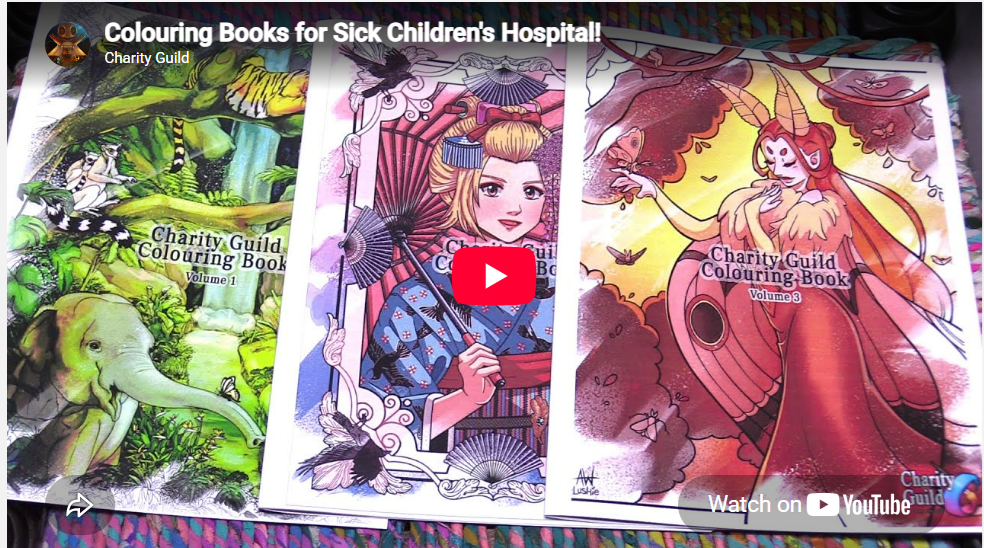
The next project is now launched! We're making colouring books and will be sending them to kids hospitals again! You can draw up to TWO pages per person! Our goal is to have at least 30-50 colouring books printed! ReallyColor is joining us again with this project! Please use our form to join and get registered into the project!
https://forms.gle/foQjj3q4Vcrx1eqw6
This is the sign up form for the Charity Guild's winter event in 2026. The goal is to create beautiful colouring books that will be printed by ReallyColor and given to kids hospital at the end of the event. If you want to contribute up to two colouring pages, please fill out this form.
Make sure to include one username/website that we can cont...
Project rules:
-No AI. All images must be drawn by you only
-Digital lineart only please. You may use traditional art if needed and a volunteer will convert them! ❤️
-Wholesome images only please. Fanart or original drawings are accepted
-No bases
-Minimum canvas size 800x1000 (Vertical pages only please)
-No art older than October 11, 2026
-Deadline December 1st, 2026
DISCORD https://discord.com/channels/619731511716872205/972156466511355914/1558877182913286275
2024
entry from me
https://aalbc.com/tc/events/event/279-charity-coloring-book-10142024/
If you are unwilling to see the complete entry, here is the video
-
11 October 2038
Indigenous Poetry ExamplesThis event began 10/11/2026 and repeats every year forever
URL
https://www.deviantart.com/hddeviant/journal/Indigenous-Poetry-Examples-1386886648
IMAGE
Untitled (Blue and Gold) by Dyani White Hawk
CONTENT
This is for the Indigenous Epigraph Poetry Challenge in
All the poems come from the following
https://www.poetryfoundation.org/collections/144560/native-american-poetry-and-culture
A last note before presenting these poems. They are merely selections. , I used an alphabetical structure, A to Z , first come first serve.
Grief Calls Us to the Things of This World
By Sherman Alexie of Spokane/Coeur d’Alene
The morning air is all awash with angels—Richard Wilbur, “Love Calls Us to the Things of This World”
The eyes open to a blue telephone
In the bathroom of this five-star hotel.
I wonder whom I should call? A plumber,
Proctologist, urologist, or priest?
Who is blessed among us and most deserves
The first call? I choose my father because
He’s astounded by bathroom telephones.
I dial home. My mother answers. “Hey, Ma,”
I say, “Can I talk to Poppa?” She gasps,
And then I remember that my father
Has been dead for nearly a year. “Shit, Mom,”
I say. “I forgot he’s dead. I’m sorry—
How did I forget?” “It’s okay,” she says.
“I made him a cup of instant coffee
This morning and left it on the table—
Like I have for, what, twenty-seven years—
And I didn’t realize my mistake
Until this afternoon.” My mother laughs
At the angels who wait for us to pause
During the most ordinary of days
And sing our praise to forgetfulness
Before they slap our souls with their cold wings.
Those angels burden and unbalance us.
Those fucking angels ride us piggyback.
Those angels, forever falling, snare us
And haul us, prey and praying, into dust.
URL
https://www.poetryfoundation.org/poems/52923/grief-calls-us-to-the-things-of-this-world
Blues-ing on the Brown Vibe
By Esther Belin of Diné (Navajo)
I.
And Coyote struts down East 14th
feeling good
looking good
feeling the brown
melting into the brown that loiters
rapping with the brown in front of the Native American Health Center
talking that talk
of relocation from tribal nation
of recent immigration to the place some call the United States
home to many dislocated funky brown
ironic immigration
more accurate tribal nation to tribal nation
and Coyote sprinkles corn pollen in the four directions
to thank the tribal people
indigenous to what some call the state of California
the city of Oakland
for allowing use of their land.
II.
And Coyote travels by Greyhound from Albuquerque, New Mexico, USA thru
Dinétah
to Oakland, California, USA
laughing
Interstate 40 is cluttered with RVs from as far away as Maine
traveling and traveling
to perpetuate the myth
Coyote kicks back for most of the ride
amused by the constant herd of tourists
amazed by the mythic Indian they create
at a pit stop in Winslow
Coyote trades a worn beaded cigarette lighter for roasted corn
from a middle-aged Navajo woman squatting
in front of a store
and Coyote squats alongside the woman
talking that talk
of bordertown blues
of reservation discrimination
blues-ing on the brown vibe
a bilagáana snaps a photo
the Navajo woman stands
holding out her hand
requesting some of her soul back
instead
she replaces her soul with a worn picture of George Washington on a dollar bill
and Coyote starts on another ear of corn
climbing onto the Greyhound
the woman
still squatting
waiting
tired of learning not to want
waits there for the return of all her pieces.
III.
And Coyote wanders
right into a Ponca sitting at the Fruitvale Bart station
next to the Ponca is a Seminole
Coyote struts up to the two
“Where ya’all from?”
the Ponca replies
“Oooklahooma”
pause
the Seminole silent watches a rush of people climb in and out of the train
headed for Fremont
the Seminole stretches his arms up and back stiff from the wooden benches
pause
he pushes his lips out toward the Ponca slowly gesturing that he too is from Oklahoma
Coyote wanders
“where ’bouts?”
the Ponca replies
“Ponnca City”
pause
the Seminole replies
“Seminoole”
Coyote gestures to the Ponca
“You Ponca?”
the Ponca nods his head in affirmation
Coyote nods his head in content
to the Seminole
Coyote asks
“You Seminole?”
pause
the Seminole now watching some kids eating frozen fruit bars
nods his head
and Coyote shares his smokes with the two
and ten minutes later
they travel together on the Richmond train
headed for Wednesday night dinner at the Intertribal Friendship House.
IV.
And Coyote blues-ing on the urban brown funk vibe
wanders
in and out of existence
tasting the brown
rusty at times
worn bitter from relocation.
URL
https://www.poetryfoundation.org/poems/53453/blues-ing-on-the-brown-vibe
Prayer to Fix the Affections
By Gladys Cardiff of Eastern Band of Cherokee
O Ancient One,
your web hangs down from the pines.
I am of the Owl clan.
I have been to water,
my dress is of red clay.
He moves at the edge of you,
binds us with your threads.
The center of his soul shall be my soul’s center.
Our paths shall be white forever.
Where we move the paths from every direction
shall recognize each other.
We are one never to be parted.
URL
https://www.poetryfoundation.org/poems/53171/prayer-to-fix-the-affections
A Mighty Pulverizing Machine
By Laura Da’ of Shawnee (Eastern Shawnee Tribe of Oklahoma)
To each orphaned child—so long as you remain close enough to walk to
your living kin you will dance, feast, feel community in food. This cannot
stand. Eighty acres allotted.
To each head of household—so long as you remember your tribal words
for village you will recollect that the grasses still grow and the rivers still
flow. So long as you teach your children these words they will remember
as well. This we cannot allow. One hundred and sixty acres allotted.
To each elder unable to till or hunt—so long as your old and injurious habits
sing out over the drum or flicker near the fire you cripple our reward. We
seek to hasten your end. Eighty acres allotted.
To each widowed wife—so long as you can make your mark, your land
may be leased. A blessing on your mark when you sign it and walk closer
to your favored white sister. Eighty acres allotted.
To each full blood—so long as you have an open hand, we shall fill it with
a broken ploughshare. One hundred and sixty acres allotted.
To each half blood, each quarter strain—so long as you yearn for the broken
ploughshare, you will be provided a spade honed to razor in its place.
When every acre of your allotment has been leased or sold, you will turn it
on yourself. From that date begins our real and permanent progress.
URL
https://www.poetryfoundation.org/poems/147037/a-mighty-pulverizing-machine
Anonymous Is Coyote Girl
By Anita Endrezze of Yaqui
From a newspaper photo and article about my godfather, James Moreno, East Los Angeles, 1950.
(Three police officers took a brutal beating in a wild free-for-all with a
family, including three young girls.
From left, James, 19, and Alex, 22, in jail after the fracas
on the porch of their home at 3307 Hunter.)
Jimmy is staring off the page, hands in his pockets.
A four-button dark shirt. No bruises,
but he looks dazed.
Alex wears a leather coat and a polka-dot shirt,
which is in itself a crime.
Nowhere is there a photo of a young girl
with a face carved like a racetrack saint,
eyes with all bets called off,
grinning like a coyote.
(Officer Parks had his glasses broken
with his own sap
and was thrown through a window.)
Jimmy and Alex are my dad’s cousins,
lived on Boyle Heights and tortillas.
Mama says the cops always harassed them, those niños
from East L.A., driving their low-riders,
chrome shinier than a cop’s badge.
And why wasn’t Coyote Girl mentioned, that round-armed
girl with a punch like a bag of bees,
a girl with old eyes, her lips cracking open
as she saw the cop sailing through glass, boiling out
of Boyle Heights, skidding on the sidewalk, flat as a tortilla?
(The officers received severe cuts and bruises,
were treated at a hospital and released in time to jail the youths,
who were charged with assault with a deadly weapon.)
Two years later, I was born and Jimmy entered the church,
hands in his pockets, shoulders hunched, watching the christening.
Four drops of water, like popped-off wafer-thin buttons,
fell on my head.
No.
He never showed up that day
or any other. My spiritual guardian must’ve been there
in spirit only.
He didn’t know nada about Got and no one knows
where he is today, but I think you could find him at the end
of a knife. Or in the slash of the z
in ¡La Raza! the dark blood
reds of graffiti. Or tomatoes
grown in old coffee cans
by a white-haired man
sitting in the sun in a dark shirt,
next to an old woman growing younger every day
as I tell her story, my story,
our story
with all the grace and power
of a deadly weapon.
URL
https://www.poetryfoundation.org/poems/53430/anonymous-is-coyote-girl
… Bee
By Eric Gansworth of Onondaga Nation (Onondaga Nation)
I stood in a longhouse
with a woman who may or may not
be Mohawk. Some shift their opinions
about her like meteorologists, as if
her blood were a storm system tracked
in its comings and goings. But the father
of her two sons was, without question, Seneca.
We knew that, in Haudenosaunee country, a father
is to some degree irrelevant, that her own
shifting identity would impact her sons’ lives
like a gene vulnerable to betrayal, causing
certain, terminal conditions. She waited
on an elder she called Steam (warning I was not
to call the elder woman by that name). Steam
(not Steam) would observe the boys, understand
their natures, give them their Creator names defining
their lives during the next ceremony. I confessed
my namelessness, confessed my longhouse- and fluency-
deficient community, and confessed that my clan
mother, three hours away, did not know me well
enough to give me a name, confessed my community followed
a more casual ceremony. You find your name after a social misstep,
a dubious facial feature, a birth defect. Names offer
the name-givers comfort, that your challenge is harder
than theirs, no matter the truth.
Our names are a convoluted toughening of our skins. My name
is not like Steam (no one is forbidden to use it). No one
calls me Batman because of my status, my utility
belt, my impressive batpole, my agility, my muscles,
my profile in spandex, my virtues, but because I wore
the cape to an older age than I should have, and could
continue to wear it now, as that shit is not going away
any time soon. Even kids who only know Christian Bale
or Michael Keaton, lurking in latex and leather hood,
still think Batman is my name.
And this is why I have no memory for when or how you became
the Bumblebee, what it means, beyond the literal.
You soar in gardens, spend days ensuring growth,
and if metaphors are at work here, this one seems true
enough to keep you in amber wings, fuzzy yellow rings,
black lacquer torso, and sensitive antennae.
What metaphor suits the night I left on the Amtrak
for Chicago, past 1:00 a.m., while you stood
on the platform, watching those cars pull out,
the night I wanted to leap from the train, stay?
I cannot invent new names for the ways we slow,
struggle, attempt to maintain the illusion of futures
without measure, defy actuary numbers and because I have
gone closer to the light than you have, the story is
easier to craft and finesse than it should be.
Pollination trails are smaller than those I’m forced
to fly in, and lying in Little Rock, Santa Fe, Manhattan,
Minneapolis, Seattle, hotel rooms, the ellipse of your name
trail winds me home, waiting, dusted in pollen and history.
URL
https://www.poetryfoundation.org/poetrymagazine/poems/146712/-bee
Fieldwork
By Joan Naviyuk Kane of Inupiaq
Another day of heat-
strangers continue to wobble
across the horizon, bringing drought
when instead we should have deluge.
I steep snow-lichen in water I
drew from a lake
which has since gone dry.
At sea few understood me,
as though I induced a sickness
that deafened, then healed.
As before, I predict lies,
to be pushed from the boat
time and time again.
Nevertheless, I expect
to get by while their widowers·
seek refuge with their provident
families; perhaps a storm will pile fish
at their doors when the red tide rises,
perhaps they will not follow as we move,
moon into moon, under another sky.
URL
https://www.poetryfoundation.org/poems/158604/fieldwork
How Soon
By Gordon Henry Jr. of White Earth Chippewa
The story goes from in a rainfall
to sister walking a field
browned autumn. And when she arrives
winter has come, so the old man
rises from his chair, picks up
matches, pipes and tools, and
walks out to begin again.
The sculptures grow by the day,
birds in ice, recognizable
eagles, a bear who began
as a man in a moment of dance.
He does this in ice, all
winter carving at dawn,
carving at dusk.
And sister after walking a field
browned autumn, arrives, watches
from the east window, waits,
goes out to him in spring,
taps him on the shoulder
and points to the pools
of water he's standing over.
URL
https://www.poetryfoundation.org/poems/147311/how-soon
Marshlands
By Emily Pauline Johnson of Mohawk
A thin wet sky, that yellows at the rim,
And meets with sun-lost lip the marsh’s brim.
The pools low lying, dank with moss and mould,
Glint through their mildews like large cups of gold.
Among the wild rice in the still lagoon,
In monotone the lizard shrills his tune.
The wild goose, homing, seeks a sheltering,
Where rushes grow, and oozing lichens cling.
Late cranes with heavy wing, and lazy flight,
Sail up the silence with the nearing night.
And like a spirit, swathed in some soft veil,
Steals twilight and its shadows o’er the swale.
Hushed lie the sedges, and the vapours creep,
Thick, grey and humid, while the marshes sleep.
URL
https://www.poetryfoundation.org/poems/52095/marshlands
Ghost Dance
By Sara Littlecrow-Russell of Anishinaabeg (Ojibwe) and Han-Naxi Métis
Two hundred seventy
Ghost Dancers died dreaming
That humanity would drown
In a flood of White sins.
Then the renewed earth
Would reclaim city and town,
Leaving only Ghost Dancers
And those who lived by nature’s laws.
History books say the threat is gone.
The Ghost Dance died with the ancestors—
Wovoka and his sacred dream
Were destroyed.
Each time it rains,
I go out to the sidewalk,
Where the tree roots
Have broken the concrete
Listening to the water’s whispering:
“It is coming soon.”
URL
https://www.poetryfoundation.org/poems/53461/ghost-dance
Love Poem to a Butch Woman
By Deborah A. Miranda of Ohlone-Costanoan Esselen
This is how it is with me:
so strong, I want to draw the egg
from your womb and nourish it in my own.
I want to mother your child made only
of us, of me, you: no borrowed seed
from any man. I want to re-fashion
the matrix of creation, make a human being
from the human love that passes between
our bodies. Sweetheart, this is how it is:
when you emerge from the bedroom
in a clean cotton shirt, sleeves pushed back
over forearms, scented with cologne
from an amber bottle—I want to open
my heart, the brightest aching slit
of my soul, receive your pearl.
I watch your hands, wait for the sign
that means you’ll touch me,
open me, fill me; wait for that moment
when your desire leaps inside me.
URL
https://www.poetryfoundation.org/poems/53926/love-poem-to-a-butch-woman
The Dice Changer
By Duane Niatum of S’Klallam
Raven steals your name for an autumn joke:
buries it along with you under the broadest hemlock
known to squirrel or chipmunk.
He croaks it’s too bad you were awake for the event.
He accuses you of boring him
with the same old questions over and over.
You attempt revolt to prove his rattle
is cracked and as brittle as his song.
Raven clacks his beak like a trap and hollers
your face is a mask splitting down the middle
and madness has found a home.
All stink and fur dung, the black master
quips you had a chance to flee
but forgot where and what direction.
Now he blurts your pain must jump in the river,
the river thrash like the wind,
the mountain awaken you to the currents of the sea.
Raven hops away and chuckles as the dark chatters,
flips you over to your earth shadow.
URL
https://www.poetryfoundation.org/poems/53165/the-dice-changer
Grandmothers Land
By William Oandasan of Yuki
around the house stood an
orchard of plum, apple and pear
a blackwalnut tree, one white pine,
groves of white oak and willow clumps
the home of Jessie was largely redwood
blood, flesh and bone sprouted
inside her womb of redwood
for five generations
the trees now stand unpruned and wild
after relocating so many years before the War
the seeds of Jessie have returned
afternoon sunlight on the field
breezes moving grass and leaves
memories with family names wait
within the earth, the mountains,
the valley, the field, the trees
URL
https://www.poetryfoundation.org/poems/53257/grandmothers-land
Lear’s Wife
By Elise Paschen of Osage
... if thou shouldst not be glad,
I would divorce me from thy mother’s tomb,
Sepulch’ring an adult’ress.
— William Shakespeare, King Lear
He faked my death,
set up this ranch
far from my three
daughters. Suburban
hellhole. With bracelet
on ankle, house-
arrest. At noon
the bully sun
shoulders a ripe
moon. In the dark
soaps reign. The anchors
will often flash
their glitterati
weddings. Not one
daughter has birthed
an heir. In vitro —
be damned. I hose
the lawn and count
the cars like fish
slipping their shiny
chrome along asphalt.
Which sparrow missed?
Cordelia —
my gutted heart.
URL
https://www.poetryfoundation.org/poetrymagazine/poems/90674/lears-wife
Buckeye as You Are
By Wendy Rose of Hopi and Miwok
September 11, 2001
They walk past you
weeping
for the leaves that burnt
& fell, the wood exposed
like bone, sculpture
that suddenly emerges
from white haze.
You old fortune-teller,
you could have told them
in their vibrant grief
whispering through the night wind
your breath held in your heart
like the trembling promise of tomorrow,
just before dawn
there was no pain
you are the wood
not the leaf,
falling is not
falling but
offering.
URL
https://www.poetryfoundation.org/poems/53427/buckeye-as-you-are
Now I'm a Woman
By Cedar Sigo of Suquamish
When you hear the knives ring
Turn the page.
I wonder why I am not
Myself of late, ridiculous glass edges
Turn back on themselves
And soon reveal
The hand of an apprentice
And godforsaken embarrassing torch,
Stormy back hallways
Out of the black and wooden theatres.
Crystal Waters plus her driver
Plus her entourage is still rolling out
Of the Sands, Atlantic City
On the soundtracks to shows
Held over at The Fairmount
She is throwing back shots
With the mafia. I have learned
To take apart this American Songbook
And very fortunately as I would take
My audience in confidence
Threads of gold fall closely together
Coming to break us off.
At the first of the shows
I sang this song
And in between I saw him in the hall,
What could I tell you?
“Someday we’ll build on a hilltop high.”
URL
https://www.poetryfoundation.org/poems/54490/now-im-a-woman
Battlefield
By Mark Turcotte of Ojibwe (Turtle Mountain Chippewa)
Back when I used to be Indian
I am standing outside the
pool hall with my sister.
She strawberry blonde. Stale sweat
and beer through the
open door. A warrior leans on his stick,
fingers blue with chalk.
Another bends to shoot.
His braids brush the green
felt, swinging to the beat
of the jukebox. We move away.
Hank Williams falls again
in the backseat of a Cadillac.
I look back.
A wind off the distant hills lifts my shirt,
brings the scent
of wounded horses.
URL
https://www.poetryfoundation.org/poems/40865/battlefield
And I wonder where you are
By Tanaya Winder of Duckwater Shoshone
Sacred stars blanket a nighttime sky,
each light reminds us of the preciousness of life.
Your memory lives along the Milky Way,
each twinkle saying don’t forget my name.
It’s an epidemic, a sickness of the earth,
a war we enter as soon as we are birthed.
Indigenous women, girls, our two-spirit, too.
When did this world start disappearing you?
URL
https://www.poetryfoundation.org/poetrymagazine/poems/155482/and-i-wonder-where-you-are