



- Open Club
- 2 members
- Rules

"Within Our Gates 1920" review + Thoughts to Oscar Micheaux from Movies That Move We

Event created by richardmurray
This event began 03/10/2026 and repeats every year forever
OSCAR MICHEAUX THEATER
https://aalbc.com/tc/events/event/677-oscar-devereaux-micheaux-books-plus-films/
"Within Our Gates" from OScar Micheaux
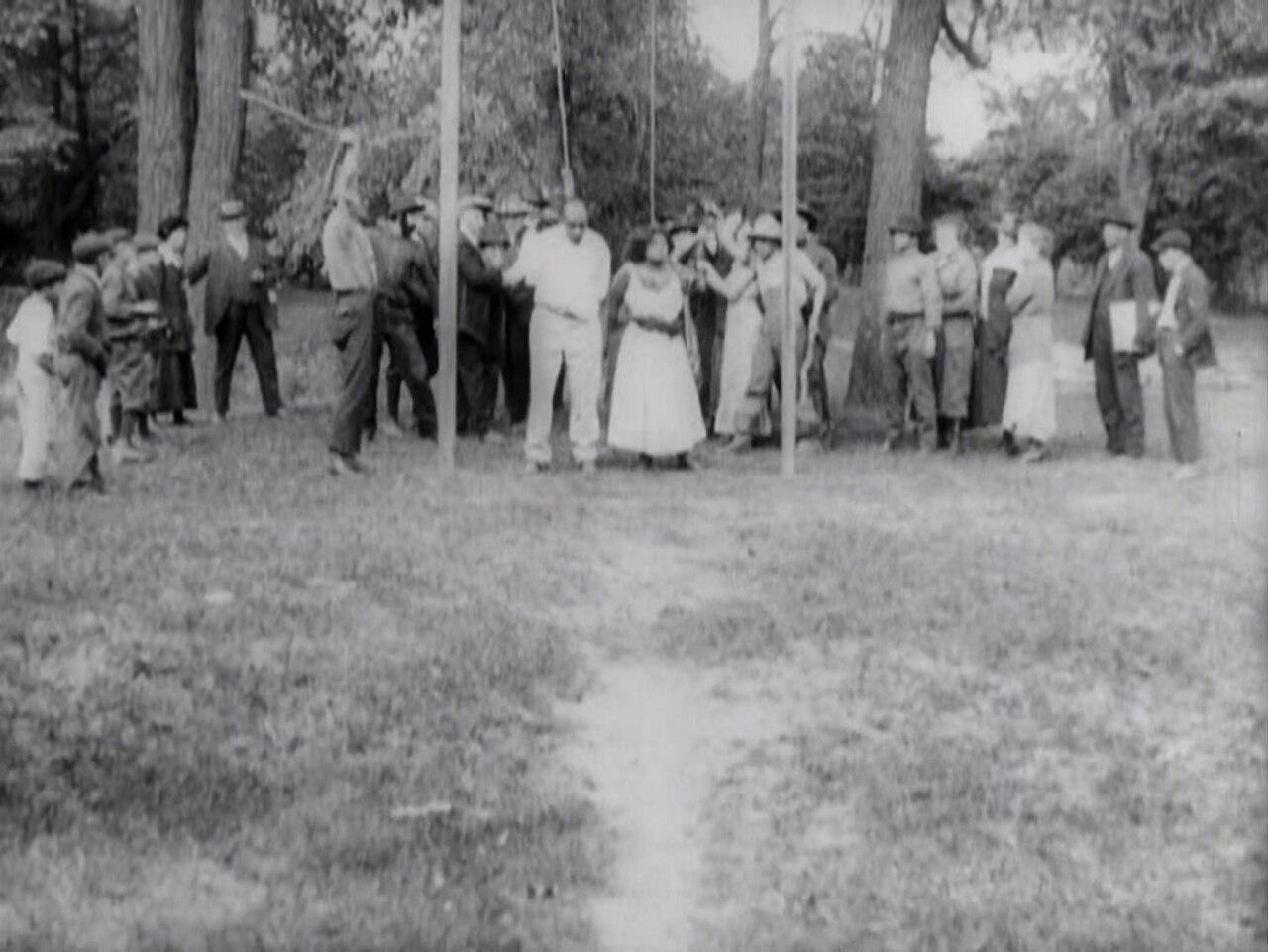
Still from Within Our Gates, portraying the lynching of Jasper Landry (William Stark) and his wife (Mattie Edwards)
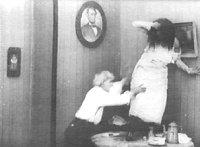
Still from the 1920 Oscar Micheaux film Within Our Gates featuring Grant Gorman and Evelyn Preer
"Within Our Gates 1920" review from Movies That Move We
Video link
https://www.youtube.com/watch?v=7pDDAem6CS8
Embed video
MY THOUGHTS
What does it mean to tell your own story when others with more power decide they don't want to see it?
What does it mean to tell stories that the larger industry was designed to oppress?
1919 The red summer, was the USA burning or was the black populace in the usa being burned?
4:22 the Spanish title is La Negra, the black... Within Our Gates Spanish title is , the black.
5:41 I didn't know Evelyn Preer died in child birth
The funny thing is Micheaux's stories had more complex characters than white financed films for decades after.
6:50 Piney Woods Country Life School https://en.wikipedia.org/wiki/Piney_Woods_Country_Life_School
The largest boarding school for black descended of enslaved, one of four Black DOS boarding schools.
https://www.pineywoods.org/
9:59 well said, Michaeux reverses the roles from "birth of a nation"
10:30 good point, representation is never neutral.
11:05 Also, shows the power of white violence, but also treats whites with a humanity, that his white peers do not do for blacks.
11:59 hmmmm well WEB Dubois/ Booker T Washington/ Marcus Garvey/ Frederick Douglass are all at the same time.
They all advocate for the rights of Black individuals or groups. They all advocate for learning, greater learning among black individuals or groups.
I think their variance is in the response to white violence and sequent actions or goals to black people.
Dubois heading the white jewish financed National association for the advancement of colored people don't take even one percent of the crimes against black people by whites to court, while he supports a phenotypically integrated workplace. I argue, Dubois wants civil rights but can only demand it as a public request to whites, alongside a request to allow blacks in white owned labor environments based on merit. But paid labor is rarely based on merit.
Washington wants Black people who at that time for ninety percent in the former confederacy states, to remain in the south and uphold a less intertwined form of integration. Washington doesn't want segregation but he wants to comfort whites by staying out of their towns/schools/business areas and getting black people to focus on building their own.
The variance between Dubois side Washington is in their end goals. Dubois end goal is to have communities/workplaces/schools where whites side blacks are one people. With that kind of goal, you can't have historic black colleges side historic white colleges. You can't have blacks towns side white towns. Government for Dubois is a tool to force total/holistic integration. This suited the white jew financiers for Dubois whose strategy was to guide blacks to have a holistic integration to get whites who are not jewish to embrace the white phenotypical populace with no boundaries in gender/religion/language/geographic ancestry. Looking at the future the White jews got what they wanted as the modern white populace at the time of this writing doesn't have any of the internal blockades to whites who are not male/Christian/European descent as in the eighteen hundreds or early nineteen hundreds. Washington's end goal is to have black communities/black schools/black businesses that only relate to whites financially, and stay out of government. The whites who financed Washington didn't have any allegiance to poor whites in the south and saw the black populace of the south as a potential offset to the poor white populace of the south. The Jim crow laws in many ways were pushed by financially poor whites who realized the black southern populace if not kept in an extremely negative financial state using the governments of the southern states, would be a rival and upend their position in bargaining with rich whites. Looking at today and the southern states, and how the white southern populace is the base for the anti immigrant position, it shows truth. The white southern populace didn't mind immigrants as long as they were hindering black financial growth by being cheaper labor or blockaded from bettering poor whites by their illegal status or extended jim crow laws.
Marcus Garvey though supported black rights plus education. The problem is Garvey didn't believe anywhere in the American continent was plausible for black rights to be upheld or for black education to lead to opportunity. And it is truthful, if you look at Mexico, brazil, the usa, even Haiti after henri Christophe died, the entire American continent, canada to argentina, before jean Jacques Dessalines or after henri Christophe in Haiti, was an anti black place. yes, examples throughout the American continent existed for black individual examples, going through many white walls. But, what is the point of life? is the point of life to struggle? I argue no. I argue the point of life is to have it good, have it easy, have it fun and ninety nine percent of black people in the entire American continent , canada to argentina, late eighteen hundreds or early nineteen hundreds, didn't have anything good or easy or fun. So leave the American continent. The tragedy is the same whites from Canada to Argentina who preached dislike of blacks hated the idea of black people leaving. Why? because white unity was only based on the presence of black people , in the entire American continent. The native American, indios had already been decimated in populace in such a way, they will never have the numbers to threaten, thus whites can't unify around an empty threat.
As for Frederick Douglass, he was older but his point wasn't to support dubois/washington/garvey but to state his belief, that the usa warrants surviving. Douglass point is the usa can become something no other government can and if black people leave en masse or don't seek complete integration, the usa can never become what he dreamed it become, a country of humans.
On one side note, Booker T Washington's wife was a white Asian and it is interesting that when you look at white Asians as a populace in the usa, they act the way booker t Washington wanted black descended of enslaved to act. Don't get involved in government, focus on your own everything. Not criminalizing integration but make everything a financial position first or foremost. In cheap retrospect, the one thing Washington didn't comprehend, and this connects to Haiti. Black DOSers relationship to the usa isn't fiscal, it isn't fiscal capitalistic. Black DOSers are not in the united states of America to make money. Black DOSers are in the usa because whites wanted it. Black DOSers can not find any reason to support the usa based on enslaved forebears. Ala, the often said while very erroneous, our forebears helped build the usa line. It is the great Black DOSer sin saying that line. My forebears were enslaved, but for anyone to suggest they cared one bit about anything in the usa, is an ugly lie. And this is the fundamental problem with said four leaders, each was bound to fail. WEB Dubois was being used to make unify white groups. Booker T Washington couldn't protect black people from fiscally poor whites violence. Garvey didn't believe in the usa or the American continent as a good place for blacks and whites in majority wanted blacks to change their minds, to anything but anti America. Frederick Douglass felt the Black DOS populace should fight through anything to remain in the usa for a greater human achievement that wouldn't benefit blacks in any of the ways they wanted but would support humanity in a way he felt it needed.
13:07 very true, i can't think of any other film showing white violence to black women that strongly, made in the usa.
14:19 i wonder your thought to passing?
15:18 good point, white comfort, this goes back to gone with the wind, a song of the south, birth of a nation, even king kong, make white people feel good about themselves, by not showing white people in any negative light.
16:37 yes, what gets saved isn't neutral and is also expensive. You have to say, what were black wealthy people doing? they could had saved.
17:21 good quote from mosely, if you are not in the story, you are not in the culture.
18:29 thank you for mentioning Julie Dash
20:00 What does watching the film demand today?
21:27 yes, lovely emotion from the thespians.
22:13 great show
Oscar Micheaux biography from Movies That Move We
https://youtu.be/1C5hxGrohps?si=hnAH78ulXh4-pyMg
my comment
What are your thoughts to the film passing?
Thanks for mentioning Julie Dash.
Great review... Oscar Micheaux in many ways incorporated WEB Dubois's philosophies aside Booker T Washington's philosophies in the production of this film.
I even wonder how many non blacks saw his films and were inspired by his work.
Great question, what would he think of the black film industry today? What would he think of the Black film industry in or out of the USA? Black identity today is global but is of many parts. Each part has its own environment. What would he think of Nollywood? What would he think of the Black film industry in the USA which monetarily is based on a handful of black producers: blacks with money or who can access money to make films?
That is such an engaging question you ask at the end. I wish he was alive to answer. I wish he had a journal. I wish I had all his screenplays. I know he wrote books alongside the films but it seems many are lost.
Profile of OScar Micheaux
video link
https://youtu.be/1C5hxGrohps?si=LKAo5vDY1-rQksl9
Embed video
MY THOUGHTS
2:44 thank you for saying it started in New York city, many don't know that.
5:23 I wonder what zukor will think to paramount today
5:58 Lamel made, Universal city, so in the end, the movie industry moved west to get as far from Edison or New York City as possible.
6:37 Fox created the proper business model, you need to own theaters to make money.
6:55 Mayer supported the star system.
7:07 Mary Pickford was connected.
8:37 good point on infrastructure.
10:46 thanks for informing about his mom who was a philosophical adherent of booker t Washington, thus he supported black strength in his films, but it wasn't anti white as much as anti "negative behavior"
12:27 I knew Micheaux self published, in Japan called Doujinshi, but I love hearing it.
13:17 good point, like booker t Washington, he wasn't trying to comfort whites or blacks, but telling the truth while supporting black empowerment.
14:17 William d foster [ https://en.wikipedia.org/wiki/William_D._Foster ] , Sherman h Dudley, theater owners booking association toba [ https://en.wikipedia.org/wiki/Sherman_H._Dudley ]
17:23 thank you for mentioning PAul Robeson started with an OScar Micheaux film.
18:49 and also integrated. The key is not merely showing Black positive lives, but showing black positive lives while in the environment of the USA.
my comment
thank you for mentioning PAul Robeson started with an OScar Micheaux film. [ https://en.wikipedia.org/wiki/Body_and_Soul_(1925_film) ]
hahaha Sinners! well done.
and spencer williams [ https://en.wikipedia.org/wiki/The_Blood_of_Jesus ]
Thinking on Nollywood, I wonder. As a Booker T Washington philosophical adherent, he would be pro USA. But, when you look at Nollywood, to be blunt, it is the biggest Black film industry in humanity. Bigger than the black film industry in south america/north america/southern asia.
Posse/Daughters of the Dust/Within Our Gates/ Emitai/ Ceddo are the first films that come to my mind with your question of films that need to be preserved. Now I want to say I am lucky, I remember seeing Within Our Gates when it was first refurbished. A black film organization exist in harlem that shared it. and I will tell you that most of the people in that showing were black. They existed in the Adam Clayton Powell state office building.
What does it mean to create when the system/environment is opposed to you as a creator or anything you create?
hmmmm,I always say the following, growing up as a kid, I recall so many books about black fantasy, not just history. Many black people... descended of enslaved or not, can recall biographies. And nothing is wrong with biographies. But I recall as a very little boy, thick books on black dos mythology, Haitian mythology, African myths, fables. I didn't just grow up learning about Madame CJ Walker side Malcolm side KWame Nkrumah side Ida B Wells...I learned about High John, The Devils Daughter, John Henry, Brer Rabbit. My point being, creating is a way to continue your heritage, what you carry side who you are. And if you don't create, you risk your heritage dying and future cultures, what people grow, being absent.
Creating is everything when it comes to artistic expression of self.
When you create in an environment opposed to you creating, it is more than just an artistic challenge. Creating in an environment supporting you creating is a blissful thing. Underrated often in how valuable it is, how emboldening it is. When you look at white film makers you see this. Whites could present their false narratives of the south , as supported creators. But when you are not supported in the environment you live in, you are making a specific statement. Said specific statement is, even though you are against me.. you have more power than me... I exist and I will not cower or delete my identity because I have impotencies.
It is interesting, because someone like Marcus Garvey will say it is better to find a supportive environment than create in an unsupportive one. and I concur to garvey, he is correct. It is unwise to create ... exist, in an environment opposed to you.
But what Micheaux displays, what all black filmmakers in the USA display, is what W.E.B. Dubois/ Booker T Washington/ Frederick Douglass all embodied or worked for. That even though a passion/suffering will happen when one creates in an environment opposed to one self, it is more valuable to create in an environment opposed to you creating to define not only yourself but to make a call, legally or militaristically impotent as it may be, to demand change to the environment that opposes. And that call has a power/value that can reach to a future with greater impotency than militaries or laws.
If Oscar Micheaux were alive today would he join Hollywood or would he do his own?
Micheaux would be independent. He would be an independent creator. I think he would also embrace internationalism in all earnest. I think he would learn languages to be into the film industries that don't speak English.
COMMENTARIES
osted just now
@aka Contrarian Micheaux never did mammy figures or tragic mulattoes or righteous reverend figures, in any of his films i saw. he did evil tricksters, but they were rarely pantomime and he did romantic leads, but they were human men.
Check out within our gates in the main post, it is free to view , you will see
osted just now
@aka Contrarian
well you know that most of Marcheaux's films , over ninety percent , have never been seen by anyone alive. So unfortunately, we only have a small section of films to view, and of the ones that are around today don't show those characterizations. I am not even certain all of Marcheaux's films are known. MAny have cited a list but ... unfortunately, absent a time machine, marcheaux's work like black descended of enslaved history from the early nineteen hundreds to fourteen ninety two is eternally incomplete.
Yes, all the black pantomime characters come from white theater. Jim Crow itself is a pantomime character. Before movies, theater plays plus recorded music was the prime media tools and were very commercial. Race music was huge, al jolsten was a white jew but the larger industry of race music/race theater, which had black writers like joplin, was huge in the united states of america. Such that when films come about they took the pantomime black characters from stage and music of the late eighteen hundreds, and put them on screen.
The interesting historical process for me is the analogous existence of Black fictional slave works, like clotel linked below, alongside the black pantomime.
The black late 1800s fiction is of fictional slave narratives. High John was still popular as a fable, and high john's nemesis is literally Massa, a white man with bone white skin with bone white clothes. Clotel to me is a fictional account but a pure indictment on the white populace of the usa. To restate, black late eighteen hundreds fiction arguably makes pantomime white villains/criminals/baddies. Oscar Micheaux emitted the vibe of the black written fictional slave narratives.
The white late 1800s fiction is of fictional slaver narratives. The films birth of a nation, gone with the wind, song of the south all reflect late eighteen hundreds white fictional slaver fiction literally made as a reply to black late 1800s fictional slave narratives.
And yes, in modernity, both late 1800s genres are no longer highly read or known or ... majority popular.
Both fictions were highly popular among the phenotypical groups they were made for with some crossover fans but blacks seemed to dislike the black fictional slave narratives as a genre. Whites slowly lost taste with the white fictional slaver narrative.
The question is why did Blacks dislike the black fictional slave narrative genre. Arguably the first fiscally successful genre in the usa.
https://aalbc.com/tc/blogs/entry/495-le-mulâtre-from-victor-séjour-two-versions-split-by-an-essay/
osted just now
@ProfD
3 hours ago, ProfD said:
Films depicting slavery aren't going to be very popular. Mainly because it des not make people feel better about themselves.
Entertainment is a form of escapism not intended to cause depression.
You sound like a very good friend of mine, a director, he always says, entertainment is to escape and I always tell him hogwash. I have never felt that way with entertainment, especially growing up. I have never wanted to be anyone but me, I like myself. II have never wanted to live anywhere than the harlem of yore that is now long gone. Now I admit, maybe having a loving home with both my parents in a small section of harlem that was happy/peaceful/black empowered meant I didn't feel bad about my home or the local area I live in the world. and thus no need to escape. As a brother of mine said, to a parent, maybe he is happy at home.
It took me years to comprehend how fortunate I was. If anything the fact that so many people in the usa, a country whose majority populace in modernity is descended on uninvited or unwanted people from the first peoples who came to this country to be happy as they were unhappy wherever they were from, find escapism through entertainment says alot about the ability of immigrants to find happiness in the usa.
When I first saw within our gates I wasn't depressed, I was interested. When I read poetry or stories in my contest/ challenges I am not looking to escape or be made to smile, I want to comprehend what the artists is saying. When I look at music, I never forget, mahalia jackson saying she would rather sing gospel than the blues cause she would rather be uplifted than sad and ... I call feces on that. I love black music, all of it, from various corners of the world and all the genres born in the land that is today the united states of america. Not all blues is sad. And mahalia should had known that. But, to your point Profd, mahalia jackson was making the same case , saying blues music is the same as fictional slave narratives, too sad, too negative, thus the need to escape, the truth, escape the things people don't want to hear or read or see because they remind them of reality that they don't want to deal with. Better to sing gospel, and not see the truth of the usa or your peoples place in it. Better to see the huxtable clan whom have none of the problems ninety percent of black people have than to see sanford and son. Even though as red fox said correctly, all black shows are dishonest, including sanford.
But then, we have in the same black populace, black people saying how black people need to want to be president and ceo and all of this stuff. I think the entertainment black people like over the years is telling to our mental states as a collective.
Thank you for your answer, I think , your 100% correct. I didn't want to face the answer is as simple as dismissal of certain aspects in the arts... maybe my variance is i look at things as the arts not exactly entertainment, if something I find funny happens I will laugh but I don't need to laugh de facto ... anyway, I think its interesting.
PRofd, isn't it a thoughtful dichotomy. Black people in majority have never been happy in the usa or the european colonies that preceded it , at any time including modernity, and yet, blacks went from enjoying fictional slave narratives as the most popular black fiction, to now in modernity not wanting any mention of enslavement in any fiction. The same black people who will say love the usa and their forebears died for them to be president, will then dismiss seeing enslaved to whites, black children tortured by whites in media. To me, that says they are lying to themselves. I start with myself, if I didn't know any black history as a child, my parents for whatever reason didn't tell me the truth, provide me books with the truth , and I was just presented escapisms, I imagine my whole stance toward the usa would be different today than what it is.
As a tutor I always told the children the truth, about everything. And this post has made me think about some of the other adults one time. I didn't think on it then but now I see why they looked at me a certain way... Thank you again. .. I realize now how many black people don't get black truth in their fiction, in their learning. It seems like many black adults want black children to be adults, circa twenty, before black truth is given... and this isn't something derived from whites, this is a black heritage.
I must admit , this topic has aided me in something, hmm thank you
3 hours ago, ProfD said:
Well, the archaeologists had to dig up Within Our Gates from a Spanish copy of the film. They had to edit to clean up/fix & translate it back to English.
Do you know the spanish subtitle for Within our gates is La Negra, the black woman. It is so basic, and a little crude and yet telling. Though I must admit the real story is how a copy of the film found its way to somewhere in spain.
@aka Contrarian
3 hours ago, aka Contrarian said:
@richardmurray: this same TV channel that I mentioned watching (back in the 1960's) showed old black movies from the past that did feature the stereo-typical black characters I mentioned. That's how l became aware of them. And they were "talkie" movies, not pantomimed, filmed during the late 1920s and early 1930s by black movie producers, lesser known than Oscar Marcheaux.
Incidentally, the acting was very amateurish and stilted, the sound and camera work of poor quality. Even so, they were treasures which I hope are stored away in vaults somewhere.
well yes I know what you speak. That is why i mentioned scott joplin, i love his rag works, but he did race music and it was very financially profitable for him. My point being... The hsitory of black comedians of the usa warrants a whole history section in the history of entertainment. You have whites who historically are most entertained by blacks or whites mocking blacks... immitation/bufoonery/jestering... the cakewalk started on plantations with black people mocking whites for a piece of cake. So whites historically love to be entertained, ala, made to laugh by blacks in the usa. Then you have especailly in the jim crow era, 1865 to 1980, blacks who increasingly want to escape as Profd said correctly. This leads to black entertainers developing to serve both audiences an interesting style. magical bufoonery. But yes, Michaeux was an outlier, but he also owned his own more than most black entertainers/filmmakers.
@admin
please share what you think after you view it, I want to know.
URL- only an excerpt
Wayback machine full version
The only copy of the oldest African-American film was hidden in Spain as 'La negra'
'Within Our Gates', the original title of Oscar Micheaux's film released in 1920, was kept at the Filmoteca, where it will be screened tomorrow, Wednesday, and was returned to the United States in the nineties

A moment from the film 'La negra', directed by Oscar Micheaux and released in 1920.
Elsa Fernández-Santos
Madrid - 08 Nov 2021 - 03:53 CET
In a letter dated July 23, 1979, one of the highest authorities on African-American cinema, Thomas Cripps, expressed his enthusiasm to one of the heads of the Spanish Film Archive, Catherine Gautier, for what seemed to be the discovery of a lost relic of the history of cinema. Gautier, a legendary programmer for more than four decades, had shown him the copy weeks earlier in Madrid and Cripps had come to the conclusion that the material could correspond to Within Our Gates, by the pioneering black filmmaker Oscar Micheaux. The film had been born as a response to the racism of D. W. Griffith's The Birth of a Nation, but neither whites nor blacks liked it. After its premiere in Chicago, it began to be censored or ignored until its only four copies were lost. One of them, however, travelled to Spain in the fifties where it was preserved under the title La negra or La negressa.
After traveling to Madrid and seeing the material in a moviola, Cripps informed Gautier that it could be three different titles by Micheaux in which actors, "a black informant" and the obsession with the culture of lynching, something recurrent in his films since he himself had witnessed a famous case as a child, that of Leo Frank, a young Jew who was the victim of a human pack that accused him of the murder of a minor whom he never killed.
The three films were The Gunsaulus Mystery, from 1921, Lem Hawkins' Confession, from 1935 or, the one that finally was, the oldest of all, Within Our Gates, released on January 12, 1920. Considered a National Asset, the film rescued in Spain is available on the internet, and can be seen tomorrow Wednesday as part of a cycle organized by the Filmoteca and the Reina Sofía entitled, Black Films Matter. After a long process, La negra passed into the hands of the American Film Institute. In 1993, it was restored by the Library of Congress, returning the intertitles from Spanish to English and, with the help of some of Micheaux's books, reinterpreting the dialogues in slang. "We did an exchange for Sierra de Teruel [by André Malraux, with a screenplay by Max Aub]," recalls Catherine Gautier. "I was in charge of relations with the other film libraries, where we looked for materials that we didn't have by Buñuel. We sent the first positive test to the United States in 1988. The internegative, a year later. They were excited, the film became a success."
Micheaux was attracted to interracial conflicts and used to reverse roles in his films. In Within Our Gates, it is a gossipy servant who causes the misunderstanding that ends with an older and innocent marriage on the gallows. They are the adoptive parents of the protagonist of the film, a mulatto, the black woman of the title, played by Evelyn Peers. The young woman has had the privilege of studying and in the first shot of the film, she appears dressed in white and reading in a flirtatious living room in a city in the north of the United States. She is a black woman with privileges, who defends the right to education and the vote of her own but who hides a traumatic past. The entire final part of the film is a long and dramatic flashback in the Mississippi Delta. There, on the plantation where their adoptive parents lived, the protagonist helps them add and subtract their savings so that they can collect from the boss without being deceived.
From the beginning of the footage, Micheaux refers to lynchings, from which he does not even save the abolitionist North. The owner of the plantation is presented as a tyrant, hated by whites and blacks, to whom his slanderous and drunken servant goes with stories of the other blacks who aspire to have an education. In the film they try to lynch four people, the only one who escapes death is a child, the protagonist's younger brother, who manages to flee. The noose around the neck is only explicitly seen in a dream of the gossipy servant, who also ends up beaten by the mob. The terrible sequence of the old couple executed closes with an ellipsis in which we only see how the rope on which they have been hanged is cut. To top off the horror, there is also an attempted rape, of such realism that actress Evelyn Peers remembered the sequence years later as the best and most brutal of her career. It is in this attempted rape that the origins of the character will be clarified, who her real father was and why she, unlike others, had agreed to an education.
Churches and film clubs
Within Our Gates was released in Chicago and Detroit in 1920, but the screenings began to be increasingly conflicting and the film stopped circulating in the main market to move only in churches and film clubs. Micheaux's style, who went on to shoot 40 more films always on the margins of the industry, is intense and at the same time sloppy, a disjointed editing that for some analysts responds to the style of improvised jazz. In any case, the film we know today is incomplete. The nitrate copy that arrived in Spain in 1956 was sold to the Filmoteca in a lot that includes titles such as La cabrita tira al monte, Pilar Guerra or a short film by Félix el Gato. Its price was 4,000 pesetas. "The Filmoteca bought the nitrate copy from Manuel Rabanal Taylor, who was national head of the SEU film clubs," explains Laura Carrillo Caminal, head of the Documentation and Cataloguing Service. "Subsequently, in 1961, the Arroyo laboratories were commissioned to produce a negative duplicate and a new 35 mm copy on acetate support, which was a non-flammable support and therefore safer. These commissions to the laboratory were, and are, common in the Filmoteca as part of its conservation policy. The original copy is not preserved, it would probably be lost because it is in poor condition."
Writer, director, producer and distributor, the figure of Micheaux has not ceased to gain relevance in recent times. The recently opened Academy Museum in Hollywood, in Los Angeles, has made questionable museological decisions by minimizing the figure of the great patriarch of cinema, D. W. Griffith, for the Southern exaltation of The Birth of a Nation. While tiptoeing around the man who according to Eisenstein taught everything "to everyone", author of Broken Lilies or Intolerance, the focus is on Micheaux's work and his cinema through extensive documentation that situates the context in which Within Our Gates was shot and released and why it is considered a response to racism in The Birth of a Nation, whose premiere in 1915 provoked protests from the African-American community.
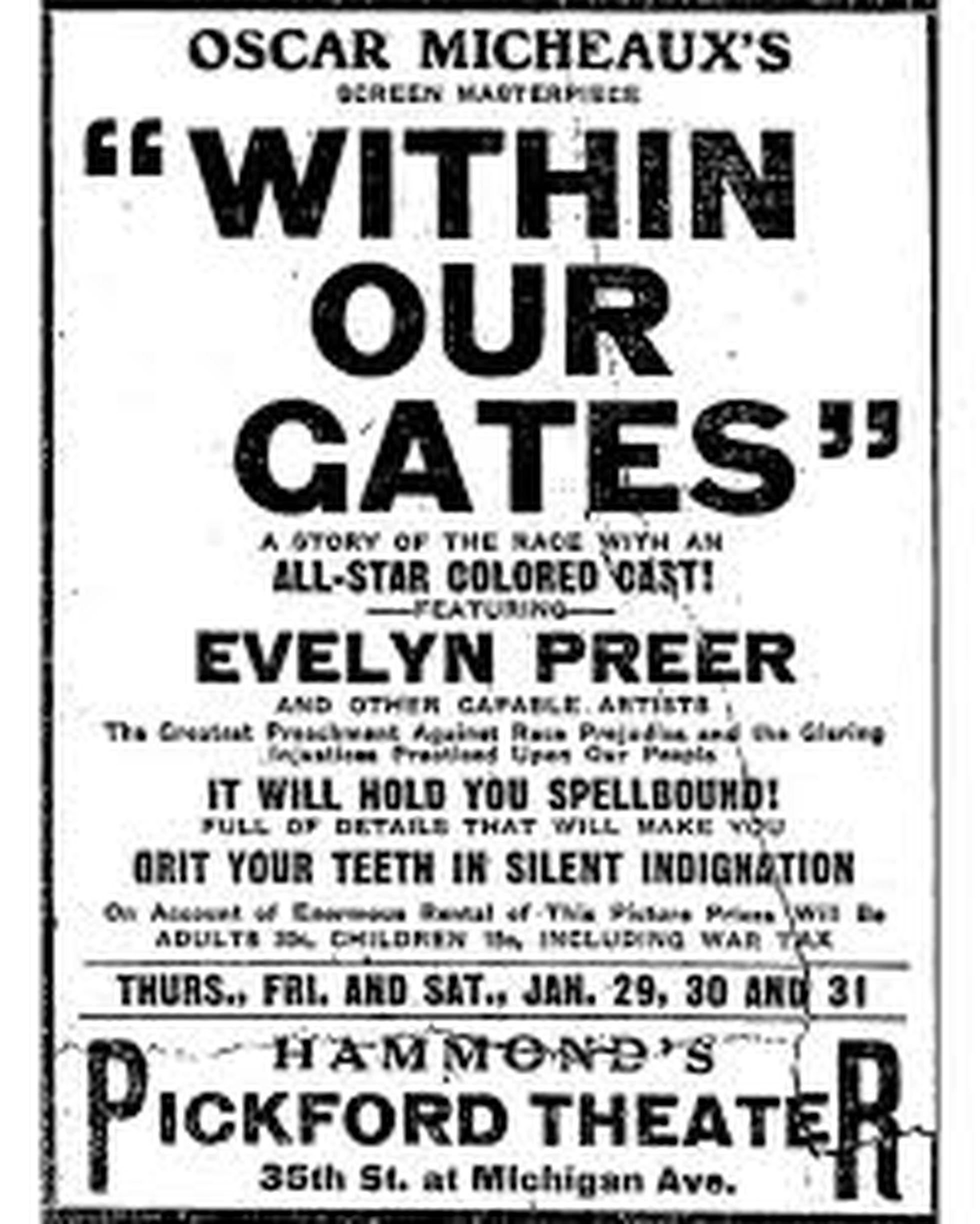
"Micheaux's importance as the first great African-American filmmaker cannot be underestimated," explains Zoran Sinobad, curator and head of film at the Library of Congress. "Not only was he the first African-American to direct feature films, but he was also the first whose films were screened in white theaters. This is especially important in the context of his work's commitment to racial injustice, a theme that was virtually non-existent on American screens in the 1920s. Micheaux was a groundbreaking filmmaker whose films challenged the stereotypical representations of black men and women that were prevalent in Hollywood at the time and provided a uniquely black perspective on race and life in the United States."
The Black Films Matter cycle that La Filmoteca and the Museo Reina Sofía present this month and which will last through December and January, aims to "give voice and space" to a series of filmmakers whose works have hardly been seen in Spain or Europe. [ https://www.museoreinasofia.es/actividad/black-films-matter ] The films of "pioneers such as Micheaux and Zora Neale Hurston; champions of race films such as Spencer Williams; revolutionaries such as Melvin van Peebles, Charles Burnett or Cheryl Dunye". All of them, fundamental names in the construction of an identity whose struggle to break with stereotypes was born in a film that chance brought to Spain.
Museo reina sofia of spain Black Films MAtter
https://vimeo.com/640315746?fl=pl&fe=sh
03142026
osted just now
@aka Contrarian
14 hours ago, aka Contrarian said:
@richardmurrayI watched "Within Our Gates" and fully appreciated it for what it was. In fact, it inspired me to do some research on Oscar Micheaux because I was both curious and confused about him, even misspelling his name. I was, however, vaguely familiar with him which was why I was of the opinion that it must've been his movies that I was seeing quite a while back on a local TV channel that did not run them in prime time but instead put them on during the early afternoon, almost as if to fill in empty air space like the wrestling matches and The Liberace Show did back during the early days of TV.
This would mean that my seeing these old films must've been back in the 1950s.
Anyway, I learned, to my surprise, that Oscar Micheaux was born in 1884 in Metropolis, Illinois, a town I know of because I had friends from there, and that he died in 1951, so he was alive during my life time.
I watched a couple of short YouTube videos about him and have concluded that at least some of those sound movies I was watching back then were ones
produced by him later in his career.
Finally, imo, some of the stereotypes I previously mentioned did appear in Micheaux's "Beyond the Gates". Certainly Sylvia Landry, the lovelorn heroine of "Within Our Gates, was a "tragic mulatto" whose real father was white and whose black adoptive parents were lynched, her adoptive and nurturing mother, Mattie, being a "Mammy" figure, and the wicked Larry, brother-in-law of Sylvia's cousin, being a villainous "Trickster", while the tattle tale Ephraim, was the "Coon" figure. The minister Jacobs, who ran a school for black children, represented the "Righteous Reverend"and Dr. Vivian, who falls in love with Sylvia, represented the "romantic hero".
These personifications, rather than being pantomimed degrading figures, were transformed in "Within Our Gates", and I suspect the improved versions, like the film itself, were used to counteract the negative caricatures that "The Birth of a Nation" depicted.
My introduction to Micheaux was probably about 70 years ago and I'm curious if those films I remember seeing were lost and no longer exist since the claim is being made that this movie is the last of its kind in existence.
Btw, I also beg to disagree with your classifying the Cakewalk as a form of buffoon mockery. It was actually an elegant, joyful, high-stepping dance where couples competed against each other, with the winner being awarded the prize of a cake!
Nor were minstrel shows totally without merit. They show cased sly humor, buck dancing and banjo artistry among other things.
I mention this because there was a time when black Masons would stage their own minstrel shows and, having seen one put on by my father's lodge when I was a young girl in the 1940s, I remember being rather proud that my dad, was a member of a barbershop quartet that performed in a show his Masonic lodge staged.
Just some thoughts...
Expand
Lovely thoughts, thank you for sharing them:)
Well use of the word personifications, in that true persons change are not pantomime.
Sylvia a true mulatto, definitely goes through trials or tribulations but she isn't tragic cause she wins in the end. She isn't clotel.
Mattie is motherly, in the same way Mammy's are, but Mattie is a black woman married to a black man raising a black child... when a black maid is motherly to a white child that is the mammy figure, it isn't a black woman being motherly to a black child, that is expected? right? The landrys are both hanged and burned alive for a crime they didn't commit.
hahaha LArry is the trickster, I admit he doesn't change. If anything he is the one true caricature. and Micheaux being like Pioneer:) one of these law abiding blacks, criminalizes black street people. All of larry's crimes are financial, none are violent. but yeah, larry is the pantomime black trickster, but knowing what I know of micheaux that makes sense. I as a writer don't view black hustlers negatively so...
Efram wasn't the coon for one reason, in the film, he recants his actions in a confession to the audience so to speak. yes, he is the prototypical coon figure gestures, talk and all, BUT unlike most coon figures, he gets killed by whites, which is a very rare touch. even among black writers, they rarely give "black traitors" aka coons the death that micheax gave efram.
People remember samuel l jackson's characters death in django, but he is murdered by a black man, django, Oscar micheaux murders his coon, efram through the true subjects whites, displaying the simple truth that whites are the enemy of blacks folks, whether the honorable, loving, law abiding Landry's or the lying, self hating scheming eframs. But the key is that efram confesses he hates himself, confesses he is wrong which is very rare in film, even black written films.
And your correct, the Rev is the "righteous reverend" and Dr.."good hero" But at least with the rev. he is actually challenged. when sylvia rebukes his offer of marriage, that is a real test that again, so few righteous reverends have in many stories. to be challenged is key to testing the identity. but the doctor is an evergood hero:) which ok:)
I wish I could see a complete version of symbol fo the unconquered. The partial I placed below. I think it is a response to birth of a nation, not within our gates. Why do I say this? In a general sense, because all of Micheaux's work involve the south plus black people and they are not like in griffith's film, they are all partially a response to birth of a nation, on a mere stylistic point. But in terms of agrarian fantasies, i argue, symbol of the unconquered is more of an agrarian fantasy which is what birth of a nation is, than within our gates.
Birth of the nation is dismissive of the usa outside of the south, in birth of a nation the usa outside of the south, doesn't functionally exist. In that way, within our gates isn't a reply. Within our gates is very much holistic. It is showing black unity between blacks outside the south and to the south. Sylvia makes it where the black school in the south will thrive/survive/live but she lives in the north, has found love in the north, fled the south because of white terror, but doesn't ask other black people to leave the south. Within our gates i argue is more holistic to the usa. that complete nature is absent in birth of a nation.
But symbol of the unconquered is all about black homesteaders. It is focused on a specific area in the usa like birth of a nation. And like birth of a nation has straight messages about certain persons or groups. Whereas the KKK is heroic supporting the traditions of the south in birth of a nation, the kkk is a terrorist illegal operating organization in symbol of the unconquered. whereas "birth's" female lead is so negatively biased she can jump off of a cliff to her death rather than be violated. the female lead in "symbol"fights through wind and rain and storms, to get her land. can be frightened but will never go to her death from fear.
yeah, well , even though I don't prefer comedy usually, i think comedy is the art form most in need in the usa at all times, this countries history doesn't yield to seriousness well.
lovely thought, thank you for sharing them
03152026
osted just now
@Pioneer1 my pleasure, check out more films and content
https://aalbc.com/tc/events/event/677-oscar-devereaux-micheaux-books-plus-films/
@Troy ah cool:)
some of the elements of within our gates are still rare to see. a black character who is publicly antiblack and confesses to it with shame before being killed by nonblacks, very rare to see //read/hear today in anything with a budget and getting paid to be made, even among black produced/financed work.
the relationship between north and south black regions in the usa, the lead female character does not like the south for multiple reasons and yet still helps the black populace in the south , I recall I mentioned in the past how many fiscally wealthy blacks who live outside the former confederacy have never paid for one person to go to one historical black college or universtiy (HBCU) even demanded all the people they have paid college for get money only if they go to a hbcu.
User Feedback
There are no reviews to display.