Many Americans hold
preconceived notions about romance fiction without having read one of these
books. Their knowledge of the genre involves perceptions about Harlequin
romances, terms such as “bodice rippers” or “purple prose,” and book covers with
Fabio embracing a blonde, blue-eyed ing’nue deep in the throes of passion. It is
widely believed that romance fiction only appeals to the type of women a
Washington Post reporter once called “the bored and the brain-dead.”
Despite stereotypes of the novels as “poorly written” or “trashy,” readers spend
nearly one billion dollars on romance fiction each year. Approximately two out
of every three paperback fiction titles purchased are romance novels. Sales of
romance fiction surpass those of mysteries, science fiction, and westerns
combined. Surprisingly, African-American readers make up the fastest growing
segment of the romance reading community, accounting for about 25 percent of the
romances sold. What accounts for this trend?
Ain’t Nobody’s Business If I Do
Romance novels are good escapist fare, says Jeanette Cogdell, senior reviewer
and editor for the popular Internet site Romance in Color (URL was www.romanceincolor.net).
”Reading a good romance novel helps to balance out the stress involved in
everyday living. When reality gets to be a bit too overwhelming for you, romance
novels offer an escape to a world you may never live in, but for those few hours
of reading, you become a part of.”
But choices were limited for the first generation of African-American romance
readers who entered the genre reading books by white authors. Historical
romance author Beverly Jenkins is an African American who was an avid romance
reader, growing up on “Victoria Holt, Phyllis Whitney and Georgette Heyer. When
times changed we moved to books by Kathleen Woodiwiss, Rosemary Rodgers and
Johanna Lindsay.”
Jenkins recalls, “Not a one [of the romance novels] featured women who looked
like us, but as we read them we longed for stories that did feature us, stories
that reflected the love our parents shared or our grandparents shared; the love
that we saw in that married couple at church who was always holding hands; or
the love we see every time we look into our partner’s eyes.”
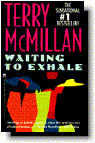 Prompted
by the enormous success of Terry
McMillan’s Waiting to Exhale in 1992, publishers began to accept manuscripts
by African-American writers in all genres, including romance. The introduction
of the Arabesque line in 1994; releases by authors
Beverly Jenkins, Amanda
Wheeler and Celene Hardware; and the launch of Genesis Press in 1995 — these
events all ushered in a new era in romance novels and the availability of
romance novels by and about Black women created a second generation of
African-American readers.
Prompted
by the enormous success of Terry
McMillan’s Waiting to Exhale in 1992, publishers began to accept manuscripts
by African-American writers in all genres, including romance. The introduction
of the Arabesque line in 1994; releases by authors
Beverly Jenkins, Amanda
Wheeler and Celene Hardware; and the launch of Genesis Press in 1995 — these
events all ushered in a new era in romance novels and the availability of
romance novels by and about Black women created a second generation of
African-American readers.
Blacks who read the early African-American romance fiction were drawn to the
stories about middle-class Blacks with whom they were able to identify and who
were involved in committed relationships. But psychologist Renee A. Redd,
director of Northwestern University’s Women’s Center, says the benefits for
readers are often more than superficial. Redd says that romance fiction provides
an escape from the social realities many African-American women face.
”They [romance novels] offer a substitute for those who have resigned to never
really being able to find a fulfilling love in their actual lives. The reality
of a dearth of available straight Black men for straight Black women is a
disconcerting and painful issue before us. For a long time we have lived with
the idea of the strong Black woman, who by implication can do without a romantic
relationship if she must, but the truth is that she would rather not.”
| ”…many feminist scholars and literary critics have berated the genre for its steamy sexual content. In addition, African-American scholars believe that the open sexual expression in romance novels can only reinforce negative stereotypes about Black women’s sexuality.” |
This acknowledgement the
social reality of the lack of marriageable African American men denotes the
difference between sister-girl fiction and romance fiction, says
second-generation romance reader Jean Dalton of New York City. “In Waiting to
Exhale, four educated and successful Black women sat around complaining about
Black men who were unable to commit, preferred white women, unemployed,
incarcerated, gay, adulterous or sexually inadequate, etc. African-American
romance heroines are more in charge of their futures. They aren’t sitting around
waiting to exhale.”
Author Gay G. Gunn agreed. “None of us could be found in Black literature at
that time. If novels gave us Black women who were about something, they still
gave us jerks for mates”
Nonetheless many feminist scholars and literary critics have berated the genre
for its steamy sexual content. In addition, African-American scholars believe
that the open sexual expression in romance novels can only reinforce negative
stereotypes about Black women’s sexuality. Renee Redd says, “I think most Black
women still believe that the sexual expressiveness allowed the women in romance
novels and to women of other races is not equally extended to Black women. This
is profoundly brought to our attention by the continued images of Black women
that are universally put forth.” The most prevalent television images of
African-American women currently come from talk shows, situation comedies, music
videos and crime-related news stories.
And, although some scholars and detractors have equated romance fiction with
soft-core pornography, devoted romance readers understand the differences among
romance, erotica, and pornography. Shareta Caldwell, a second-generation reader
from Los Angeles, says “Romances portray love, romance, and sensuality in an
positive adult manner. In romance novels, a man puts a woman’s pleasure first.
This is not the case in pornography.”
|
|
Jennifer Coates of Chicago
enjoys the committed relationships depicted in African-American romances. “In
other media, we see intimate relationships being treated casually—like a
handshake, but not that personal. The romance, the courting, the mystery seems
to have disappeared from contemporary literature.” Coates cites
Beverly Jenkins’ Night Song
among her favorites because the interaction between the hero and heroine
”demonstrates their appreciation and love for one another and solidified their
relationship for me, elevating their sharing and mutual respect from a
by-product, to the backbone of their intimate exchanges.”
It’s Not Just a “Girl Thing”
As the debate over the social and literary merits of romance novels continues,
the number of Black romances and readers is growing. Interestingly a small
number of men are beginning to examine the genre.
Larry Jones, of Fayetteville, North Carolina is a relatively new reader. “Like
most men, I used to think that romances were all hugging, kissing and longing
looks. But, as I began to read them, I found that they were that and much more.
The thing that struck me most, as I read, was that the female characters were
not weak women. In fact, they are the kind of strong, Black women that we
brothers dream about. They are the kind of women who can give it emotionally,
spiritually and physically,” says Jones.
”I really enjoy reading the works of
Beverly Jenkins. Her
historical romances, set mostly in the post-Civil War period, are exciting
reading. She frames her action against the prevailing social and political
climate of the day. It is interesting to see how her women deal with and
overcome social and racial prejudice. With leading ladies like Cara Henson,
Sable LeVeq and Grace Atwood, she is able to create entertaining stories filled
with romance, action, suspense, drama and tragedy.
What would it take to get more men to read romance novels? Jones says once men
get over their initial misconceptions about romance fiction, they will find
common ground. “They would see familiar situations from a woman’s perspective.
It’s also quite possible that by reading “women’s books,” men could learn a
little more about how their special woman looks at and feels about things. If I
were going to recommend something to another guy, it would most likely be
something in the historical vein.”
”I think Beverly Jenkins’ “Topaz” would be a good starter because it’s a good
mix of romance, whodunit, action and it’s just plain old good writing,” he adds.
Kay Mussell, Dean of the College of Arts and Sciences and a Professor of
Literature and American studies at American University, agrees. Mussell, who
has written four books about romance fiction, says romance novels are important
to study. “Over time, their core values - love, family domesticity, fidelity,
monogamy - have remained remarkably consistent while their subject matter and
plots have altered with the times. This gives us some insight into how women in
different eras perceive their roles, status, and some of the important issues of
their day.”
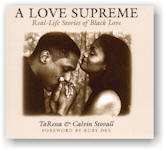 Critics of African-American romances often contend that they do not portray
African-American life. A Love Supreme: Real Life Black Love Stories by Calvin
and TaRessa Stovall presents real-life examples of many of the fictional plot
lines that rival those in African-American romance fiction. And, like romance
authors, the Stovalls produced the book to dispel harmful stereotypes of Black
male-female relationships presented in the media. Black art truly does imitate
Black life for a great many readers and writers.
Critics of African-American romances often contend that they do not portray
African-American life. A Love Supreme: Real Life Black Love Stories by Calvin
and TaRessa Stovall presents real-life examples of many of the fictional plot
lines that rival those in African-American romance fiction. And, like romance
authors, the Stovalls produced the book to dispel harmful stereotypes of Black
male-female relationships presented in the media. Black art truly does imitate
Black life for a great many readers and writers.
As Emma Rodgers of Dallas’ Black Images Book Bazaar says, “African-American
romance novels are so popular because they reflect the values of the majority of
the Black community [better] than most other types of media. The men and women
are educated professionals, gainfully employed… or are entrepreneurs,
upwardly mobile. The women are independent, career-minded with goals. Both are
law-abiding citizens. Readers seldom see these images reflected on the evening
news or in the daily paper.”
Themes and Trends
Readers are drawn to strong romance characters, relationships and the escape
they provide. As sociologist and romance novelist Gwynne Forster said, “What
makes characters uniquely African American is their perspective of the world
around them; their optimism and tenacious pursuit of dreams and goals in the
presence of towering social impediments; and their ability to laugh at awesome
obstacles, or to ignore them and, often, climb over them.”
African-American romances have touched upon a variety of contemporary issues and
topics: homelessness (Rendezvous by Bridget Anderson), substance abuse (Slow
Burn by Leslie Esdaile and One Love by Lynn Emery), breast cancer (I Promise by
Adrianne Byrd), date rape (Hidden Blessings by Jacquelin Thomas) and illiteracy
(Pride & Joi by Gay G. Gunn, and Forever Hers by Francis Ray).
Authors have also touched upon topics of specific concern to the
African-American community such as class and intraracial discrimination (The Way
Home by Angela Benson), the plight of the African-American farmer (For Keeps by
Janice Sims), sickle cell disease (Picture Perfect by Reon Carter and Opposites
Attract by Shirley Hailstock), organ donation (Precious Heart by Doris Johnson),
Black genealogy (A Forever Passion by Angela Winters), and the impact of the
foster care system of African-American children (Commitments by Carmen Green and
Charade by Donna Hill).
Readers say they enjoy seeing Blacks in a variety of occupations and story lines
which include features common to the every day lives of African Americans such
as historically Black colleges and universities, Kwanzaa, Black fraternities and
sororities, and religious denominations. Popular music also plays an important
role in these stories and often provides a backdrop and context for the plot. A
trait specific to African American romances is that between 35 and 40 percent
share titles or lyrics with “Old School” songs.
Beyond issues of race, African-American authors have begun to change the look of
romance. Love comes in all sizes, shapes and skin tones. There are romances
among Blacks throughout the African Diaspora. Full-figured women have been
showcased as primary love interests in novels that depart from the
one-size-fits-all school of romance. These include The Look of Love by Monica
Jackson, Mad About You by Roberta Gayle, and Fantasy by Raynetta Ma’ees.
And, as baby boomers mature, many storylines have begun to reflect the changing
demographic. Felicia Mason’s Body and Soul is a December-May romance between a
47-year-old woman with five grown children and a successful 30-something lawyer.
More recent titles (with older heroes, too!) include
Rochelle Alers’ novellas
”Far From Home,” “Stand-In Bride,” and “From the Heart”; Layle Giusto’s Silver
Love; Monica Jackson’s Never Too Late for Love; and Janice Sims’ A Second Chance
at Love.
Texas author Evelyn Palfrey writes books she calls “romances for the marvelously
mature. “I enjoyed reading romances, but I was way past where the storylines and
heroines were. Some of the main characters were the same age as my children and
I had already come through some of the problems they faced. I began writing
because I wanted to read stories about women like me,” says Palfrey. Her novels
include Three Perfect Men, The Price of Passion, Dangerous Dilemmas, and
Everything in Its Place. Subplots have touched upon menopause, second- chance
romances and grandparents raising their grandchildren.
You Can’t Judge a Book By Its Cover
While there are those who complain that the characters inside African-American
romances are not Black enough, others complain that the characters outside the
novels might be “too Black.” In an Arlington Morning News story about crossover
marketing of African-American romances, a magazine publisher indicated that the
covers, which show Blacks in Afrocentric styles, might make white readers
uncomfortable.
|
|
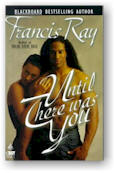
”There are many people who might see the covers of the books, which often
feature women with braids or short kinky cuts and men with clean-shaven heads
and dark skin, as being too black and in-your-face” She went on to suggest
covers without people.
African-American romance readers chafe at the notion of removing Black
characters from the covers to make the stories more palatable to non-Black
readers. Shareta Caldwell says, “I like it when there are Black faces on the
books, especially if the cover is an accurate portrait of the character in the
book. That is the reason I picked up Beverly Jenkins’ Indigo. I loved the
picture. And I don’t like the idea of fooling people by not having real Black
people on the front. If White readers can’t get past the braids, locks,
bald-heads, and Black skin on the cover, then how are they going to get through
the book?”
The boom in African-American romances has created a market for male cover
models. On the covers of African-American romances, it’s not Fabio, it’s
Demetrius. He, Daryl Farmer and Kendall McCarthy are popular with readers. In
addition, Arabesque/BET Books has held an annual cover model search. The winners
have graced the covers of a September release for the last three years. This
year’s winner, Paul Haney, is a Washington D.C. - area firefighter who was among
those who responded to the September 11 attack on the Pentagon. Fittingly, is
appears on Dierdre Savoy’s Holding Out for a Hero.
Romance in the New Millennium
The genre currently is in a state of change. Several established authors like
Donna Hill and Francis Ray are making the transition into mainstream fiction
just as more publishers are beginning to publish African-American romances.
Mid-list authors are making steps up. New authors are entering the genre. Edwina
Martin-Arnold, Seressia Glass, Tamara Sneed, Reon Carter Laudat and Niobia
Bryant are part of the next generation of romance writers.
However, readers like Jeanette Cogdell are cautiously optimistic. She is
concerned about the encroachment of hip-hop values into a genre that is
definitely “Old School.” “Courtship, marriage, commitment and sex are definitely
seen differently by this generation,” says Cogdell.
It’s All About Love
African-American romance readers are not a monolithic group. They enjoy story
lines that illustrate the depth and breadth of African-American culture, that
depict their history, and that dispel stereotypes. Readers are drawn to the
romance genre because the stories provide an escape and are devoid of racial
conflict, gratuitous sex and profanity. African-Americans who read romance
novels tend to be avid readers who enjoy other forms of African-American
literature, and books in other genres by black non-black authors. Despite the
predictability of the happy ending, readers enjoy discovering how the author is
going to resolve conflicts between the main characters.
Suggested Reading
Alers, Rochelle. (1999).
Summer Magic. New York: Arabesque/BET Books.
Click to order via
Amazon
Alers, Rochelle, Hill, Donna, Jackson, Brenda, & Ray, Francis. (2000).
Welcome to Leo’s. New York: St. Martin’s Press.
Click to order via
Amazon
Alers, Rochelle, Hill, Donna, Mason, Felicia, & Ray, Francis. (1999).
Rosie’s Curl and Weave. New York: St. Martin’s Press.
Click to order via
Amazon
Esdaile, Leslie, Henderson, T.T., & Thomas, Jacquelin. (2001) After the Vows,
Genesis Press.
Click to order via
Amazon
Green, Carmen. (1997). Silken Love. New York: Arabesque/BET Books
Click to order via
Amazon
Gunn, Gay G. (1997). Nowhere to Run. Columbus, Miss.: Genesis Press.
Click to order via
Amazon
Hill, Donna. (1997). Intimate Betrayal. New York: Arabesque/BET Books
Click to order via
Amazon
Jackson, Brenda. (1997). Eternally Yours. New York: Arabesque/BET Books.
Click to order via
Amazon
Jackson, Brenda. (2000). Secret Love. New York: Arabesque/BET Books.
Click to order via
Amazon
Jenkins, Beverly. (1996). Indigo. New York: Avon Books.
Click to order via
Amazon
Jenkins, Beverly. (1997). Topaz. New York: Avon Books.
Click to order via
Amazon
Mason, Felicia. (1995). Body and Soul. New York: Arabesque/BET Books.
Click to order via
Amazon
Ray, Francis. (2000). Heart of the Falcon. New York: Arabesque/BET Books
Click to order via
Amazon
Sims, Janice. (1999). A Bittersweet Love. New York: Arabesque/BET Books
Click to order via
Amazon