The OCM Bocas Prize for Caribbean Literature
← Back to Main Awards Page
The OCM Bocas Prize for Caribbean Literature is a major award for literary books by Caribbean writers. Prizes are awarded in three categories: poetry, fiction, and literary non-fiction; with one book being named the “Overall Winner.” The prize includes an award of $10,000 for the overall winner ($3,000 for the other winners), and is sponsored by One Caribbean Media. The awards are announced during the Bocas Literary Festival which is held in Trinidad & Tobago each spring.
To be eligible for the prize, a book must have been published in the past calendar year, and written by an author born in the Caribbean or holding Caribbean citizenship. Books must also have been originally written in English. Learn more ▶.
3 Books Honored in 2024
Hungry Ghosts
Buy from AALBC
Add to Cart — $18.99More Book Details
Fiction, Paperback, 335 pages
Publisher: HarperCollins
ISBN: 9780063213418
 Bookshop
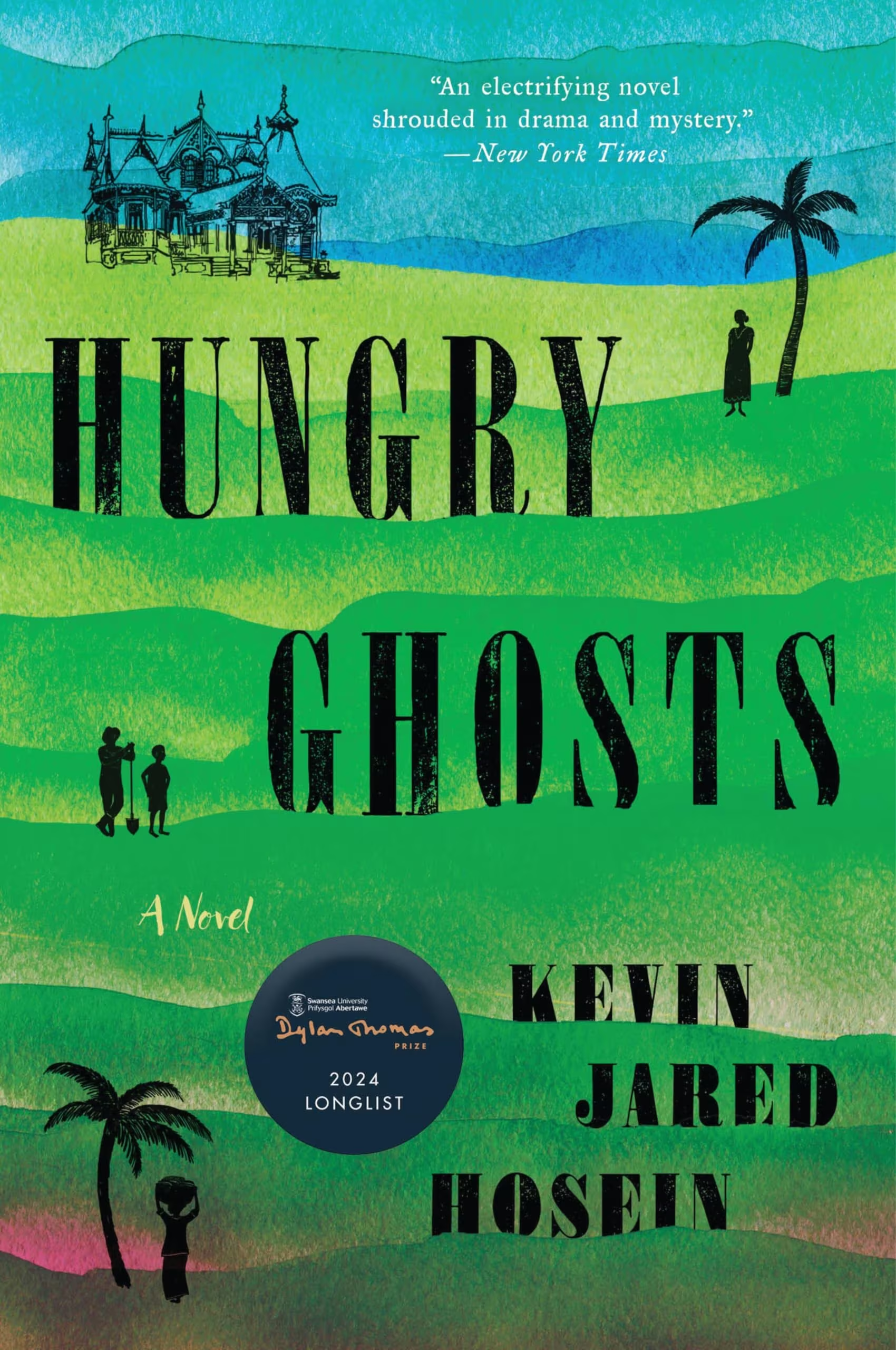
Hungry Ghosts
Longlisted for the Swansea University Dylan Thomas Prize
Winner of the Walter Scott Prize for Historical Fiction
This is a deeply impressive book, and I think an important one. Its intensity, its narrative attack, the fascinations of its era and setting, make it impossible to tear the attention away. Energy and inventiveness distinguish every page.
Hungry Ghosts is a sweeping debut from an unforgettable new voice in Caribbean literature. Set in 1940s Trinidad, near the end of American occupation and British colonial rule, the novel follows the intertwined fates of two families—one wealthy, the other impoverished—and a chilling mystery that binds them together.
On a hill above Bell Village stands the Changoor farm, home to Dalton and Marlee Changoor. Below, in the Barrack, a rundown building split into crowded rooms, live the Saroops—Hans, Shweta, and their son, Krishna. Theirs is a world of poverty, unrelenting labor, and spiritual endurance.
When Dalton mysteriously disappears and Marlee’s safety is threatened, Hans is hired as a watchman on the estate, lured by the promise of stability. But this shift sets off a sequence of events that entangles both families and irreversibly changes the community.
Lyrical and searing, Hungry Ghosts explores themes of class, religion, historical violence, and generational trauma. Rooted in Trinidad’s pastoral landscape and oral storytelling traditions, this novel is an unforgettable meditation on power, sacrifice, and the consequences of injustice.
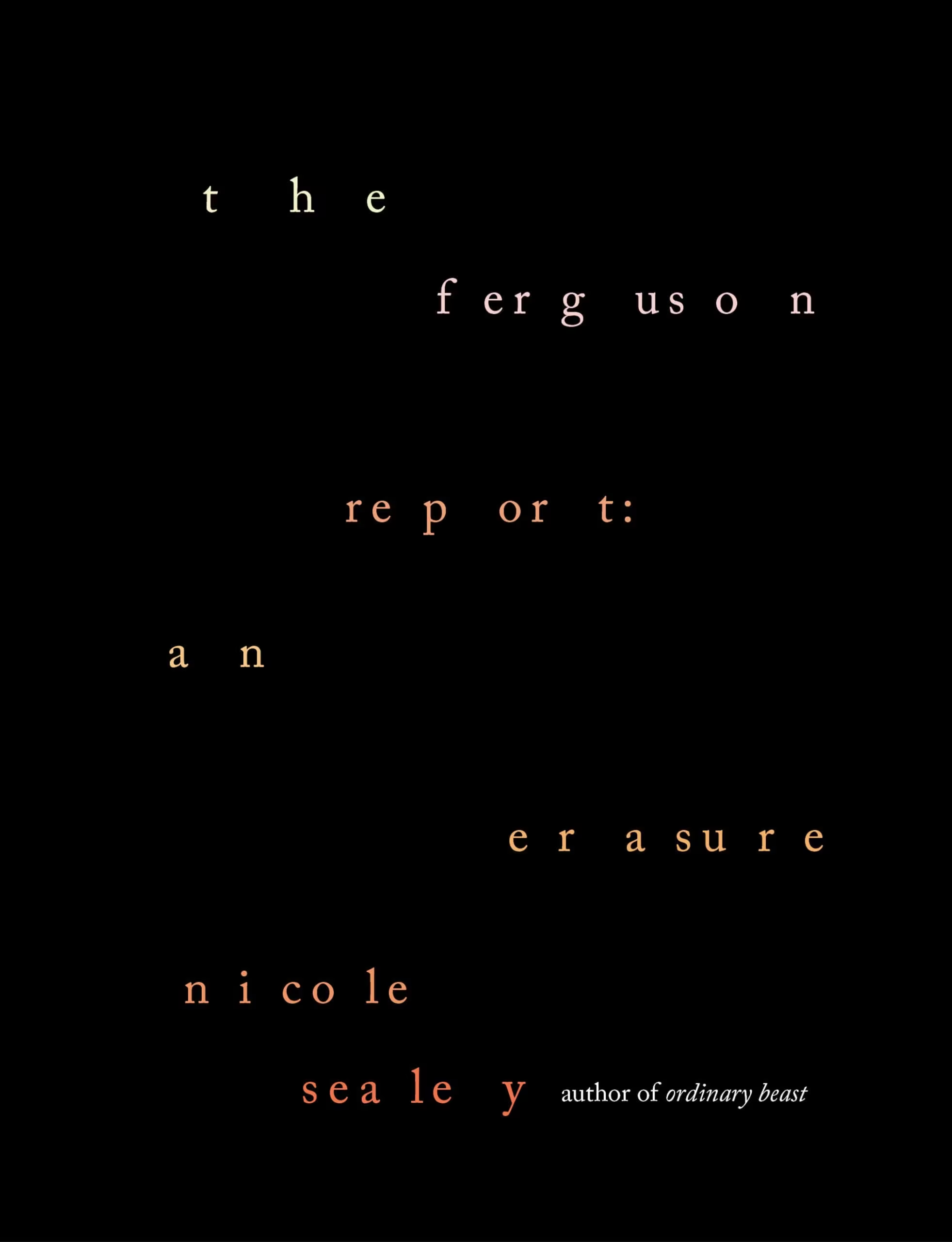
The Ferguson Report: An Erasure
Buy from AALBC
Add to Cart — $29.00More Book Details
Poetry, Hardcover, 144 pages
Publisher: Penguin Random House
ISBN: 9780593535998
A New Yorker Best Book of the Year • A meditation on our times, cast through a reconsideration of the Justice Department’s investigation of the Ferguson Police Department.
In August 2014, Michael Brown—a young, unarmed Black man—was shot to death by a police officer in Ferguson, Missouri. What followed was a period of protests and turmoil, culminating in an extensive report that was filed by the Department of Justice detailing biased policing and court practices in the city. It is a document that exposes the racist policies and procedures that have become commonplace—from disproportionate arrest rates to flagrant violence directed at the Black community. It is a report that remains as disheartening as it is damning.
Now, award-winning poet Nicole Sealey revisits the investigation in a book that redacts the report, an act of erasure that reimagines the original text as it strips it away. While the full document is visible in the background—weighing heavily on the language Sealey has preserved—it gives shape and disturbing context to what remains.
Illuminating what it means to live in this frightening age, and what it means to bear witness, The Ferguson Report: An Erasure is an engrossing meditation on one of the most important texts of our time.
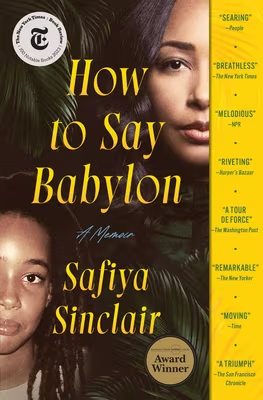
How to Say Babylon: A Memoir
Buy from AALBC
Add to Cart — $18.99More Book Details
Nonfiction, Paperback, 352 pages
Publisher: Simon & Schuster, Inc.
ISBN: 9781982132347
With echoes of Educated and Born a Crime, How to Say Babylon is the stunning story of the authors struggle to break free of her rigid Rastafarian upbringing, ruled by her fathers strict patriarchal views and repressive control of her childhood, to find her own voice as a woman and poet.
Throughout her childhood, Safiya Sinclairs father, a volatile reggae musician and militant adherent to a strict sect of Rastafari, became obsessed with her purity, in particular, with the threat of what Rastas call Babylon, the immoral and corrupting influences of the Western world outside their home. He worried that womanhood would make Safiya and her sisters morally weak and impure, and believed a womans highest virtue was her obedience.
In an effort to keep Babylon outside the gate, he forbade almost everything. In place of pants, the women in her family were made to wear long skirts and dresses to cover their arms and legs, head wraps to cover their hair, no make-up, no jewelry, no opinions, no friends. Safiyas mother, while loyal to her father, nonetheless gave Safiya and her siblings the gift of books, including poetry, to which Safiya latched on for dear life. And as Safiya watched her mother struggle voicelessly for years under housework and the rigidity of her fathers beliefs, she increasingly used her education as a sharp tool with which to find her voice and break free. Inevitably, with her rebellion comes clashes with her father, whose rage and paranoia explodes in increasing violence. As Safiyas voice grows, lyrically and poetically, a collision course is set between them.
How to Say Babylon is Sinclairs reckoning with the culture that initially nourished but ultimately sought to silence her; it is her reckoning with patriarchy and tradition, and the legacy of colonialism in Jamaica. Rich in lyricism and language only a poet could evoke, How to Say Babylon is both a universal story of a woman finding her own power and a unique glimpse into a rarefied world we may know how to name, Rastafari, but one we know little about.
Reader Comments (0)
Log In to Join the Conversation
Commenting is reserved for registered AALBC members to maintain high-quality discussions.
No comments yet. Be the first to share your thoughts!
Advertisement