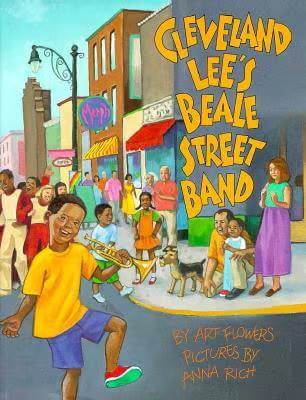
Cleveland Lee’S Beale St. Band
Buy from AALBC
Add to Cart — $14.95More Book Details
Fiction, Hardcover, 32 pages
Age Range: Picture Book
Publisher: Troll Communications
ISBN: 9780816736522
 Bookshop
Description of Cleveland Lee’S Beale St. Band
When Cleveland Lee says he wants to play trumpet in his sister’s marching band, everyone laughs and says he’s too young. Then one of the grand old bluesmen of Beale Street show Cleveland how to play music straight from his heart—and all of Memphis takes notice. Vibrant paintings pulse to the beat of the rhythmic text, making this a memorable tribute to the birthplace of the blues. Full color.
African American writer, griot and blues singer Arthur Flowers and Indian scroll painter Manu Chitrakar combine their very distinctive storytelling traditions in an extraordinary jam session, creating this stunning graphic narrative-style biography of Martin Luther King Jr.
The engaging text describes the apartheid South in Martin Luther King’s time, which in many ways was not very different from the early days of slavery. Included are descriptions of the Montgomery Bus Boycott; the formation of civil rights groups; mass movements against segregation, such as the Albany Movement and the Children’s Crusade in Birmingham, after which King became black America’s acknowledged leader; and the influence on King of Gandhi, with his nonviolent approach to resistance. We are told about King’s personal struggles as well as the political challenges he faced with the rise of Malcolm X and Black Power. Flowers’ text concludes with a brief look at his legacy.
Arthur Flowers tells a masterful story in musical prose, based on griot oral storytelling traditions, bringing his own perspective to the events he describes, while Manu Chitrakar carries the tale into the vivid idiom of Patua art, turning King’s historic journey into a truly universal legacy.
Includes editorial notes, a description of how this extraordinary cross-cultural book came to be, and a note on Patua art.