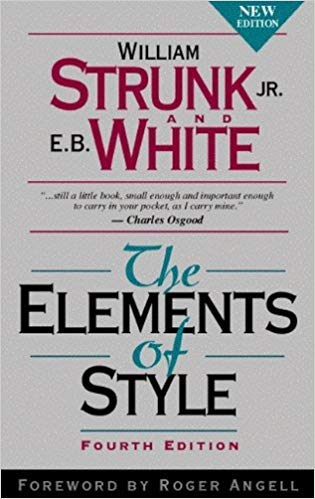
The Elements of Style
Buy from AALBC
Add to Cart — $14.99 Bookshop
Excerpt
In the final chapter of The Elements of Style, E. B. White provides a list of guidelines to help writers develop a distinctive and effective voice. These are not rigid rules of grammar, but rather a philosophy for better communication.
- Place yourself in the background: Write in a way that draws attention to the sense and substance of the writing, rather than to the mood and temper of the writer.
- Write in a way that comes naturally: Use words and phrases that come to you spontaneously, but do not mistake casualness for lack of care.
- Work from a suitable design: Even a simple outline can prevent a piece of writing from becoming a mere series of sentences.
- Write with nouns and verbs: Adjectives and adverbs should be used sparingly. The strength of a sentence lies in its nouns and verbs.
- Revise and rewrite: Very few writers are so gifted that they can produce a perfect manuscript on the first try.
- Do not overwrite: Rich, ornate prose is often hard to digest. Avoid the temptation to use "fancy" words when simpler ones will do.
- Do not overstate: When you overstate, the reader will be on guard, and your credibility will diminish.
- Avoid the use of qualifiers: Words like rather, very, little, and pretty are the "leeches that infest the pond of prose, sucking the blood of words."
- Do not affect a breezy manner: True humor and ease come from the subject matter, not from forced "cleverness" in the writing.
- Use orthodox spelling: Avoid "simplified" spellings like thru or nite unless you are writing something highly informal.
- Do not explain too much: Trust your reader. You do not need to describe every facial twitch if the dialogue conveys the emotion.
- Do not construct awkward adverbs: Words like importantly or firstly often clutter a sentence unnecessarily.
- Make sure the reader knows who is speaking: In dialogue, be clear about the speaker so the reader doesn't have to go back and count lines.
- Avoid fancy words: Prefer the familiar word to the far-fetched. Write buy instead of purchase, and help instead of facilitate.
- Do not use dialect unless your ear is good: If you cannot capture the authentic sound of a region or culture, avoid trying to spell it out phonetically.
- Be clear: Clarity is not a "virtue" of writing; it is a duty. If the reader is lost, the writer has failed.
- Do not inject opinion: Unless you are writing an editorial or an essay of opinion, stay focused on the facts of the story.
- Use figures of speech sparingly: A metaphor is like a spice; too much of it can ruin the dish. Avoid mixed metaphors (e.g., "The ship of state is flying through the air").
- Do not take shortcuts at the expense of clarity: Avoid initials and acronyms (like NASA or NATO) unless you are certain the reader knows them.
- Avoid foreign languages: Use English whenever possible. Do not use a French phrase if an English one exists that says the same thing.
- Prefer the standard to the offbeat: Use language that has stood the test of time rather than the latest slang or jargon.
Read Pearson’s description of The Elements of Style .
Copyright © 1999 Pearson/William Strunk Jr. and E. B. White. No part of this excerpt may be reproduced or reprinted without permission from the publisher or author.
Reader Comments (0)
Log In to Join the Conversation
Commenting is reserved for registered AALBC members to maintain high-quality discussions.
No comments yet. Be the first to share your thoughts!
Advertisement