NYT 100 Notable Books of 2011 by Authors of African Descent
Each year, The New York Times releases its “100 Notable Books” list, featuring standout works of fiction, poetry, and nonfiction selected by the editors of The New York Times Book Review. Below are the books by—and about—people of African descent that made the 2011 list.
8 Notable Books Found for 2011
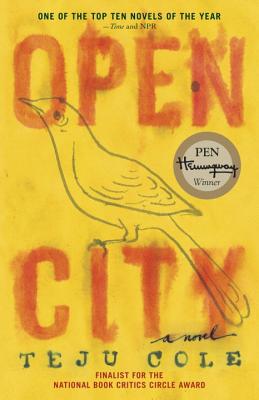
Open City
Buy from AALBC
Add to Cart — $17.00More Book Details
Fiction, Paperback
Publisher: Penguin Random House
ISBN: 9780812980097
 Bookshop
The past, if there is such a thing, is mostly empty space, great expanses of nothing, in which significant persons and events float. Nigeria was like that for me: mostly forgotten, except for those few things that I remembered with outsize intensity.
Along the streets of Manhattan, a young Nigerian doctor doing his residency wanders aimlessly. The walks meet a need for Julius: they are a release from the tightly regulated mental environment of work, and they give him the opportunity to process his relationships, his recent breakup with his girlfriend, his present, his past. Though he is navigating the busy parts of town, the impression of countless faces does nothing to assuage his feelings of isolation.
But it is not only a physical landscape he covers; Julius crisscrosses social territory as well, encountering people from different cultures and classes who will provide insight on his journeywhich takes him to Brussels, to the Nigeria of his youth, and into the most unrecognizable facets of his own soul.
A haunting novel about national identity, race, liberty, loss, dislocation, and surrender, Teju Coles Open City seethes with intelligence. Written in a clear, rhythmic voice that lingers, this book is a mature, profound work by an important new author who has much to say about our country and our world.
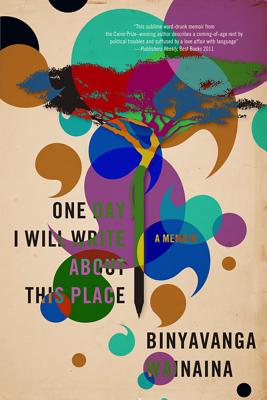
One Day I Will Write About This Place: A Memoir
Buy from AALBC
Add to Cart — $16.00More Book Details
Fiction, Paperback, 272 pages
Publisher: Graywolf Press
ISBN: 9781555976248
A Kenyan Portrait of the Artist as a Young Man suffused by a love affair with language.Publishers Weekly, Top Ten Books of 2011
In this vivid and compelling memoir, Binyavanga Wainaina tumbles through his middle-class Kenyan childhood out of kilter with the world around him. In One Day I Will Write About This Place, named a 2011 New York Times notable book, Wainaina brilliantly evokes family, tribe, and nationhood in joyous, ecstatic language.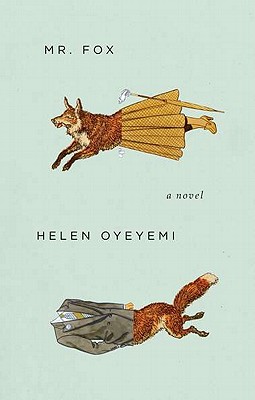
Mr. Fox
Buy from AALBC
Add to Cart — $25.95More Book Details
Fiction, Hardcover, 336 pages
Publisher: Penguin Random House
ISBN: 9781594488078
Winner of the Hurston/Wright Legacy Award for Fiction
One ofGrantas Best Young British Novelists
From the prizewinning young writer of What Is Not Yours Is Not Yours, coming February 2016, a brilliant and inventive story of love, lies, and inspiration.
Fairy-tale romances end with a wedding, and the fairy tales dont get complicated. In this book, the celebrated writer Mr. Fox cant stop himself from killing off the heroines of his novels, and neither can his wife, Daphne. Its not until Mary, his muse, comes to life and transforms him from author into subject that his story begins to unfold differently.Mary challenges Mr. Fox to join her in stories of their own devising; and in different times and places, the two of them seek each other, find each other, thwart each other, and try to stay together, even when the roles they inhabit seem to forbid it. Their adventures twist the fairy tale into nine variations, exploding and teasing conventions of genre and romance, and each iteration explores the fears that come with accepting a lifelong bond. Meanwhile, Daphne becomes convinced that her husband is having an affair, and finds her way into Mary and Mr. Foxs game. And so Mr. Fox is offered a choice: Will it be a life with the girl of his dreams, or a life with an all-too-real woman who delights him more than he cares to admit?The extraordinarily gifted Helen Oyeyemi has written a love story like no other. Mr. Fox is a magical book, endlessly inventive, as witty and charming as it is profound in its truths about how we learn to be with one another.
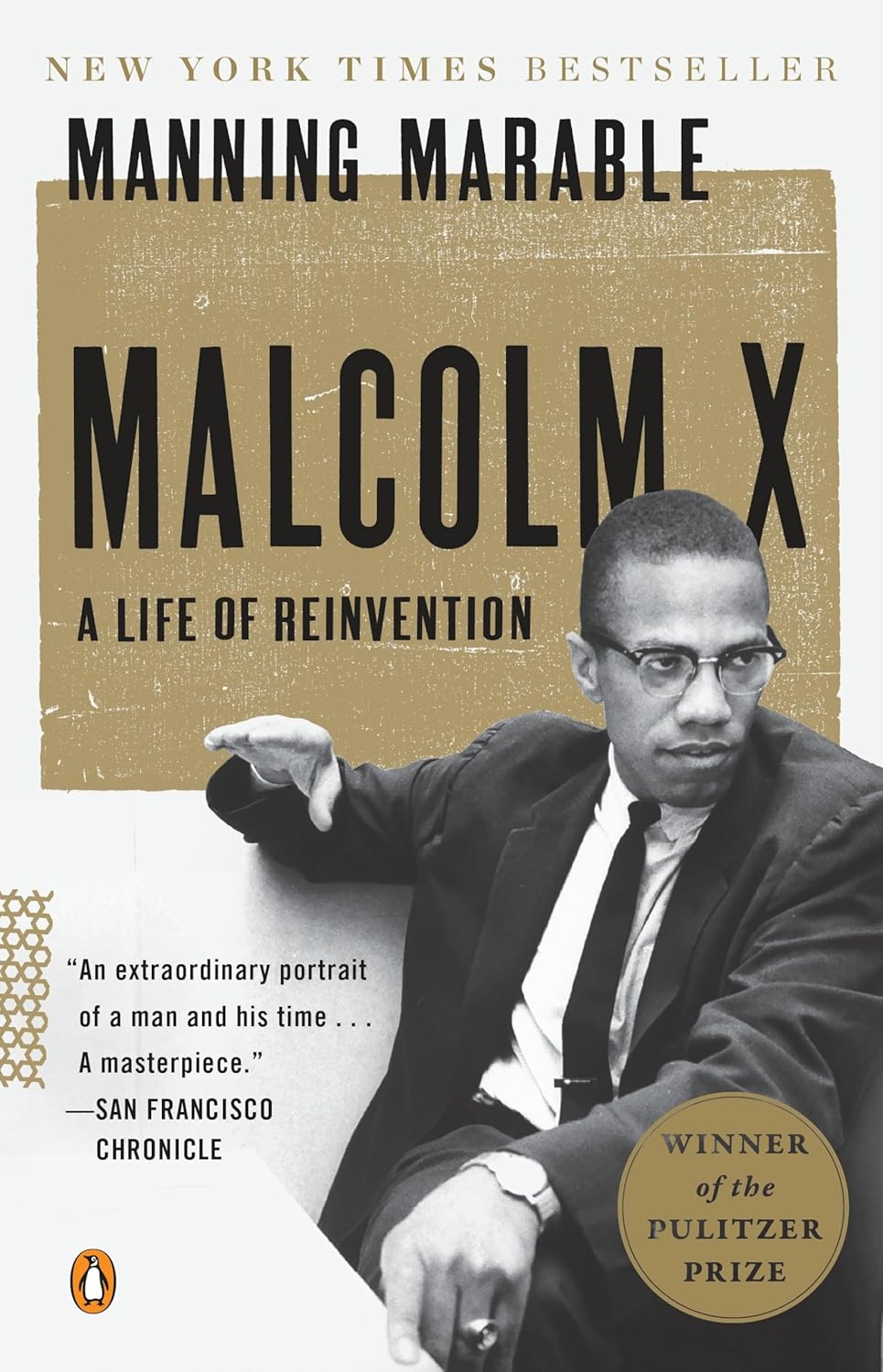
Malcolm X: A Life Of Reinvention
Buy from AALBC
Add to Cart — $25.00More Book Details
Nonfiction, Paperback, 624 pages
Publisher: Penguin Random House
ISBN: 9780143120322
Years in the makingthe definitive biography of the legendary black activist.
Of the great figure in twentieth-century American history perhaps none is more complex and controversial than Malcolm X. Constantly rewriting his own story, he became a criminal, a minister, a leader, and an icon, all before being felled by assassins bullets at age thirty-nine. Through his tireless work and countless speeches he empowered hundreds of thousands of black Americans to create better lives and stronger communities while establishing the template for the self-actualized, independent African American man. In death he became a broad symbol of both resistance and reconciliation for millions around the world.
Manning Marables new biography of Malcolm is a stunning achievement. Filled with new information and shocking revelations that go beyond the Autobiography, Malcolm X unfolds a sweeping story of race and class in America, from the rise of Marcus Garvey and the Ku Klux Klan to the struggles of the civil rights movement in the fifties and sixties. Reaching into Malcolms troubled youth, it traces a path from his parents activism through his own engagement with the Nation of Islam, charting his astronomical rise in the world of Black Nationalism and culminating in the never-before-told true story of his assassination. Malcolm X will stand as the definitive work on one of the most singular forces for social change, capturing with revelatory clarity a man who constantly strove, in the great American tradition, to remake himself anew.
Also consider A Lie of Reinvention: Correcting Manning Marables Malcolm X by Jared Ball and Todd Steven Burroughs
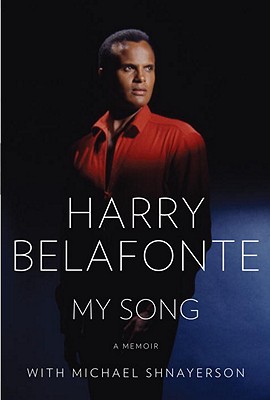
My Song: A Memoir
Buy from AALBC
Add to Cart — $30.50More Book Details
Nonfiction, Hardcover, 480 pages
Publisher: Penguin Random House
ISBN: 9780307272263
Harry Belafonte is not just one of the greatest entertainers of our time; he has led one of the great American lives of the last century. Now, this extraordinary icon tells us the story of that life, giving us its full breadth, letting us share in the struggles, the tragedies, and, most of all, the inspiring triumphs.
Belafonte grew up, poverty-ridden, in Harlem and Jamaica. His mother was a complex womancaring but withdrawn, eternally angry and rarely satisfied. His father was distant and physically abusive. It was not an easy life, but it instilled in young Harry the hard-nosed toughness of the city and the resilient spirit of the Caribbean lifestyle. It also gave him the drive to make good and channel his anger into actions that were positive and life-affirming. His journey led to the U.S. Navy during World War II, where he encountered an onslaught of racism but also fell in love with the woman he eventually married. After the war he moved back to Harlem, where he drifted between odd jobs until he saw his first stage playand found the life he wanted to lead. Theater opened up a whole new world, one that was artistic and political and made him realize that not only did he have a need to express himself, he had a lot to express.
He began as an actorand has always thought of himself as suchbut was quickly spotted in a musical, began a tentative nightclub career, and soon was on a meteoric rise to become one of the worlds most popular singers. Belafonte was never content to simply be an entertainer, however. Even at enormous personal cost, he could not shy away from activism. At first it was a question of personal dignity: breaking down racial barriers that had never been broken before, achieving an enduring popularity with both white and black audiences. Then his activism broadened to a lifelong, passionate involvement at the heart of the civil rights movement and countless other political and social causes. The sections on the rise of the civil rights movement are perhaps the most moving in the book: his close friendship with Martin Luther King, Jr.; his role as a conduit between Dr. King and the Kennedys; his up-close involvement with the demonstrations and awareness of the hatred and potential violence around him; his devastation at Dr. Kings death and his continuing fight for what he believes is right.
But My Song is far more than the history of a movement. It is a very personal look at the people in that movement and the world in which Belafonte has long moved. He has befriended many beloved and important figures in both entertainment and politicsPaul Robeson, Eleanor Roosevelt, Sidney Poitier, John F. Kennedy, Marlon Brando, Robert Kennedy, Nelson Mandela, Fidel Castro, Tony Bennett, Bill Clintonand writes about them with the same exceptional candor with which he reveals himself on every page. This is a book that pulls no punches, and turns both a loving and critical eye on our countrys cultural past.
As both an artist and an activist, Belafonte has touched countless lives. With My Song, he has found yet another way to entertain and inspire us. It is an electrifying memoir from a remarkable man.
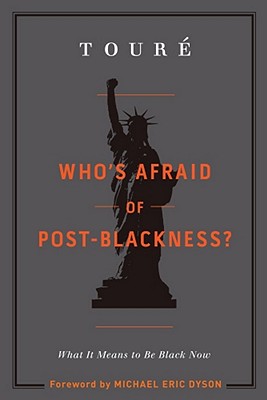
Who’s Afraid Of Post-Blackness?: What It Means To Be Black Now
Buy from AALBC
Add to Cart — $25.00More Book Details
Nonfiction, Hardcover, 272 pages
Publisher: Simon & Schuster, Inc.
ISBN: 9781439177556
In the age of Obama, racial attitudes have become more complicated and nuanced than ever before. Inspired by a president who is unlike any Black man ever seen on our national stage, we are searching for new ways of understanding Blackness. In this provocative new book, iconic commentator and journalist Tour tackles what it means to be Black in America today.Tour begins by examining the concept of Post-Blackness, a term that defines artists who are proud to be Black but dont want to be limited by identity politics and boxed in by race. He soon discovers that the desire to be rooted in but not constrained by Blackness is everywhere. In Whos Afraid of Post-Blackness? he argues that Blackness is infinite, that any identity imaginable is Black, and that all expressions of Blackness are legitimate.Here, Tour divulges intimate, funny, and painful stories of how race and racial expectations have shaped his life and explores how the concept of Post-Blackness functions in politics, society, psychology, art, culture, and more. He knew he could not tackle this topic all on his own so he turned to 105 of the most important luminaries of our time for frank and thought-provoking opinions, including the Reverend Jesse Jackson, Cornel West, Henry Louis Gates Jr., Malcolm Gladwell, Michael Eric Dyson, Melissa Harris-Perry, Harold Ford Jr., Kara Walker, Kehinde Wiley, Glenn Ligon, Paul Mooney, New York Governor David Paterson, Greg Tate, Aaron McGruder, Soledad OBrien, Kamala Harris, Chuck D, Mumia Abu-Jamal, and many others.By engaging this brilliant, eclectic group, and employing his signature insight, courage, and wit, Tour delivers a clarion call on race in America and how we can change our perceptions for a better future. Destroying the notion that there is a correct way of being Black, Whos Afraid of Post-Blackness? will change how we perceive race forever.
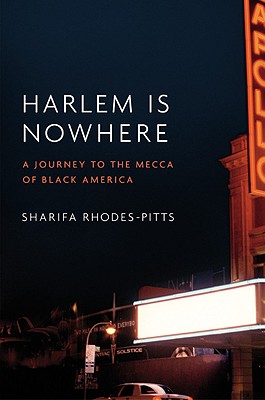
Harlem Is Nowhere: A Journey To The Mecca Of Black America
Buy from AALBC
Add to Cart — $24.99More Book Details
Nonfiction, Hardcover, 304 pages
Publisher: Hachette Book Group
ISBN: 9780316017237
Most everything I write here is true and happened on or around Lenox Avenue. This is where I live now; if you stand at its center, the crossing at 125th Street, and look north and then south, youll see it come to a dead stop at both ends. It begins at the top of the park, where you can see the Harlem Meer, where I saw fireflies in summer and where each winter, I am told, teenagers drown trying to walk across the half-frozen ice. When I first moved here, to 120th Street, I was happy to be close to this secret, manmade lake, with its Dutch name, Haarlem Meer, the Lake of Harlem. Lenox Avenue begins there at 110th Street and ends up at 149th Street or so; I have never been to the very end of it. At the end a bridge goes over the Harlem River and then suddenly it is the Bronx. The Harlem River is not a real river, just as the Harlem Meer is not a sea or even a real lake, and Lenox Avenue is technically Sixth Avenue. Downtown it is called Avenue of the Americas before it runs into the south end of the park, and up town it is called Malcolm X Boulevard, but only by the kind of person who insists on calling Bombay Mumbai or Calcutta Kolkata. They would also feel the need to call Eighth Avenue, Frederick Douglass Boulevard and Seventh Avenue, Adam Clayton Powell, Jr., Boulevard. One Hundred Twenty-Fifth Street is also called Martin Luther King, Jr. Boulevard, but Ive never heard anyone insist upon it. I dont call any of these by their second names. The point is that Lenox Avenue doesnt go anywhere, and yet it is thought to be the most important thoroughfare of the most important place for black people in America, if not the world.Sharifa Rhodes-Pitts
"No geographic or racial qualification guarantees a writer her subject.Only interest, knowledge, and love will do thatall of which this book displays in abundance." (Zadie Smith, Harpers)
A finalist for the 2011 National Book Critics Circle Award in Autobiography, and a New York Times Notable Book of the Year.
For a century Harlem has been celebrated as the capital of black America, a thriving center of cultural achievement and political action. At a crucial moment in Harlems history, as gentrification encroaches, Sharifa Rhodes-Pitts untangles the myth and meaning of Harlems legacy. Examining the epic Harlem of official history and the personal Harlem that begins at her front door, Rhodes-Pitts introduces us to a wide variety of characters, past and present. At the heart of their stories, and her own, is the hope carried over many generations, hope that Harlem would be the ground from which blacks fully entered Americas democracy.
Rhodes-Pitts is a brilliant new voice who, like other significant chroniclers of places-Joan Didion on California, or Jamaica Kincaid on Antigua-captures the very essence of her subject.
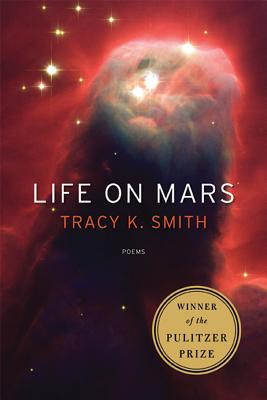
Life On Mars: Poems
Buy from AALBC
Add to Cart — $16.00More Book Details
Poetry, Paperback, 88 pages
Publisher: Graywolf Press
ISBN: 9781555975845
A 2012 Hurston/Wright Legacy Award Nominated Book
Winner of the 2012 Pulitzer Prize* A New York Times Notable Book of 2011 and New York Times Book Review Editors Choice *
* A New Yorker, Library Journal and Publishers Weekly Best Book of the Year *New poetry by the award-winning poet Tracy K. Smith, whose "lyric brilliance and political impulses never falter" (Publishers Weekly, starred review)You lie there kicking like a baby, waiting for God himself
To lift you past the rungs of your crib. What
Would your life say if it could talk?
from "No Fly Zone"
With allusions to David Bowie and interplanetary travel, Life on Mars imagines a soundtrack for the universe to accompany the discoveries, failures, and oddities of human existence. In these brilliant new poems, Tracy K. Smith envisions a sci-fi future sucked clean of any real dangers, contemplates the dark matter that keeps people both close and distant, and revisits the kitschy concepts like "love" and "illness" now relegated to the Museum of Obsolescence. These poems reveal the realities of life lived here, on the ground, where a daughter is imprisoned in the basement by her own father, where celebrities and pop stars walk among us, and where the poet herself loses her father, one of the engineers who worked on the Hubble Space Telescope. With this remarkable third collection, Smith establishes herself among the best poets of her generation.
Reader Comments (0)
Log In to Join the Conversation
Commenting is reserved for registered AALBC members to maintain high-quality discussions.
No comments yet. Be the first to share your thoughts!
Advertisement