

richardmurray
-
Posts
4,380 -
Joined
-
Last visited
-
Days Won
122
Content Type
Profiles
Forums
Blogs
Events
Everything posted by richardmurray
-
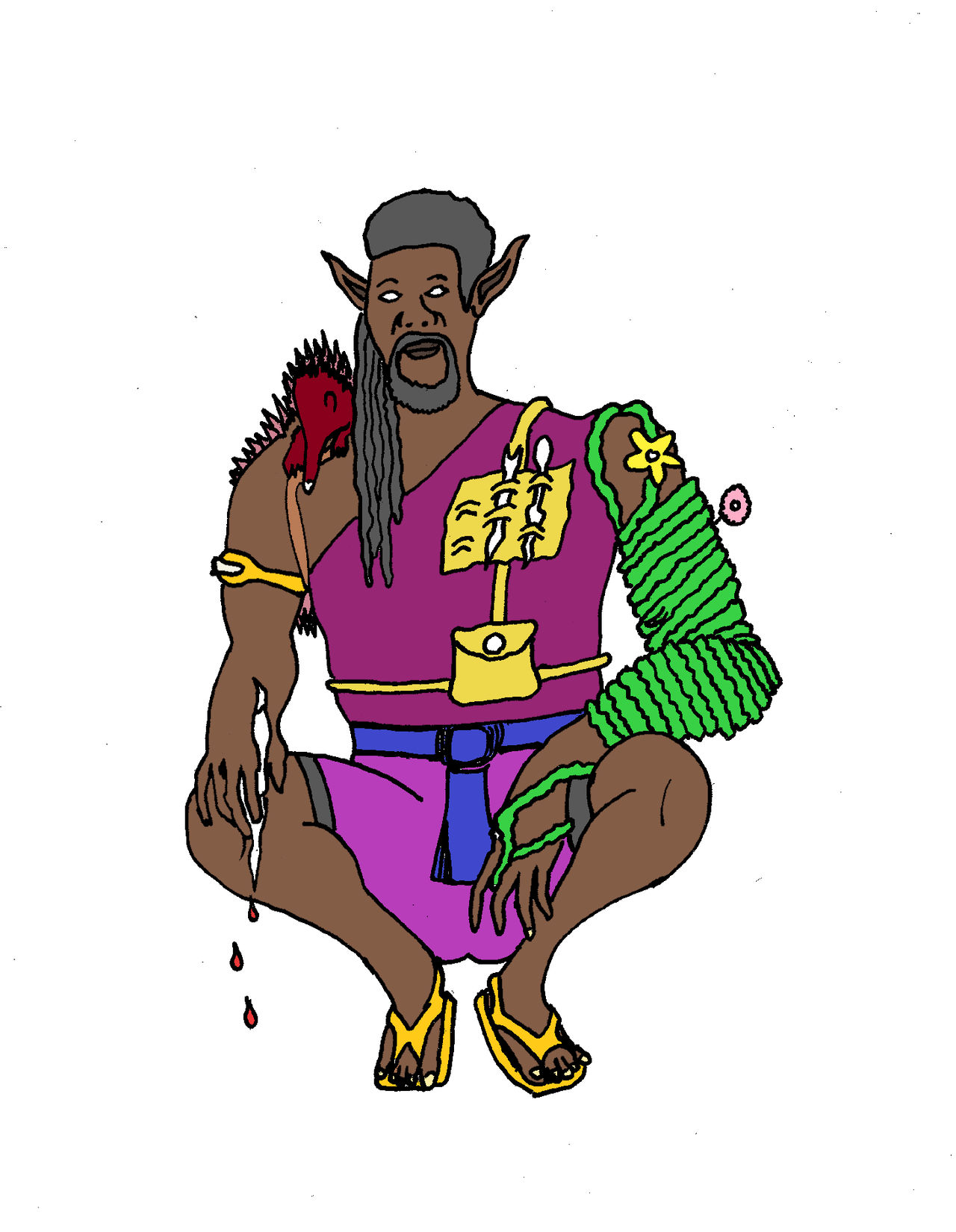
An ink with digital coloring for the elymyself challenge
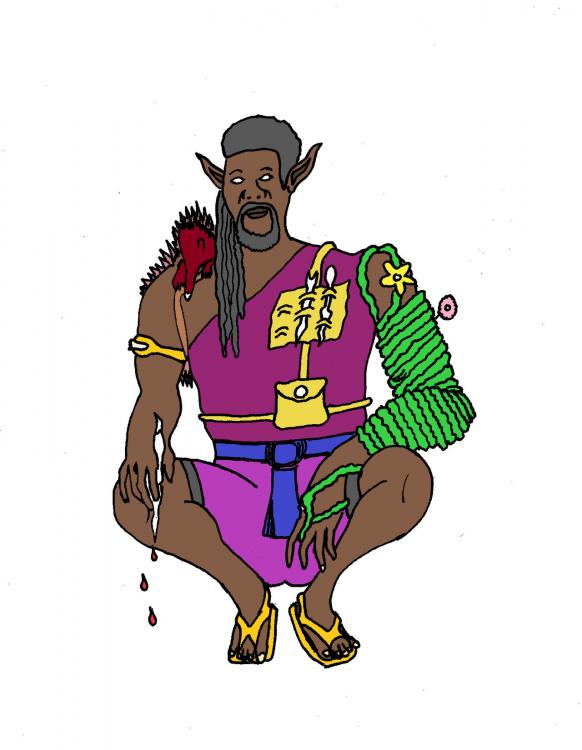
https://www.deviantart.com/hddeviant/art/Elfmyself-ink-Digitalcolor-883685515 -
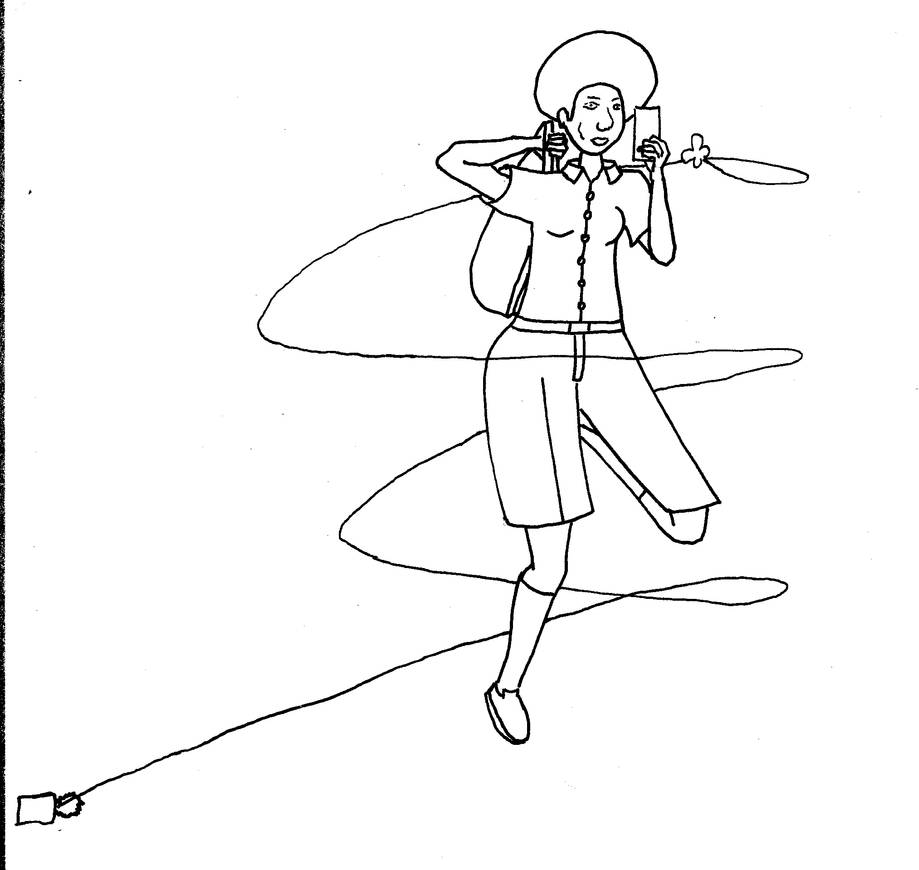
An Ink from me, I did in process to the Oh My Witch deviantart competition
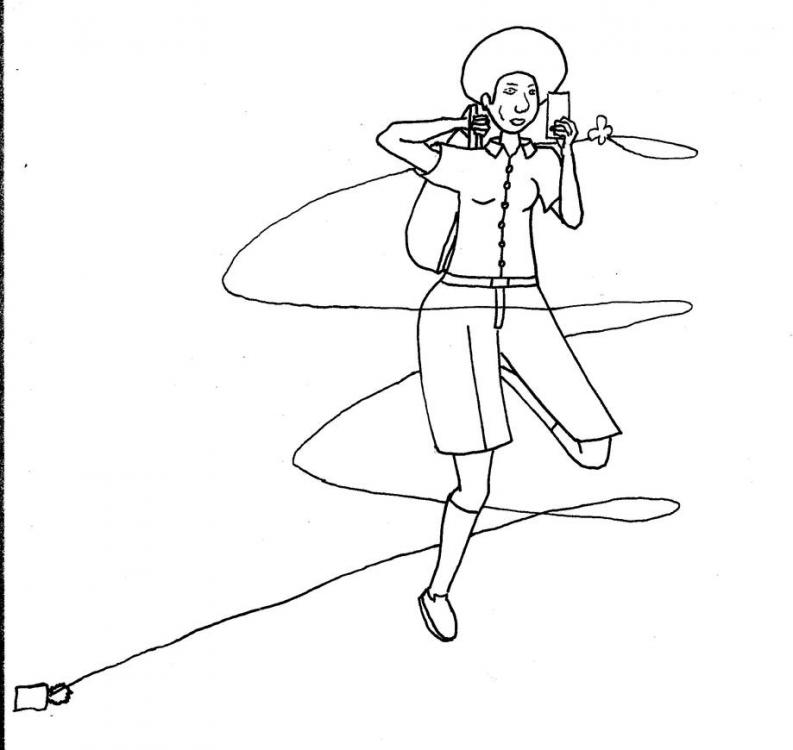
https://www.deviantart.com/hddeviant/art/Ohmywitch-body-ink-883685112
-
Ask Kobo Anything: Kobo PlusInterested in learning more about Kobo Plus?Get your questions ready! We'll be talking to Tara, Joni and Siobhan about reaching subscription readers and how to take advantage of the Kobo Plus program.The Kobo Writing Life team is excited to announce our latest Live Q&A on Thursday June 24th. From 12:00 PM-1:00 PM EST, we'll be answering all your questions on the Kobo Writing Life Facebook and YouTube pages.f you can’t make the takeover, feel free to comment on this post with your questions and we can ask them for you!
-
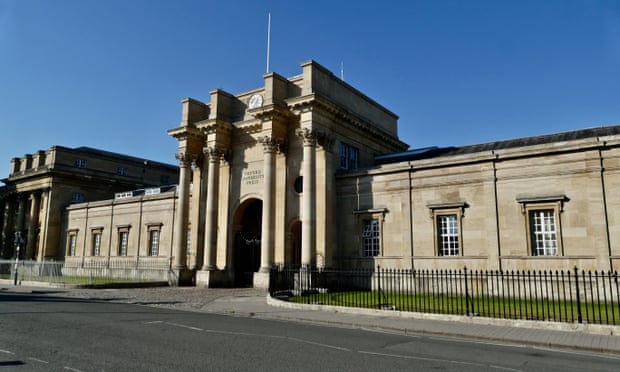
Oxford University Press to end centuries of tradition by closing its printing arm
Oxford University’s right to print books was first recognised in 1586, in a decree from the Star Chamber. But the centuries-old printing history of Oxford University Press will end this summer, after the publishing house announced the last vestige of its printing arm was closing.
The closure of Oxuniprint, which will take place on 27 August subject to consultation with employees, will result in the loss of 20 jobs. OUP said it follows a “continued decline in sales”, which has been “exacerbated by factors relating to the pandemic”.
Oxuniprint’s closure will mark the final chapter for centuries of printing in Oxford, where the first book was printed in 1478, two years after Caxton set up the first printing press in England. There was no formal university press in the city over the next century, but the university’s right to print books was recognised in a decree in 1586, and later enhanced in the Great Charter secured by Archbishop Laud from Charles I, entitling it to print “all manner of books”.
OUP has existed in a recognisable form, with its own printing division, since the 17th century, printing everything from the King James Bible to scholarly works. It has outsourced the printing of its own books since 1989, with subsidiary Oxuniprint in Kidlington the last vestige of its rich printing history, working for clients including Oxford University and the NHS, as well as supplementary material for OUP itself.
“Oxuniprint is the latest iteration of OUP’s print division which has been around for centuries,” said Dr Jude Roberts, chair of the Unite union branch at Oxford University Press. “The idea of Oxford University Press as a press has always been fundamental to what we do. It’s not just about the content, although obviously that is important, it’s also about the quality of our publications as cultural artefacts. It’s much more difficult to control that quality when the physical books and journals are produced by somebody else.”
Oxuniprint’s closure was condemned by Unite, which blamed OUP’s increasing outsourcing abroad and its failure to take up the government’s furlough scheme.
“This is the final chapter in a distinguished printing history at the OUP, but we feel that there could have been a different outcome if OUP bosses had not been hell-bent on pursuing their outsourcing agenda,” said Unite regional officer Kevin Whiffen. “There is not much loyalty to the centuries-old printing heritage, and those who have given their working lives to it.”
Roberts said that the 20 affected staff are now all in individual consultations about their own redundancies. “The press has said that they are going to attempt to find alternative roles for them. But the fact is that the work that these guys do is so specific, it’s so highly skilled in this particular area, and we don’t do any of that work now without them, so it’s hard to imagine where they could be placed elsewhere in the press. It’s absolutely awful.”
A spokesperson for OUP said: “This decision follows a recent business review of our operations. This has not been an easy decision for us, and we thank the team for the support and dedication to OUP, and their clients, over the years.” -

Bogus Social Media Outrage Is Making Authors Change Lines in Their Books Now
from Laura Miller https://twitter.com/magiciansbookElin Hilderbrand writes novels about people who summer in Nantucket and have lots of family secrets and complicated love lives. The books—whose covers feature beach scenes with women in sun hats and sherbet-colored towels fluttering in the sea breeze—reliably make the bestseller lists every July, snapped up by fans in search of vacation reading. Hilderbrand’s seems a dreamy life, raking in the cash by offering fans a few hours of harmless, sunny escapism. But don’t get too comfortable in that deck chair: Social media has arrived to harsh Hilderbrand’s mellow.
As described in an article in Publishers Weekly, readers on Instagram criticized Hilderbrand’s summer 2021 book, The Golden Girl, for a passage in which two teens, Vivi and Savannah, discuss plans for Vivi to hide out in the attic of Savannah’s house without Savannah’s parents’ knowledge: “You’re suggesting I hide here all summer?” Vivi asks. “Like … like Anne Frank?” The two friends laugh at this, but Vivi thinks to herself, “Is it really funny, and is Vivi so far off base?”
On an Instagram post in Hilderbrand’s publisher’s feed, a user who goes by the name “poursandpages” posted a comment (since deleted) denouncing this joke as “horrifically” antisemitic and demanding an apology. Others described themselves as “disgusted” and “gobsmacked in every way with the insensitivity” and accused Hilderbrand of thinking “antisemitism is funny.” After trying to put out these fires via DMs, Hilderbrand issued a formal apology and stated that the line would be removed from the book.
And this isn’t the only time this month that an author came under fire for something one of their fictional characters said. A few days later a Twitter user posted a passage from Casey McQuiston’s Red, White & Royal Blue, a popular gay romance novel published in 2019, in which a supporting character who is the president of the United States complains, “Well, my UN ambassador fucked up his one job and said something idiotic about Israel, and now I have to call Netanyahu and personally apologize.” This, one user insists, “normalizes the genocide & war crimes done by Israel that will always be backed up & unashamedly supported by America.” It seemingly doesn’t matter that the line clearly reads as a gentle satire of the United States’ overly deferential foreign policy; another Twitter user explained that “mentions of Israel (especially when they’re completely unnecessary as well, such as in books/films/shows) normalize the occupation of Palestine. All mentions, even ones that don’t outwardly seem bad, are wrong.” Like Hilderbrand, McQuiston has tweeted that the line “will be changed for all future printings.”
Complaining about other, more successful writers is one of the most popular activities on Twitter, as is devising elaborately exacting standards of correct speech and vigorously, if informally, prosecuting those who violate them. What’s unusual about these two examples is how rapidly both authors caved in the face of what appear to be very small posses of critics. This is both absurd—Elin Hilderbrand sells hundreds of thousands of books, and she’s going to revise a novel post-publication for the benefit of a dozen objectors on Instagram?—and a little bit understandable. The irresponsibly gossipy nature of social media makes it all too easy for vague and unsupported slagging (“I heard she’s an antisemite,” “I heard they’re a Zionist”) to grow like weeds in the neglected corners of a prominent person’s reputation.
Why do silly things like this happen? I know some will consider Hilderbrand’s and McQuiston’s obeisance to be a sign that the “toxic drama” that prevails on YA Twitter—in which ambitious reviewers-cum-influencers revile authors for failing to toe extremely fine and perpetually changing lines on race, gender, and other sensitive issues—has spread to the world of commercial adult fiction. It’s not uncommon in those disputes for the critics to make the rookie’s mistake of confusing the statements and feelings of fictional characters with the author herself. This, of course, is nonsense; were fictional characters required to pass purity tests to exist, we’d be left with some pretty bland fiction. The president of the United States is, generally, obliged to behave as if the nation of Israel exists. And most schoolchildren in America read The Diary of Anne Frank; if you suggested to one of them that she hide in an attic for an entire summer, a comparison to Anne Frank would certainly come up. This doesn’t make the child an antisemite who thinks the Holocaust is funny, much less an author who puts such a child in her novel.
While it’s perplexing that people who are always rhapsodizing about how much they love reading can be so very bad at it, the truth is that the incentives for interpreting a book’s meaning in the worst possible light are high. Disparities in fame seem to encourage even more resentment than disparities in income, and readers canny enough to take advantage of that resentment have seen their clout increase. My little account may have only a few thousand followers, but if I can muster a handful of book ’grammers to second my accusations, then even an author as prominent and prosperous as Elin Hilderbrand can be made to dance to my tune.
-

Against Mythologizing the Practice of Writing
from Amber SparksI suppose I started writing because it was the easiest way to dump out my imagination and play with it. There were few costs and no barriers to entry, no special tools or equipment or collaborators needed. When I was little and bored, all I needed was a pencil and paper to sketch out an escape plan, another world in all its intricacies and details that I could fly to when I needed it. I could create the friends I lacked in real life on the page. I could pour all my negative feelings into some truly gnarly villains. It was easy, free, and completely satisfying, whether I was writing for five minutes or five hours. I had this easy, casual relationship with writing up through college, largely because I didn’t think of myself as a writer. I was an actor and a musician with a bunch of retail jobs; writing was something I just did for fun, not something I was. So nothing was attached to it, no identity, no expectations, no fanciness. I wrote in the car on vacations, in the breakroom at work, in my notebooks during classes. I wrote and wrote and wrote.
But at some point after I started submitting and publishing stories in my late twenties, and met writers, read blogs, did workshops - I started to notice those expectations creeping in, a slow set of mythologies that started to grow in and around my writing practice. For the first time, I started thinking about writing as a deliberate practice, and not just as an almost automatic action. I think this happens to just about every writer at some point between writing for fun and writing for serious.
I don’t mean the practice of editing your writing and looking at it with a critical eye - that most likely started when you were young, and obviously if you studied writing or edited a magazine or became a teacher, the practice of critically examining your own work deepened, which is a good thing.
No, I’m talking about that other thing - the mythologies around what it means to be A WRITER, to practice and perform the act of writing itself. For example! Every few months, another of those “what my writing day is like” interviews with some famous writer starts circulating on social media, and it usually goes like this: “10 am, emerge lazily from my beautiful French country bedroom wearing a flowing robe that smells slightly of the sea; 11am, sharpen fourteen Blackwing pencils by hand while watching the foxes outside my window feed their young; noon, harvest the day’s honey from my hive of bees while thinking slightly about the characters in my next novel; 2pm, write my ass off; 5pm, drink a glass of port on the veranda while listening to the gentle saw sound of the cicadas and thinking about the impossibilities of life” etc etc.
People unusually share these interviews with a screenshot and a comment reflecting wistfulness or jealousy or aspiration or all three. “ME SOMEDAY” or “THE DREAM,” they proclaim, harmlessly enough, while not realizing that these interviews are being woven into their own internal writing mythologies. A real writer lives in the country! Sharpens fresh pencils! Wakes at 10! Keeps bees! And these notions about what a writer is or should be, and what kind of idealized conditions create truly great writing, start subtly to grow around the writer, like stupid vines, and complicate entry into the once simple act of writing itself. Suddenly the writer who has written on their phone on the subway commute, the writer who scribbles on scraps of paper between diaper changes or shift changes - the writer who doesn’t have a practice of their own, or a room of their own, or even a desk of their own, and has never needed one, starts to feel a sense of inadequacy. They must not be a real writer, because they do not take to an isolated cabin for weeks at a time to write, or have a sacred office space with special writing music and office hours to boot.
There’s nothing inherently wrong with interviews with very famous and established - usually financially secure - writers, about how they write. That stuff is interesting to know! We love to hear about what kind of pens or pencils or software or notebooks others use to get the job done. It’s fun to read. The real problem happens when early or mid-career writers start to internalize these practices and become aware of what they then perceive to be lacking. Because here’s the thing: most of those interviews are with writers who are older, who have already achieved outsized success, both professional and financial, whose children are grown and who are no longer caring for elderly parents. These same writers almost certainly did much of their own best and most urgent writing while working a day job or three, while raising kids, while riding the Metro and running errands, while living in tiny studio apartments in a crowded city. The way that most writers throughout time have written - through necessity, through poverty, through children crawling on their laps and demanding their attention, through whatever it takes to access that imaginative fire.
I would gently suggest (and I tell myself this, everyday!) that these mythologies aren’t really about the practice of writing at all. These “how I write” pieces, for example, have almost nothing to do with being a writer, and the reasons they’re shared have very little to do with being a writer. They’re actually about the dream of being freed from economic anxiety and the wheel of capitalism, and from the various demands on us from our families and loved ones. They’re a dream of “being just a writer,” which is less a dream about writing than a dream about leisure. I see it everyday - despite almost no fiction writer making a living being “just a writer,” emerging writers and mid-career writers alike have made this unlikely reality their goal. It’s no different from planning on winning the lottery as a retirement goal. And I think it not only leads to disappointment and heartache - I think it also leads to less writing. And there comes a point, or at least, there certainly has for me, where you have to start hacking away at the thorny forest of your mythologies (sorry to torture this metaphor) and find the pencil and notebook and the five minutes inside that were all you once needed. That’s your enchanted shit, not the country house and the pencils and the kudzu.
It’s not a lesson to be learned just once, either. It’s a lifelong struggle, I’ve found. As a writer, I constantly fight the feeling of “if only,” feeling I could be a brilliant writer if only I had more time, more space, a real desk, a retreat in the woods. I realized, when talking about my last book in interviews, that I wrote most of it on my phone on commutes and very late at night, when my baby was asleep and I was wide awake. I had that fire in me then, and it blazed its way onto the metaphorical page despite my lack of time, or sleep, or solitude. It was the closest I had been in a long time to that deep mystery, that almost primal urge to tell stories that writers seem to be born with. The ur of writing, to be an asshole about it.
This last year and a half, we’ve all had plenty of opportunity to experience the frustrations of not-writing, as family obligations increased or loneliness encroached, as escapes (even just to coffee shops) became impossible, as illness and sadness and anxiety stood guard at the door, and our writing practice narrowed to very small windows in time and space. For most of us, the dream went from “spend all my time writing” to “ spend any of my time writing,” and a lot of us lost a year plus of our practice entirely.
I’m not going to spin the pandemic as positive in any way - fuck that - but I do think after emerging from the worst of it here in the US, my expectations for what it means to be a writer have changed. I had a disappointing experience last weekend, with a weekend writing retreat I had planned for myself cancelled unexpectedly. I found myself instead where I have been all pandemic, in my apartment bedroom, my child running in and out, writing on a lap desk on my bed. But somehow, I got on with the writing, and somehow, that old feeling, that love of story, that sense of following my characters into the rabbit hole and getting lost with them - it all came back to me and I was no different than me at six or me at sixteen, not being a writer or a Writer, but just spending the time I could with an imaginary world I made. Which is pretty much all I’ve ever wanted to do.
-
-
 1
1
-
- Report
-
Meet Vanessa: The Newest Member of the KWL Team
https://kobowritinglife.com/2021/06/10/meet-vanessa-the-newest-member-of-the-kwl-team/
Secondhand Royalties, A Goodreads Bug, and a History of the Singular They: This Week in Book News
https://kobowritinglife.com/2021/06/11/secondhand-royalties-a-goodreads-bug-and-a-history-of-the-singular-they-this-week-in-book-news/
-

Inside Matthew Rhys' Hemingway-inspired 'tale of madness' to restore a boat
https://ew.com/celebrity/matthew-rhys-ernest-hemingway-boat-moveable-feast/
https://youtu.be/W0m-3dtNfn8
Ask Kobo Anything, A Bloomsbury Deal, and Hemingway’s Boat: This Week in Book News
https://kobowritinglife.com/2021/06/04/ask-kobo-anything-a-bloomsbury-deal-and-hemingways-boat-this-week-in-book-news/
-
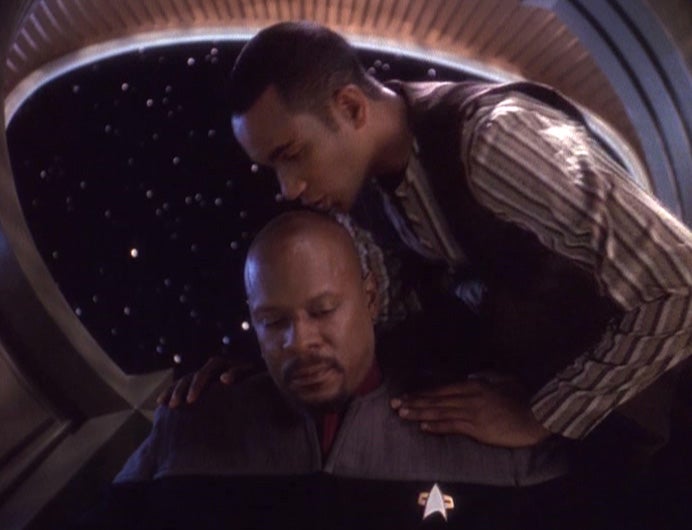
Happy father's day folks:) positive fathers is not new in black literature at ALL , but in white owned media , which is what hollywood is or what all in the USA have exposure too, the following was and is rare to view.
-

The first paragraph of the article entitled: "white bears in sugar land: Juneteenth, cages, and afrofuturism", end with the following in brackets < Liberty, emancipation, independence, without brotherhood or equality or justice or peace, presume utopia. Any alternative imagining can only be fiction. >
That paragraph ending encapsulate the theme of the article. The theme is freedom is not enough. Freedom must come with equality between all living beings, positive comradery between all living things, peace for all <with peace defined as happiness>, justice for all with the caveat that justice leads to emotional or spiritual redemption.The article author, Tochi Onyebuchi, uses an episode of the show Black Mirror to encapsulate said point. The article author restates, I quote in brackets < If your organizing principle is freedom, maybe all you’ve done for yourself is fashion another cage. And a cage does not need metal bars and concrete walls to be obvious. Count on the Brits to expose American absurdity. >
But is it absurd? IT being, the idea that freedom is all that is needed. The question is, what is freedom, liberty, emancipation, independence? The character in the Black Mirror episode who is forced to be mentally tortured isn't independent, emancipated, liberated, or free. She is in a system that judged her and deemed her existence is to be totally enslaved.
This is why I have always said that the Black American, Black American defined as people from modern day Canada to Argentina who look in the phenotypical range I label as Black, have only one instance of liberty, freedom, emancipation, independence in their modern history, modern history defined as the past 500 years; said one instance is in HAiti.
To restate, Black Americans, people of the phenotypical range labeled black who live in what is modernly called Canada to Argentina, only achieved freedom/emancipation/liberty/independence in the last 500 years in Haiti cause to achieve freedom/emancipation/liberty/independence one or a group can only achieve it in completion.
What is absurd, or beyond the muted , in an enslaved woman being mistreated by her enslavers.
The ability to do what you want from the most cruel to the most loving is the only sign that you have freedom. The moment any of your actions or yourself are judgeable or controllable by an external , you do not have freedom/independence/liberty/emancipation.
Now some may argue, what about government? Government is however the free, in parallel the most powerful, in a community decide the rules of a community to be.
Human government can have any set of rules within human imagination, no set of rules are right or wrong or good or bad; they merely exists as they must.
The idea of a moral code/ an equalizer of justice, a loving of relationships being necessary for positive society is false.
As the Haitian freeing proves, once free you can be cruel, cause you are free to be.The article author then explains the position in a temporal sequence, beginning with the unearthing of buried enslaved people in modern day texas in early 2018. The bodies were dated being between 1878 and 1910 at the time of death thus legally, they should not had been enslaved.
The next moment in time is June 19th 1865 , the source day for Juneteenth. I want to say as a mere sidenote, I don't see Juneteenth as a day of freedom for black people in the usa. The author quotes General Order Number 2 and states the truth that some at Galveston will be in that cemetery unearthed in 2018. The author state, I Quote in brackets < An even cursory reading of General Order No. 3 reveals just how conditional freedom was in the post-bellum Re-United States. Despite “an absolute equality of personal rights and rights of property between former masters and slaves,” the freedmen “will not be supported in idleness either there or elsewhere.” Nor will they be allowed to “collect at military posts.” Whether they served the Union or the Confederacy, they will be left with nothing but the scarred skin on their backs. There will be no government assistance, no 40 acres, no mule, no “help them get back on their feet” allowance. Liberation pure and simple. A typical American blunder to mistake emancipation for justice, liberation for peace. To mistake the light up ahead for the tunnel’s end and conclude that the hard work has been finished. >
The problem I have with the author's position is the suggestion that freedom is obtained but it is the absence of justice that leads to the abuses in the future. But again, haiti proves this is wrong.
The problem isn't that freedom was achieved circa 150 years ago in the usa and justice was evaded. The problem is freedom wasn't achieved over 150 years ago by Blacks from whites. Slavery like all things come in levels/grades/ranks.
A people don't need to be completely shackled or sold on auction by another to be enslaved. A people can have mayors/presidents/billionaires/sanitation workers/generals in the army or other modern overseers while they are all in truth, still enslaved , to another people.
He cites a book I have not read, and I will probably not read. The posthumous work of Ralph Ellison, check the bottom of this post. I am very suspicious to any posthumous work. The book was originally titled: Juneteenth. I can concur with the article writer that Ellison was clearly going to make a critique of Black joy in the USA. But I oppose the idea that Black joy comes from the gaining of freedom while the absence of justice. Black collective joy in the usa or the greater Black American community or the greater Black world, please note my stated definitions as not all black people are african, comes from the lessening of slavery not the gaining of freedom.
The 13th amendment to the constitution, the civil rights act, Juneteenth or other general orders, the emancipation proclamation, the golden law in brasil, the end of slavery in the british empire , or similar were not the gaining of freedom for black people; each stated instance was the lessening of slavery of blacks to whites , but not the absence of slavery of blacks to whites. Black people were and do cheer steps to something that has never been achieved absent violence/cruelty/hate.The next moment is July 22, 2013, where the author reveals experiences of his life in Ramallah, a palestinean city in Israel former Palestine, and after as a growing lawyer in various systems of incarcerations. I Quote him in brackets < Spend enough time on the outside looking at people held in cages and you might shake your head, look for confetti under your shoes, and begin muttering to yourself, “the whole thing was a hoax.” >
I will not speak for the author but based on my own personal journey I say that freedom isn't a hoax for those that truly have it. Too often people think they are free but to quote agent smith in quotations "the problem isn't that we are free the problem is that we are not free"
IT is the illusion plus allusion of being truly free that is the problem. An image of freedom is presented or freedom is suggested in communication that has no basis in reality.The next moment is September 15, 2018 where the author focuses on the United States of America. I quote in brackets < Liberation is one of the principal themes in the myth of the United States of America. ... Clean-up is for later.>.
I concur, the USA was founded on myth over reality. But in defense of the USA, the founding fathers, all financially wealthy human owning men of white european descent, never told anyone not in their specific race to think they are free cause they are in the usa.
It can be argued that the myth of the USA says more about the needs of some people to manufacture possibilities of freedom based on lies they tell themselves.
I have not read the George S. Schuyler book , Black No More, but the description from the author suggest it is afrofuturism based on the description of afrofuturism provided. I quote in brackets < [S]peculative fiction that treats African-American themes and addresses African-American concerns in the context of 20th-century technoculture,” that is how Mark Bould defines Afrofuturism in “The Ships Landed Long Ago: Afrofuturism and Black SF.” >
The author spends half of this section on his personal activities as a writer, events around modernity. The point is to state the potency or growth of black writers or moreover, writers of the militaristically oppressed.
I quote the article in brackets < that liberation without justice is not liberation, it is simply a hoax. >
In prior prose I stated a simple truth. Rightly or wrongly, positively or negatively, the black community of the usa has been led by a philosophy of merit side equality. Sequentially, when one desires a moral code of equality, they accept restrictions which by default is unfreedoms. Thus, of the writer or the many adherents in humanity who share a similar view, want all to accept a level of slavery that allows one to feel free while it doesn't deny any equality while it accepts restrictions or slavery to maintain said equality.The last moment is May 30, 2019. Where he speaks of being inspired to write his second book by a friend, who the white owned system has guided into its negativities.
I can add only hope that tomorrow is better. Real power is a fleeting thing in humanity, very few humans can touch real power in humanity. Absent that real power, one can only hope. Absent true freedom, one has to ask.
Maybe in afrofuturism, someone will write the first fictional future where all humans are free while not in each others, or any other life forms, way. Maybe it will be me. Maybe the author of the article. But the idea is needed.THE ARTICLE IN COMPLETION
We resist enclosure. Deer roam forests. Vines colonize abandoned Coliseums. A human being held in solitary confinement will self-harm, scream, plead, kick doors, smear feces on their cell walls, and refuse food if there exists even the promise of seeing the sun for fifteen minutes of their day. There are many words in English for what that human being quests for: liberty, emancipation, freedom, independence. So much of the American project has been dousing its cultural fabric in these colors. No mention of brotherhood and precious little of equality. Justice is nowhere to be found. Peace, somewhere far off in the distance. Over the horizon, in fact. Those messy words presume an After, and they presume that this After is other than post-apocalypse. Liberty, emancipation, independence, without brotherhood or equality or justice or peace, presume utopia. Any alternative imagining can only be fiction.
An episode in the second season of Black Mirror, titled “White Bear,” dramatizes precisely this conundrum. The protagonist, a woman played by Lenora Crichlow, awakens with amnesia, haunted by a symbol that flickers on the television screen in her room and hunted by unreasoning pursuers. People on the street catch sight of her and immediately raise their cameraphones to record. Even as her pursuers shoot at her and those who have decided to aid her, the spectators remain just that. Spectators. They’re being held captive by a signal from a transmitter at a facility called “White Bear.” Get to White Bear, destroy the transmitter, and free the world from their stupor. When she and her confederate reach the transmitter, two hunters attack. In what is supposed to be the episode’s climax, she wrestles a shotgun away from one of her assailants, aims, and pulls the trigger.
Out comes confetti.
The whole thing was a hoax. Her name is revealed, as well as the fact that she and her fiancé had murdered a child, her sentence for which is daily psychological torture. Relive the same day over and over and over again, with no memory that it has ever happened before.Emancipation with no hint of peace. Some would watch the aftermath of that reveal, the woman being driven back to her compound while those spectators from earlier curse her and damn her and spit at her, and say that’s justice. They might say that, in punishing her, whatever justice system that exists in the world of this episode is simply operating out of procedural fidelity. Maybe the algorithm decided this, and an algorithm sees neither color nor sex nor gender nor faith, that renders us equally as numbers. But of the many things I came away from that episode holding in my chest, nowhere among them was any sense of justice.
Black Mirror places the episode somewhere in our future. An After, as it were. The paradox of progress here is that it takes our imaginations to create an After where there are no Afters, revealing the mistake inherent in founding your identity on the sole item of liberation. The light at the end of the tunnel, brought to you by lamps that have been hung up in the next portion of tunnel. If your organizing principle is freedom, maybe all you’ve done for yourself is fashion another cage. And a cage does not need metal bars and concrete walls to be obvious.
Count on the Brits to expose American absurdity.
In early 2018, the Fort Bend Independent School District broke ground in Sugar Land on the site of what was to be a new technical center. It was in February that the first remains were discovered. By July, archaeologists had discovered a total of 95 bodies. The bodies were buried in individual wooden caskets. Initial analysis places the youngest of the deceased at 14, the oldest around 70. Analysts deduced, early on, that the bodies showed evidence of severe malnourishment and physical stress, pointing to a history of hard labor. Prison labor.
A former prison guard, Reginald Moore, had told officials in the fall of the previous year that there might be a cemetery there. Since his term as a corrections officer in the 1980s, he had adopted as his mission excavating the land’s past and serving as caretaker for the Imperial Farm Cemetery, also in Fort Bend County.
It is speculated that the bodies were buried between 1878 and 1910. Technically, none of the buried could have been slaves at the time of their deaths. Slavery had officially ended in Texas 13 years prior.
June 19, 1865
Union Army General Gordon Granger stands on the balcony of Galveston’s Ashton Villa. Maybe there are banners commemorating the occasion. Maybe a flag hangs from somewhere. Maybe he has bathed, maybe he has not. The previous day, the General had arrived on Galveston Island with 2,000 federal troops to occupy Texas on behalf of the federal government. Just over two weeks prior, on June 2, the last of the Confederate forces, the Army of the Trans-Mississippi, had formally surrendered. Maybe they hadn’t believed reports of Robert E. Lee’s formal surrender on April 9 of that year. Maybe they thought it Union propaganda. Maybe the officers leading that corps had lost the mail. News, back then, didn’t travel as quickly as it does now.But on June 19, 1865, General Granger unfolds a piece of parchment and reads aloud from what is marked “General Order No. 3”:
“The people of Texas are informed that, in accordance with a proclamation from the Executive of the United States, all slaves are free. This involves an absolute equality of personal rights and rights of property between former masters and slaves, and the connection heretofore existing between them becomes that between employer and hired labor. The freedmen are advised to remain quietly at their present homes and work for wages. They are informed that they will not be allowed to collect at military posts and that they will not be supported in idleness either there or elsewhere.”
The once-enslaved rejoiced in the streets.
The 14-year-old boy, whose destiny is a shallow grave near the Brazos River, is one year old. Born a slave before the moral border crosses him, and he’s suddenly freed. In thirteen years, he will be buried alongside the rest of the prison labor.
An even cursory reading of General Order No. 3 reveals just how conditional freedom was in the post-bellum Re-United States. Despite “an absolute equality of personal rights and rights of property between former masters and slaves,” the freedmen “will not be supported in idleness either there or elsewhere.” Nor will they be allowed to “collect at military posts.” Whether they served the Union or the Confederacy, they will be left with nothing but the scarred skin on their backs. There will be no government assistance, no 40 acres, no mule, no “help them get back on their feet” allowance. Liberation pure and simple. A typical American blunder to mistake emancipation for justice, liberation for peace. To mistake the light up ahead for the tunnel’s end and conclude that the hard work has been finished.
The After that these freefolk walk into is a Texas whose economy depended heavily—too heavily—on sugarcane, a Texas whose economy had depended almost entirely on free labor. So two Confederate veterans, Edward Cunningham and Littleberry Ellis, sign a contract with the state in 1878 to lease the state’s prison population. The Vagrancy Act of 1866, also known as the “Act Providing for the Punishment of Vagrants,” drafted and ratified by the Virginia state legislature, forced into imprisonment for a term of up to three months anyone who appeared to be unemployed or homeless. It is only one example of the type of legal regime that proliferated over the United States. So-called Black Codes declared, among other things, that if a freedman left employment without the employer’s permission, he would be denied his wages. Also declared was the fact that a worker could be fined $1 for acts of disobedience or negligence or 25 cents per hour for every missed hour of work. In Texas, a system of apprenticeship was enacted, along with a host of vagrancy laws.
Cunningham and Ellis suddenly had their workers.
In many instances, men were handpicked, noted for their heavy bearing or their workers’ hands or their strong backs, innocent men, targeted as they walked through the thoroughfare because they looked like good laborers, arrested, and swept into the machine of convict leasing.
That year, 1878, the 14-year-old boy, if he is not already serving time in a cell or on a plantation, will arrive at his destination and not last the year.
Out comes confetti. Emancipation? Freedom? The whole thing was a hoax.
By the time he died, Ralph Ellison had compiled thousands of pages of notes and drafts and pieces of drafts on what was to be his second work of long fiction, the novel that would follow his masterwork, Invisible Man. He never lived to see it completed. Looking at the themes it examined, perhaps unfinished is its most natural state. There is a dying race-baiting Senator who once was maybe a small black boy destined to be a preacher. There is a parodic exploration of filmmaking culture as an allegory for Franklinian ambition, the American ideal: reinvention. There’s jazz in the prose and in the story. There’s a tragicomic scene where Senator-to-be Sunraider, as a maybe black boy, is raised out of a tiny coffin by his adopted preacher daddy during the course of a rousing sermon only to see a white lady from the congregation loudly claim him as her long-lost son. The story is ostensibly a satire, but the shape-shifting of the maybe black preacher’s son to race-baiting United States Senator brings to mind more fantastical creatures, the werewolves and sprites and witches and vampires who all, in one way or another, embody our fears and hopes and lusts. The werewolf’s human form is a seduction, and so is the promise, in Ellison’s unfinished second novel, of whiteness. Of freedom.
Long after Ellison’s death, a near-comprehensive collection of what was supposed to be this novel was released, titled Three Days Before the Shooting. Previously, the material had been compiled, condensed, and published by his editor as a novel coming in under 400 pages.
Its original title was Juneteenth.
July 22, 2013
I arrive at the Ofer military court for the first time. It wasn’t that far from the office in Ramallah. We took a service taxi to the gates, offloaded and got into a van that operated much like a taxi the way a plainclothes cop is police and we crossed the first major threshold, whereupon we passed through the first metal detector and showed our passports to the bored guard behind the glass. When we came out from beneath the shelter of that first station, we walked down an outdoor corridor to a waiting room where waited family members of those whose trials were scheduled today, along with men and women in the process of attending their own hearings, often for parking tickets.In May of 2013, I began work at an organization that represented and advocated on behalf of Palestinian Arabs detained in Israeli prisons. At the time, I occupied a flat in Ramallah with a classmate of mine from law school. She was working on women’s rights. I was at the Ofer military court on this day with a supervisor and a few colleagues, one of whom was a student like myself, from Harvard Law School.
My supervisor took our passports into the main booth and then after a wait, we went through. Shoes and belts removed, pockets emptied, then we came out on the other side with our belongings. Down another corridor and into a courtyard that looked very much like the prison courtyards in the US, only this was populated with family and friends of the to-be-incarcerated. Heat blanketed everything, and people bounced in and out of the shade, waiting, joking about what they’d do if they couldn’t get rid of the parking ticket. I talked career paths with this fellow intern and movies, I think, with another. Inside a small shack-like building that resembled a mini airport waiting station, I practiced my Arabic script and a fellow intern taught me some new words and I worked on my numbers. With us, at that time, were the wife and the brother of one of the detainees we’d come to see, a man who had worked and researched with our organization and who had been arrested and detained the previous September. We were here for his sentencing hearing.
Our colleague is being held in Trailer 4. There are four prisoners in the box here to our left. Less chaos than hearings earlier in the day. There’s one dignified hijabi woman who looks like defense counsel. New witnesses enter, and we play musical chairs to shuffle so that the men sit in an unbroken line.
The translator here has a wide, sharp face, stubbled, shiny blue eyes, looks like so many kids I went to school with. A Billy club hangs from his back pouch.
A dumpy middle-aged prosecutor charges his phone in the wall behind him.
The prisoners here are older than most of us in the audience. Much older.
One of the prisoners received word from his wife, behind me, seated amongst the spectators, that his friend had just died. “My God,” he said, “rest in peace.” The expression on his face is beyond my ability to describe. Before he can fully process the news, his attention snaps back to his hearing.
The prisoners are handcuffed in pairs and led out. That was it.
It turns out the hearing for the man we had come to see was now moved to July 29, 2013, a week from today. Four hearings in five minutes.
On July 28, 2013, the night before our colleague’s trial, I’m in Jerusalem with yet another colleague from work. The friend she’d brought with her had on a Metallica shirt.
It took quite a bit of cajoling on my colleague’s part to eventually get me to Jerusalem and while the three of us sat on the roof of the Austrian Hospice with the sun gilding East Jerusalem, waiting expectantly for the muezzin so that we could begin eating the sweets we’d picked up in the souk, she asked why I’d waited until my last week in Palestine to come to Jerusalem.
I thought of the Qalandiya checkpoint that I’d seen numerous times and had occasionally passed through and how the very sight of all those Palestinians herded like cattle through the stations, many of them waiting in lines in a shack reminiscent of a post-apocalyptic Six Flags, made my hands start shaking. I thought of how comfortable I’d gotten in Ramallah, even as this place had begun to wear on my spirit. It was familiar. More familiar than leaving.
And I thought of everywhere else I’d traveled to. All the other countries where voyaging was an effortless thing. A wish was all it took to put me on a train in Paris that would spirit me to Amsterdam. Being stranded at the Kosovo-Serbia border and having to negotiate my way through Macedonia, cut a path through Bosnia, to wind up back in Croatia again, that was an adventure. Rabat to Tangier, an inspired odyssey.
Here, though, freedom of movement didn’t seem to exist beyond the contours of Ramallah. There were passable barriers, but the trouble of negotiating them overwhelmed me so that it took as long 10 weeks for me to see a city that was but 10 kilometers away. There was security behind bars. Should our imprisoned colleague eventually be released, this is what would have been waiting for him. More tunnel.
So, when my friend asked me why it took me so long to get to Jerusalem after I’d been in the Territories for almost ten weeks, I shrugged and said I was scared.
The next day, our colleague went on trial. Again.
After my ten weeks in Ramallah, I would return to law school where I would be put on the habeas corpus case for a man who had been wrongfully convicted and held in prison in my home state for over 18 years. I would write a long and heavily-researched paper on carceral philosophies fed and watered in the US and exported to El Salvador and the Occupied Territories. I would later graduate and spend a year at a job, part of which required observing minors held in solitary confinement. After that would come Rikers.
Spend enough time on the outside looking at people held in cages and you might shake your head, look for confetti under your shoes, and begin muttering to yourself, “the whole thing was a hoax.”
September 15, 2018
Liberation is one of the principal themes in the myth of the United States of America. Liberation from tyranny, liberation from savagery, liberation from taxes. Hell, early Americans even liberated themselves of imported tea. What a mess they must have made on those ships docked in the Boston Harbor. Clean-up is for later. As is the burial of convicts leased out for labor. As is the release of the modern American incarcerated. And with a largely monochrome literary lineage, American letters has largely allowed myth to morph into accepted wisdom, some facsimile of fact. American letters gave Margaret Mitchell’s Gone with the Wind a Pulitzer Prize. And though the film The Birth of a Nation is largely credited with the rebirth of the Ku Klux Klan, it was adapted in part from the first two novels in Thomas Dixon Jr.’s Ku Klux Klan trilogy: The Leopard’s Spots: A Romance of the Whiteman’s Burden – 1865-1900 (published in 1902) and The Clansman: A Historical Romance of the Ku Klux Klan (published in 1905). Less sanguine a patrilineage but just as alabaster, one may start somewhere around Washington Irving or even Edgar Allan Poe and work one’s way through Thoreau, Hawthorne, Whitman, Dickinson, Twain, Henry James, Edith Wharton, Faulkner, Fitzgerald, Steinbeck, Mailer, etc., etc. etc. American myth.Those works that did exist to scrub away some of the varnish, like Uncle Tom’s Cabin or Narrative of the Life of Frederick Douglass, an American Slave, more often than not written by those on the margins, largely concerned those on the margins. Even after the tiff between Henry James and H.G. Wells results into the greater beef between “literary” and “genre” fiction, that writing by the racially marginalized, in order to be seriously considered as a work of merit, need by definition concern the racially marginalized.
So the first alleged science fiction novel by an African American isn’t about aliens. It isn’t about other planets. The novel figures our own is strange enough.
Its author is one George S. Schuyler. Its title is Black No More: Being an Account of the Strange and Wonderful Workings of Science in the Land of the Free, AD 1933-1940. And at its center is a scientific procedure. Protagonist Max Disher, after having been spurned by a white woman in a Harlem speakeasy on the simple fact of his blackness, reads of a scientific procedure that could result in the complete bleaching of his skin. “Black-No-More” claims to be able to turn a black man white.
The scientific procedure grows in popularity, throwing the social and economic order of the country—predicated on a strictly delineated racial hierarchy—into bedlam. NAACP leaders with their Talented Tenth aura hate it. Southern segregationists, desperate for a critical mass of Other to hate, despise it. Meanwhile, Max Disher, now Matthew Fisher, wins the white girl. The novel’s hijinks involve a potential mixed-race baby, a jet plane and mutilation at the hands of animalistic, atavistic Mississippi whites.
“[S]peculative fiction that treats African-American themes and addresses African-American concerns in the context of 20th-century technoculture,” that is how Mark Bould defines Afrofuturism in “The Ships Landed Long Ago: Afrofuturism and Black SF.”
And lately, the word “Afrofuturism” has received a lot of purchase, eagerly slapped on any story in which black people and magic (or sufficiently-advanced technology) are co-pilots. It’s another attempt to categorize and catalog, some way to trace genealogy and link Schulyer with Octavia Butler with Tananarive Due with Sheree Thomas with Samuel Delany with Andrea Hairston with Colson Whitehead with N.K. Jemisin with P. Djeli Clark. A justification for putting them in the same cupboard, aside from the fact of their shared blackness. That would be too gauche a reason.
But the fact of the matter is that the aforementioned authors resist sameness. Time travel, galaxy hopping, climate catastrophe, zombies, broken cities with burnt skies, they are at the business of excavating myth and pulling humans out of it, same as any other bushel of writers. The fact of their blackness does not mean that they are obligated to allegorize black death or black anguish or black angst (whatever those reductionist terms may mean or entail) or that the entirety of their oeuvre must stem from the primordial wounding.
If they were to address injustice and un-freedom and the paradox of progress, it would be by choice.
It is a Saturday. September 15, 2018. At a place called Roulette on Atlantic Avenue in Brooklyn. Somewhere in the emails, perhaps on the Gala invite itself, there’d been dress code instructions, but due to characteristic failure of foresight, I arrive at the venue wearing jeans and a black t-shirt that reads “Abolish ICE.” My worries are assuaged by a young man in a rumpled, dark-colored button-down waiting in line just in front of me for the bar.
It’s my third time at the Brooklyn Book Festival, second time as a dude who wrote a thing. And, thus, my second time at the pre-Festival gala. So many of the writers I’d been lucky enough to have befriended or known over the previous two year are in attendance. Crystal Hana Kim, author of the Korean War love epic If You Leave Me; essayist and novelist Naima Coster; R.O. Kwon, author of The Incendiaries. In the low lighting, I’m sure there are others I would recognize if only they came affixed with name badges.
After enough time has passed, we are urged to our seats. I and friends take our seats in the balcony. In June of that year, it had been announced that the Best of Brooklyn Award, given annually by the festival, would go to N.K. Jemisin. The previous honoree had been Colson Whitehead.
In the time between her name is called and she makes her way to the stage to accept her award and give her speech, everyone rockets to their feet. There can’t be more than a few hundred of us in that hall, but it feels like we are one thousand strong. Applause thunders. And thunders. And thunders.
The previous month, Jemisin had won her third consecutive Hugo Award for Best Novel, making history twice over as the first author to threepeat and the first to win for every novel in a series. For a series of novels quite explicitly about injustice and un-freedom, into which can be read with remarkable ease black anger and black pain and so many of those other complex weavings of emotion that stem from having buried somewhere deep in one’s genealogy that primordial wounding. In short, a series of novels that not only stars black people, but that thematically concerns itself with the business of being black in the United States of America. A series of novels about having too little and too much power simultaneously, about loving in the face of loss, about the separation of families, about containing in one calcifying body both God and woman.
UX Designer and theorist Florence Okoye writes: “Afrofuturism dares to suggest that not only will black people exist in the future, but that we will be makers and shapers of it, too.” < https://howwegettonext.com/there-are-black-people-in-the-future-d2fd9f1a38ea >She ties the Afrofuturist project to a reaching back. Far from operating from the blank slate baseline that results from the wholesale obliteration of one’s history by the triangle slave trade, “we can reach back to our past to inspire our futures.” We’ve snatched the pen, the tablet, the laptop from the hunter and type out, with our claws, the true story of the savannah. Oppression seeks to pulverize the possible, to atomize hope, to granulate not only dreams but the very act of dreaming. What control does one have over the slave, the sharecropper, the convict in a capitalistic enterprise if they can imagine another Now, if they can build, in the cathedral of their mind, an After? No, better to erase their name, indicate only their present physical features on the bill of laden, amputate their familial bonds by scattering the children into plantations all over the country. A century later, however, rappers walk the streets of New York City with Africa pendants hanging from their necks, at work, knowingly or unknowingly, repairing American injury. Telling story the way Schuyler told story, the way Butler told story, the way Jemisin will tell story. Afrofuturism is exhuming the bodies buried in Sugar Land and reanimating them. Afrofuturism, this imagining of Afters, pushes the laborer toward the tunnel’s mouth. That warmth? The feel of the sun on your face. Prison still persists, environmental racism aggravates illness, material and professional advancement will still be thwarted, but there is nothing like the moment when a prisoner the first night of the 1971 Attica Uprising, stares up at the sky from a D Yard crowded with other prisoners crafting a civil rights moment, and says, tears leaking down his face, that he hasn’t seen the stars in 22 years. We resist enclosure.
I think of the Broken Earth trilogy and the word that comes to mind is liberation. Authors from marginalized backgrounds may, to varying degrees of success, deny the more pernicious aspects of American publishing and refuse to write their marginalizations, to allegorize them even, or to reduce themselves and their demographic to suffering. What matters is the choice. Because should a black author face the plight of black Americans in the United States since before its inception and allegorize that, excavate from the mythmaking of Irving and Thoreau and Hemingway and Mitchell a series of humans the same color as her, the result can be a piece of writing so powerful and painful and daring that we can’t look away from that most essential truth it purrs, screams, weeps, shouts, whispers into our ear: that liberation without justice is not liberation, it is simply a hoax.
May 30, 2019
On this day, a Thursday, someone dear to me begins his jail sentence. He was convicted in Connecticut for a crime he is alleged to have committed in Connecticut, and when he is released, he will, absent permission from a probation officer, have to remain in Connecticut. His sentence is for one year. He will be eligible for parole in eight months.He is a college graduate and a veteran of the Air Force. He enjoys difficult video games, then, bafflingly, replaying them at higher and higher difficulties. By turns brooding and articulate, reluctant and insistent. He loves potatoes, eats irregularly, and his metabolism is so powerful that whatever food he digests seems to vanish entirely, leaving no trace in his stomach or his ass or his chest or arms of its ever having been. If we are not plagued by the same haunts, the same principalities that swing us not from happy to sad but from ecstasy to sorrow, that render life for us in nine dimensions, that set whatever’s inside our ribcages on fire, if we are not whispered to by the same voices, then, at the very least, those phantasms, like the bodies hosting them, share DNA.
The afternoon of the first day of his sentence, I sat at a table in the Jacob Javits Center and, for ninety minutes, signed copies of a novel I’d written. It is difficult to say that anything other than providence had a hand in placing me here and placing him there, but there it is.
When he is released into probation and given his set of instructions, his list of constraints, and whatever methods they’re going to use to continue monitoring him, I hope I’ll be able to look at him and think of his time inside and now his time outside, his having lost a year in the prime of his life, him leaving a house of Corrections for a world of ankle monitors and check-ins, to look at him at the end of all of this, the entirety of his sentence, and not say out loud, “the whole thing was a hoax.”
Between the time he went in and the time he gets out, I will have published two books, the second of which is about, in part, a young man in jail. I wrote it because I think science fiction, fantastika, is one of the best tools I have to help build an After. Imagining justice. Imagining equality. Imagining peace. Cleaning up the mess American mythmaking has made of this place. I hope he is able to read this book. I hope he is able to read Riot Baby and know that I tried my best.
I hope he makes it to the end.
I wrote it for him.
Originally published June 2019.
Tochi Onyebuchi’s fiction has appeared in Panverse Three, Asimov’s Science Fiction, Obsidian, and Omenana Magazine. His non-fiction has appeared in Nowhere Magazine, the Oxford University Press blog, and the Harvard Journal of African American Public Policy, among other places. He holds a B.A. from Yale University, a M.F.A. from New York University’s Tisch School of the Arts, a J.D. from Columbia Law School, and a Masters degree in droit économique from L’institut d’études politiques. His debut young adult novel, Beasts Made of Night, was published by Razorbill in October 2017, and its sequel, Crown of Thunder, was published in October 2018. His next YA book, War Girls, will hit shelves on October 15, 2019, and a novella, Riot Baby, will be available from Tor.com Publishing in January, 2020.
Footnotes
1: Science Fiction Studies 34.2 (July 2007): 177–186.ARTICLE URL
https://www.tor.com/2021/06/19/juneteenth-cages-and-afrofuturism/Juneteenth from Ralph Ellison
Text https://www.kobo.com/ebook/juneteenth
Audio https://www.kobo.com/audiobook/juneteenth-4Three days before the shooting
Text https://www.kobo.com/us/en/ebook/three-days-before-the-shooting
Audio https://www.kobo.com/us/en/audiobook/three-days-before-the-shooting-2George s. Schuyler book
https://www.kobo.com/us/en/ebook/black-no-more-a-novel
-

Happy Besooned June Solstice
In the northern hemisphere summer begin, in the southern hemisphere winter begin.
The sun will appear to be at its highest point in the sky in the northern hemisphere, the lowest point in the sky in the southern hemisphere.
In parallel, during the December solstice, in the northern hemisphere it begins winter, in the southern hemipshere summer
The sun will appear to be at its lowest point in the sky in the northern hemisphere , while the highest in the southern hemisphere
EQuinox, the path of the sun crosses the equator of earth extended out into space or the celestial equator.
-

Happy Besooned Father's day, here are two stories to enjoy:)
-

HAppy Juneteenth - enjoy a story
https://aalbc.com/tc/blogs/entry/261-good-news-blog-stories-through-a-year/?tab=comments#comment-908
-
Well... it is another Friday, another day to love, to Oxum, Oshun, Freya, or Venus, another day to Kizomba!
The leg work in this routine is very nice from Sabrina side Fabricia; you have to check out their feet throughout, they worked on the little movements very well; but do not chagrin, they did some standard or flashy moves. -
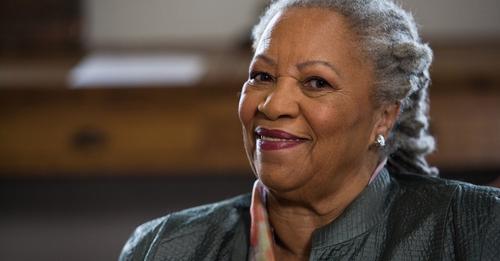
This is the first I am hearing of this though i am not a fan of hamilton anyway but I think what is interesting is how during obama's era, not just his two terms but his donkey primary, the media seemed to be of the agenda of not mentioning dislikes to him so... It can be argued the scrogge needed is obama not miranda. I will never forget about the black woman who merged, lift every voice and sing and the star spangled banner and was criticized heavily for it, and obama didn't do anything to speak for her. I always thought that was foul of him cause he supposedly campaigned on positive integration and yet didn't think that artistic rendition didn't require protection or was valid as a symbol
THE ARTICLE
Toni Morrison is said to have hated Hamilton so much that she helped to finance a play called The Haunting of Lin-Manuel Miranda.
The late author, whose work explored Black identity in America, reportedly made the second-largest donation to fund a play that was written by Ishmael Reed, who is best known for his 1972 novel "Mumbo Jumbo."
Hamilton, the hip-hop-inspired Broadway sensation about Alexander Hamilton's rise, humanizes the founding fathers in a show that's considered emblematic of the Obama years. It was viewed through a different lens during the Trump years amid rising racial tensions in America.
So he penned the play, a rewriting of Charles Dickens' "A Christmas Carol" that portrays a fictionalized version of the Hamilton creator who is is visited by the historical figures portrayed in the musical.
By the end of the play, the fictional Miranda is supposed to see the error of his ways in creating Hamilton."I draw attention to what was left out of Hamilton by giving speaking parts to those who were left out of the narrative," he said.
The Haunting of Lin-Manuel Miranda ran in theatres in New York in 2019, with Reed telling AAWW magazine at the time: "She [Morrison] was the second largest patron of my new play The Haunting of Lin Manuel Miranda."
Morrison, the author of classics like "The Bluest Eye" and "Beloved," passed away in August 2019.Miranda responded to the criticisms of Hamilton in July 2020 when he tweeted: "All the criticisms are valid. The sheer tonnage of complexities & failings of these people I couldn't get. Or wrestled with but cut. I took 6 years and fit as much as I could in a 2.5 hour musical. Did my best. It's all fair game."
Miranda was forced to apologize this week after the release of the movie version of his other musical, In The Heights, was marred with a colorism casting controversy.The film has drawn severe online condemnation for lacking Afro-Latinx representation in the cast.
"I'm seeing the discussion around Afro-Latino representation in our film this week and it is clear that many in our dark-skinned Afro-Latino community don't feel sufficiently represented in it, particularly among the leading roles," Miranda tweeted in a statement. "I can hear the hurt and frustration over colorism, of feeling still unseen in the feedback."
"In trying to paint a mosaic of this community, we fell short," he added. "I am truly sorry. I'm learning from the feedback, I thank you for raising it, and I'm listening."
-

I remember how cornell west or tavis smiley was vilified in some black circles for their opposition and I had in my little neck of the internet arguments. So I am not surprised I am learning of this now. I think like alot of events in the black community, the hollywood movie version is, all black people loved it were in it, the truth is, maybe not even the majority were inspired. ... YEah, I remember, I remember her being attacked online. precancelculture- cancelculture. It seems like she angered everybody, but I never liked that obama didn't protect or support her. I admit I opposed obama as a legislature, but I thought she fit his philosophy better than most. Not HAmilton which is a mockery but a merging of two songs from two different communities. anyway...the following isnt an article but at least it confirms my point
... one thing, latinos come in all phenotypes. Blanco/mulatto/mestizo/negra... I think that truth is one of the problems following
-
-
Live Music in Oakland <Music is Will DOwning - Can't HElp It>
Photographer: Ronald Reed
https://www.flickr.com/photos/ronwired/51180741047/in/photostream/ -
Ask Kobo Anything: Going Global
The Kobo Writing Life team is excited to announce our latest Live Q&A on Thursday June 10th. From 11:00 AM-12:00 PM EST, our very own KWL European team, will be answering all your questions on the Kobo Writing Life Facebook and YouTube pages. Tune in to learn more about expanding your global reach with Kobo! If you can’t make the takeover, feel free to comment on this post with your questions and we can ask them for you!
Enjoy my audiobook
https://www.kobo.com/audiobook/the-visasiki-complete-version -
INFORMATION
KWL Live Q&A: All About AudioAre you considering expanding your catalogue to include audiobooks? We're chatting live with Zack, Kobo's Director of Audiobooks Growth all about the audiobook industry, the future of audio, and what the audiobooks program at Kobo looks like.
Enjoy my audio book
https://www.kobo.com/audiobook/the-visasiki-complete-version -
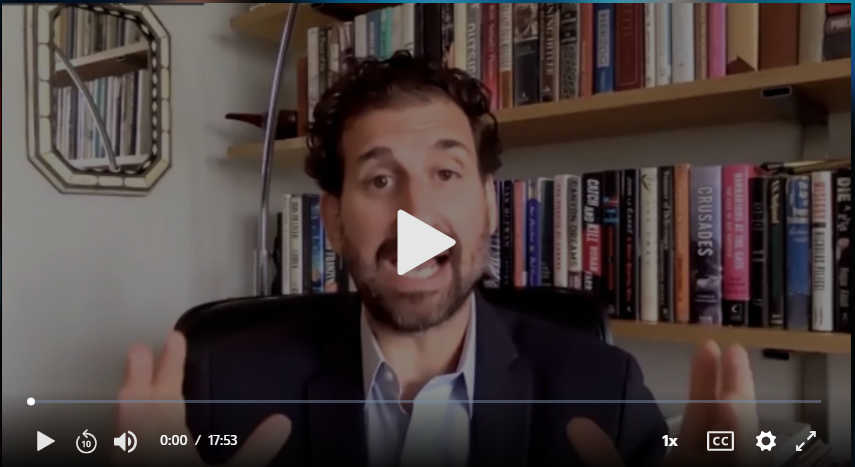
JEsse Eisinger is a eporter for propublica, for the public, here is his ProPublica page, the transcript to the episode is below for those that want to read and not hear. To hear you can click the image above or the link append to the transcript
TRANSCRIPT
NOW THEY ARE SOME OF THE WEALTHIEST AND MOST POWERFUL MEN IN THE WORLD.
JEFF BEZOS, MICHAEL BLOOMBERG, WARREN BUFFETT, ELON MUSK JUST TO NAME A FEW.
PULITZER PRIZE WINNING PROPUBLICA REPORTER JESSE EISINGER HAS DELVED INTO THEIR TAX RETURNS.
THESE BUSINESS MOGULS ONLY PAY A FRACTION OF THE HUNDREDS OF MILLIONS IF NOT BILLIONS OF DOLLARS OF THEIR FORTUNE.
HERE WE ARE SPEAKING WITH THEM HOW THEY MANAGED TO LEGALLY WORK THE SYSTEM.
THANKS.
JESSE EISINGER FROM POE PUBLICA JOINS US.
THERE ARE ONLY TWO THINGS GAUR AN 250ED.
DEATH AND TAXES.
HOW DID YOU FIND THIS?
WE HAVE OBTAINED -- PROPUBLICA HAS OBTAINED OVER 15 YEARS OF INFORMATION, TAX INFORMATION, TAX RETURNS AND INFORMATION FROM SCHEDULES THAT GO INTO THE RETURNS FROM THINGS LIKE STOCK TRADING, GAMBLING THOUSANDS OF THE WEALTHIEST INDIVIDUALS.
THIS IS REALLY JUST THE 1% OF THE 1%. WE'RE NOT COMMENTING ON HOW WE OBTAIN THE MATERIAL.
WE'RE TRYING TO PROTECT THE SOURCE OR SOURCES.
WE ARE EXPLAINING THAT WE VERIFIED IT EXTENSIVELY AND ARE BEING VERY CAREFUL STEWARDS OF THE INFORMATION.
WHEN YOU LOOK AT THIS, THIS IS A FIRST OF YOUR SERIES OF REPORTS, BUT YOU SEE A GLARING PATTERN HERE.
MOST OF US ANECDOTALLY THINK, WELL, THE RICH PROBABLY HAVE BETTER ACCOUNTANTS, ET CETERA, BUT WHAT YOU'RE SHOWING IS A STRUCTURAL FLAW IN THE SYSTEM.
YEAH.
EXACTLY.
THIS ISN'T ABOUT EVADING TAXES EXOTICALLY AND ILLICITLY, THIS IS ABOUT ROUTINE AND PERFECTLY LEGAL TAX AVOIDANCE STRATEGY.
YOU DON'T NEED A FANCY ACCOUNTANT FOR THIS.
WHAT WE SHOW IS THE SYSTEM AND THE SYSTEM'S ESSENTIAL UNFAIRNESS, WHICH IS THAT AVERAGE AMERICANS ARE STUCK IN THE TAX SYSTEM.
WE HAVE NO CHOICE IN THE MATTER.
WE WORKED TO LIVE, WE HAVE TO WORK.
WE GET SALARIES AND TAXES GET EXTRACTED FROM OUR PAYCHECK.
THE WEALTHY, THE ULTRA WEALTHY ESPECIALLY ARE COMPLETELY OUTSIDE OF THE SYSTEM ENTIRELY.
THEY DON'T HAVE TO TAKE INCOME.
WHEN THEY DO TAKE INCOME, IT'S IN THE TIME AND PLACE OF THEIR CHOOSING AND, THEREFORE, THEY CAN REALLY LOWER THEIR TAX BURDEN OR NOT HAVE A TAX BURDEN AND WHAT WE SHOW IS THAT SOME OF THESE GUYS, JEFF BEZOS, ELON MUSK, MICHAEL BLOOMBERG, CARL ICAHN, THEY ACTUALLY PAY ZERO IN FEDERAL TAXES IN RECENT YEARS.
SO JEFF BEZOS, LET'S TAKE A LOOK AT HIM FOR A MOMENT.
YOU HAVE A CARD ON YOUR WEBSITE.
IT SAYS BETWEEN 2014 AND 2018 HIS WEALTH GREW $99 BILLION BUT HIS TOTAL REPORTED INCOME, WHICH IS DIFFERENT THAN YOUR WEALTH GROWING, IS $4.22 BILLION, THAT'S ABOUT 4% OF HIS WEALTH.
AND ON THAT HE PAID $973 MILLION IN TAXES.
NOW, PEOPLE ARE GOING TO LOOK AT THAT NUMBER AND SAY $973 MILLION IN TAXES.
THAT'S A LOT OF TAX.
RIGHT.
WHAT'S THE POINT YOU'RE MAKING?
RIGHT.
IT DOES -- IT'S AN ENORMOUS NUMBER.
WE CAN'T EVEN CONTEMPLATE THAT NUMBER MUCH LESS THE $100 BILLION THAT HIS WEALTH GREW, BUT THE ESSENTIAL NUMBER HERE IS THAT IT IS A FRACTION, A TINY FRACTION OF HIS WEALTH GROWTH AND WHAT WE'RE ARGUING IN THE PIECE ESSENTIALLY IS THAT WEALTH GROWTH IS THE TRUE MEASURE OF HIS INCOME.
THE EQUIVALENT OF AVERAGE PEOPLE'S INCOME.
AND SO WHEN YOU COMPARE THAT FIGURE, THAT FIGURE OF ALMOST $1 BILLION TO $100 BILLION, IT'S ABOUT 1%. IT'S SLIGHTLY LESS THAN 1%. THE AVERAGE PERSON INCOME WHEN IT'S TAKEN OUT FOR TAXES, IT'S ABOUT 14%. SO THE AVERAGE PERSON MAKING 60 OR $70,000 A YEAR IS PAYING $14 IN TAXES EACH YEAR AND JEFF BEZOS ON THE RELEVANT FIGURE IS PAYING LESS THAN $1.
WHY DO WE THINK THIS IS THE RELEVANT FIGURE?
WELL, EVERYTHING EMANATES FROM WEALTH GROWTH FOR THE ULTRA WEALTHY.
THEY -- ALL OF THEIR POWER, ALL OF THEIR INFLUENCE, ALL OF THE WAY THAT THEY CAN PURCHASE LAVISH LIFESTYLES, JEFF BEZOS IS BUILDING A YACHT FOR HIS YACHT.
A YACHT THAT WILL TAKE HIS HELICOPTERS, WORTH ABOUT HALF A BILLION.
HE BOUGHT THE WASHINGTON POST FOR HALF THAT, $200 MILLION.
IT AFFORDS HIM POLITICAL INFLUENCE.
ALL OF THAT COMES FROM HIS WEALTH.
WHAT'S INCREDIBLE TO US, WHAT'S ASTOUNDING TO US IS THAT ALL OF THIS WEALTH GROWTH IS REALLY OUTSIDE OF THE TAX SYSTEM, ALMOST ENTIRELY BEINGS AND JUST NOT TAXED BECAUSE OF WHAT WE CHOOSE TO TAX IN THIS COUNTRY AND WHAT WE CHOOSE NOT TO TAX.
IN THOSE YEARS YOU HAD JEFF BEZOS FILINGS AND HE TOOK A TAX CREDIT.
IN 2011 HE REPORTED A VERY MODEST AMOUNT OF INCOME AND WAS ABLE TO WIPE THAT OUT WITH DEDUCTIONS AND BECAUSE OF THAT, HE HAD SO LITTLE INCOME HE WAS ABLE TO CLAIM THE CHILD TAX CREDIT FOR THEN 2 CHILDREN, $4,000.
SO HE ACTUALLY HAD NEGATIVE INCOME.
HE HAD CREDIT FROM THE U.S.
GOVERNMENT.
HE WAS THEN IN 2011 CLEARLY ONE OF THE RICHEST PEOPLE IN THE WORLD BUT EVERY DOLLAR COUNTS.
WHERE DO THE ULTRA WEALTHY GET THEIR MONEY TO SPEND, RIGHT?
I MEAN, YOU AND I HAVE CHECKING ACCOUNTS, SAVINGS ACCOUNTS, MAYBE A RETIREMENT ACCOUNT IF WE'RE LUCKY.
WE HAVE AN INCOME THAT COMES EVERY COUPLE OF WEEKS AND WE SAY, OKAY, THIS IS MY BUDGET.
IF YOU'RE SUPER WEALTHY AND YOU AREN'T GETTING AN INCOME, A LOT OF TECH BILLIONAIRES WILL ACTUALLY JUST WORK FOR A DOLLAR A YEAR, WHERE ARE THEY GETTING THAT MONEY?
YEAH, THAT'S A VERY GOOD POINT.
THEY DON'T TAKE SALARIES.
OSTENTATIOUS DISPLAYS OF SALARIES LIKE MARK ZUCKERBERG, SERGEI BRANDON.
WHERE DO THEY GET THE MONEY?
THE ANSWER IS, NOT FOR EVERYBODY, BUT OFTEN THEY'RE BORROWING.
THEY'RE BORROWING AGAINST THEIR STOCKS.
THEY PUT UP THEIR STOCK COLLATERAL AND THEY'RE BORROWING.
SOMEBODY LIKE ELON MUSK DISCLOSES IN A SECURITY FILING THAT HE'S PLEDGED TENS OF MILLIONS OF DOLLARS OF STOCK AND BORROWED AGAINST IT AGAIN FOR TENS OF BILLIONS OF DOLLARS.
AND THIS IS HOW THEY FUND THEIR LIFESTYLES.
THERE'S NO -- WE DON'T HAVE ANY EVIDENCE BEZOS IS BORROWING.
HE MAY BE, HE MAY NOT BE.
NOT EVERYBODY HAS THE SAME HYMN BOOK.
WHEN THEY BORROW THEY'RE NOT TAKING INCOME, THEY'RE NOT SELLING THEIR STOCKS, THEY'RE NOT PAYING CAPITAL GAINS ON THAT STOCK THAT THEY'RE NOT SELLING.
THEY'RE KEEPING CONTROL OF THEIR COMPANIES AND WHEN YOU BORROW, YOU DON'T PAY ANY INCOME TAX ON THE BORROWING.
SO IT'S A WIN WIN WIN IN ALL OF THE WAYS THAT YOU CAN IMAGINE.
SO IF I AM A BILLIONAIRE, I DECIDE TO GO TO A BANK AND SAY, YOU KNOW I'M GOOD FOR IT.
I'VE GOT MULTIPLE BILLIONS OF DOLLARS IN STOCK, WHY DON'T YOU JUST, WHAT, LOAN ME A COUPLE OF HUNDRED MILLION AT 2 OR 3% BECAUSE THAT'S CHEAPER FOR ME TO PAY YOU BACK THAN IT IS TO PAY UNCLE SAM IF I ACTUALLY CASH THAT OUT AND LOOK LIKE I MADE 200 MILLION?
YOU ARE THINKING SMALL, COUPLE HUNDRED MILLION.
CARL ICAHN HAS ESSENTIALLY SOMETHING LIKE A MORTGAGE FOR A BILLION TWO THAT WAS IN HIS TAX FILINGS, AND AS I SAY, ELON MUSK HAS TENS OF BILLIONS AND LARRY ELLISON OF ORACLE DISCLOSED IN SECURITY FILINGS YEARS AGO THAT HE HAD A $10 BILLION CREDIT LINE.
START THINKING A LITTLE BIGGER BUT, YES, BANKS ARE HAPPY TO OFFER THESE GUYS, THEY ARE GOOD FOR IT, AND THEY CHARGE RELATIVELY LOW INTEREST RATES AND YOU JUST ROLL OVER THAT DEBT ALL THE WAY -- SOMETIMES ALL THE WAY UNTIL YOU DIE.
WE'LL GET TO THAT IN A SECOND, BUT THE WHOLE STRATEGY IS ENCAPSULATED BY THE PHRASE BUY, BORROW, DIE.
THAT'S ED McCAFFREY PHRASE, HE'S A PROFESSOR FROM USC.
YOU BUY YOUR ASSETS, BUILD YOUR ASSETS.
OBVIOUSLY BEZOS AND MUSK BUILT THEIR COMPANIES.
YOU INHERIT, THE WALTON AND MARS FAMILIES HAVE INHERITED GREAT FORTUNES.
THEN YOU BORROW AGAINST IT.
THEN YOU CAN EVADE OR ESCAPE OR AVOID -- NOT REALLY EVADE BECAUSE IT'S ALL LEGAL.
YOU CAN AVOID TAXATION AT DEATH.
YOU CAN ESCAPE THE TAX MANEUVERS.
THEN ESSENTIALLY YOUR GREAT FORTUNE HAS BEEN ALMOST UNTAXED THROUGHOUT YOUR LIFE AND INTO DEATH.
HERE'S THE THING.
SOME OF THE PEOPLE THAT YOU PROFILED, YOU MADE BASEBALL CARDS OUT OF WARREN BUFFETT, MICHAEL BLOOMBERG.
THESE ARE PEOPLE WHO MICHAEL BLOOMBERG ON THE CAMPAIGN TRAIL CAMPAIGNED FOR CHANGES IN TAXES.
WARREN BUFFETT FAMOUSLY HAS COME OUT AND SAID THIS DOESN'T MAKE ANY SENSE THAT I PAY LESS TAX AS A PERCENT THAN MY SECRETARY DOES, RIGHT?
SO WHAT DID YOU FIND ABOUT WHAT THEY'RE DOING LEGALLY?
YEAH.
WELL, THAT'S A VERY INTERESTING QUESTION, BUFFETT, BECAUSE WHAT WE FOUND IS THAT NO ONE HAS AVOIDED MORE TAX FOR AS LONG AS WARREN BUFFETT.
AND HE'S REGARDED AS KIND OF GRAND FAIRLY FIGURE.
HE'S BELOVED AND OF COURSE HE HAS COME OUT, TO HIS CREDIT, AND SAID THAT THE WEALTHY DON'T PAY ENOUGH IN TAXES, BUT WHEN HE'S TALKING ABOUT THAT, HE'S TALKING ABOUT IT IN THIS EXTRAORDINARILY NARROW WAY WHERE HE SAYS, TAXES ON INCOME ARE TOO LOW FOR THE WEALTHY AND CAPITAL GAINS TAXES ARE TOO LOW.
HE SAID I HAVE CAPITAL GAINS SOMETIMES AND I PAY A VERY LOW RATE COMPARED TO MY SECRETARY.
HE'S RIGHT, HE PAYS A RELATIVELY LOW RATE.
BUT WHAT'S REALLY EXTRAORDINARY ABOUT WARREN BUFFETT, HE TAKES SO LITTLE INCOME.
HE TAKES TINY FRACTIONS OF HIS ENORMOUS WEALTH.
NOW HE'S WORTH OVER $100 BILLION.
HE TAKES TINY, TINY FRACTIONS OF THAT IN INCOME AND PAYS A VERY SMALL PERCENTAGE OF THAT.
WHEN WE MEASURED HOW MUCH HE PAID IN TAXES COMPARED TO HIS WEALTH GROWTH, HE ACTUALLY PAID 10 CENTS FOR EVERY $100 THAT HIS WEALTH GROSSED.
10 CENTS FOR EVERY $100 THE WEALTH GROSSED.
THE WEALTHY, THE TOP 25 PAID 3.40 DWZ FOR EVERY $100 THEIR WEALTH GREW.
THE RICHEST 25 PEOPLE IN AMERICA.
MEANWHILE, AS I SAY, THE AVERAGE AMERICAN WHEN YOU TALK ABOUT INCOME TAX, WHICH IS REALLY THE WAY THEY ARE TAXED, IT'S $14 FOR EVERY $100 THEY BRING.
IN YOUR ANALYSIS, THE 25 RICHEST AMERICANS SHOWED BY THE END OF 2018, THOSE 25 WERE WORTH $1.1 TRILLION, IT WOULD TAKE 14.3 MILLION ORDINARY AMERICAN WAGE EARNERS PUT TOGETHER TO EQUAL THAT SAME AMOUNT OF WEALTH.
THE PERSONAL FEDERAL TAX BILL FOR THE TOP 25 IN 2018, JUST THOSE 25 PEOPLE, WAS $1.9 BILLION.
THE BILL FOR THOSE WAGE EARNERS, THE 14 MILLION WAGE EARNERS PUT TOGETHER WAS $143 BILLION.
THOSE AVERAGE WAGE EARNERS ARE NOT ONLY PAYING A DISPROPORTIONATE SHARE OF THEIR OWN TAXES, THEY'RE PAYING MORE IN RAW NUMBERS AS WELL TO THE FEDERAL GOVERNMENT.
ABSOLUTELY.
AND THAT ASTONISHING FIGURE WAS DONE BY MY COLLEAGUE WHO HAS WORKED WITH ME ON THE STORY, AND WE REALLY WANTED TO HIGHLIGHT THIS BASIC IMBALANCE, THIS STUNNING IMBALANCE WHERE THE ULTRA WEALTHY CAN DEVELOP ENORMOUS SUMS FROM WHICH, AS I SAID, ALL OF THEIR POWER AND INFLUENCE EMANATES AND ALL THEIR MEANS EMANATES.
THOSE 14 PLUS MILLION PEOPLE ARE INSIDE THE TAX SYSTEM.
THEY'RE PAYING THEIR FAIR SHARE.
WE HAVE STRUGGLED TO ADEQUATELY FUND THE FEDERAL GOVERNMENT.
PERIODICALLY THEY ARE CONVULSED IN FEAR MEDICARE WILL GO BROKE.
ROADS AND BRIDGES ARE CRUMBLING.
WE NEED TO PROVIDE NATIONAL DEFENSE.
IF THE FEDERAL GOVERNMENT IS CONSTRAINED BECAUSE THE PEOPLE WITH THE MOST WEALTH ARE NOT PAYING THEIR FAIR SHARE, THEN WE WANTED TO HIGHLIGHT THAT SYSTEM AND REALLY SHINE A LIGHT ON IT.
THERE ARE A LOT OF WEALTHY PEOPLE, WARREN BUFFETT INCLUDED, WHO SAY I DON'T WANT TO GIVE IT TO UNCLE SAM.
I'M GOING TO GIVE 99.5% OF MY WEALTH AWAY, PHILANTHROPIC GIVING.
I THINK I'M A BETTER STEWARD OF MY HARD EARNED MONEY THAN THE GOVERNMENT IS.
WHAT'S WRONG WITH THAT IDEA?
HE SAID EXACTLY THAT.
I DON'T WANT TO HAVE MY MONEY BEING PAID -- HAVE THE DEBT PAID DOWN TO CHINA WHEN I CAN ALLOCATE IT TO SOMETHING THAT WILL DO MORE FOR SOCIETY.
ONE ANSWER IS, BOY, I WOULD LIKE TO ALLOCATE MY TAX DOLLARS THE WAY I WANT TOO.
I BET MOST PEOPLE HAVE PRETTY STRONG OPINIONS ABOUT HOW THE DUFUSSES IN WASHINGTON ARE SPENDING MY MONEY AND I COULD DO IT BETTER THAN WE DO.
THAT'S WHY WE HAVE ELECTIONS, WHY WE HAVE A DEMOCRATIC SOCIETY.
WE HAVE A SHARED DEMOCRATIC SOCIETY TO ELECT LEADERS TO ALLOCATE OUR TAX DOLLARS THE WAY THE MAJORITY THEORETICALLY WANTS.
THE OTHER THING IS PHILANTHROPY DOESN'T SOLVE THINGS.
PHILANTHROPY FOR THE ULTRA WEALTHY ARE WAYS THAT THEY CAN PUT FORWARD THEIR OWN POLICY CHOICES, TRY TO DOMINATE THE CONVERSATION, HAVE DISPROPORTIONATE INFLUENCE.
SOMETIMES THEY FUND POLITICAL CAMPAIGNS.
SOMETIMES THEY RIDE THEIR HOBBIES AND OBSESSIONS.
IT'S NOT REALLY THE WAY WE WANT TO RUN SOCIETY.
IT'S A DISTORTION OF SOCIETY TO HAVE BILLIONAIRES AND ALSO BE SUBSIDIZED BY TAXPAYERS.
ONE OF THE PUSH BACKS IS GOING TO BE CORPORATE TAXES, RIGHT?
WARREN BUFFETT SAYS BERKSHIRE HATHAWAY PAYS A TON OF CORPORATE TAXES.
WHAT'S YOUR PROBLEM HERE?
IF I HAVE MY MONEY IN THAT, MY CORPORATION IS ACTUALLY PAYING THOSE TAXES, I'M NOT TRYING TO STEAL FROM THE GOVERNMENT.
YEAH, THAT'S A VALID POINT AND THERE'S A LOT OF DEBATE AMONG ECONOMISTS ABOUT THIS.
WHAT I WOULD SAY ARE TWO THINGS.
ONE IS WE'RE IN A GOLDEN AGE OF CORPORATE TAX AVOIDANCE SO COMPANIES LIKE am*zon, APPLE, FACEBOOK HAVE GONE TO GREAT LENGTHS TO MOVE OPERATIONS OVERSEAS AND AVOID AMERICAN TAX.
SOMETIMES THEY ALSO PAY ZERO IN TAX.
SO, YOU KNOW, am*zon IS A TAX AVOIDER BOTH AT THE CORPORATE LEVEL AND AT THE OWNERSHIP LEVEL.
THE SECOND THING IS THAT CORPORATE TAXES DON'T SOLELY FALL ON THE OWNERS OF THE CORPORATIONS.
PROBABLY, THIS IS A MATTER OF DEBATE, BUT CONSUMERS PAY CORPORATE TAXES.
WORKERS PAY CORPORATE TAXES.
AT LEAST SOME ECONOMISTS THINK SO.
SO THIS IS SORT OF DISBURSED.
THAT'S NOT A DIRECT TAX ON THE OWNERS OF THE COMPANY.
NOT A DIRECT TAX ON BEZOS OR MUSK.
SO ONE WAY TO SOLVE THIS WOULD BE TO HAVE MORE DIRECT TAXES ON THE OWNERS OF THE COMPANY.
JESSE EISINGER, PROPUBLICA, THANK YOU VERY MUCH.
-
Unbelievable! Working stiffs pay far more in real term terms — not just as a percentage.
This will not likely change, as the wealthy own or politicians.
Meanwhile our infrastructure is crumbling and millions live in poverty.
-
-
1
-
- Report
-
-
-
Black + Excellent with Quinta Brunson
We sat down to catch up with Tumblr nerd and Queen of Memes, @thequintab < https://thequintab.tumblr.com/ > to talk about everything from fostering genuine communication to her new book She Memes Well < https://www.am*zon.com/She-Memes-Well-Quinta-Brunson/dp/1328638987 > , on shelves NOW (SO GO GET IT---- Like frfr!!). -
Well... it is another Friday, another day to love, to Oxum, Oshun, Freya, or Venus, another day to Kizomba!
I must admit, that dress that Flavie has on is great for the beginning to autumn, the routine from manuel and flavie is not their best. Sultry but not exactly exciting. but that dress. -
Based on the articles length, I will preface my much smaller point. One of many thing not said and spoken about the Vietnam War in modernity, modernity meaning the now, is it prove the masses/the majority/the people don't know the truth. Focus on that, the people don't know the truth. The myth in modern media is the people know, the people assume correctly, how many people project certainty in so many arenas.
How many are certain bernie sanders is a liberal warrior? How many are certain Trump is the antichrist? how many are certain big business is in full control? how many were certain Obama was what the USA needed or was liberal? how many were certain the banks would be saved?
I am not questioning anyones stance in humanity, their politics, thing of the people. I am questioning all to assume for 5 minutes what they now is not the complete truth and then, what does that mean?
Enjoy the articleTHE PENTAGON PAPERS
The Secrets and Lies of the Vietnam War, Exposed in One Epic Document
With the Pentagon Papers revelations, the U.S. public’s trust in the government was forever diminished.This article is part of a special report < https://www.nytimes.com/spotlight/the-pentagon-papers > on the 50th anniversary of the Pentagon Papers.
Brandishing a captured Chinese machine gun, Secretary of Defense Robert S. McNamara appeared at a televised news conference in the spring of 1965. The United States had just sent its first combat troops to South Vietnam, and the new push, he boasted, was further wearing down the beleaguered Vietcong.
“In the past four and one-half years, the Vietcong, the Communists, have lost 89,000 men,” he said. “You can see the heavy drain.”
That was a lie. From confidential reports, McNamara knew the situation was “bad and deteriorating” in the South. “The VC have the initiative,” the information said. “Defeatism is gaining among the rural population, somewhat in the cities, and even among the soldiers.”
Lies like McNamara’s were the rule, not the exception, throughout America’s involvement in Vietnam. The lies were repeated to the public, to Congress, in closed-door hearings, in speeches and to the press. The real story might have remained unknown if, in 1967, McNamara had not commissioned a secret history based on classified documents — which came to be known as the Pentagon Papers. < https://www.archives.gov/research/pentagon-papers >
By then, he knew that even with nearly 500,000 U.S. troops in theater, the war was at a stalemate. He created a research team to assemble and analyze Defense Department decision-making dating back to 1945. This was either quixotic or arrogant. As secretary of defense under Presidents John F. Kennedy and Lyndon B. Johnson, McNamara was an architect of the war and implicated in the lies that were the bedrock of U.S. policy.
Image
Secretary of Defense Robert S. McNamara addressing reporters at a news conference on Sept. 7, 1967. Two months earlier he had created the task force that would compile and write the Pentagon Papers.Credit...Associated PressDaniel Ellsberg, an analyst on the study, eventually leaked portions of the report to The New York Times < https://www.nytimes.com/2021/01/07/us/pentagon-papers-neil-sheehan.html > , which published excerpts < https://www.nytimes.com/1971/06/13/archives/vietnam-archive-pentagon-study-traces-3-decades-of-growing-u-s.html > in 1971. The revelations in the Pentagon Papers infuriated a country sick of the war, the body bags of young Americans, the photographs of Vietnamese civilians fleeing U.S. air attacks and the endless protests and counterprotests that were dividing the country as nothing had since the Civil War.
The lies revealed in the papers were of a generational scale, and, for much of the American public, this grand deception seeded a suspicion of government that is even more widespread today.
Officially titled “Report of the Office of the Secretary of Defense Vietnam Task Force,” the papers filled 47 volumes, covering the administrations of President Franklin D. Roosevelt to President Lyndon B. Johnson. Their 7,000 pages chronicled, in cold, bureaucratic language, how the United States got itself mired in a long, costly war in a small Southeast Asian country of questionable strategic importance.
They are an essential record of the first war the United States lost. For modern historians, they foreshadow the mind-set and miscalculations that led the United States to fight the “forever wars” of Iraq and Afghanistan.
The original sin was the decision to support the French rulers in Vietnam. President Harry S. Truman subsidized their effort to take back their Indochina colonies. The Vietnamese nationalists were winning their fight for independence under the leadership of Ho Chi Minh, a Communist. Ho had worked with the United States against Japan in World War II, but, in the Cold War, Washington recast him as the stalking horse for Soviet expansionism.
American intelligence officers in the field said that was not the case, that they had found no evidence of a Soviet plot to take over Vietnam, much less Southeast Asia. As one State Department memo put it, “If there is a Moscow-directed conspiracy in Southeast Asia, Indochina is an anomaly.”
But with an eye on China, where the Communist Mao Zedong had won the civil war, President Dwight D. Eisenhower said defeating Vietnam’s Communists was essential “to block further Communist expansion in Asia.” If Vietnam became Communist, then the countries of Southeast Asia would fall like dominoes.
This belief in this domino theory was so strong that the United States broke with its European allies and refused to sign the 1954 Geneva Accords ending the French war. Instead, the United States continued the fight, giving full backing to Ngo Dinh Diem, the autocratic, anti-Communist leader of South Vietnam. Gen. J. Lawton Collins wrote from Vietnam, warning Eisenhower that Diem was an unpopular and incapable leader and should be replaced. If he was not, Gen. Collins wrote, “I recommend re-evaluation of our plans for assisting Southeast Asia.”
Image
In 1957, South Vietnamese President Ngo Dinh Diem, center, visited San Francisco, arriving on U.S. President Dwight D. Eisenhower’s private plane. Six and a half years later, the U.S. backed a coup that left Diem dead.Credit...Associated PressSecretary of State John Foster Dulles disagreed, writing in a cable included in the Pentagon Papers, “We have no other choice but continue our aid to Vietnam and support of Diem.”
Nine years and billions of American dollars later, Diem was still in power, and it fell to President Kennedy to solve the long-predicted problem.
After facing down the Soviet Union in the Berlin crisis, Kennedy wanted to avoid any sign of Cold War fatigue and easily accepted McNamara’s counsel to deepen the U.S. commitment to Saigon. The secretary of defense wrote in one report, “The loss of South Vietnam would make pointless any further discussion about the importance of Southeast Asia to the Free World.”
The president increased U.S. military advisers tenfold and introduced helicopter missions. In return for the support, Kennedy wanted Diem to make democratic reforms. Diem refused.
A popular uprising in South Vietnam, led by Buddhist clerics, followed. Fearful of losing power as well, South Vietnamese generals secretly received American approval to overthrow Diem. Despite official denials, U.S. officials were deeply involved.
“Beginning in August of 1963, we variously authorized, sanctioned and encouraged the coup efforts …,” the Pentagon Papers revealed. “We maintained clandestine contact with them throughout the planning and execution of the coup and sought to review their operational plans.”
The coup ended with Diem’s killing and a deepening of American involvement in the war. As the authors of the papers concluded, “Our complicity in his overthrow heightened our responsibilities and our commitment.”
Three weeks later, President Kennedy was assassinated, and the Vietnam issue fell to President Johnson.
He had officials secretly draft a resolution for Congress to grant him the authority to fight in Vietnam without officially declaring war.
Missing was a pretext, a small-bore “Pearl Harbor” moment. That came on Aug. 4, 1964, when the White House announced that the North Vietnamese had attacked the U.S.S. Maddox in international waters in the Gulf of Tonkin. This “attack,” though, was anything but unprovoked aggression. Gen. William C. Westmoreland, the head of U.S. forces in Vietnam, had commanded the South Vietnamese military while they staged clandestine raids on North Vietnamese islands. North Vietnamese PT boats fought back and had “mistaken Maddox for a South Vietnamese escort vessel,” according to a report. (Later investigations showed the attack never happened.)
Testifying before the Senate, McNamara lied, denying any American involvement in the Tonkin Gulf attacks: “Our Navy played absolutely no part in, was not associated with, was not aware of any South Vietnamese actions, if there were any.”
Image
McNamara, center background, testified before the Senate Foreign Relations Committee on April 20, 1966. “We should be proud of what we are doing out there for the people of South Vietnam,” he told the committee.Credit...Henry Griffin/Associated PressThree days after the announcement of the “incident,” the administration persuaded Congress to pass the Tonkin Gulf Resolution < https://www.ourdocuments.gov/doc.php?flash=false&doc=98# > to approve and support “the determination of the president, as commander in chief, to take all necessary measures to repel any armed attack against the forces of the United States and to prevent further aggression” — an expansion of the presidential power to wage war that is still used regularly. Johnson won the 1964 election in a landslide.
Seven months later, he sent combat troops to Vietnam without declaring war, a decision clad in lies. The initial deployment of 20,000 troops was described as “military support forces” under a “change of mission” to “permit their more active use” in Vietnam. Nothing new.
As the Pentagon Papers later showed, the Defense Department also revised its war aims: “70 percent to avoid a humiliating U.S. defeat … 20 percent to keep South Vietnam (and then adjacent) territory from Chinese hands, 10 percent to permit the people of South Vietnam to enjoy a better, freer way of life.”
Westmoreland considered the initial troop deployment a stopgap measure and requested 100,000 more. McNamara agreed. On July 20, 1965, he wrote in a memo < https://history.state.gov/historicaldocuments/frus1964-68v03/d67 > that even though “the U.S. killed-in-action might be in the vicinity of 500 a month by the end of the year,” the general’s overall strategy was “likely to bring about a success in Vietnam.”
As the Pentagon Papers later put it, “Never again while he was secretary of defense would McNamara make so optimistic a statement about Vietnam — except in public.”
Fully disillusioned at last, McNamara argued in a 1967 memo to the president that more of the same — more troops, more bombing — would not win the war. In an about-face, he suggested that the United States declare victory and slowly withdraw.
And in a rare acknowledgment of the suffering of the Vietnamese people, he wrote, “The picture of the world’s greatest superpower killing or seriously injuring 1,000 noncombatants a week, while trying to pound a tiny backward nation into submission on an issue whose merits are hotly disputed, is not a pretty one.”
Johnson was furious and soon approved increasing the U.S. troop commitment to nearly 550,000. By year’s end, he had forced McNamara to resign, but the defense secretary had already commissioned the Pentagon Papers.
In 1968, Johnson announced that he would not run for re-election; Vietnam had become his Waterloo. Nixon won the White House on the promise to bring peace to Vietnam. Instead, he expanded the war by invading Cambodia, which convinced Daniel Ellsberg that he had to leak the secret history.
Image
Daniel Ellsberg and Patricia Marx, his wife, center, at the Watergate hearings. Nine months before the Watergate break-in, the so-called plumbers had ransacked the office of Ellsberg’s psychiatrist, in search of incriminating files.Credit...Mike Lien/The New York TimesAfter The New York Times began publishing the Pentagon Papers on Sunday, June 13, 1971, the nation was stunned. The response ranged from horror to anger to disbelief. There was furor over the betrayal of national secrets. Opponents of the war felt vindicated. Veterans, especially those who had served multiple tours in Vietnam, were pained to discover that Americans officials knew the war had been a failed proposition nearly from the beginning.
Convinced that Ellsberg posed a threat to Nixon’s re-election campaign, the White House approved an illegal break-in at the Beverly Hills, Calif., office of Ellsberg’s psychiatrist, hoping to find embarrassing confessions on file. The burglars — known as the Plumbers — found nothing, and got away undetected. The following June, when another such crew broke into the Democratic National Committee Headquarters in the Watergate complex in Washington, they were caught.
The North Vietnamese mounted a final offensive, captured Saigon and won the war in April 1975. Three years later, Vietnam invaded Cambodia — another Communist country — and overthrew the genocidal Khmer Rouge regime. That was the sole country Communist Vietnam ever invaded, forever undercutting the domino theory — the war’s foundational lie.
Elizabeth Becker is a former New York Times correspondent who began her career covering the Cambodia campaign of the Vietnam War. She is the author, most recently, of “You Don’t Belong Here: How Three Women Rewrote the Story of War.”
ARTICLE
https://www.nytimes.com/2021/06/09/us/pentagon-papers-vietnam-war.html
-

At the time of this writing motherlands has eight days to go.
It already made its money to be produced. You can bid anything from one dollar upward. If you want something physical, or nonelectronic to be precise you need to submit at least 50 dollars. I love the graphics , the video intro. It seems good fun.
I will link the twitch gameplay or youtube discussion link under their main website which is linked under the kickstarter URL
Kickstarter
https://www.kickstarter.com/projects/cypheroftyr/into-the-mother-lands-rpg
Diverse games
https://ineeddiversegames.org/
Twitch
https://www.twitch.tv/cypheroftyr
Youtube
https://www.youtube.com/playlist?list=PLAHfidpOmZk8oP58WptCpNfBAWL-yfFFe....
...
If you made it this far, I do have a critique with the article linked at the end of my prose.
I paraphrase the article in brackets
<
B. Dave Walters, the creator of the new setting, and lead designer ,said : “It is a science fiction universe where there is no colonialism. There is no expansionist rhetoric. That is not the root cause of the action.”Charlie HAll , Charlie_L_Hall , the article writer added; DePass did not say the following.
Instead, the Musalians and Vutoa’s existing populations coexist all around the planet, in high-tech urban centers as well as strange alien landscapes. When conflict does arise, it’s often about two or more groups competing for scarce resources.B. Dave Walters continued: “We wanted to do something different, where diversity was a foundational idea, ... Black excellence was a foundational idea, so we came up with a premise that would allow lots of different kinds of people of color to have a place where they flourish and are at the center stage rather than being in addition to, or as a ‘noble savage’ or something that was bolted on to the side [of a Euro-centric universe]. It is an expansive sci-fi epic.”
>
The article admits they are using systems that the owner of Dungeons and DRagons use so I imagine , financially a synergy. And , the article reveals other wise financial choices or managements by the black creators of this gaming universe.
...
My issue is, if the words from the article are true, a question. If resources are scarce, ala a purpose to competitiveness in the game, then how can colonial or expansionist or anti-multiversity or pro-monoversity be denied or absent? It makes no sense. The article subtitle refer to black panther or star trek. But, Black panther's anti expansionism is , to be blunt silly. I can comprehend Wakanda not feeling the need to expand to cairo or to great zimbabwe. But, when the portuguese were infiltrating the Kongo empire and enslaving the geographic neighbors to wakanda, even in the black written Black Panther Film script, the Wakandan anti expansionist policies make no sense. When Belgium was given Congo, by the british, explain to me how the highly educated or knowledgeable wakandans didn't think it was wise to expand? tradition. Please. And Star Trek, another story written by a white person, provides a world with no material need after clone wars or et cetera. So, Star Trek universe didn't achieve the anti imperial stance, from an initial source. But, in Wakanda or Star Trek, at least the issues of colonialism or expansion arise. By what the lead developer said he wanted a game where expansion or colonialism are blockaded as ideas. I don't buy that world honesty, but it is a video game, so PLEASE BUY IT and enjoy.
Article
https://www.polygon.com/2021/6/10/22528001/mother-lands-afrofuturist-tabletop-rpg-tanya-depass-b-dave-walters-interview?fbclid=IwAR0FSyJ_GsyGz7s5BnJX2rfNTRSBkmvaXb-3__Chjj1GJ_52bYWtj26GcJE
Image info
The city of Malisuuna, founded by the descendants of African Emperor Mansa Musa’s expeditionary fleet. Image: Mother Lands RPG -
The Introduction 6-11-2021
richardmurray posted a blog entry in BlackGamesElite's Game Builder Garage
A video, take a look https://photos.app.goo.gl/XzverpLwzdMtXU69A