

Leaderboard
-

Troy
Administrators6Points14,736Posts -

Mel Hopkins
Members3Points2,196Posts -
ProfD
Members1Points7,783Posts



Popular Content
Showing content with the highest reputation on 07/16/2026 in Posts
-
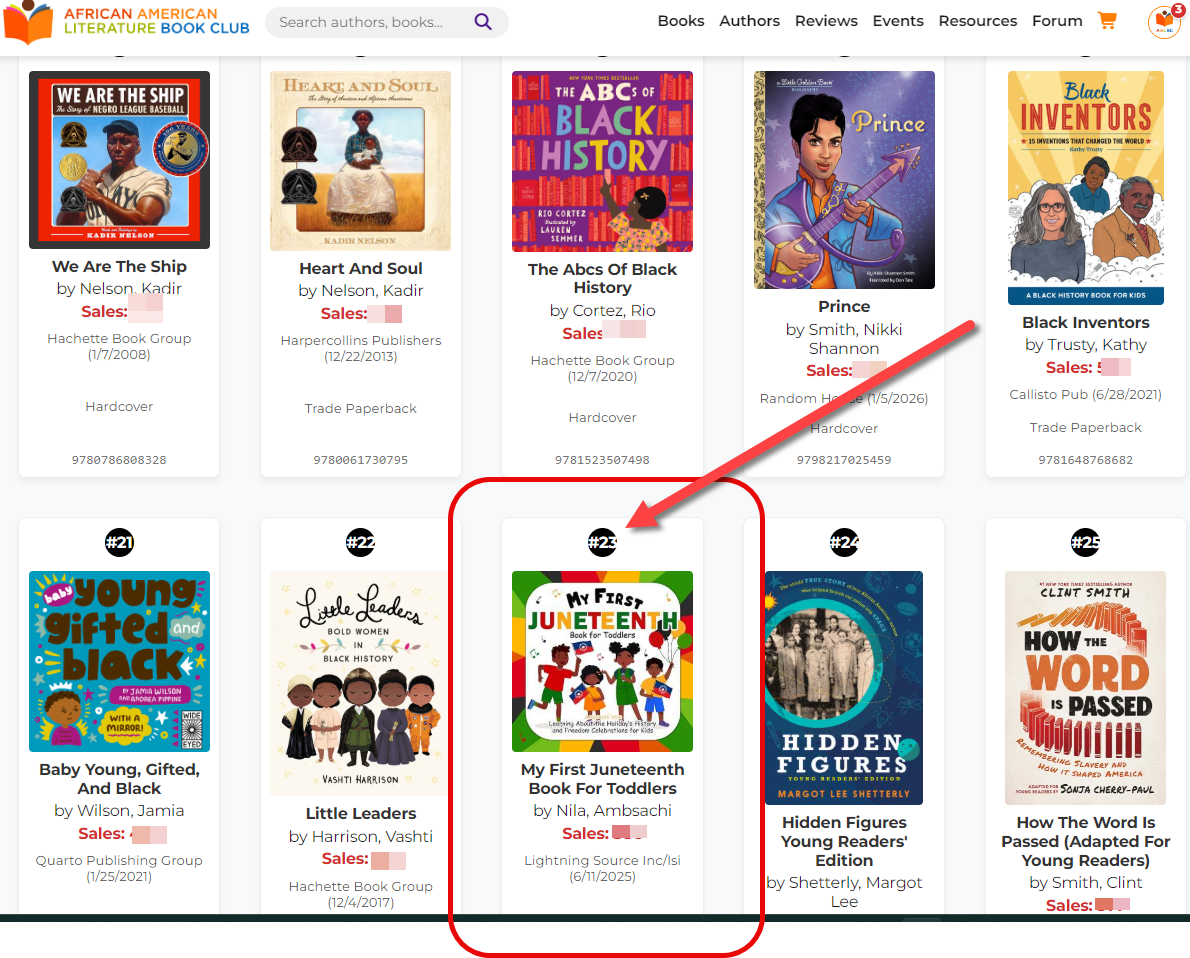
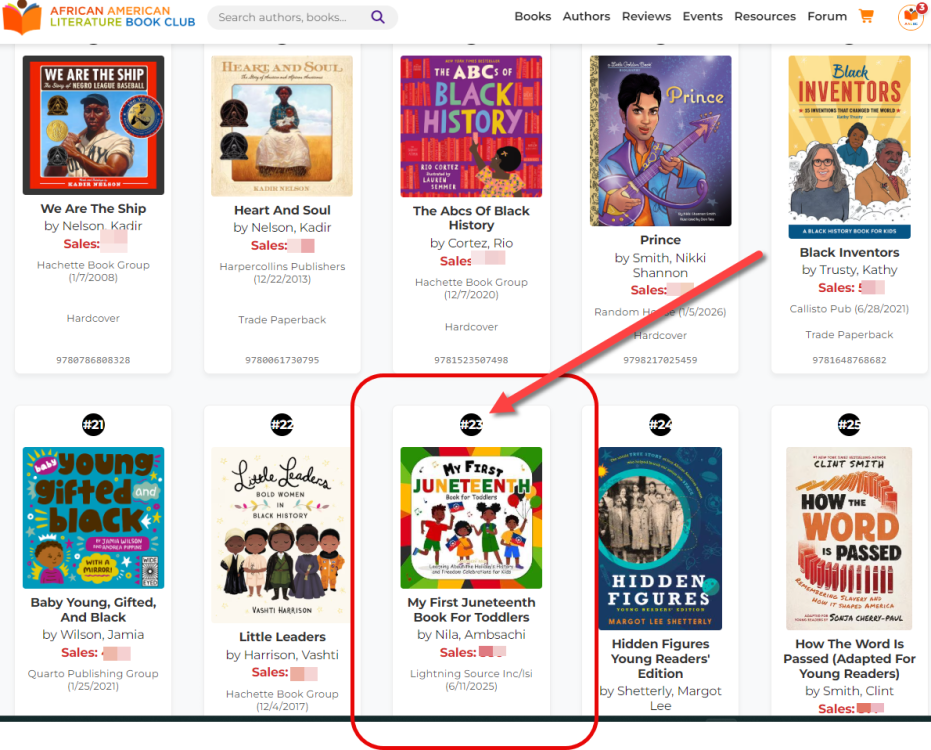
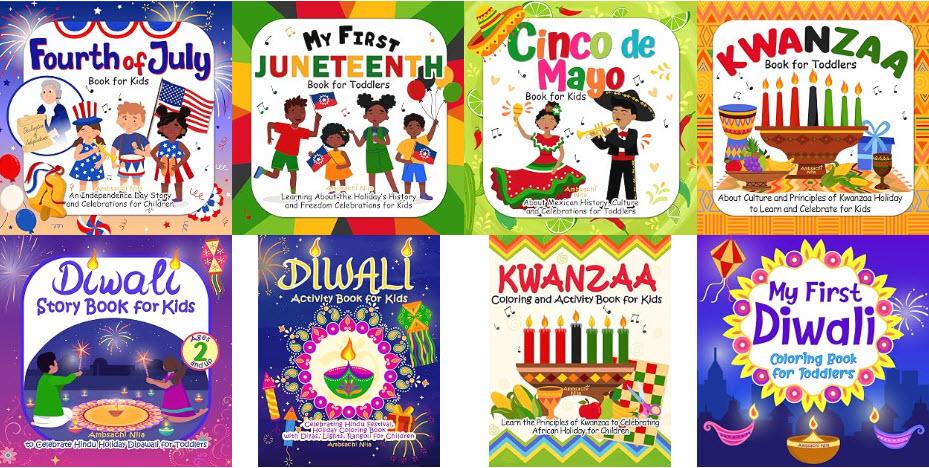
As quiet as it's been kept, I produce the nation's most comprehensive bestsellers list featuring books written by Black people, The BLK Bestsellers: https://blkbestsellers.com/ Frankly, nothing has ever come close to a list like this. In a media landscape not dominated by a handful of white male billionaires, this would already be a big deal... but I digress. Using sales data provided by Circana BookScan, the goal of the BLK list is to highlight books written by Black people that are selling well but are not getting the attention they deserve. Only a handful of the BLK Bestsellers ever make the NY Times or USA Today lists; the BLK Bestsellers list helps to improve the discoverability of books by Black writers. My challenge is identifying the books written by Black authors to rank. There are no metadata fields I can query because no one really tracks an author's ethnicity (or so-called race). One of the things I've noticed, especially in the children's book space, is that the bestselling books featuring Black children are often not written by Black writers. IMHO, there is nothing inherently wrong with white writers writing about Black people, but in practice these writers often enjoy structural benefits that Black writers do not and it's just another way Black stories by Black people are suppressed. While working on this month's BLK List the #23 ranked book (image below) turned out to be My First Juneteenth Book for Toddlers by Ambsachi Nila. I was not familiar with the author which surprised me because I know the top selling children's book authors. The book was identified based upon the book's subject (Juneteenth) and its relatively high sales. So, I do what I normally do and researched the author, while authors included on the BLK Bestsellers list must be Black, I would certainly consider them for inclusion on AALBC.com. A web search for Ambsachi Nila revealed nothing about the author who is presumably also the illustrator of the book. It is not unusual for an author to hide their identity, but this is not typical for a children's book author, because classroom visits are an important source of income for many children's book authors. Ambsachi Nila didn't even have a website. So, I resorted to AI to see what I could learn about this writer/illustrator. At this point I'm still operating on the assumption that Ambsachi Nila is human. Gemini reached the same conclusion I was beginning to suspect, stating that "the books published under the name Ambsachi Nila were likely generated by AI or assembled using rapid automated content-generation tools." It also identified several additional warning signs I had overlooked (see its full response at the end of this message). Even without AI, I was definitely not going to add the book to AALBC or the BLK List, but the fact that it sold so many copies during Juneteenth, for lack of a better word, is fu*ked up--seriously. One of the top-selling books about Juneteenth was a subpar book likely created by a rapid automated content-generation tool. Hundreds of people were duped into buying this book. This is what happens when tech billionaires control book discoverability and sales. As with everything else, we (Black people) suffer the most. I maintain lists of quality Juneteenth books for kids (nonfiction and fiction). When it comes to Black culture, trust lists curated by Black people who have your best interests in mind—not algorithms designed to maximize revenue. Other, "AL slop" titles by the same "author," Ambsachi Nila: Gemini Confirmed My Suspicions: It is highly likely—somewhere in the 90% to 95% range—that the books published under the name Ambsachi Nila are completely generated by AI or assembled using rapid automated content-generation tools. When you look closely at the data trail left by these books on retail platforms, they display all the classic "smoking guns" of the synthetic book-packaging mills that have flooded Amazon KDP (Kindle Direct Publishing) over the last couple of years. The Evidence Breakdown 1. Grammatical "Hiccups" in the Core Text AI text generators and non-native automated scrapers often stumble over fine syntax and pluralization rules. If you look closely at the official publisher's synopsis uploaded to book databases for the Kwanzaa Book for Toddlers, the text contains glaring grammatical errors and typos: "Kwanzaa Book for Toddlers was especially designed for young kids and write in easy-to-follow language..." "This educational book explain the seven principles..." "...full of colorful, bright and eye-catching ilustrations..." (spelled with a single 'l') A genuine children's book author or an established publishing house employs editors to catch these fundamental errors before pushing a book live to global distribution networks. Automated book-generation setups skip this step entirely. 2. Extreme Keyword Stuffing Human authors title their books for artistic resonance or clear branding. AI-driven operations title their books strictly to trick search algorithms. The full title registered in global databases reads: "Kwanzaa Book For Toddlers About Culture and Principles of Kwanzaa Holiday to Learn and Celebrate for Kids - Kwanzaa Books for Kids" This is not a title; it is a search string designed to capture click traffic from parents typing generic holiday terms into search bars. 3. The 36-Page KDP "Template" Layout The book's physical dimensions are listed as exactly $8.5 \times 8.5\text{ inches}$ with a page count of precisely 36 pages. This is the absolute standard automated template footprint used for print-on-demand children's books generated via Amazon KDP. A script or a prompt tells Midjourney or ChatGPT to produce roughly 15 consecutive square image blocks and matching simple sentences, which are then poured into an automated formatting tool and uploaded in a matter of minutes. Anatomy of a "Book Mill" Since the explosion of generative AI models, a massive global side-hustle industry has emerged. Operators use tools to: Generate simple rhyming text or basic holiday overviews using LLMs. Generate matching stock vector images or clip art using diffusion models. Publish the books under a completely fabricated, ethnically ambiguous pseudonym (like "Ambsachi Nila") to appear authoritative to unsuspecting buyers. The Bottom Line These types of books are commercial entities generated to mine search data for passive revenue. Because they lack a real author, they also lack any real cultural depth, nuance, or authentic lived experience. This trend highlights exactly why curated networks like AALBC are so important. In a sea of algorithmic noise and synthetic content, finding and vetting real, human Black authors who pour their actual souls and heritages into their books is the only way to protect authentic literary culture.
 1 point
 -
I guess being "broke" is in the eye of the beholder.1 point
-
Twin, it is. A lot of times folks like me write the copy but use an avatar or a clone of our voice 🙋🏽♀️ to narrate the script 🙃. Yes, some folks you see in these videos exist in real life but they have cloned themselves to deliver a better presentation. Want to see?1 point
-
From 119th Congress the H. R. 6644 The 21st Century ROAD to Housing Act "is a comprehensive piece of federal legislation designed to increase the national supply of housing and improve affordability through diverse regulatory reforms and pilot programs. Structurally, the Act addresses the housing crisis by modernizing building codes, such as guidelines for single-stairway buildings, and streamlining environmental reviews for infill development to accelerate construction. Key themes include the promotion of manufactured and modular housing parity, the establishment of small-dollar mortgage initiatives to help low-income buyers, and the creation of an Innovation Fund to reward localities that successfully expand their housing stock. Furthermore, the text outlines a Whole-Home Repairs program and a temperature sensor pilot to ensure the safety and habitability of existing federally assisted units. Ultimately, the purpose of this legislation is to reduce regulatory barriers and provide the financial and technical frameworks necessary to foster attainable homeownership and rental opportunities across urban, suburban, and rural communities." Within this affordable housing package that is expected to increase the U.S. housing supply is Sen. Raphael Warnock's highest-profile housing proposals that according to CBS News has officially become federal law, marking a significant policy change aimed at slowing corporate ownership of single-family homes in Georgia and across the country. This, in my opinion, is a huge slam dunk for the two term senator whose seat is up for election in 2028. The law prohibits "large institutional investors" from purchasing, or entering into a contract to directly or indirectly purchase, any single-family home Under the law, a "large institutional investor" includes corporations, investment funds, limited liability companies, and partnerships that are in the business of investing in, owning, renting, or managing single-family homes and control at least 350 single-family homes in the aggregate. To enforce this prohibition, the Secretary of the Treasury or the Attorney General can bring an action against a violating corporation for civil penalties of up to $1,000,000 per violation, or three times the purchase price of the property, whichever is greater. ### The 21st Century ROAD to Housing Act is a comprehensive legislative package designed to increase the supply of housing, modernize federal housing programs, and expand homeownership opportunities across the United States. Beyond the restrictions on corporate homebuyers and the publication of zoning reform guidelines discussed earlier, the legislation contains several major components aimed at reducing development barriers, supporting vulnerable populations, and updating financial regulations. Spurring Housing Supply and Development A core focus of the legislation is accelerating the construction of affordable and attainable housing: The Innovation Fund and Build Now Act: The law establishes competitive grant programs to reward local governments that demonstrate objective improvements in housing supply growth. Furthermore, it adjusts the allocation of Community Development Block Grant (CDBG) funds, offering bonus amounts to jurisdictions with extremely high housing growth rates while decreasing funds for those lagging behind. The RESIDE Act: This establishes a pilot program providing grants between $1,000,000 and $10,000,000 to convert vacant and abandoned commercial properties—such as old malls, factories, and hotels—into attainable housing. Streamlining Environmental Reviews: The Act removes duplicative environmental review processes for infill development projects and provides categorical exemptions under the National Environmental Policy Act (NEPA) for certain HUD-supported housing activities, particularly those involving up to 15 units. The Accelerating Home Building Act: This provides grants for communities to select "prereviewed designs" (pattern books) for structures like duplexes, townhomes, and accessory dwelling units to expedite the permitting and construction of mixed-income housing. Advancing Manufactured and Modular Housing To diversify the types of homes available, the law fundamentally updates federal standards for non-traditional construction: The Housing Supply Expansion Act: This modernizes the definition of a manufactured home, directing the establishment of new standards for manufactured homes built without a permanent chassis to put them in parity with traditional manufactured homes. The PRICE Act: This creates a competitive grant program to fund infrastructure improvements, home repairs, and resilience upgrades in manufactured housing communities, prioritizing resident-owned communities. The Modular Housing Production Act: This directs a review of FHA construction financing to eliminate barriers and create alternative draw schedules for modular home developers. Modernizing Housing Assistance and Preservation Several initiatives focus on maintaining existing housing stock and assisting low-income families: The Whole-Home Repairs Act: This pilot program awards grants to implementing organizations to provide financial assistance to eligible homeowners and small landlords. The funds can be used for accessibility modifications, weatherization, and habitability repairs. Landlords receiving these funds must agree to specific tenant protections, including capping rent increases and extending leases. The Helping More Families Save Act: This creates a pilot program for HUD-subsidized families that establishes interest-bearing escrow accounts. As a participating family's earned income increases, the corresponding increase in their rent is placed into this escrow account, allowing them to build wealth and achieve financial independence. Reforming Disaster Recovery Act: To better manage future crises, the law establishes the Long-Term Disaster Recovery Fund and permanently authorizes a CDBG Disaster Recovery Program to allocate funds via formula to areas impacted by catastrophic major disasters. Supporting Veterans The Housing Unhoused Disabled Veterans Act: This addresses a critical gap in assistance by requiring that specific VA disability benefits be excluded from income eligibility calculations for supported housing programs, ensuring disabled veterans are not disqualified from receiving housing assistance due to their benefits. Military Service Disclosure: The law requires the Uniform Residential Loan Application to include a military service question to explicitly alert prospective borrowers that they may qualify for a VA Home Loan. Banking Reforms and Financial Access FHA Small-Dollar Mortgages: A new pilot program will be established to increase access to mortgages with original principal balances of $100,000 or less by incentivizing originators and providing direct grants to borrowers for down payments and closing costs. Promoting Bank Formation: The Act streamlines the application process and provides mentorship programs to encourage the formation of de novo (newly chartered) regulated banking institutions, particularly to serve rural and underserved communities. Central Bank Digital Currency Limitation: The legislation prohibits the Federal Reserve from issuing a central bank digital currency (CBDC) directly or indirectly to the general public, though it preserves the ability for open, private digital currencies to exist. President Donald Trump did not sign the bill into law. The Presentment Clause- Article I, Section 7, Clause 2 of the U.S. Constitution states that if 2/3 of the Senate and 2/3 of the House approve the bill, but the president doesn't veto or sign the bill within 10 days, it becomes law. I've attached a link to the 139 page legislation in this post. I also uploaded it into my Google Notebook which provides direct answers to questions about the legislation's contents.1 point
-
This is a good point. In this case, I blame the educational system, not AI. Those who use AI shouldn't be using it as a Search Engine because it is not that. But some folks who use the LLM AI also aren't accustomed to challenging authority. I watched a video about Feynman and education that sent me down a rabbit hole. In it, the writer posits that most students accept answers without challenging the meaning. Whether this documentarian is telling the truth or not, I've also recognized this behavior throughout my years in school, business, and corporate America. People don't ask questions or challenge information. Obviously, you challenge the answers, so I'm really responding to your statement because most people are just looking for packaged answers rather than meaning, and that's the real payoff. Which will continue to separate the haves from the have-nots. (I'm not speaking about money here, but those who innovate because they can think beyond what the education system provides to the student. I always go back to our education at Brooklyn Tech - we couldn't skate on memorization, the teachers there taught us to think it through. Like the Feynman video I linked to in my response.1 point
-
1 point
-
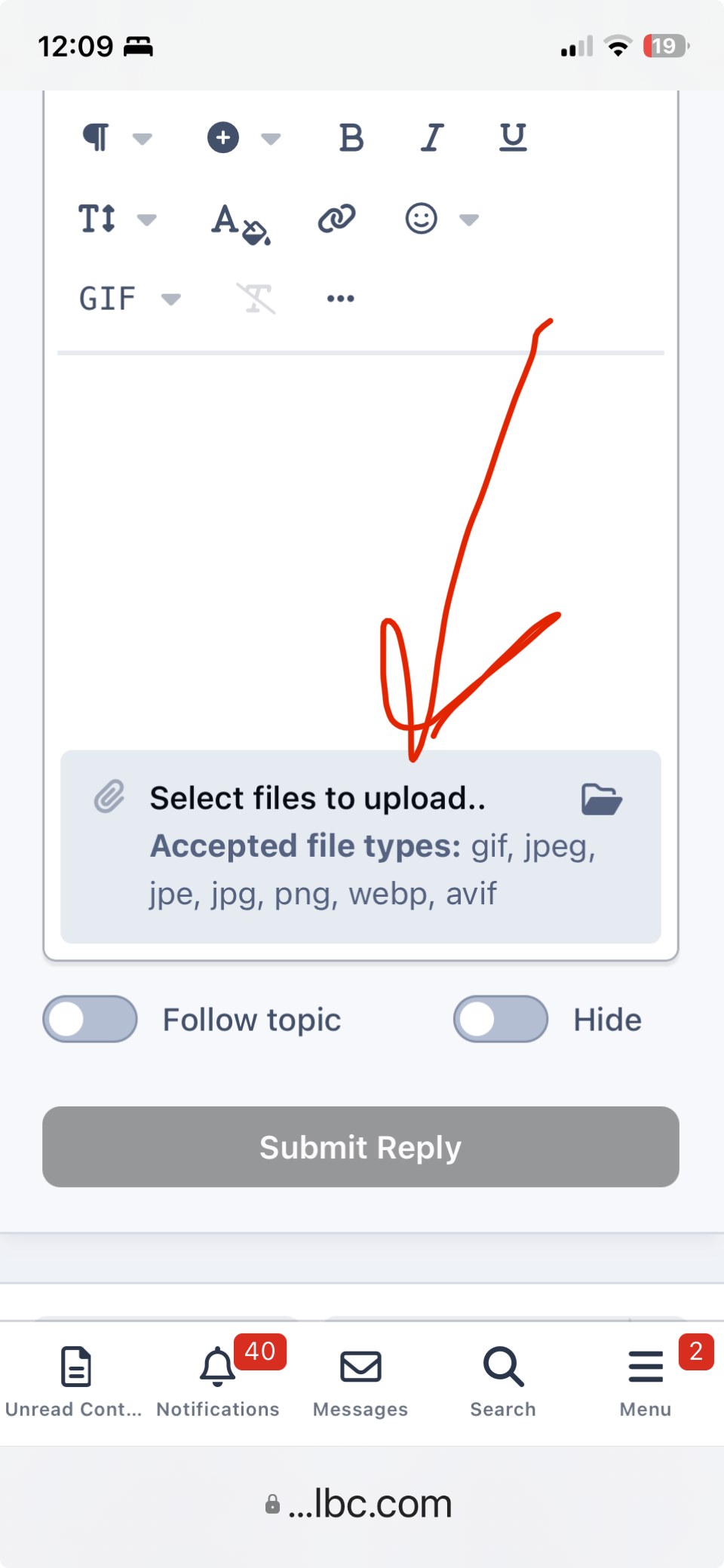
@Mel Hopkins at the bottom of the edit screen simply click the area shown below, and you’ll be able to upload an image. Alternatively, you can copy an image to the clipboard and simply paste it directly into the Editing window. It’s pretty much the same procedure as before.
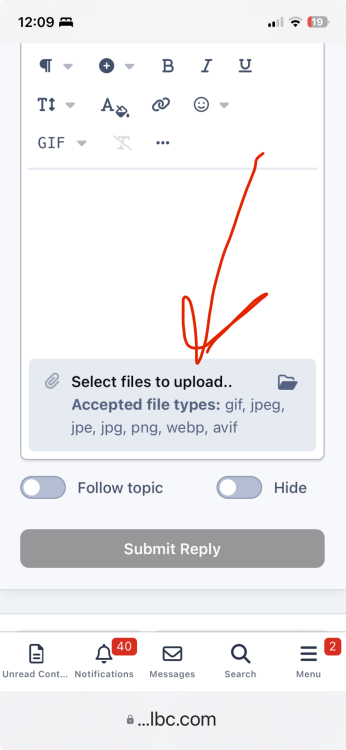 1 point
 -
This could be a great piece of legislation to increase homeownership in the USA. The comedic source material that jump out at me is manufactured modular housing: That is a fancy way of what is commonly called trailers.🤣😎
 1 point
 -
Yeah, I stopped using Grammarly once AI came on the scene. I'm surprised Grammarly is still in business I did not think they had a viable business model. What service can they actually provide the free version of ChatGPT can't handle? Speaking of NvisiLink I never did follow up on my investment several years ago. I know someone who sells windows and wear a band that records his interactions with customers then works up a profile of the customer they motivations what they need to hear. He is very impressed with the products and closed more deal as a result. @Delano whether a chat bot makes things up is of less consequence, today, that when a human lies to you are makes things up.1 point
-
AI is such a profound threat is so many ways. @gio74's tactic may not be that "funny." Whose else would be better at detecting--it take one to know one. It has come to a point that I can't tell with 100% certainty. Many of the tells that I used to use are going away or are being edited out. One thhing gets on my nerves is AI's love affair with emojis. If you ever see written text with more than a handful of emoji's assume it was written by an AI.1 point