NYT 100 Notable Books of 2015 by Authors of African Descent
Each year, The New York Times releases its “100 Notable Books” list, featuring standout works of fiction, poetry, and nonfiction selected by the editors of The New York Times Book Review. Below are the books by—and about—people of African descent that made the 2015 list.
10 Notable Books Found for 2015
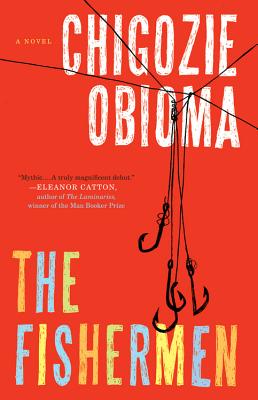
The Fishermen: A Novel
In a Nigerian town in the mid 1990s, four brothers encounter a madman whose mystic prophecy of violence threatens the core of their close-knit family.Told from the point of view of nine year old Benjamin, the youngest of four brothers, THE FISHERMEN is the Cain and Abel-esque story of an unforgettable childhood in 1990s Nigeria, in the small town of Akure. When their strict father has to travel to a distant city for work, the brothers take advantage of his extended absence to skip school and go fishing. At the ominous, forbidden nearby river, they meet a dangerous local madman who persuades the oldest of the boys that he is destined to be killed by one of his siblings. What happens next is an almost mythic event whose impact-both tragic and redemptive-will transcend the lives and imaginations of its characters and its readers. Dazzling and viscerally powerful, The Fishermen never leaves Akure but the story it tells has enormous universal appeal. Seen through the prism of one familys destiny, this is an essential novel about Africa with all of its contradictions-economic, political, and religious-and the epic beauty of its own culture. With this bold debut, Chigozie Obioma emerges as one of the most original new voices of modern African literature, echoing its older generations masterful storytelling with a contemporary fearlessness and purpose.
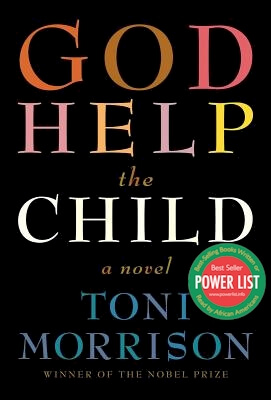
God Help the Child: A Novel
Spare and unsparing, God Help the Child is a searing tale about the way childhood trauma shapes and misshapes the life of the adult. At the center: a woman who calls herself Bride, whose stunning blue-black skin is only one element of her beauty, her boldness and confidence, her success in life; but which caused her light-skinned mother to deny her even the simplest forms of love until she told a lie that ruined the life of an innocent woman, a lie whose reverberations refuse to diminish Booker, the man Bride loves and loses, whose core of anger was born in the wake of the childhood murder of his beloved brother Rain, the mysterious white child, who finds in Bride the only person she can talk to about the abuse shes suffered at the hands of her prostitute mother and Sweetness, Brides mother, who takes a lifetime to understand that "what you do to children matters. And they might never forget."
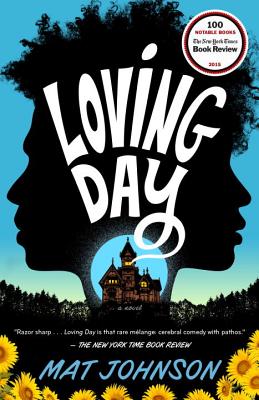
Loving Day: A Novel
Named one of the Best Books of the Year by the San Francisco Chronicle •NPR •Mens Journal • The Denver Post •Slate •Time Out New York
From the author of the critically beloved Pym (Imagine Kurt Vonnegut having a beer with Ralph Ellison and Jules Verne.Vanity Fair) comes a ruthlessly comic and moving tale of a man discovering a lost daughter, confronting an elusive ghost, and stumbling onto the possibility of utopia.
In the ghetto there is a mansion, and it is my fathers house.
Warren Duffy has returned to America for all the worst reasons: His marriage to a beautiful Welsh woman has come apart; his comics shop in Cardiff has failed; and his Irish American father has died, bequeathing to Warren his last possession, a roofless, half-renovated mansion in the heart of black Philadelphia. On his first night in his new home, Warren spies two figures outside in the grass. When he screws up the nerve to confront them, they disappear. The next day he encounters ghosts of a different kind: In the face of a teenage girl he meets at a comics convention he sees the mingled features of his white father and his black mother, both now dead. The girl, Tal, is his daughter, and shes been raised to think shes white.
Spinning from these revelations, Warren sets off to remake his life with a reluctant daughter hes never known, in a haunted house with a history he knows too well. In their search for a new life, he and Tal struggle with ghosts, fall in with a utopian mixed-race cult, and ignite a riot on Loving Day, the unsung holiday for interracial lovers.
A frequently hilarious, surprisingly moving story about blacks and whites, fathers and daughters, the living and the dead, Loving Day celebrates the wonders of opposites bound in love.
Praise for Loving Day
Incisive razor-sharp that rare mélange: cerebral comedy with pathos. The vitality of our narrator deserves much of the credit for that. He has the neurotic bawdiness of Philip Roths Alexander Portnoy; the keen, caustic eye of Bob Jones in Chester Himess If He Hollers Let Him Go; the existential insight of Ellisons Invisible Man.The New York Times Book Review
Exceptional To say that Loving Day is a book about race is like saying Moby-Dick is a book about whales . [Mat Johnsons] unrelenting examination of blackness, whiteness and everything in between is handled with ruthless candor and riotous humor . Even when the novels family strife and racial politics are at peak intensity, Johnsons comic timing is impeccable.Los Angeles Times
Loving Day is about being blackish in America, a subject about which Johnson has emerged as satirist, historian, spy, social media trickster (follow him on Twitter) and demon-fingered blues guitarist . Johnson, at his best, is a powerful comic observer [and] a gifted writer, always worth reading on the topics of race and privilege.Dwight Garner, The New York Times
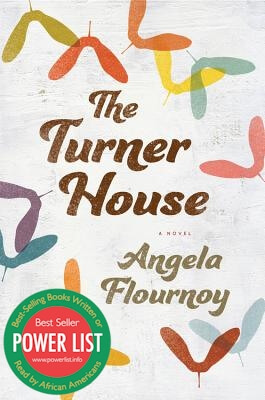
The Turner House
A powerful, timely debut, The Turner House marks a major new contribution to the story of the American family.
The Turners have lived on Yarrow Street for over fifty years. Their house has seen thirteen children grown and goneand some returned; it has seen the arrival of grandchildren, the fall of Detroits East Side, and the loss of a father. The house still stands despite abandoned lots, an embattled city, and the inevitable shift outward to the suburbs. But now, as ailing matriarch Viola finds herself forced to leave her home and move in with her eldest son, the family discovers that the house is worth just a tenth of its mortgage. The Turner children are called home to decide its fate and to reckon with how each of their pasts haunts and shapes their familys future.
Praised by Ayana Mathis as utterly moving and un-putdownable, The Turner House brings us a colorful, complicated brood full of love and pride, sacrifice and unlikely inheritances. Its a striking examination of the price we pay for our dreams and futures, and the ways in which our families bring us home.

The Sellout
The Sellout, won the Man Booker Prize on October 25, 2016. Paul Beatty is the first American to win the award.
The Sellout is also:
- Winner of the 2015 National Book Critics Circle Award in Fiction
- Named one of the best books of 2015 by The New York Times Book Review and the Wall Street Journal
A biting satire about a young mans isolated upbringing and the race trial that sends him to the Supreme Court, Paul Beattys The Sellout showcases a comic genius at the top of his game. It challenges the sacred tenets of the United States Constitution, urban life, the civil rights movement, the father-son relationship, and the holy grail of racial equalitythe black Chinese restaurant.
Born in the agrarian ghetto of Dickenson the southern outskirts of Los Angelesthe narrator of The Sellout resigns himself to the fate of lower-middle-class Californians: Id die in the same bedroom Id grown up in, looking up at the cracks in the stucco ceiling thatve been there since 68 quake.&rdquo Raised by a single father, a controversial sociologist, he spent his childhood as the subject in racially charged psychological studies. He is led to believe that his fathers pioneering work will result in a memoir that will solve his familys financial woes. But when his father is killed in a police shoot-out, he realizes there never was a memoir. All thats left is the bill for a drive-thru funeral.
Fuelled by this deceit and the general disrepair of his hometown, the narrator sets out to right another wrong: Dickens has literally been removed from the map to save California from further embarrassment. Enlisting the help of the towns most famous residentthe last surviving Little Rascal, Hominy Jenkinshe initiates the most outrageous action conceivable: reinstating slavery and segregating the local high school, which lands him in the Supreme Court.
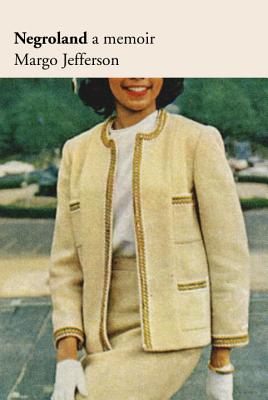
Negroland: A Memoir
ANew York TimesBestseller
At once incendiary and icy, mischievous and provocative, celebratory and elegiachere is a deeply felt meditation on race, sex, and American culture through the prism of the authors rarefied upbringing and education among a black elite concerned with distancing itself from whites and the black generality while tirelessly measuring itself against both.
Born in upper-crust black Chicagoher father was for years head of pediatrics at Provident, at the time the nations oldest black hospital; her mother was a socialiteMargo Jefferson has spent most of her life among (call them what you will) the colored aristocracy, the colored elite, the blue-vein society. Since the nineteenth century they have stood apart, these inhabitants of Negroland, a small region of Negro America where residents were sheltered by a certain amount of privilege and plenty.
Reckoning with the strictures and demands of Negroland at crucial historical momentsthe civil rights movement, the dawn of feminism, the fallacy of postracial AmericaJefferson brilliantly charts the twists and turns of a life informed by psychological and moral contradictions. Aware as it is of heart-wrenching despair and depression, this book is a triumphant paean to the grace of perseverance.
(With 8 pages of black-and-white photographs.)
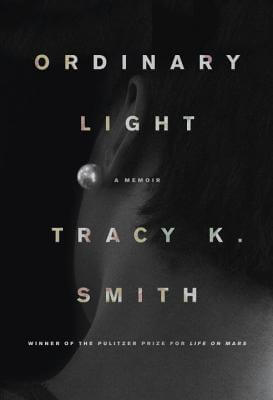
Ordinary Light: A Memoir
National Book Award Finalist
From the dazzlingly original Pulitzer Prize-winning poet hailed for her extraordinary range and ambition (The New York Times Book Review): a quietly potent memoir that explores coming-of-age and the meaning of home against a complex backdrop of race, faith, and the unbreakable bond between a mother and daughter.
The youngest of five children, Tracy K. Smith was raised with limitless affection and a firm belief in God by a stay-at-home mother and an engineer father. But just as Tracy is about to leave home for college, her mother is diagnosed with cancer, a condition she accepts as part of Gods plan. Ordinary Light is the story of a young woman struggling to fashion her own understanding of belief, loss, history, and what it means to be black in America.
In lucid, clear prose, Smith interrogates her childhood in suburban California, her first collision with independence at Harvard, and her Alabama-bornparentsrecollections oftheir own youth in theCivil Rights era. These dizzying juxtapositionsof her familys past, her own comfortable present, and the promise of her futurewill in due course compel Tracy to act on her passions for love and ecstatic possibility, and her desire to become a writer.
Shot through with exquisite lyricism, wry humor, and an acute awareness of the beauty of everyday life, Ordinary Light is a gorgeous kaleidoscope of self and family, one that skillfully combines a childs and teenagers perceptions with adult retrospection. Here is a universal story of being and becoming, a classic portrait of the ways we find and lose ourselves amid the places we call home.
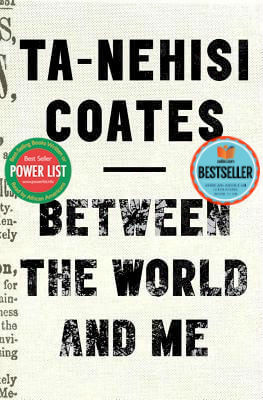
Between The World And Me
- 5-time BLK Bestseller, Adult Nonfiction (Hardcover)
- 10-Time AALBC.com Bestseller!
- Indies Choice Book Awards (2016)
- NAACP Image Award for Literature (2016)
- Kirkus Prize Winner/Finalist (2015)
- National Book Award Winner/Finalist (2015)
- NYT Notable Book (2015)
- 1-Time Power List Bestseller
- Pulitzer Prize Finalist/Winner (2016)
- Selected for 2 Book Club Reading Lists
Debuted #1 New York Times Best Seller • Hailed by Toni Morrison as required reading, a bold and personal literary exploration of Americas racial history by the single best writer on the subject of race in the United States (The New York Observer)
This is your country, this is your world, this is your body, and you must find some way to live within the all of it.
In a profound work that pivots from the biggest questions about American history and ideals to the most intimate concerns of a father for his son, Ta-Nehisi Coates offers a powerful new framework for understanding our nations history and current crisis. Americans have built an empire on the idea of race, a falsehood that damages us all but falls most heavily on the bodies of black women and menbodies exploited through slavery and segregation, and, today, threatened, locked up, and murdered out of all proportion. What is it like to inhabit a black body and find a way to live within it? And how can we all honestly reckon with this fraught history and free ourselves from its burden?
Between the World and Me is Ta-Nehisi Coatess attempt to answer these questions in a letter to his adolescent son. Coates shares with his sonand readersthe story of his awakening to the truth about his place in the world through a series of revelatory experiences, from Howard University to Civil War battlefields, from the South Side of Chicago to Paris, from his childhood home to the living rooms of mothers whose childrens lives were taken as American plunder. Beautifully woven from personal narrative, reimagined history, and fresh, emotionally charged reportage, Between the World and Me clearly illuminates the past, bracingly confronts our present, and offers a transcendent vision for a way forward.
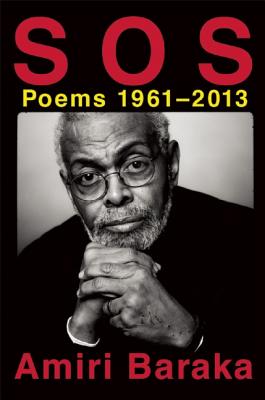
S O S: Poems 1961-2013
A New York Times Editors Choice
Fusing the personal and the political in high-voltage verse, Amiri Baraka"whose long illumination of the black experience in America was called incandescent in some quarters and incendiary in others" (New York Times)was one of the preeminent literary innovators of the past century. Selected by Paul Vangelisti, this volume comprises the fullest spectrum of Barakas rousing, revolutionary poems, from his first collection to previously unpublished pieces composed during his final years.
Throughout Barakas career as a prolific writer (also published as LeRoi Jones), he was vehemently outspoken against oppression of African American citizens, and he radically altered the discourse surrounding racial inequality. The environments and social values that inspired his poetics changed during the course of his life, a trajectory that can be traced in this retrospective spanning more than five decades of profoundly evolving subjects and techniques. Praised for its lyricism and introspection, his early poetry emerged from the Beat generation, while his later writing is marked by intensely rebellious fervor and subversive ideology. All along, his primary focus was on how to live and love in the present moment despite the enduring difficulties of human history.
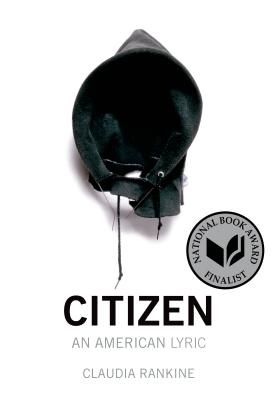
Citizen: An American Lyric
* Finalist for the National Book Award in Poetry *
* Winner of the National Book Critics Circle Award in Poetry * Finalist for the National Book Critics Circle Award in Criticism * Winner of the NAACP Image Award * Winner of the L.A. Times Book Prize * Winner of the PEN Open Book Award *
ONE OF THE BEST BOOKS OF THE YEAR:
The New Yorker, Boston Globe, The Atlantic, BuzzFeed, NPR. Los Angeles Times, Publishers Weekly, Slate, Time Out New York, Vulture, Refinery 29, and many more
A provocative meditation on race, Claudia Rankines long-awaited follow up to her groundbreaking book Dont Let Me Be Lonely: An American Lyric.
Claudia Rankines bold new book recounts mounting racial aggressions in ongoing encounters in twenty-first-century daily life and in the media. Some of these encounters are slights, seeming slips of the tongue, and some are intentional offensives in the classroom, at the supermarket, at home, on the tennis court with Serena Williams and the soccer field with Zinedine Zidane, online, on TV-everywhere, all the time. The accumulative stresses come to bear on a persons ability to speak, perform, and stay alive. Our addressability is tied to the state of our belonging, Rankine argues, as are our assumptions and expectations of citizenship. In essay, image, and poetry, Citizen is a powerful testament to the individual and collective effects of racism in our contemporary, often named "post-race" society.
Advertisement