


Leaderboard
-
CDBurns
Members1Points972Posts -
Troy
Administrators1Points14,765Posts -

Kalexander2
Members1Points751Posts -

Mel Hopkins
Members1Points2,198Posts




Popular Content
Showing content with the highest reputation on 06/06/2018 in Posts
-
1 pointBlockchain Technology may cause the next disruption in book-selling and "Put Authors At Center of Publishing Universe". Blockchain, the underpinnings of the bitcoin launched in 2009, "is a decentralized ledger of all transactions across a peer-to-peer network. Using this technology, participants can confirm transactions without a central authority. Potential applications include fund transfers, settling trades, voting and many other uses. " Source: PwC (see the infographic) As we all know, one of the centralized authorities in bookselling is an online retail store, namely Amazon. With blockchain technology, books will contain smart contracts between the author and publisher. Also spelled out in the block, will be subsidiary rights, payment etc, essentially cutting out the middlemen (maybe even bowker's isbn too! But I digress. From Publisher's weekly: So how would blockchain work for books? Basically, a digital book created in the blockchain holds both the text, and also all the terms of a book’s contract—referred to as a “smart contract”—including but not limited to commercial terms of sale (and even resale), author credit and other information. The Alliance of Indepedent Authors (ALLi) has published a white paper on blockchain for books. When a user purchases a blockchain book, the transaction is direct between author and reader—no middleman, like Amazon. The reader gets the text within an app. The text cannot be tampered with or transferred outside of the contract terms coded therein. And the author is paid immediately, with payments divvied up according to the smart contract—for example, the contract might call for 10% of the book's price to go the author’s publisher. And yes, payments are made in cryptocurrency directly to the authors “digital wallet.” By the way, this isn't years away; it is happening now with one of the first books launched in April at the London Book Fair. Also from Publisher's Weekly: Josef Marc, CEO of upstart blockchain publisher Publica, announced that the company had just gone live in the Google Play Store with author Sukhi Jutla’s Escape The Cubicle: Quit The Job You Hate. Without getting too technical, Publica offers the service to authors to crowdfund their publications through ICO (initial coin offerings). So who knows, maybe , @Troy will use a blockchain platform to publish authors and create AALBC tokens too? Decentralization is putting the power back into the hands of the people. For the times they are a-changin'.1 point
-
Thanks everybody! Don't have anything to add right now because I'm too busy considering how to incorporate all these great strategies into my marketing plans.1 point
-
I'm popping up again, lol. I recently added the RSS Feed from the network sites to each homepage of the sites. That is the closest thing to a webring I've found. It also diminishes writing posts for more than one site. Authors are all content to remain on Facebook and IG basically screwing themselves out of any potential additional revenue via affiliates and ads. It's so unfortunate. With the sneaker site it has turned into my writing site. My books have never really taken off, but as of late I've been interviewed several times about diversity in footwear because of posts I've written on the site. I've basically become a writer because of blogging, when I was a novelist without any readers. My work is being read more than ever which is the most important statement I could ever make. If writers are creating their own content on a consistent basis, they are going to have travel everywhere and go to every event to build an audience. If they simply woke up each morning and updated their own sites they would improve search and opportunities. Sorry I've been missing, but there have been some incredible things taking shape because of the posts on the site and I've been completely focused on building that momentum. I hope everyone is well!!!!1 point
-
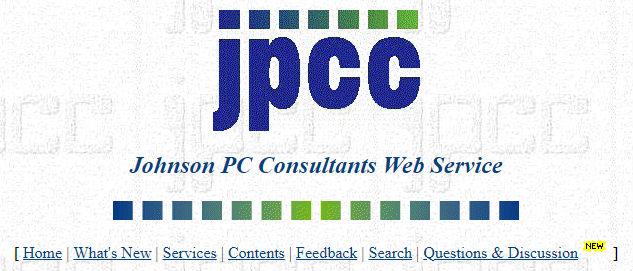
1 point@Kalexander2, in an earlier conversation, brought up an online news firm he'd previously planned to start, the JPCC News agency. That actually reminded me of a company I started, back in 1991 when I was in MBA school, working in the computer lab with @Delano. I'm order than Del, but he was ahead of me in school.' Anywho when K2 mentioned "JPCC" it really triggered memories. I went to the Wayback Machine and found a snapshot of the JPCC website from 1995. JPCC was one of the first websites that I created; I'm not sure what year that but it was not long after the Netscape Navigator web browser became available. AALBC started as a directory on this website back in 1997. That was a time when very few people had both a PC and Internet access at home.
 1 point