


Leaderboard
-
Troy
Administrators5Points14,765Posts -
.jpg.473e1f1051552796800f1e62b10321ca.jpg)
Cynique
Moderators2Points5,744Posts -
Mel Hopkins
Members1Points2,198Posts -
Tony Lindsay
Members1Points20Posts
.thumb.jpg.3bf9f25532a7944736ddb02aa1b64269.jpg)

Popular Content
Showing content with the highest reputation on 09/30/2018 in Posts
-
1 point@Pioneer1 I just listened to the entire Tariq Nasheed video you posted the other day. The code of Black men never speaking against another Black man in public sounds good. But Tariq, made it sound like no other culture does this. When the reality is they do. I defy anyone to think of some heinous thing that a white people has done -- even to a Black person -- where another white person has not condemned the action. White people trash each other in the media all day long indeed this is quite a lucrative activity. In fact, I'd argue that it is Black people who have adopted this code of not speaking against another Black person. Look how little criticism Barack Obama got. In fact, he got so little criticism many people people think he walks on water. Barack got very little criticism from Black folks because he shut down folks like Cornel West and as far as I know Barack did not give a single interview to a Black-owned newspaper (I know he went at least the first 6 years in office without doing it). Still, how many Black men openly condemned Cosby when the news broke -- virtually none. Speaking personally, I called anyone who would not vote for Obama a "self-hating negro," including @Cynique (sorry I was wrong). I shared evidence supportive of Bill Cosby's innocence (I still would do this even given the benefit of hindsight). But here is the kicker Pioneer; Tariq, IN THE VERY SAME VIDEO, was critical of people like Don Lemon. How do you square his calling for a code that he himself violates in the same interview?! Did you listen to what the man was saying? Man, we have to be more critical of ourselves not less.1 point
-
1 pointThese young men live in a completely different world than the vast majority of Americans. I got a glimpse of this world as my kids went to one of these elite NYC prep schools and I worked at Goldman Sachs and other Wall Street firms for 15 years, and attended a top business school.. Most people have no clue just how privileged these white boys. Some Black people strive to be like them, the ones that look down on other Black people who can not be in this "class" turn my stomach -- literally, they disgust me. That said if it is not Kavanaugh is not hired would be another clone. Obama loved these people and used them through his administration. The whole system is fu*ked. On a related subject John Oliver did a segment lambasting florida and it's oppressive voter suppression laws. There was an article in the paper where Florida discovered a guy 30 years later and took aways his right to vote. He attempted to cash a bad check for less than $300 got a felony conviction did not server time, he has no realistic chance at appeal as the video below will explain. Privileged white men created these laws to enhance their wealth. There is a opportunity to change this law, Florida, but since so many of the people who would vote for this have been disenfranchised there is no guarantee that the law will be changed, especially sInce poor white folks show no lack of willingness to vote against their own self-interests.1 point
-
1 pointAre you using the information from the website? Also have you reviewed interviews from the founders? That may help you craft your argument for the morality of the organization - Specifically , how an organization working against police brutality could lead to community policing - and more cooperation between residents and law enforcement. This keeps police safe as well as black residents. Back in the early 2000s there was an organization called weed & seed - it was an USDOJ office of justice programs - and black communities and police worked together... and million dollar funding made it possible. So maybe there’s where morality can come into play - https://www.huffingtonpost.com/entry/black-lives-matter-a-catalyst-for-philanthropic-change_us_582234bae4b0102262411df71 point
-
1 pointI don't think the movement is dying so much as i think it is stalled, just marching in place, bringing about few results. For some reason, black leaders have not thrown their full support behind this organization, while Colin Kaepernick's solo crusade has captured the imagination and support of the black masses, stealing the thunder of BLM. There also seems to be undercurrents in regard to this organization having been co-opted by opportunistic individuals with their own agendas. In Chicago, a sensational trial is currently taking place involving the killing of a 19-year-old black male by a white cop who fired 16 shots at the knife-carrying victim as he walked away from him. Several black community groups are peacefully demonstrating outside the court house, but I'm not even sure whether BLM is among them; that's how invisible this group has become.1 point
-
1 point@Pioneer1 so you are just going to ignore the irrelevance of bringing the Catholic priest sex scandal into the argument... OK. Harvey's case has not played out yet. Lets see what happens when it has been fully adjudicated; then maybe you'll have a point1 point
-
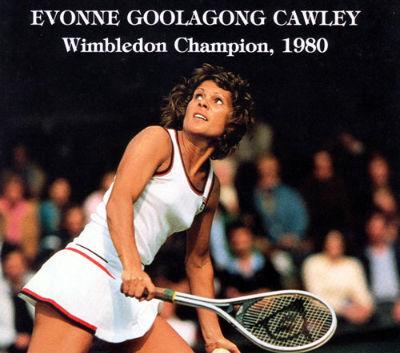
1 pointYes I remember Evonne, she was one of the best players of her day. I did not know until now that she was an Aboriginal Australian. You so rarely encounter these people -- outside Australia. Then the Europeans did murder every single indigenous Tasmanian to the point not one lives today.
 1 point
 -
1 pointIt's not immoral in its pursuit of justice. It is a movement using the political arena to protest how little value white society, especially those in law enforcement, place on the lives of black citizens. Its legitimacy has been tainted by biased counter forces who seek to incorrectly portray its public demonstrations as violent mob action. Its white critics insist that BLM overlooks the idea that 'all lives matter'. Cynics in the black community point out that since black lives don't matter, the movement would be better served by a different rallying cry. Currently, this organization seems stalled by a lack of effective leadership. My question to you: why would someone calling herself "Queen melanin" ask this irrelevant question?1 point
-
Here is a video of Barracoon's editor, Deborah G. Plant.1 point
-
I would argue that the work had two protagonists: Hurston herself because of her goal to keep Kossola talking and thereby transcribe his life to text, and the other being Kossola because the text was his story, and wow, what a story. There was so much grief in such a small work – loss of family, loss of community, loss of health, and the loss home. And equally as painful as the grief was Kossala’s remembering the part Africans / Dahomey played in the slave trade. Kossala’s goal was to stay alive, and his antagonist was the Peculiar Institution of American Slavery with its long reaching and lasting tentacles of racism. He was kidnapped, placed in a barracoon, a slave ship, and on an auction block (all life threatening situations) due to American slavery. I believe, the establishment of Africatown, was his strongest blow against the reaching effects of slavery; freed slaves reestablished an African community on hostile American soil; that was miraculous. Kossala didn’t die due to slavery, but he suffered during and after; the lashes of racism ripped at his spirit and his body most of his life. Kossala was never able to return to Africa, and this denial was directly linked to slavery’s tentacles. The main message the text left me with – was that culture was king. Kossala’s culture was his strongest and consistent weapon. He relied on his culture and African traditions his entire life: in the bowels of the slave ship, he and the other kidnapped youth cried through traditional songs to ease their burden, as soon as he and other recently kidnapped Africans were freed they danced a traditional dance, throughout his youth and senior days African parables and fables guided his actions. When his family was taken, his culture remained; he took on the traditional role as griot for Africatown before the loss of family and remained in the role after the loss as an elder. Motifs in the text included valuing family, adapting to change, self-sufficiency, and surviving despite oppression. The text was loaded with descriptive language but what remained me was Kossala calling his wife his eyes, and when he lost her/then he was finished. The most memorable scene was the image of the Dahomey attacking his village; woman warriors entering the village beheading elders while the men blocked the exits kidnapping those who tried to escape the carnage. I believe the work will become one of the most important slave narratives in the canon. Hurston brought the skill of a fiction writer to the task of recording a biography; she converted Kossala’s biography into a story. In addition, Plant’s editing is informational and instructional. I will continue to read both writers. https://ndigo.com/2018/06/27/barracoon-wakeup-reading-paul-king/1 point