



richardmurray
Boycott Amazon
-
Joined
-
Last visited
Everything posted by richardmurray
-
Commission The Aevemor from TheBootesArtVoid Black and white https://www.deviantart.com/hddeviant/art/Commission-TheBootesArtsVoid-04-26-2023-b-w-960001249 Colored version https://www.deviantart.com/hddeviant/art/Commission-TheBootesArtsVoid-04-26-2023-color-960000846 If you like the work, commissions are open microcalligraphy https://www.deviantart.com/hddeviant/commission/Microcalligraphy-signatures-1487995
-
@Troy harlem nyc, after the 1970s. The link should work now. That link is to my public skydrive so it should be available . Please try it out for me, and tell me if the following works. It is public and viewable, but not editable. https://1drv.ms/b/s!ArspJ5yABJDqg8EsiSlQIdYn0kDlcA?e=LnBJgs Or, maybe NYC will not. NYC is a minor mirror to the USA, historically or modernly.NYC like the USA can exist for a long time with a fiscal wealthy aided by an army. No city in the usa has more billionaires and no city has a law enforcement agency larger than the NYPD. But, the illusions of the USA, that statue of liberty, they are dying and that is good cause everything they alluded to was never true. When I look at NYC historically, even for whites, it was never this city of opportunity, this city of upward mobility. This city of middle class power. all lies. Lies that rich people said for their ego or their dysfunctional philosophies. Or less the poor said for they didn't want to look at their life honestly. NYC's government, like the USA government, is deadlocked in the legacy of lies that are losing out to truth. The truth of the usa has always been and will always be negative, cruel, vicious. The minority of good stories mounted as common are losing their vitality. @ProfD To your first question, the NYPD doesn't exist to protect or serve, it exist to financially ingratiate itself. The NYPD needed statistics to warrant more money, law enforcers put those in jail to make the numbers. The NYPD needed to make sure each race in the NYC had a member pro cop, it opened its ranks. All of this is to make money. I will be simple, if you want a stronger communal environment, law enforcement isn't the answer. To your second question, people in NYC love to have their cake and eat it to. The examples are many where people in NYC publicly proclaim a position to others that they themselves don't apply if they are in the same situation as others. @Delano fair enough, I can only say, like the USA, NYC could use someone to treat its partitions separately. But that goes into the problem. PEople, many people, in the usa want a universal application. How I lived is how everybody lived or how I live is how everybody has to live and there lies the problem . Maybe other there is different.
-
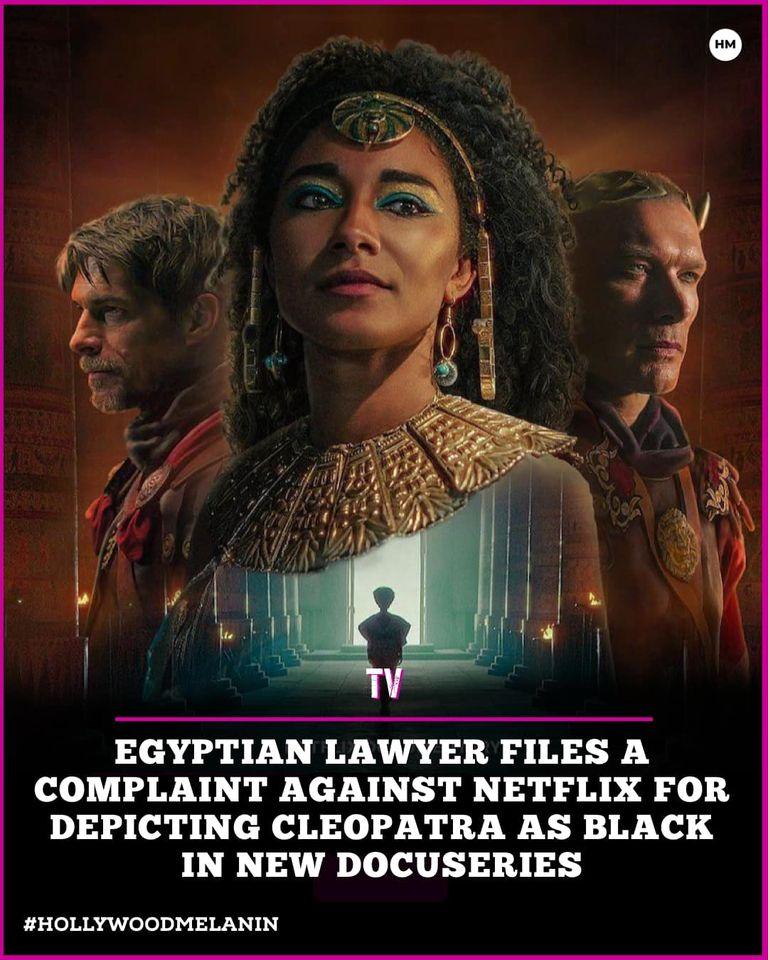
... over a week ago, I was in a location where Automated Teller Machines exist and a Black woman, I think Descended Of Enslaved, suggested I needed to be careful. She continued while I merely looked and said, she was in said ATM locale earlier and homeless people were in the place. She felt fear and called law enforcement. I said nothing to her, and just left. But I pondered a few questions. Did said homeless people attack her? Did said Homeless people approach her? Did said homeless people speak to her? She defined her experience. She didn't say she was harmed or approached in any way. She said, using my word choice, she came into the locale, saw homeless people, felt threatened by their presence and called law enforcement. She suggested I be safe but safe from what. The presence of homeless people does not make me feel worried or threatened or scared. But the larger question is, how many Black people are like said black woman. I bet millions, and definitely not an insignificant amount. But the larger question isn't most important. The most important is how much has unfounded Black fear of Black people led to aiding law enforcement. I will explain. The NYPD select how they operate. They do it based on biases, negative or positive. Sequentially, when Black people call law enforcement on Black people they feel , not are actively, threatened by , it is fuel for the NYPD's biases. I know of Black people raised at the same time as me les than 5 blocks from my home who said the Black community was dangerous in our community. A danger I never felt one day , not one day, and I walked to and from school nearly my entire school life, north to south or west to east, in my community. I was fortunate to not have to leave my community to go to school. My point, Black people lie about our communities condition to ourselves. We take our dislikes at Black people who are poor, loud, angry, hustling and turn that into crimes. I conclude using the following. If you are black plus live in a black community in a city anywhere plus you feel threatened aside other black people who you fear because of the way they wear their clothes or they speak or they live then go into your home, lock the door, and never go out. Half of the people in New York City don't have the ability to afford basic needs. The proof is stated in more detail with supporting evidence at the following link https://aalbc.com/tc/profile/6477-richardmurray/?status=2319&type=status NYPD ->greatest crime is theft, why look above https://aalbc.com/tc/profile/6477-richardmurray/?status=2103&type=status -> The NYPD's statistics are gathered based on their actions which are publicly known to be negatively biased towards blacks while positively biased towards whites https://aalbc.com/tc/profile/6477-richardmurray/?status=2162&type=status -> Riker's is a detention cell, sequentially, the people in it are not confirmed to have committed a crime but are confirmed to have been judged by the New York Police Department to warrant detention, but the NYPD is negatively biased towards blacks https://aalbc.com/tc/profile/6477-richardmurray/?status=2091&type=status -> The NYPD admitted black crimes went up 100% second in the city to hate crimes against white jews but the NYPD nor local media in NYC seem to be able to televise or get a street camera or put in jail anyone who committed a hate crime against black people https://aalbc.com/tc/profile/6477-richardmurray/?status=1894&type=status@ProfD The answer to your first question is simple. The we you refer to doesn't exist. The whole point of any we is that those in the we share something in common. If historical perspective <why in modernity that we should care about Cleopatra or Greeks or Romans>or present strategy < how any of this ancient history will move Black folks beyond their present condition > are the elements that are meant to be common in a we and it isn't then the we doesn't exist. The better questions are two. 1) who in the Black community thinks like you Profd, shares your philosophical positions offline or online? They exist and are in the millions. 2) what is the we you are apart of doing as a group? The we you are apart of isn't merely Black people. Black people is the village. The we you are apart of is a tribe, Black people who don't care about cleopatra or greeks or romans who see no correlation to that history and how the present condition of blacks can improve under the system of white supremacy. You don't need black people who do care about cleopatra or see some connection to be convinced to your view. You need to work with those who see your view and do something. It is like I tell Black Donkeys or Black Elephants all the time. You two keep talking about the larger black community but you two don't have anything to show within your own tribe in the village. So, ProfD what is your tribe doing to better itself in the village? don't tell me your alone, other black people think like you. I know this for certain from offline conversation side black people you don't know who said exactly what you said. So, I ask again, what is your tribe doing to better itself and telling other blacks to think like y'all isn't dysfunctional proselytization.@Pioneer1 all i want to say is i don't share your view, i think most black people in the usa have a negative view towards whites,but also most black people in the usa have a nonviolent stance towards whites.TITLE Tituba: The Black History & Origins Of The Salem Witch Trials SUBTITLE Did you know the first woman ever accused of witchcraft in the United States was a black woman? Written by Bilal G. Morris Published on February 10, 2021 Did you know the first woman ever accused of witchcraft in the United States was a black woman? Her name was Tituba, and her American story is rarely told in history books. When she was brought to the states as a slave, little did she know her fate would forever be linked to one of the most disturbing atrocities this young country had ever seen? Little did anyone know a slave from Barbados would be the first woman to be accused of practicing witchcraft during the Salem Witch Trials in the early 1690s. Some believed Tituba to be Native American, but her roots can be traced back to the tiny island nation located north of Trinidad and Tobago. Even though her past isn’t quite known, what is known is this colored woman was the catalyst to hundreds of women murdered for being so-called witches. Whether you believe in witches or not is irrelevant to this story. This is a tale of race, sexism, and America’s ugly past. In 1692, Puritan minister Reverend Samuel Parris, a Salem Village native, heard tales of his daughter partaking in forms of witchery, which at the time was punishable by death. These stories also included his young slave woman, Tituba. Allegedly, Tituba was teaching Parris’ daughter Elizabeth and her friend Abigail voodoo and witchcraft. Parris was furious. Witchcraft to the Puritans meant nothing less than devil worship and any of its practitioners should be scorched in the pit of hell. Parris needed to get to the bottom of this quickly, so he approached the girls, who wouldn’t dare lie to the Puritan minister of Salem Village. The girls, understanding the swift punishment of witchcraft, promptly told the minister what he needed to hear; the slave Tituba was to blame. Parris now needed one more admission and the truth he’d created in his head would be deemed reality. In his eyes, the validity of the truth didn’t need actual evidence of witchcraft, merely someone who wasn’t Tituba confirming his suspicions. If Tituba told him she was practicing and educating the girls in the works of witchcraft, the blame could easily be shifted. Salem only needed one witch, not three. The minister attempted to gain a confession from Tituba via beatings. She vehemently denied practicing witchcraft but Parris continued to beat on her for hours until he got his desired result. Even if Tituba confessed to matching a “witch cake” and feeding it to the girls, the mere mention of “witch” satisfied Parris. She knew of women in her native country who practiced and for good measure, she named Sarah Good and Sarah Osbourne. Good and Osbourne weren’t witches either and Good’s family were considered “nuisances” by the general public. In a way similar to the modern criminal justice system and a lack of good societal standing being used to place guilt on anyone, the three were jailed and to await a trial where their guilt was long determined by the court of public opinion — and Parris in particular. The Salem Witch Trials began in February 1692 and concluded in May 1693. In total, 30 people were found guilty of witchcraft and 19 people were executed by hanging. It was the deadliest witch hunt in the history of colonial North America and Titbua’s false confession started it all. She later recanted her story and confessed she made it up to escape persecution. She would apologize to the girls and well as Sarah Good and Sarah Osborne. This infuriated Parris, who would later refuse to pay the jailer’s fee to allow her to be released from prison. She would then spend the next 13 months in prison until she was bought by another slave owner. Her story is tragic but is a lesson in understanding the struggle for Black women in early colonial America. Not only was she subjugated to slavery, but she was also was used as a pawn in a deadly period of this county many people do not acknowledge. URL https://blackamericaweb.com/2021/02/10/tituba-the-salem-witch-trials-origins/ REFERRAL- yes from Tony Todd's twitter, some know him as older Jake Sisqo or The Candyman from the original film or Seacrops in Xena world https://twitter.com/TonyTodd54/status/1649952132676878336 ANOTHER POST@Troy exactly, I wondered did he sue the film gods of egypt,where most of the actors looked northern european i was unable to find any way to email or message hawass or the lawyer. Isis + Hawthor in that film looked like brunhilda and freya. But that was a similar thinking I had. I adjusted my post with the following https://www.boxofficemojo.com/release/rl3847128833/weekend/ Mar 2-6 - $39,360 - 1 - $39,360 $39,360 1 Mar 9-13 - $14,958 -62% 1 - $14,958 $60,950 2 Mar 16-20 - $13,675 -8.6% 1 - $13,675 $77,216 3 So, Gods of Egypt wasn't banned, wasn't called to be banned in Egypt. People saw it in egypt. So, this invalidates the desire of the few in Egypt to pan the cleopatra film by Jada Pinkett Smith. And what does it prove. It proves that, the issue here isn't that the Cleopatra film in question isn't phenotypically or other racially correct, it is that, it is produced by Jada Pinkett SMith, a Black woman of the USA in the NEtflix zone, which is going to be mostly seen online in streaming. This is the true issue. Black produced and mostly on streaming not in theaters. Hawass and EL Semary realize that most of the young in egypt, like most poor people in the usa , get film through streaming, not theaters, they are afraid of said Cleopatra's visions being displayed amongst the youth, which will get some youth to question the Europhilic-whitephilic aspects of egyptian culture that have been peddled or enforced by those in power in egypt. I got you!:) I have found real evidence against them. @Chevdove check the comment above to troy. I asked if Gods of EGypt was banned in egpty and it wasn't. I hoped somebody knew but I finally found evidence, all cited.@Troy I paraphrase you well said. Human beings in modernity, led in large part by how the majority of the populace in the usa treats identity as a very modern thing, have a problem accepting racial change in history. I think said humans like the the ease of ignoring when another people were the majority in the past. And I will even be honest and admit I comprehend why. The reasons why the majority changes in countries is rarely positive or fair, and by ignoring you save the community from the discussion of why things changed so drastically, which rarely has a peaceful way to be.@Chevdove Well, I hoped my post aided in clarity. I am saddened it didn't. But, you offer a great question. What is the race of cleopatra? now you may ask, didn't I, Richard, answer that. Well no, I didn't. All human beings are part of various races, that are clearly defined with various labels for communication sake. I myself, am male-my gender or sexual physicality at birth/black-my phenotype or appearance/anglo- the language I speak/african- my majority geographic ancestry, note a difference between saying african as opposed to nigerian. and continuing. But what is the point? What is the race of cleopatra? Is it the cultural race she adhered to? Cleopatra didn't call herself Greek or Hellens, she called herself the queen of egypt. Egpyt is the greek word for Kemet. But, South Africa is the white european term for the lands consisting of and between the Namib or Zululand. Yet, Charlize Theron who has no african or black ancestry, not the same thing, calls herself south african. So, Cleopatra called herself Egyptian. Is it her geographic ancestry? Human beings always have mixed ancestry in some form or fashion. A majority of Cleopatra's ancestry is macedonian-hellens/greek, Most Descended of Enslaved from Canada to Argentina have a minority of ancestry from europe, while a majority of ancestry from africa and yet most Descended of Enslaved do not call themselves African or European but Black or NEgra or Noir. So Hawass or others, giving greater attributation to her geographic ancestry is dysfunctionally discarding Cleopatra's life. She had the money or resources to relocate to Greece with money and leave Egypt without a greater fight. Is it her phenotype? My guess is Cleopatra was white. I have no proof cause Cleopatra is one of the most historically manipulated figures. And, what I have seen is unverifiable. But her being white doesn't suggest her complete ancestry or the ancestry she valued or her heritage she valued. This is why I continually say finding one's roots has nothing to do with paper trails because the identity of people in the past can only come from their words. I really think the diary or the speech from one's forebears isn't given their proper value in truly comprehending a person's past and definitely one's ancestry. Supposedly where her palace was https://en.wikipedia.org/wiki/Antirhodos\ Supposedly from the palace in egypt https://en.wikipedia.org/wiki/Bust_of_Cleopatra a bust supposedly made in italy during her trip to rome https://commons.wikimedia.org/wiki/Category:Bust_of_Cleopatra_VII_in_the_Altes_Museum_Berlin So what is the race if Cleopatra ? Is it what she wanted , which no one in modernity knows? Is it what anyone in modernity guesses, even though her life is full of racial complexity? @Pioneer1 your correct, but the question is who are arabs? The problem with the racial term arabs is the same with latinos. In Encanto, the black latinos seem to live absent any friction with white latinos but in reality in most latin american homes, the dark are not treated equally or better than the light, and the powerful in the house are rarely the black while usually the white. In the same context. Arabs is to open ended a racial term. Who are arabs ? those born in the arabian peninsula? those who speak arabic? those who look mulatto in the american continent context but live in North africa or south east europe or westernmost asia arab? If Common the Black American thespian was born in egypt , and all anyone had was a photo, is he black or arab? My point is, when you have a loose racial classification it yields negative biases because the definition allows for too much and restricts to little. the same with American. I don't know how many times I have heard black people utter, you born in the USA your american, which based on descended of enslaved history range from an insult to a crude simplicity. Is anyone Statian , of the usa, because of the legal system's rulings on classification of children based on geography, or some culture or heritage, or the quantity of forebears in the usa ?@Troy yeah yeah, I got another internet oddity hmm, many people are all talk well, the people in the usa never were atoned, nor are atone now. Moreover, the legal system of the usa or time from english colonies to 2023 or the multiracial community of nonviolent integrationists in the USA are atonements, things that atone , make one. Being one people requires the one thing the USA never had and doesn't have now, a purpose that unifies a people. Germany used to be federated states. Italy was principalities. But it was a unified purpose<to make a country that could stand with pride against their neighbors> that made modern germany, not the law, not a group of people in the country forcing all others<and yes, the German jew wanted a united germany too, and had it, before world war II>, not an individual liberty mantra. Oneness is always possible no matter the inner multiraciality of any group, but it requires something to be one around. IT can not be oneness for oneness sake. if by atonement the hebrew israelites mean repairer, well, the usa has nothing to repair. All the past conditions in the USA or the english colonies preceding it were negative. And, the elements that need repair in the past of the usa are beyond money or technology. Can someone bring back and make as if lived the native american peoples that were slaughtered by whites of europe? can someone bring back and make as if lived the majority of enslaved blacks, as 80% of black enslaved people never made it cross the water, most enslaved black people are in the ocean. Atone, to make one. Repair , to fix. @Pioneer1 well, I have never heard a black person say publicly that they want a white person to kiss their feet either BUT I did hear a black person, james baldwin admit that his father hated whites, while his father never, ever, spit/hurled threats/or acted violently towards whites. what is my point? Black people in the usa have a heritage of not speaking , or moreover not acting, how we feel amongst whites or other blacks. I bet many black people wouldn't mind seeing their feet kissed by whites. I am not suggesting me. No I don't want white people kissing my feet. But I am also certain a whole lot more black people , especially descended of enslaved, who wouldn't mind that, but will never say it. Many Black christian chruch people in the 1960s scoffed at Black panthers for self defense members simply demanding all black people arm themselves against white aggression. Said black church people never trusted white people and lived in fear of whites but publicly scoffed at the notion of black people defending themselves. No, the black community in the usa's public voice is untrustworthy to its true desires.@Troy well, yes but I want to say, I was up late and all my twitter connections are either sports or writers, with most pundits/athletes et cetera. So i admit this is a rare thing on my feed, which is why it attracted me. Well, my twitter gets quite a few daily bots, connecting to it. And usually the bots are white females, oddly enough, just like on blackplanet. so... The purpose? that is an excellent question. My first thought was I have no idea. But I recently saw Edtv for the first time and I ponder. You suggested this is for dumb people who will think a race war is imminent, but I think it is for the cinema verite audience. I Think many people online are are entertained, but not through the exact act. They are entertained by the presentation. This is presented as news, as informative, they can read comments. I think many people view the online/electronic social experience itself as entertainment and sequentially, posts like this are cradles of said experience. Positive post don't go far, but this stuff, goes far.Cleopatra and the media https://aalbc.com/tc/profile/6477-richardmurray/?status=2317&type=status
 I want it known. It was a white connection, not a black one that placed this on my wall. Now I admit, I am up late doing some emanagement and so at this hour means my usual feed's soccer based content can be quiet. So a lesson for me on many levels. But, the best comment I read was from a guy who said, no one mentioned the rick james boots, which I think is funny. But, beyond that. I tried to find out if someone had talked to any of these whites who have done this. I saw a few white couples, or white males or females individually. But, if any of you know some media outlet that actually talked with one of these whites who did that, please share to me. Staging these events isn't new or odd but I will like to know.I remember in the year two thousand and twenty three when media in NYC emphasized hate towards asians of any phenotype + white jews. But what I found most informative was that the percentage of hate crimes towards asians was under fifteen percent while hate towards black people of any language or religion or gender was second only to white jews. And the question relates to what Olayemi states brilliantly. Where is the outrage? where is the call for crime in the white community to be checked or handled? Moreover, I want to know their faces , their names. the odd thing about crimes against Black people by non whites is how little paperwork or technology is used or available or accessible. When a white jew is attacked , a video, a facial photo, a name, speeches from various organizations is presented as a package. But when a Black is attacked, no video, no facial photo, no name, no speeches from various organizations. It's so imbalanced an approach it is not merely a negative bias towards black people but it makes clowns of the black people who clamor on about the black communities criminal record in the usa when it is clear that the judicial system, from law enforcers to prisons , produces false information concerning the record of crime in the USA. IN AMENDMENT In this very forum, ecommunity, many black people have ranted about black criminal activity in the USA and it is clear that their rant is the conclusion to a simple algorithm. What are the elements of the algorithm: In the USA, Black people are oppressed by whites who control the judicial system in said government. The application of the judicial system to blacks in the usa by whites is designed to make blacks statistically greater than all others. Black people like all humans commit criminal or illegal acts, a crime is injuring another, an illegality is acting outside the laws allowance. Black people in the USA who want individual rights while nonviolent resistance to whites don't have any tools to stop white oppression to blacks. When you add the three elements together the only answer is for Black people to delete the illegal + criminal activity in their community . But how can illegal + criminal activity be deleted absent massive fiscal wealth, which the black community doesn't have. The answer is condemn black illegality or criminality. Whenever a Black person acts illegally or criminally, members of the Black community emphasize an unreal danger because their goal is to get the larger black community to provide no instance of illegality or criminality for the white community to take advantage of. Its a dysfunctional thing. But I have accepted that many Black people see that as the answer. I oppose the strategy but I comprehend it. When a white banker for goldman sachs, legally acts criminally stealing millions from various people, mostly white, in the USA with falsely valued financial schemes. The same Black people that will accept the actions of the white banker as playing the system, the same old same old, fiscal capitalism, will speak of a black man making peanuts trying to feed himself on the street with some illegal act, a sin, a bad characters, a useless activity, a bad example for children. To said black folk, like Mayor eric adams and most of the other black people in the NYC government, it isn't that blacks commit more crimes or illegalities, or more negative resulting crimes or illegalities, it is that Black people still commit crimes or illegalities. To rephrase, Eric Adams, many in this very forum, have a goal. The goal is to eradicate black illegal or criminal activity in the USA by emphasizing it. Not because Black crime or illegality is higher in quantity or worse , but because it exists and in their philosophy, Black people support nonviolence plus integration most by acting toward an unrealistic ideal that the same black judgers don't apply to the non black. I quote Al SHarpton: the thing about a nonviolent movement is that it can not merely call on others to stop acting violently towards a group but has to be nonviolent itself.I will try to find a photo of the eclipse but it will not be visible in north america i think@Delano I see , you mean another movie besides creed3? what will you like that movie to be?@Troy yeah Nike in the review is the same way. Modern Athletic fictional films, which is what the first Rocky film started, are an acquired taste. If you are not interested in the work out montage or the competitive montage or the personal issues inlet scenes, it isn't a genre for you:) No Creed is from Los Angeles like Apollo Creed, his father. And no Los Angeles... at the moment, isn't building a statue of Creed @Delano he has been wise, don't pidgeon hole yourself, do as many various roles as you can if you can. When you say perhaps they will do a movie together with PEele or coogler? Majors and who?for letting me be myself again:) beat me to it @Pioneer1 @Troy in defense, and I know this post is positive, and not meant to go where my comment will, but the Black community in the USA from the Club Women's crusade against the heritage of enslavement which includes the dialects of english black people spoke before 1865, to Zora Neale Hurston being a near lone crusader against her black artistic peers to utilizing said dialects, to the added dialects of english from black communities in the caribbean or africa coming into the usa after the immigration act and being advertised proudly in artistic mediums in specificity rap , the relationship of Black people in the usa to english and how "we spek e" is a complex issue that shows itself to all black people in the usa as it has with you in this one instance.your thoughts?@Pioneer1 you got me, well , I will never forget james baldwin saying that because so few black people viewed heavily ever admit blacks don't like whites as a community with a nonviolent posture. In the UA non violence equals civilization, equals integration, equals acceptance, but James Baldwin used his personal connections to display the falsehood in that narrative. And I think many Black people in the USA are in denial about said truth. I will never forget a black man i used to see on a daily route who looked so miserable , clearly working a well paying job but clearly miserable. Being peacefully hateful isn't positive even if it is nonviolent. When you said : this is not elijah muhammed but an actor:) classic. Fair enough, the black community in NEw York State's goal <defined as what most black people are engaged in functionally>, since the USA was founded was peaceful integration side whites. And I argue the black community in new york state, led by new york city has reached closer to that. Every single organization in the government of NEw York has black people who have potent roles or positions. The financial sector of NY has black people in it throughout. The goal is near. At this point the question for the black community in New York State is not about integration but potency. The fact that in New York State the marijuana licenses are actually going out to some blacks who were incarcerated while white pharmaceutical firms brought lawsuit against the state of new york for that action shows you where the black community in new york state is in relations to new york state, notice I have not said the usa. Now New York has some unique characteristics. One more black people live in new york than any other state. two the internal multiraciality of the black community in new york state is higher than anywhere else which has brought challenges but also has some advantages when it comes to outreach and the identity of being black in new york is less specific. yes, white power is still the rule in new york state, but the black community in new york isn't trying to topple whites but integrate side whites. That is an important point. The goal isn't for the black community in New York to be dominant over all others. In comparison, the black community in louisiana can't have the same goal as the black community in new york. the white community in louisiana is more pure. Meaning the white community in new york state also is highly multiracial internally. As well as the latino or asian, so that explains why the racial walls are looser. So, I think in some states the black community does have a goal. But the black community in each place can't have the same goal. In some places, like south africa, integration isn't working and black people need more power. In other places, like a germany, black people need a minority goal, they are too small in quantity to go for integration. Each place has it's own answer. so functionally you want black people to return to the geographic distribution we had before jim crow in the usa? Internally many black people still don't like the southern/midwestern states. Do you live in the south or midwest? You know what they are doing, they are reaching their goals. And this goes back to my simple point. But I will use an example. When Obama was president he said he wasn't the president of black people and many have talked about that line but most have miscomprehended its true value. All those mayors or police commissioners you showed are no different than the black mayors or police commissioners in NYC or Newark in the north. Their goals are not to help the black community get stronger over all others, their goal is to prove blacks and whites can exist integrated in these systems whites started. And they are achieving that. The problem is in NY that is satisfactory as the goal of being an aracial people is in the potential future. but in louisiana that isn't the case. Blacks don't like whites and whites don't like blacks in majority, so while black or white people in Louisiana , like the former mayor of new orleans landrieu, may see themselves as serving all of louisiana that isn't a good goal for the situation. It is clear that Louisiana's populace on the ground is a different creature and that isn't a problem. The USA is a federation for a reason. The white slavers that started this government knew that no people under any government in human history are every truly one, always a minority or another exist and they need space to be. The problem is those people don't have a goal that involves the betterment of the black community. tHeir goal is already succeeded, they are black continuing the status quo of whites. That is how a person in one community shows they can lead many in another by not empowering their own:) And while that goal seems to be good enough for the black community in New York, I don't think it is good enough for the black community in louisiana?@Pioneer1 I know you know the history of the Black community in the english colonies or new france or the USA or the Louisiana Purchase. I know you know the majority of Black people in said places have never been in happy in those time periods I mentioned. Not all, but the overwhelming majority of Black people in the english colonies, new france, the usa or the louisiana purchase. And, you know most Black ancestors in the history of said places cursed white people every day of their lives without taking up arms. They lived hating whites. I quote james baldwin: his father hated whites. and I amend what baldwin didn't say, his father acted nonviolently his entire life. his father never made any violent moves towards whites while hating them every day. Pioneer you know everything I just said, you know. So, the following question is not insult but is mandatory. Can you name one reason for the Black community in Louisiana, not black people anywhere else in the USA, have for digging in? And, what is the goal for the Black community in Louisiana by digging in, cause I don't see a goal for them, not for black people across the usa or new york, just louisiana? Fair point. But you didn't say where. You would advise the black people in california to leave but you didn't say where ... where ? Are you suggesting the black people in california need to go to lousiiana? You are speaking about the black community in the USA as one. I live in New York city in New York state. New York city has black billionaires. No disrespect to Black people who live in NYC which includes myself, but our scenario has no value in my view for black people in louisiana. The law talk, non violence talk, justice talk, all that is cute in New York but Lousiana... I wish you could provide a reason that emphasizes black people in louisiana. I may be wrong but it seems your suggesting the black people in louisiana need to dig in for black people who live in other states. That is a great idea , but the black community in Louisiana doesn't have the means to make that happen. it is that simple. Whites have too much power and it is that simple. Power matters. It's beyond the law. Are black people the fiscal wealthiest in louisiana? no, so we don't have members in our community who can just pay elected officials to do what they want, which is how most laws are made in the usa historically. Are black people the overwhelming majority populace in louisiana ? no so block voting isn't enough. What your saying can work in south africa. No black people are not the fiscal richest but they have the numbers to dictate law with a movement. No state in the usa has a black populace that can win 80% of the elected positions in the state based on the black vote alone. No state in the usa fiscal wealthiest are black.MY COMMENT the article title is false, the article contest say this is going to happen not may. in all earnest, I wonder about the black community in louisiana, who leads them, what is their plan. I ask cause, louisiana has been this way since the louisiana purchase. I wonder what the black leadership , and that means elected officials, plan is for the future of the black community in louisiana. Does anyone know? I will be blunt now, if black elected officials, black christian church leaders, the black financial elite in louisiana have no plan but integration under the constitution, I don't think that is a functional plan for the Black people of Louisiana. IN AMENDMENT I will throw out a plan. The black people of louisiana need to have an exodus of that state. Now I already know the rebuttals. Black people helped build the USA. The federal law says this or that. But, in NYC as I compose this, people are leaving countries of their kin cause opportunity is lax. Well, Black people of Louisiana need to leave Louisiana cause they are oppressed by whites of lousiana and opportunity is lax. Why can't Black people of Louisiana come to NYC the same way the various central american and northern south american peoples do? I just think that at some point, black people in louisiana have to stop the plan of waiting for whites to love us or the law to protect and mold louisiana into a peaceful or positive interracial community. That plan hasn't worked for over one hundred and fifty years. What are black people in Louisiana, saps? How long do you continue down a path before you quit? and beyond, what are the black leaders of the black community in louisiana planning? I am not suggesting what I threw out has to be the plan for Black people of Louisiana but the nature of my plan has to be the plan. The nature of my plan is to not be what the Black community of Louisiana has been doing for over one hundred and fifty years.Read all about it https://www.deviantart.com/hddeviant/journal/The-Construction-of-Holiday-Rex-is-a-DD-958169717