

Troy
Administrators
-
Joined
-
Last visited
Everything posted by Troy
-
That was an interesting history lesson
-
So you want me to disprove something that is false? People unable to prove or substantiate a statement usually resort to this tactic; mix in a little hubris and indignation and they feel vindicated. OK @Danielle you know more than the CDC and the WHO. We can't have a meaningful conversation because you won't accept facts. Instead you operate on the propaganda promulgated by our president. It is not clear why though ...
-
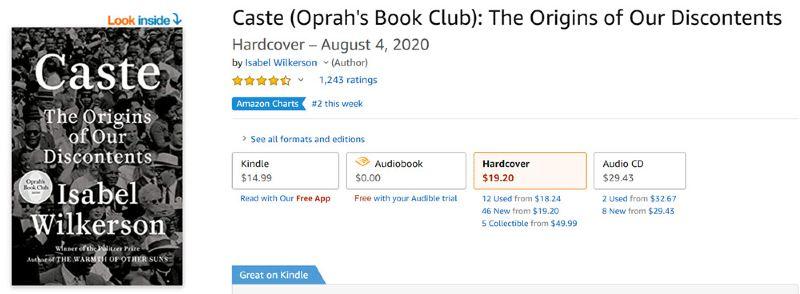
It is certain the publisher was not behind this. I'm not going to waste any more of my time tying to "help" them. I don't have a meaningful relationship with anyone at PRH ... I know, that is very telling right. Gives you some insight on the state of marketing at some of these big publishing houses. Amazon has deleted the "bootleg" version of Caste and, true to form, is engaging in predatory pricing selling the book at 40% off. 40% is the discount AALBC and many booksellers get from distributors. I'm pretty confident Amazon gets a higher discount, but are probably still selling at a lost, once you factor in shipping, labor, storage, insurance, etc. All indie booksellers would sell more copies of this book if Amazon were not allowed to engage in this behavior. I wonder of companies like PHR are happy to see the number of places able to sell their books reduced to one company?
-
@daniellegfny you must have missed my last reply: Scholastic is much more that a "catalog of books for young people." They are one of world's leading publishers of books. AALBC is not about to match that, indeed who can?
-
Guest "Evie" I did not approve your post for the reason mentioned above.
-
How about digital money or a coupon to a bookstore? Welcome to the forum @Yvonne.
-
Welcome to America. Though the white guy's agenda is to critique modern feminism, and I'm concerned about how Black women are portrayed in mainstream media, my assessment of the video does not differ very much from his. This video belong on a porn site -- not available to any kid with a wifi connection. Are young white women portrayed in this fashion for mainstream media?
-
I'm not gonna argue that point, because it is far too easy to find celebrations of gay and interracial relationships. Again I celebrate love now matter how it looks. But based upon my observations, which starts from the world of books, you have to look too hard to find celebrations of love between to heterosexual ADOS individuals. It is like these relationships, which are the majority in the country, are boring, passe, and unworthy of celebrating. Maybe I'll created a category for Black Heterosexual ADOS Love Stories (literary fiction and nonfiction) Anyone know of any?
-
Thanks @Delano I noticed this and wrote about how they sourced AALBC for the list without attributing it to me. You know @Pioneer1 that might actually be a good idea. But nothing they'd consider doing during a pandemic. They could commit to buying books from our websites. But again, this opportunity was missed as I described in the article I linked to above.
-
Of course, they are perhaps the largest publisher of children's books on Earth. So when you asked the question: I assumed you not inquiring how I can match Scholastic's efforts. I assumed must have meant matching something that they were doing specifically.
-
No. This is a narrow minded perspective. Fortunately the majority of governments around the world don't share this view. Why? Because Covid-19 has no vaccine, is far more contagious and far more lethal that the flu Danielle. Why is this so hard for you to understand? Roughly 34K people died in 2018 from the flu. 184K have died from Covid-19 in less than a year and that is with all the PPE in use, social distancing, shut downs, business closures, etc. Doesn't that tell you anything? Now I see you are floating the notion that the numbers are somehow being inflated, so it is becoming plain that you don't want to believer this. I'm still waiting to hear where you gt this information, or did you just make it up? Again every indication that deaths from Covid are probably higher. Some people are dying from pneumonia and heart failure brought on by Covid-19. Many people lack medicial insurance and don't go to the hospital (like yourself), are not treated, get sick, and die. Again, your position defies logic. Your hero Herman Cain's dying was not enough? Don't you know anyone who has died from the disease or complications from it? Don't you know anyone with long term health issues because of Covid?
-
Maybe there is a list. I guess it depends on how you Black school. Is it like the public schools I attended where all the students are Black, and the teachers are white? Does it have to be owned, operated, and attended exclusively by Black people? What is Scholastic doing that you want replicate?
-
I hear you, I know others who have said the same thing and most did have it, but they were tested. As far a lowering the numbers, that is actually the opposite of what I've heard. We know the numbers of cases are acutally higher because people like you, who had it, were not tested so can't be counted. This is one of the problems of so many people not having medical insurance. Were did you read that the counts were being revised downward?
-
Danielle this means you really don't know. 40% of the people who get it have no symptoms at all. @Pioneer1 I seem to remember hearing that someone in Cain's family is continuous his legacy by posting in his account. But I agree it is misleading. But since when has social media cared about being misleading; it is how they make money.
-
@Pioneer1 for the most part I completely ignore celebrity behavior. There are a number of reasons for this, but one is the fact that you found "nearly a dozen articles" on this event. That should tell you something that you probably already already know. The media are not at all interested in sharing information that is important or that we need to know. They are DEFINITELY not gonna do anything to promote what one would describe as traditional family values when it comes to Black people. As previously discussed you have to look very hard to find "news" about a successful Black woman marrying a ADOS man. That is not considered newsworthy; it has to be dysfunctional or nontraditional in order for the media to run with it. For example, without even trying, I'm aware that Will and Jada Smith have an open marriage and his boy dresses like a girl. I'm aware of Niecey Nash's marriage to a girl. I would have thought her spouse was a guy judging by the photo. She looks like Lakeith Stanfield.
-
@Pioneer1 human sexuality is not as black and white as you seem to be trying make it seem. It is on a spectrum, and trying understand it from your personal lense is probably impossible. Just accept it. Why do you care about what this woman does anyway?
-
Is it objectively right, or true, that what is good for the country is in fact better than what is good for any subset of the population? I think it is... ...and would I be wrong for thinking I'm right? 🤔
-
I agree, but people who only care about themselves don't think that way.
-
I believe 'crackers" came the guys who used whips to drive cattle. At least that was the story I heard here in Florida, thought I would not be surprised if there was some revisionist history in play. I've seen whip made by hand and they made a distinct and powerful cracking sound when used. If you've ever seen one used. The image of it being used on a human is unconscionable. Could the slur, "white cracker" from from the color of saltine cracker?
-
@daniellegfny, why do you think the Republicans pulled Hershel Walker out of obscurity rather than use their most popular Black supporter, Candice Owens? If Herman was so great. Why do you think the Republicans failed to recognize or acknowledge his untimely (and avoidable death). A moment of silence would have been appropriate for such a "great man" wouldn't you agree? The Uncle Tom film used Owens and Cain because they arguably the most visible and strongest advocates for the president and republican party, clearly the RNC chose not to return the love when it mattered most. These action do lend credence to @Pioneer1's perspective that Republicans don't give a damn about Black people. Now I don't believe that is universally true, but I can easily see why anyone would believe it. When you make an unqualified statement like; "The President is doing a great job of getting America back in order." All my experience tells me there is a troll behind the keyboard. I've encountered many trolls in my days moderating these forums, and if you are a troll you would be the most sophisticated one I've ever encountered. For now, I'm assume you truly do believe "The President is doing a great job of getting America back in order." This is hard for me to do, but I'll continue to take you at you word ... for now, for all trolls eventually make themselves plain.
-
Sorry buddy, the relationship has nothing to do with the roots of the words. Any relationship between "Negro" and "Necro" is purely of your own making. That is like saying (in my Oswald Bates voice) White is derived from Whip which is why the implement used to beat slaves was called at Whip. White >> Whip. One can say things like this, and other can believe it to be true, but that does not mean it has a foundation in reality.
-
Hey man you often post derivations of words that share a few common letters and assert that they mean the same thing or one was derived from the other, like the example above. I'm no linguist, but I know enough about Spanish to know Negro and Necro do not the share the same meaning in Spanish or English. Now if you can show how the words are related I'd be happy to read it.
-
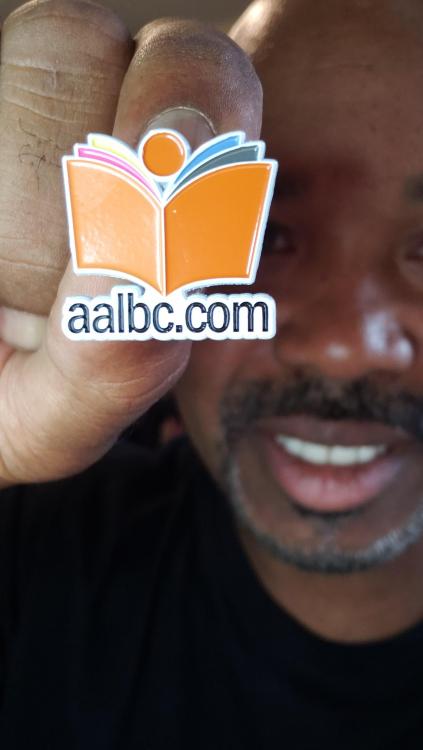
Yeah the shipping would cost almost as much as the book. I sent a buddy the pin below cost me almost $14 USD and it took 10 days.
-
LOL, you can have her and that Omarosa woman too. I feel bad for Cain though. For some reason he struck me as sincere. He drank the Kool Aid but unfortunately was not as lucky as @daniellegfny. Owens, on the other hand, does not strike me a caring person. She popularized the fact that George Floyd did not live the most virtuous life -- I learned it from her. That reaction to his execution (I still have not brought myself to watch it) is simply cruel. Even racist white people were taken aback by Floyd's murder. Man, you can keep callous "b-word" all for yourself.
-
@daniellegfny is seems the RNC is even rejecting Candice Owens. According to Newsone: "...the only thing unexpected about the RNC was the omission of Owens as well as any mention of Herman Cain (two Black diehard soldiers for Republicans and the latter of whom literally died supporting Donald Trump and the party. Instead of using her to spread their lies, Republicans trotted out some of their other usual Black suspects as well as some new ones, suggesting Owens’ 15 minutes of infamy could finally be expiring."