

Troy
Administrators
-
Joined
-
Last visited
Everything posted by Troy
-
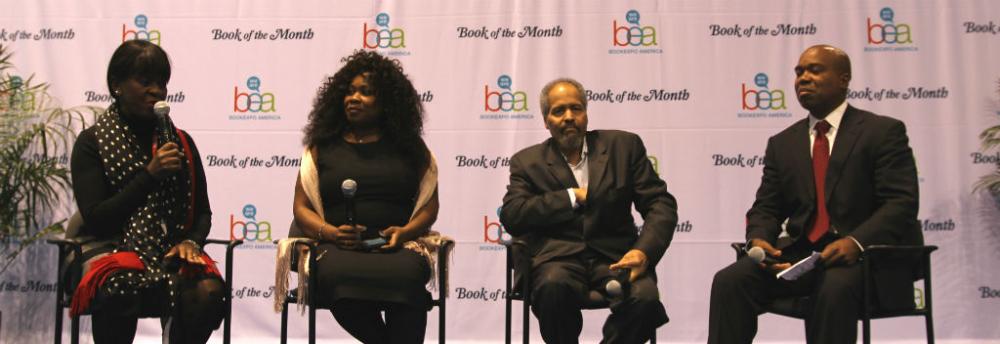
Photo Credit: Regina Brooks African-American women hit the books because it’s a way to spark a conversation, and to learn, validate, and share, says Lloyd-Sgambati: “You have to remember that not so long ago, it was punishable by death for an African-American to read, mainly because white society feared the spread of knowledge. Now many readers think, ‘I am doing this for my ancestors.’ My mother had eight children, but she ended every day by reading a book. It’s a large part of the African-American tapestry of their lives. It’s a myth perpetuated that they don’t read.” It’s not just African-American women who are reading, says Johnson. The men are also hungry for something that speaks to their lives. “It is not clear to me that men are reading less, but they are reading differently,” he says. “Women are more likely to get together and talk about books and go to readings. Those types of things are more visible, but that doesn’t mean men aren’t reading and exploring as well.” Read the complete article at Publisher's Weekly.
-
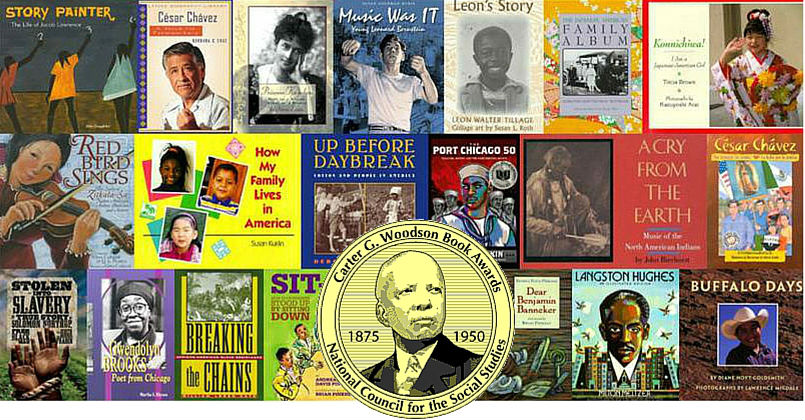
The Carter G Woodson Awards has recognized the most diverse set of books for young readers than anyone.
-
Man you should know me better that this by now :-) I related my personal experience, as you did, primarily to show that I understand the appeal from the rider's perspective. But trust I was wearing my MBA/Entrepreneur hat when looking at Uber's business model. Also keep in mind asking a bunch of drivers question is not much better than our experiences, they are just more anecdotes. We can also make different assumption of the expenses (for example, I would argue most cars would not get 40 miles per gallon in city driving). The fundamental question I'm really asking/ however; is society better off with Uber/Lyft, with the previous model or something else (true peer to peer)? Again we both attest to the benefits from the rider's perspective. But is that trade off worth the resulting negatives to society? Again, if white women can get dresses that cost less because enslaved Africans are picking the cotton is society better off? Chris you should check out The Harvard Business review of how Uber managers drivers, you might be surprised by certain aspects of the how the business actually works. This is one of the reasons asking drivers what they think, though interesting, is not very valuable in understanding Uber's model--the primary reason is that the driver may simply be ignorant of these issues or not sophisticated to appreciate them. Man peer to peer model is realistic, is in use today, and I believe the future. ebay, for example, it is doing very well; this is just is not resulting in the fantastic numbers that makes headlines. Closer to home, the digital revolution has made it possible for more Black people to publish books, but Amazon's model, which dominates the Black book ecosystem, is all about "extraction," revenue generation. So despite the plethora of Black books Amazon is not helping in the process of getting the best books to the readers most likely to enjoy them. This opens up opportunities for other businesses to reap financial reward by compensating for Amazon's deficiencies. Of course Amazon will do everything in their power to crush any competition, but they can't succeed, because at the end of the day, you'll make a little less money when you are unwilling to exploit people and that is a tradeoff facebook, Amazon and Uber are unwilling to make--despite what the billionaires who own these companies say. The actions of their companies reveal the truth.
-
"They did their own thing within the confines of their communities and managed to find a way to survive and even enjoy themselves." That is an interesting point Cynique, do you think this is true today? It seems much of what we do is dependent upon folks outside the Black community--especially online, but increasingly off.
-
When I was in Chicago a few weeks ago I used Uber for the first time; it was actually the only way I got around in the 36 hours I was in the city. I must have taken 6 Uber rides. The experience was definitely positive, and the entire transaction was handled via my cell phone. But again the devil's in the details. I spoke to one driver who works 6 days a weeks and drives 12 hours a day, to make a living. I'm not sure people understand how difficult that is to do. I was in the car about 25 minutes (southside to the convention center and the ride cost just under $10. When you factor in Uber's cut, gas, wear and tear on the car, taxes, bottled water, whatever, the hourly wage is not very good particularly when you factor in the work required. Of course the riders are happy; they are getting cheap, convenient transportation. Of course the owner of Uber is happy, he is a multi-billionaire. Again, these companies are exploitative. Sure they are providing needed services or optimizing and old ones, but the problem, as discussed in the video, is the pressure for these companies to show growth. The result is increased downward pressure in driver revenue. But again as long as the passengers and investors are happy workers will continue to be exploited. Competition from Lyft only increases this pressure. @CDBurns, as a result it will be much more difficult for anyone to operate their own car services in the world of Uber/Lyft. Again the optimization would benefit us more if it were peer- to-peer rather than controlled by a single entity hell-bent on making an ever increasing amount of money.
-
Pioneer just because a countless people experience something, does not make it reality. You may recall all the descriptions of near death experiences of people who see a bright light, these perceptions can be explained and have been replicated in the laboratory. What do you think about all of the experiences we have when we dream? Do you think they are real too? Do you ascribe meaning to dreams as well? Some people believe they can use used to tell the future. Maybe people close to death are having a dream, in which they see loved ones. I have heard these stories too, but again that does not mean that those love ones were actually present, or that the ones close to death can now perceive things healthy people can not--i'd think as one draws closer to death they would actually perceive less as their body breaks down... Maybe the comforting visits by loved ones is our bodies natural reaction to ease the transition to death. A biological adaptation to prevent the mortally ill from being a drag on the community longer than necessary. Besides, it just does not seem likely that on a spiritual plane that we would retain the same identities we have on earth where we are limited by a our physical bodies. I would not worry about you trying to "prove" you spiritual experiences, you can't prove these thing. I just think it would be interesting to read. Maybe I'd share a spiritual experience to two of my own ;-)
-
Pioneer, if you took away all of Prince's musical talents, celebrity, and money I'm not convinced women would be all that attracted to the way he looks. I stood next to the man, he looked a older than his photographs, he was really petite, and had a ton of makeup on. But again, and as Cynique suggests, it was the whole man, that that attracted women. Women were sexually attracted Luther Vandross too, in fact Eddie Murphy joked about the appeal of these Brothers.
-
I don't think Ali was joking about his looks either :-) Pioneer, I believe men and women define sexiness differently. Men rank a woman's looks higher up on the set of characteristics they consider; while women rank what a man does higher. This is why a physically unattractive, or feminine looking man, can easily score highly desireable women. While a physically unattractive, or masculine looking women, would have more difficulty attracting highly desireable men. So while Prince would not be what one considers, a "Man's Man," he was da Man.
-
I understand @Mallah-Divine, increasingly many authors starting out don't have a web site, instead opting to go with Amazon and social media as their main web presence. Ultimately however, you'll need to establish your own web presence. This will make it easier for you to communicate and control the engagement with your audience. Simple things like building a mailing list is much easier from your own. And of course your website is not limited to people who have accounts on Facebook. If you are interested, I can help you get started. Would you be willing to share a sample chapter from your book here? The main reason I ask is that it is will give potential readers and book reviewers a sample of your writing style. This is really important because you are not a known author and this is your debut novel (as far as I can tell). Also, and please take this as a critique intended to help, your bio on Amazon while filled with superlatives, communicates nothing substantive to demonstrate a skill in writing (i.e. awards, education, workshops, etc). This is another reason why an excerpt from your book is important in your case. I also suggest your register a domain name; both mallahdivine.com and mullah-divine.com are both available. Once you register a domain name, you can easily setup a website, or I can show you how to associate it to pages on AALBC.com.
-
Of course corporate greed is nothing new. Corporations will pursue profits over anything else including human suffering. What struck a chord with me is that I watched the WWW transition from a platform where people were able to exchange value directly with each other and reap the financial benefits of these exchanges; to a platform where only the biggest corporations now control the exchange of value between people and only those corporations reap all the benefits. So today, it truly is harder to make a living. For example, will the economy be better off, in the long run, in the world of Uber? What are we gaining in exchange for what we are giving up? Will the pressure for an Uber to show constant growth result in drivers making more money or less? Of course regulation is an big issue as companies like Amazon operate in an environment that small business do not, including exploiting tax loopholes facilitated by their Washington lobbyists and ownership of the Washington Post, all the while funded by the capital markets fuel by Wall Street. Are we collectively better off with an Amazon? Chiraq was the first release from Amazon's movie division. Da Sweet Blood of Jesus (which didn't even make Sara's list) raised $1.5M on Kickstarter and did nothing at the box office Are we getting better movies as result of Kickstarter or Amazon? Again, the goal is not better movies but money Kickstarters got paid, Amazon got paid. Spike got paid, what do we get? I dunno....
-
Pioneer, if you actually saw the film you would have to agree that it actually tries to show how senseless the violence in Chicago has become. Unfortunately it was just done in an inaccessible and unentertaining way. The last time I was in Chicago the violence subject came up in several conversations with native Chicagoans. I was told over the Mother's Day weekend, 45 Chicagoans were shot, this was on the heels of a campaign, to stop the violence. I did not hear this on the news, I heard this directly from Chicagoans themselves. Another Chicago native told me his loved Chicago, but his only complaint is the violence. I know what it is like to live in a violent neighborhood, to be literally concerned about your well being when going outside. I also know the government can turn things around tomorrow if they wanted to, because today, 40 years later, I live in the very same neighborhood. While it is not perfect it is like paradise compared to when I grew up. Chicago has a very serious problem, but it is not unique. To fix it, the government will need to do what is necessary. Chicago really is, and should be, the Black mecca of America--and this is a Harlemite writing.
-
@Pioneer1, have you ever considered that seeing past relatives is just one mind playing tricks on them? Also the experience is not universal. Why don't you hear stories of those about to be executed being visited by relatives to help them transition, or those who are about to die from an accident or heart attack? Surely we don;t have to be dying a slow death for them to know we are about to transition, right? Would you care to relate a personal spiritual experience? This is a situation where the phrase, "playing the devil's advocate" seems particularly apropos

-
Celebrating the Best in Black Literature (May 31, 2016 Newsletter)
-
@Pioneer1 Spike Lee's film CHIRAQ did not glorify violence or gangster lifestyle in Chicago, in fact it did the exact opposite. Did you see the film? @Sara, Spike's film bombed because it just was not very good. Interesting stats, basically what is says is that Spike has not made a commercially successful film in over a decade. That term "Super Predator," was a evil; turning Black men into nonhuman entities such that no one cared about locking them up and throwing away the key for minor crimes. I believe even Black people have internalized this depiction. Which is why I refuse to vote for Hillary as the so called "lessor of two evils;" a voting strategy that still makes no sense to me. @Cynique, I would not put a Jay-Z, Tyler Perry, Oprah, Bob Johnson, or a Dre in the same category as a typical entertainer/athlete. The individuals have power. Jay_z had sufficient power to start Tidal, in an effort to wrest more revenue from his music. Whether is is successful or not that is a show of power, but again who benefits... But to answer @Xeon's original question there is no Black African country in 2016, that leads the world in technological, medical and scientific development. But so what? What does that mean? African countries are European constructs that have nothing to do with the people that lived there. Still, do you know how many brilliant Nigerians there are? Where is that brilliance applied--who benefits from it--the West does. In fact what happens to all of the brilliant Black people in the United States, do they build their own companies, or do they go work for someone else? Do they create wealth for their own people or do they enrich someone else? What If every Black basketball player stepped off the court? What if every Black actor refused to work? What if readers stopped buying books from Amazon? The potential is limitless, but the reality is clear; NBA owners will call the shots over their "Million Dollar Slaves;" Black actors will continue to gripe about not being recognized, and and the limited stereotypical roles offered; and Amazon will continue to dominate, because individually we are too greedy to care about anything other than ourselves. So the questions I asked and the one posed by Xeon are not relevant because they presuppose conditions that don't exist to answer affirmatively.
-
@Mallah-Divine, do you have a website? Please share it here, I'd like to check it out.
-
Pioneer what informs your belief in an afterlife? Is it a specific religion?
-
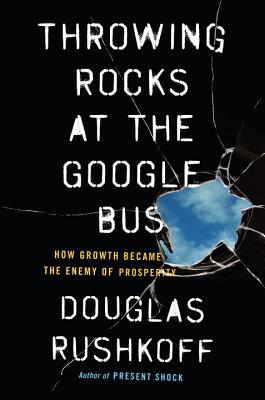
My personal experience with the world wide web mirrors exactly what Rushkoff is saying in this video. If good to hear that he is hopeful about the long term prospects for the web, for the the same reasons that I am. This video and the commentary below is from the Big Think website. “It's harder for most people to making a living now than it was before the rise of online businesses like Facebook and Amazon. That's because the digital economy is hurting the real economy, says media theorist Douglas Rushkoff. Competition is increasingly fierce in just about every industry, and digital technologies have allowed companies to pursue monopolies like never before — because they chase the entire world's population as a customer base. Businesses have always sought growth, but applying the growth mindset to digital technology wields some very disturbing results. Take Twitter for instance: as a company, it makes $500 billion each quarter, but market observers have questioned the company's value because it doesn't have a growth strategy. Compare that to Amazon or Facebook or Google, each of which span multiple industries and have grown rapidly over the last decade. Interestingly, for all our fascination with businesses owned by shareholders, family businesses perform better in just about every metric. The reason, says Rushkoff, is that family businesses are more concerned for the future — the long term future, not just next quarter. Rushkoff explains more surprising facts about our digital economy in his book, Throwing Rocks at the Google Bus: How Growth Became the Enemy of Prosperity.” This net video
-
Well the question of whether Obama and Holder had sufficient power to do anything is predicated on the assumption that they actually wanted to to do something substantive for Black folks. As far as I'm concerned the jury is out on that.... no actually I don't think they really tried to do anything to specifically address the plight of Black people. Obama was the president for all people and most American's are not Black. So the question is not just do we have the power; the question is when we have the power do we chose to use it benefit our people. Collectively, we absolutely have power but we generally use it to benefit ourselves, individually--that is the american way. Entertainers (which include actors, athletes, and musicians, generally don't have power. They serve at the largess of the people they work for--they are as powerful as an hourly worker in a fortune 100 company.
-
I know we are only 17 years into the 21 century, but since people love lists I figured I’d create a 21st century version of the our list from the last century, “The AALBC’s Favorite 50 African American Authors of the 20th Century.” (I know; it is an ugly page, but it is on the list of pages to migrate to the new format) Renaming the list to the “Top” or the “Best” 50 Black Authors of the 21st Century, is more in line with the “click-baity,” attention grabbing headlines that are required now to attract attention. I wonder if people could come up with 50 favorite authors, When I created the original list 15 years ago, almost 1,900 people to cast votes. I'm actually confident that many would do it today—despite there being many more people with internet access today compared to 15 years ago. I’d probably have to create a list and give people the option to choose—make it real easy to participate. It has also been suggested by some that I create a 25 most powerful Black people in publishing (or the Black book business) list. Unless someone does it before me I’ll create that list as well. Black Issues Book Review did a very important articles naming the 50 most powerful people in publishing, I’d like to follow up on that article adding a “where are they now” component. But this will take resources and time that I don’t have now, so this article is many months off. But I think it is important for the public to know who the important Black people behind the books we read and in fact how few of them there are. As always I'm open to suggestions. And if you want you can start writing names in now for both the best authors and important people in publishing. Though I plan to compile the important Black people in publishing myself, I'm open to suggestions too.
-
That is easy to understand. They view the animals as innocent, whereas Black men are viewed as... well...I don't need to get into it...
-
Man it was a fertile time for authors in Harlem. Do you remember one of the owners of Harlemade, Kevin McGruder? Kevin is a published author as well.
-
@Tolly, if you create an account you will not have to wait for me to approve your comments before they go live. I have not seen the video yet, but running a query to understand the Julie Dash reference I came across the NY Times article which explains the reference and a whole lot more; The queasiest part of “Drunk in Love” comes when Jay Z raps, “Eat the cake, Anna Mae,” invoking a diner scene from “What’s Love Got to Do With It” when Ike (using Tina’s birth name) shoves dessert in her face. Is “Lemonade” a rebuke of that, too? Why not? Any wife who outs her husband on an album and in an hourlong video as a cheater, then makes him release that album on his streaming platform — exclusively — is having her cake and making him eat it, too. —Wesley Morris, The New York Times Sheesh! Maybe @Pioneer1 has a point about men; is be realistic for a woman (even a Bey) to think a man of Hova's power and wealth would remain monogamous?
-
Well since April 10th I've added 43 subscribers; which brings me down to 0.8 new subscribers a day. At this rate, I'll now reach my goal on September 19, almost 10 months after making my appeal, talk about playing the long game... I almost forgot why I needed 1,000 subscribers I just checked on Omar's progress. He has gained 66 subscribers during the same period. At this rate he will reach his goal on August 18, 2018. That is a lifetime on the web, YouTube will likely change such that the feature will no longer be offered or the requirement will be different.
-
Man has it been 13 years? I still remember the day I first met you at a party Musa Jackson held in Harlem. Harlem has changed so much in that short period of time... I guess we all have. Congrats on 13 years. Here's to 13 more!
-
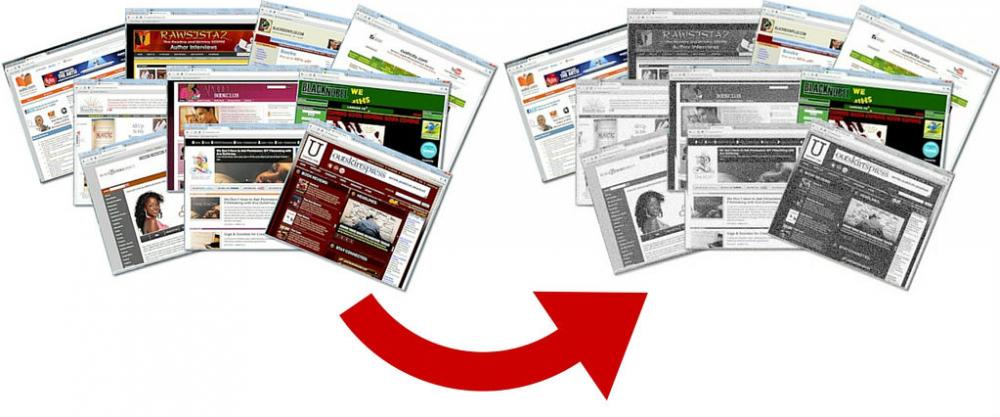
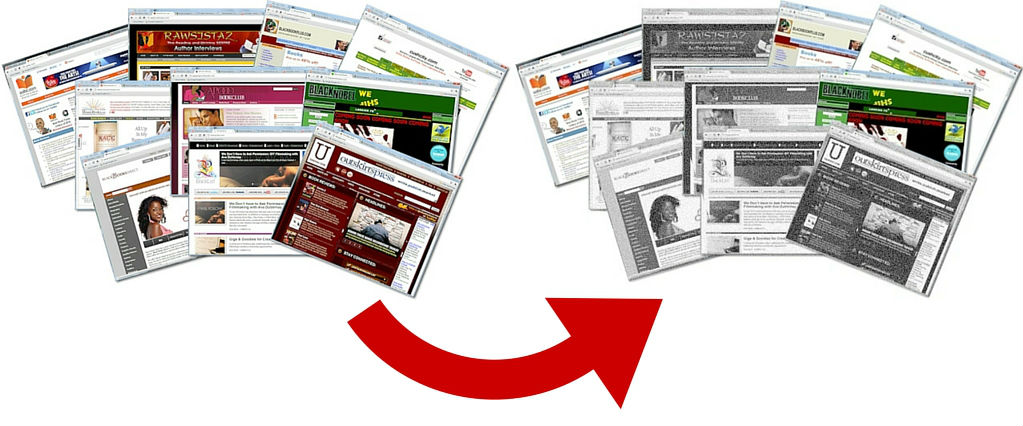
In the case I mentioned with Urban Books, the authors had no control of the price which their book were being sold on the street. I recall one of the Urban Book Authors Jihad ranting in a video over what was happening during the period. To your last point about changes in the industry, which also relates to much of what you wrote is the importance of the author's "Platform." The concept of platformed seemed to become much more popular around 10 years ago. Authors were not just expected to come to the table with a great manuscript they were also expected for have a platform, a quantifiable, preexisting audience. According to some agents authors with a platform, got book deals over better writers. Publishers would look at how many Twitter followers an author had as a factor when signing them. But at the same time they were not sophisticated enough to know that Twitter followers could be purchased. The same goes for purported sales as a self published author, does anyone look at receipts from the printer for validate these claims? While publishers looked at the platforms of all authors, Black authors platforms seemed to be scrutinized the most. The idea of a promising writer being nurtured, by a major publisher just does not happen very often--especially if their characters are Black. As far as Black sites, or indie websites in general, traffic is down for a plethora of reasons. AALBC.com survives because of organic traffic, from search, but Google can take that traffic away tomorrow. Disappearing, or being pushed way down in search results killed many sites. When authors stopped linking to Black book sites, or stopped participating (for whatever reason), this only exacerbates the problem, the nail in the coffin was authors taking all of their energy and devolving it to social media--even over their own websites. This has the effect of cannibalizing the very platforms that can and will support them. In 2010, I wrote an article about the need to support Black book websites, highlighting a few of the more popular sites that remained (image on the left below). Five years later almost all of those sites were gone (grayed out in the image on the right). Now Mosaicbooks.com, The Urban Book Source, Rawsistaz, and the others may describe their reasons for the shutting down completely differently, but they were all operating under the same adverse conditions and they were generating meaningful revenue; I suspect they would still be around today. Just today when researching something related to urban lit, I used the Way Back Machine to retrieve an article that used to be in The Urban Book Source's site. As we continue to lose these sites the internet becomes less rich. Social media simply can not make up for what we are losing. Back to the renaissance, I'm beginning to see more entities authors, publishers, book clubs, etc, looking to work together to improve things. @TheroneShellman, your very participation in this conversation is reflective of this change in mindset. I think you can appreciate that a conversation like this could never have taken place on any social media platform. Hopefully, in 5 to 10 years, we will look back on this very conversation and agree that we were right about a being in the verge of a renaissance in Black literature