

Leaderboard
-
Troy
Administrators2Points14,765Posts -
ProfD
Members2Points7,933Posts -
Mel Hopkins
Members1Points2,198Posts -

Pioneer1
Members1Points13,762Posts




Popular Content
Showing content with the highest reputation on 05/04/2023 in Posts
-
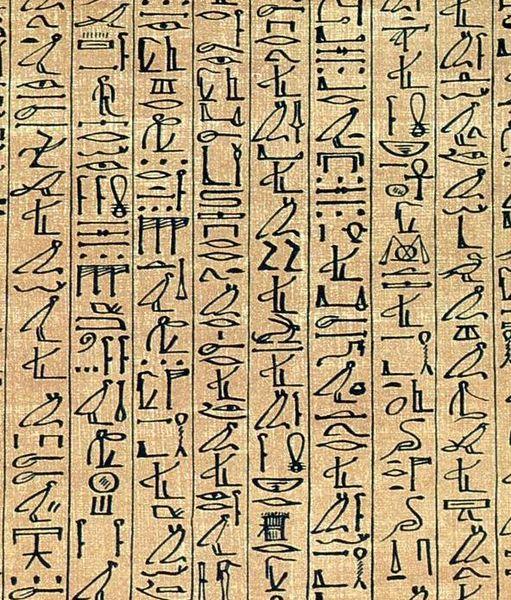
The following was excerpted from "African Writing Systems – Where Do We Go From Here?" by Amenuti Narmer. I discovered this article in the Blacknificent Life Newsletter, which you may subscribe to here. You can learn about these two sites and hundreds of more Black owned sites here. Ancient Africa has the world’s oldest and largest collection of ancient writing systems. Evidence of such dates to pre-historic time, and can be found in various regions of the continent. By contrast, continental Europe’s oldest writing, Greek, was not fully in use until c. 1400 BC (a clay tablet found in Iklaina, Greece) and is largely derived from an older African script called Proto-Sinaitic. The oldest Asian writing, Proto-Cuneiform, dates to around 3000 BC (clay texts found at Jemdet Nasr). However, the oldest known African writing systems are several centuries older. Proto Saharan (5000 – 3000 BC) The ancient Proto-Saharan script was a logo syllabic system. The words used to write this script were monosyllabic. Perhaps the world’s oldest known form of writing and are inscriptions of what some archaeologists and linguists have termed, “Proto Saharan” near the Kharga oasis west of so-called “Nubia” that date to at least 5,000 BC. The writings under the image that looks like the Nilotic god Seth show similarities to later writing systems such as Tifinagh and Vai. Nsbidi (5000 BC – present) Nsibidi is an ancient script used to communicate in various languages in West Central Africa. Most notably used by the Uguakima and Ejagham (Ekoi) people of Nigeria and Cameroon, Nsibidi is also used by the nearby Ebe, Efik, Ibibio, Igbo, and Uyanga people. The script is believed to date back to 5000 BC, but the oldest archaeological evidence ever found dates it to 2000 BC (monoliths in Ikom, Nigeria). Similar to the Kemetic Medu Neter, Nsibidi is a system of standardized pictographs. In fact, both Nsibidi and Medu Neter share several of the exact same characters. Medu Neter or Ta Merrian “Hieroglyphs” (4000 BC – 600 AD) The word Medu Neter (MDW W NTR) literally means “tongue of God” or more loosely, “God’s words.” The English word, “hieroglyphs,” is derived from the Greek word, “hieroglyphikos,” which means “sacred engraving,” similar to the basic meaning of “Medu Neter.” This script is an elaborate a logosyllabic writing system in which symbols represent either words (concepts) and consonantal phonetic sounds, or both, depending on the context. The oldest known evidence for this writing system come from pre-dynastic pottery at Gerzeh (c. 4000 – 3500 BC; “Gerzean culture”), which is located about 100 miles south of Ha Ka Ptah (Giza), and from inscriptions found at Gebel Sheikh Suleiman (Wadi Halfa; 4000 – 3500 BC; “Nubian A-Group culture”) in so-called “Nubia.” The next oldest form of Medu Neter dates between 3300 and 3200 BC and found in Abdu (tomb of the so-called “Scorpion” suten in Abydos) on clay tablets that recorded oil and linen deliveries. Read the rest of this article.
 1 point
 -
1 pointThat resonates. Spirituality, also, as Frankster stated... This in my mind includes not just all other people, but the rest of the universe. I hear you. I used to feel that way to until I learned more. I used to believe anything of value came from Western civilization from the Greek. That is what I was taught, but as I got older and learned more I realized this was simply factually in accurate and that he true has been deliberately hidden, obfuscated, and distorted. I recently shared information about Ancient African Writing Systems. European historians know that the Greeks learned from Africa. But our public schools teach us nothing about the African origins of Western knowledge including religion. Everything we've learned from the West has been perverted primarily for the financial benefit of a few. Pioneer wrote. Some religions teach you that you must go through a man (always a man) to get to God, to experience the Divine. Again, the West has stripped out the most important aspects of religion. As a result, you have a culture of people who are spiritually vacuous. The Western world is increasingly nonreligious for this reason. We will never address any of the worlds most serious problems wars, climate change, poverty from this position. Interestingly, Octavia Butlers Parable series examines, thought fiction, the potential consequence of a lack of spirituality and religious based fascism to grow unfettered. In the second book in her series, Parable of the Talents, the presidential candidate, a Christian, issues a call to "Make American Great Again!" Parable of the Talents was published in the 1998, long before Trumpism. The spiritual emptiness of the world's most powerful nations is, in my opinion, the planet's most serious problem.1 point
-
1 pointIt can be, but religion is externally based and has tenets that dictate your path. Spiritually is internally based, and DIVINITY reveals ITSELF as you journey.1 point
-
I love the work of Milton Davis. I always find something special and fascinating in his works. I will definitely read "Muscudine wine".1 point
-
1 pointIn keeping with the theme of this thread....... The difference between religion and spirituality tends to be from the S/sources. Religion tends to be MAN MADE while Spirituality (more properly called "Mysticism") is of a DIVINE origin. Religion is STUDIED while Spirituality/Mysticism is EXPERIENCED.1 point
-
1 pointConstantly on point bro.👏🏿 As the resident agnostic around here, I approve of this message. 🤣😎1 point
-
1 pointMy brothas @Pioneer1 and @frankster, I'm thoroughly enjoying your positive dialog. 👏🏿 It is an example of the intellectual curiosity and awareness our people possess.👍🏿😎1 point
.thumb.jpg.37951596a52d2f1084e511523defcb03.jpg)