
Troy
-
Posts
14,568 -
Joined
-
Last visited
-
Days Won
804
Content Type
Profiles
Forums
Blogs
Events
Everything posted by Troy
-
The promotional copy reads; "Since 1827, when Freedom’s Journal, the first newspaper to be published by free Black men in the United States, Black folks have been making use of the media technologies available to them to tell their own stories in their own ways." There is own important, and obvious, difference between Freedom's Journal and Twitter (I know it is called "X" now). Black people owned Freedom's Journal! the failure to make that distinction, and to use this as a Twitter as an example of Black people using media to tell our own stores in our own way is ludicrous! First, Twitter uses an algorithm to determine which tweets get elevated. People generate content to satisfy the algorithm whose sole purpose to maximize Twitter's revenue. Anyone who thinks this serves Black people is stupid (sorry). Second, I recently spoke about how I was banned from accessing or even seeing my Twitter account. I later learned that other Black people, some very prominent, have been blocked or had their account usurped by the pin heads at Twitter. I just learned about the book, We Tried to Tell Y’All by Meredith D. Clark today from the New York Times. I have not read the book, but from what I've seen in videos about the author's thoughts on Twitter I find virtually nothing I agree with regarding her position on Twitter and the agency of Black people on it. Meredith and I are both clearly very biased, but I think I'm more correct. Elon's take over of the platform, and Trump's exploitation of it to propel himself into the Whitehouse should be sufficient evidence. But the real proof is the answer to the question, I first posed: Is Black Twitter still a thing? We Tried to Tell Y’All: Black Twitter and the Rise of Digital Counternarratives by Meredith D. Clark
-
I would email myself and say that Black people will flock to the massive corporate websites that will emerge and help make their owners some of the richest white men in the world. Black sites will struggle and remain irrelevant to the internet as a whole. Most Black people will not support you because you are Black-owned. There will always be enough people, of all backgrounds, that will support you, but it will rarely be easy.
-
The first time I saw a Cybertruck was while driving down the street and I was like "what the hell is that?!" Now I like the Tesla vehicles, but this one seems impractical at $100K+
-
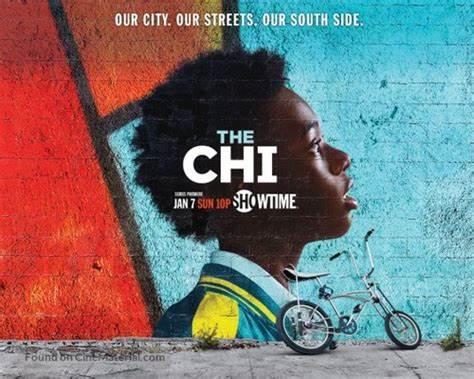
I just watched 6 seasons of The Chi it took me about 6 weeks to get through it. A friend recommended it to me, and she expressed an interest in my opinion. I found it interesting enough to get through it but on a scale of 1 to 10 id give it a 6. You really had to suspend disbelieve to get all the plot lines and the overlapping characters. @Pioneer1's post about Smoking Weed was what made me think about The Chi. Smoking weed was such a big part of the series -- almost everyone smoked weed constantly. They were smoking it, growing it, selling it and killing over it. It was a major character of the series. Another big part of the series was sex. Most characters had multiple concurrent partners. A father and son shared partners. There was sexual abuse. Everyone gender and sexuality combination was expressed to the point that it felt forced. Man with man, woman with woman, young with old, trans with cis, and most of these liaisons were between unmarried people. I'm no prude but it was a bit over the top. Well, maybe I'm a prude by today's standards...

-
 Here are 5 new features: https://invisioncommunity.com/news/invision-community/five-invision-community-5-features-your-members-will-love-r1309/ Apparently, the editor will be much better.
 -
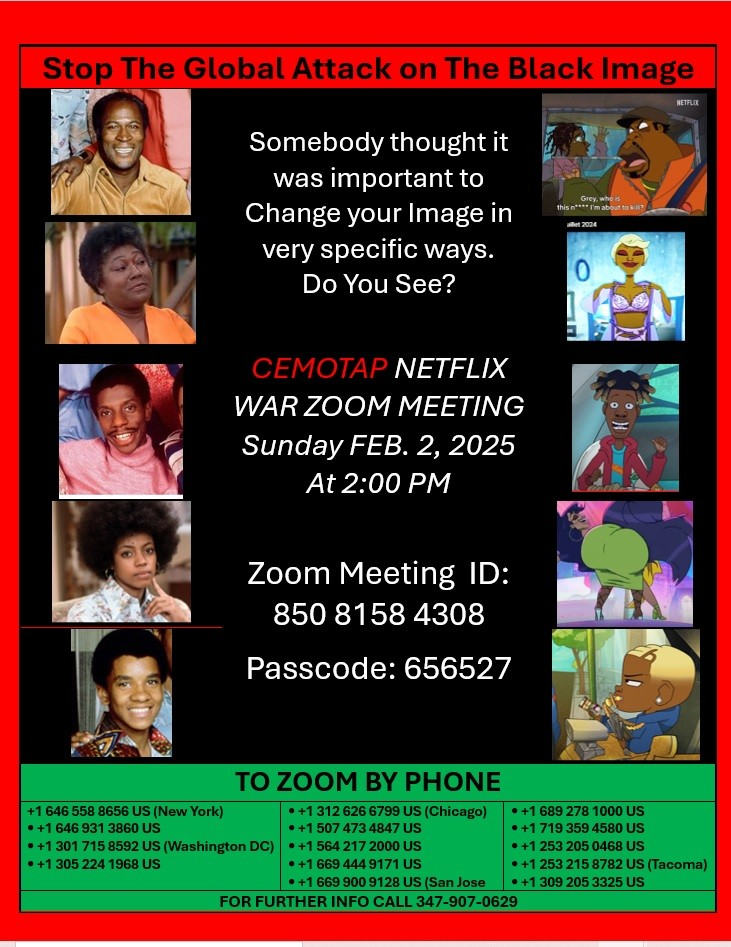
CEMOTAP NETFLIX WAR MEETING - Sun Feb.2, 2025 at 2PM
Troy replied to Troy's topic in Culture, Race & Economy
@ProfD Even when Obama ran 1/3 of eligible voters did not turn out. I suspect voter turnout will continue to be poor and decline further. The masses are not happy with the choices and seemingly have little faith in the government helping us. It costs a bazillion dollars to run for office and you are obviously beholden to the people who put them in power and that ain't us... Clearly Elom Musk will exert a great deal of influence control over Trump. From what I've seen the non-voters tend to be younger and less educated. They can't afford a college education, can't afford a home, can't afford to have children. No incentove to get married, I here they are even having less sex. The chickens will come home to roost. -
CEMOTAP NETFLIX WAR MEETING - Sun Feb.2, 2025 at 2PM
Troy replied to Troy's topic in Culture, Race & Economy
Basically, 77 M people voted for Trump, 75 M voted for Harris, and 3 M for others like Jill and Cornel. Based upon an estimate of the number of eligible voters (239 million) about 84 million eligible voters did not vote in the 2024 presidential election (35% of eligible voters -- again, more than either candidate! (note: Where did you get the "6 million eligible people didn't vote at all. " figure from?). Her gender was part of it. The biggest reason, in my opinion, is that she was a relatively weak brown candidate shoved down our throats. 66 M people voted for Clinton, 63 M voted for Trump (who won despite getting 3 million less votes!), and 8 M for others. Based upon an estimate of the number of eligible voters (231 million) about 94 million eligible voters did not vote in the 2024 presidential election -- 40% of American's could be bothered to vote in that election. -
February Boycott: Amazon, Walmart, Target, McDonalds, Lowes
Troy replied to Troy's topic in Culture, Race & Economy
Yes it was. I don't think we can repeat the accomplishment. As long as a few of us can sit at the front bus and others can aspire to do so, does anyone really care about those who have no hope of even getting on the bus, let alone sitting in the front of it. -
CEMOTAP NETFLIX WAR MEETING - Sun Feb.2, 2025 at 2PM
Troy replied to Troy's topic in Culture, Race & Economy
I actually do not listen to Roland. I don't like his style appealing: he is combative, and he asserts his opinions as if they are unassailable truths. I know some people find this entertaining or useful it is just not my cup of tea. It does not surprise me he would be hyper-critical of Black people who did not vote. I view this as blaming the victim. More people did not vote than those who cast a vote for Trump. The problem is why these people did not bother to vote. That needs to be understood and addressed rather than beating up on people. I promote Roland Martin's books because I believe he has Black people best interests at heart -
February Boycott: Amazon, Walmart, Target, McDonalds, Lowes
Troy replied to Troy's topic in Culture, Race & Economy
I'm not sure what Boycott resulted in the Civil Rights Act? Calls for b\oycotts clearly generate media attention but little else I think we'd have to go back more than half a century. I heard about a boycott of Blumstein's department store in my neighborhood in Harlem to get jobs for Black people. One impact of this was that when I was a kid, Blumstein's was the first place, I ever saw a Black Santa! My little sister did not like him, because she was so used to seeing white Santa's. She might have only been 5-years old I asked ChatGPT for more content. They did not cite a source to take it with a grain of salt: ---- The boycott of Blumstein’s Department Store in Harlem was a pivotal civil rights action in the 1930s aimed at securing employment opportunities for Black people in New York City. Background: During the early 20th century, Harlem became a cultural and economic hub for African Americans, but businesses in the area, including major department stores, largely refused to hire Black workers—even for positions serving a predominantly Black customer base. The Boycott: In 1934, the Young Negroes’ Cooperative League (YNCL) and the New York branch of the NAACP, led by Adam Clayton Powell Jr., organized a boycott against Blumstein’s Department Store, one of Harlem’s largest retailers. The protest was part of a broader “Don’t Buy Where You Can’t Work” movement, which sought to pressure white-owned businesses to employ Black workers. Powell and other activists led picket lines, rallies, and consumer boycotts, urging Harlem residents to withhold their spending at Blumstein’s until it agreed to fair hiring practices. Impact and Success: The boycott was highly effective, resulting in Blumstein’s hiring Black workers for the first time. The success of this campaign set a precedent for economic activism and became a model for later civil rights boycotts, including the Montgomery Bus Boycott in the 1950s. Powell’s leadership in this movement helped him gain political influence, eventually leading to his election as Harlem’s first Black congressman. Legacy: The Blumstein’s boycott demonstrated the economic power of Black consumers and the effectiveness of organized, nonviolent protest in challenging racial discrimination. It also inspired future employment rights movements across the country. Would you like more details on Adam Clayton Powell Jr. or the broader "Don't Buy Where You Can't Work" movement? -
CEMOTAP NETFLIX WAR MEETING - Sun Feb.2, 2025 at 2PM
Troy replied to Troy's topic in Culture, Race & Economy
Who knows maybe he owns stock in Netflix, maybe they are a corporate sponsor, maybe Step Curry is his boy, or maybe he just doesn't care... -
February Boycott: Amazon, Walmart, Target, McDonalds, Lowes
Troy replied to Troy's topic in Culture, Race & Economy
@ProfD The answer is, of course, no -- they own these coporations. When was the last successful boycott that benefited Black people? Look, the mere act of calling for a boycott benefits the very business we should be boycotting. Meta will benefit financially as they provide the platform for people to spread the word and debate the issue. "...the masters tools..." -
Diversity, Equity & Inclusion (DEI) Being Eliminated
Troy replied to ProfD's topic in Culture, Race & Economy
DEI efforts support everyone except cisgendered, heterosexual white males, or roughly 75% of the US Population. Of course, Black people's issues get lost in the sauce as priories are dictated by those with the most resources -- include gay white men, white women -- who make up more than half of the US population! Still one can fight for the rights of Black people and take any wins from DEI efforts. -
February Boycott: Amazon, Walmart, Target, McDonalds, Lowes
Troy replied to Troy's topic in Culture, Race & Economy
I'm all for boycotts. I boycotted Amazon for a years, but ended it because I was alienating too many authors who were making books exclusively available from Amazon. People who make a lot of money from these companies are not about to Boycott them -- I learned that when trying to get others to Boycott Amazon. The list of companies we should be boycotting should be MUCH longer. Why these five were selected is not clear to me. At the top of this list should be Meta, but I guess the organizers are using Meta's properties, Facebook, Instagram, etc to get their message out. See the problem... @Chevdove McDonald's should be on everyone's because their food is hazardous to our health... I asked Chat GPT who is organizing the Boycott and this was part of the response; Tabitha Brown's reaction was really just a convoluted way of saying. "Chile, I'm making too much money from Target to support a boycott and honey y'all really need to continue supporting them 'cause that is how I get paid." I think she misses the larger point. It is not about her products. The reason so many more Black women products are in the store is because of DEI efforts, which these companies are discontinuing. Besides we are only talking about a 28 day boycott?! The reality is Tabitha has nothing to worry about. Most people are not going to boycott Amazon for 5 minutes let alone 28 days... For what it is worth, I'm going to support the boycott. -
1. Sun Feb.2, 2025 at 2PM Agenda CEMOTAP NETFLIX WAR MEETING A. Actions Since last meeting B. Meeting Steph Curry in Chicago and L.A. and NY C. Recent CEMOTAP FCC Complaint D. Legal Response - Can the FCC Regulate Netflix. If So, how? If not Why Not LINK TO MEETING FEB 2, 2025 2PM https://us02web.zoom.us/j/85081584308?pwd=MVZVMU41Z3pTVlFMWmV6cGMrV2ZiUT09 Meeting ID: 850 8158 4308 Passcode: 656527 Dial by your location • +1 646 558 8656 US (New York) • +1 646 931 3860 US • +1 301 715 8592 US (Washington DC) • +1 305 224 1968 US • +1 309 205 3325 US
-
OK email it to me at troy@aalbc.com
-
Yeah, I saw an all black rodeo in Oklahoma. When little kids ride calves that’s called mutton busting — it is so cute
-
@Milton, I just added the Space Funk anthology to our website. Congrats! BTW is "Space Funk" one or two words I've seen it written both ways. Also, what is the correct page count you press release says 708 the metadata circulating the web says 688 (if it were a few pages I wouldn't care but 20 pages is a significant. Finally, would you like to share a story to add as an excerpt on our website? My fave of the two covers
-
FOR IMMEDIATE RELEASE: Wednesday, January, 29, 2025 The Demise of DEI: A New Dawn for Black Economic Autonomy with the Inauguration of Black Business Enterprise (BBE) Certification, Echoing Booker T. Washington's Legacy The National Business League Secures Historic USPTO Federal Trademark for Black Business Enterprise (BBE), Revolutionizing Economic Equity and Sovereignty for Black Entrepreneurs Globally Tuskegee, Alabama — Sixty-one years after the Civil Rights Act of 1964, the Black American community stands at a pivotal juncture, confronting the enduring legacy of systemic economic exclusion. Despite historical legislative efforts aimed at fostering inclusion, Black America finds itself still entangled in the remnants of colonial economic strategies. Today, the National Business League (NBL)® proudly announces a significant achievement: the securing of a USPTO Federal Trademark for the Black Business Enterprise (BBE)®, under registration numbers 98127825 and 98130839. This landmark development is not merely a legal triumph but a profound cultural declaration against the prevailing economic systems rooted in exclusion, inequity, and systemic racism. Booker T. Washington's Vision Revisited Echoing the ethos of self-reliance and economic empowerment championed by Booker T. Washington, Dr. Ken L. Harris, President and CEO of the National Business League, declared, "We stand on the precipice of reclaiming our economic destiny. Integration was never the solution to our economic disenfranchisement; the experiment has failed. DEI initiatives have failed. Affirmative action has failed. Black businesses and their communities have been left behind, and now we declare unequivocally: We will no longer beg for a seat at the table. We are building our own." A Historical Context of Racial Constructs and Economic Exploitation The discourse on racial constructs and economic exploitation is enriched by scholars like Dr. Theodore W. Allen, who in "The Invention of the White Race," elucidates how race was engineered as a tool for economic control. When the first Africans arrived in Virginia in 1619, there were no “white” people there; America’s ruling classes created the category of the “white race” as a means of social economic control. White privileges have enforced the myth of racial superiority, created in the late 16th century. This understanding is further expanded by Dr. Jacqueline Battalora in "Birth of a White Nation," highlighting legal mechanisms that entrenched racial hierarchies. Contemporary analyses by Tim Wise and Dr. Robin DiAngelo expose how these historical constructs continue to undermine genuine DEI efforts, rendering them ineffective in the modern era. Dr. Jeffrey B. Perry's work further illustrates the global implications of these racial strategies, emphasizing the urgency for a new paradigm in economic justice for Black communities in 2025 and beyond. PR Newswire Link: https://www.prnewswire.com/news-releases/the-demise-of-dei-a-new-dawn-for-black-economic-autonomy-with-the-inauguration-of-black-business-enterprise-bbe-certification-echoing-booker-t-washingtons-legacy-302358365.html DEI's Hollow Promise: A Critical Analysis Introduction The contemporary discourse on Diversity, Equity, and Inclusion (DEI) has been marked by a profound dissonance between its ideological promise and its practical outcomes, particularly for Black communities in the United States. Despite the proliferation of DEI programs post-Civil Rights Movement, the evidence suggests a pattern of systemic failures in delivering genuine economic and social equity. The Truth of DEI: A Systemic Failure for Black Indigenous Communities Historical Context: 406 Years of Struggle: Black communities in America have endured 406 years of systemic racism, from slavery to modern-day discrimination. The Civil Rights Act of 1964 was a pivotal moment, yet the benefits of this legislation have disproportionately favored other groups. The Illusion of Inclusion: Diversity, Equity, Inclusion (DEI) Critique: Often labeled as DEI, the practice in many institutions and corporations has been more accurately described as (D)on't, (E)ver, (I)ntegrate. This critique stems from observed outcomes where: Beneficiaries: White women, white male members of the LGBTQIA+ community, and other non-Black minorities have seen more tangible benefits from DEI initiatives. Hierarchical Disparity: A clear hierarchy exists, benefiting in descending order from White Women, White Veterans, Asians, to White LGBTQIA+, Hispanics, Native Americans, Ashkenazi Jews, and White Immigrants. Below them, minorities, people of color, disadvantaged, and underserved groups, with Black Indigenous peoples at the very bottom of the economic scale. Data and Evidence: Post-Civil Rights Disparity: Despite Black communities' central role in advocating for civil rights, they have not proportionally benefited from subsequent social advancements. Ownership and Privilege: By 1865, white women owned 45% of the slave plantations in the South, highlighting their historical complicity in the system of slavery, which has translated into modern-day privilege through marriage and association with white male power structures. The Bitter Truth: DEI as a SCAM: A Stark Reality For Black people, Diversity, Equity, and Inclusion (DEI) initiatives have largely been a scam, failing to genuinely address the core issues of systemic racism. Here's the stark reality, backed by evidence, data, and history: Systemic Racism and Economic Power Redistribution: Despite the proliferation of DEI programs, there has been little to no significant redistribution of economic power or resources to Black communities. Data shows that the wealth gap between Black and white Americans has not significantly narrowed over the last few decades. In 2023, the typical Black family had a median net worth of about $24,100, compared to $188,200 for white families, indicating a persistent and widening economic disparity. This stark contrast in wealth accumulation underscores the failure of DEI to tackle systemic economic inequalities. Supplier Diversity Programs: Supplier diversity programs, which are often highlighted as a part of DEI efforts, have struggled to effectively engage, develop, onboard, and maintain Black suppliers. Studies and reports indicate that Black-owned businesses continue to receive a disproportionately small fraction of corporate contracts. For instance, in 2024, Black startups received only 0.12% of venture capital funding, highlighting how DEI in business practices has not translated into substantial support for Black entrepreneurship. This lack of progress suggests that these programs might be more about optics than actual economic empowerment. Maintaining the Status Quo: DEI often acts more as a band-aid than a cure, providing visibility to issues without driving substantive change. The backlash against DEI, including legislative efforts to dismantle these programs, further illustrates how these initiatives are perceived by some as superficial rather than transformative. The claim by critics that DEI is merely "performative" is supported by the fact that many companies have scaled back or entirely eliminated DEI positions and programs following public and political pressure, without addressing underlying inequalities. Failure to Engage with Core Issues: A significant portion of DEI initiatives focuses on training and awareness rather than actionable change in hiring practices, promotion, or economic support. This has led to criticisms that DEI efforts are long on promises but short on delivery, with many Black professionals feeling that these programs do not lead to tangible benefits in career advancement or economic mobility. The historical trajectory of DEI since its inception shows that while it might have started with good intentions, it has not fundamentally altered the racial economic landscape. Instead, it has sometimes served to maintain the status quo by giving the appearance of progress without the substance, thereby continuing to marginalize Black communities in the economic sphere. Call for New Discourse: Centering Black Voices: It is imperative that we shift the narrative to one that places Black voices and experiences at the center of discussions on equity and liberation. This discourse must challenge the existing frameworks that only superficially engage with diversity. Conclusion: The evidence is clear; DEI initiatives, as currently practiced, do not serve Black indigenous communities but rather perpetuate a cycle where Black struggle is acknowledged yet not addressed in meaningful ways. It's time for a radical reevaluation of these practices to ensure they are not just symbolic but transformative, focusing on genuine equity and liberation for Black people. October 16, 1901, President Theodore Roosevelt, in an unprecedented act, extended an impromptu dinner invitation to Booker T. Washington, making him the first African American to dine at the White House. This event transcended mere social interaction, catalyzing a significant discourse on civil and economic rights across the nation. [Photo Credit: Courtesy of The National Business League Archives] Legal Setbacks Affirmative Action and Supreme Court Decisions: The 2023 Supreme Court decision in Students for Fair Admissions v. Harvard and UNC, driven by minority Asian American plaintiffs, has effectively dismantled race-based affirmative action, a cornerstone of many DEI initiatives. This legal shift underscores a major setback, leaving Black communities to navigate educational and economic landscapes with diminished legal support for diversity efforts. The implications of this ruling extend beyond academia, affecting corporate and governmental diversity policies, rendering them legally tenuous and operationally challenging. Performative Government and Corporate Promises Financial Pledges vs. Actual Impact: Since the racial awakening following events like the George Floyd murder in 2020, over $200 billion has been pledged for racial equity. However, these commitments have rarely translated into systemic change for Black businesses. A deeper analysis reveals that much of this funding has been either misallocated or not effectively targeted towards Black economic empowerment. Large-scale relief packages like the CARES Act, the Consolidated Appropriations Act, and the American Rescue Plan have disproportionately failed to reach Black communities, with estimates suggesting less than 1% of these funds have directly benefited Black American businesses and individuals. A report from career site Zippia details that of these positions, only 4% of the roles were occupied by Black people in 2023. Structural Regression Shrinking DEI Departments: There has been a noticeable trend where DEI roles within organizations are either reduced or repurposed into less impactful positions, signaling a retreat from genuine commitment to Black economic upliftment. This regression is often masked by performative gestures rather than substantive action, further entrenching tokenism. Colonial Lexicon Terminology and Perception: The language used in DEI contexts often perpetuates a narrative of dependency rather than autonomy. Terms like "minority," "disadvantaged," "People of Color" and "marginalized" have colonial undertones, suggesting that Black communities are in need of external rescue rather than capable of self-determination and are no considered terms of exclusion for Black American businesses. The Black Business Enterprise (BBE) movement seeks to reclaim narrative power, advocating for terms centered on sovereignty, equity, and empowerment, distancing themselves from other associated negative terms of exclusion. Meritorious Manumission Historical Parallels: The legacy of practices like Virginia's 1710 Meritorious Manumission Act—where freedom was granted to enslaved individuals who betrayed their communities—mirrors modern scenarios where individual Black leaders or figures might prioritize personal or selective group advancement over communal upliftment, thus continuing a divisive legacy. Dilution of Diversity Broadening Scope, Narrowing Impact: The civil rights movement, largely a Black struggle, has over time seen its benefits diffused across various groups, often leaving Black Americans at the economic bottom despite their pivotal role in these fights. This has led to a scenario where other demographic groups, including those historically aligned with power structures, have benefited more from policies originally aimed at rectifying Black disadvantages. Politicization of DEI Divisive Political Tools: DEI has become a battleground for political ideologies, often used to rally Black votes without corresponding policy changes that would address Black economic stagnation. This politicization has diluted the effectiveness of DEI, turning it into a slogan rather than a strategy for systemic change. Black Gatekeepers Internal Barriers: The presence of Black individuals in high places has not always translated into broader community upliftment. Sometimes, these gatekeepers operate within frameworks that favor individual or small group gains, echoing historical patterns where personal advancement within oppressive systems was prioritized. Certification Disparities Exclusion from Economic Opportunities: Despite millions of Black-owned businesses, less than 1% hold any form of minority and other non-Black organization led certification, locking them out of government and corporate contracts that could drive economic growth within the community. Moving Away from DEI DEI's hollow promise is evident when we assess the lack of tangible progress against the backdrop of lofty intentions. The critique here is not merely to highlight failures but to pivot towards a new paradigm where Black economic liberation is not just an outcome but the central focus. The BBE Certification: A New Paradigm Vision and Mission The Black Business Enterprise (BBE) Certification and Scorecard Program emerges as a transformational initiative, spearheaded by national Black business organizations through the National Alliance for Black Business (NABB) and its partners. This initiative is designed to correct the economic disparities that DEI programs have largely failed to address. It is built on the foundational principles of Black self-determination, economic empowerment, and a clear rejection of dependency narratives. We are moving beyond allowing non-Black led entities, agencies, programs, and initiatives to create economic platforms and dictate our progress, which we see as a core reason behind the shortcomings of DEI. Too often, white-led or other externally created groups have been positioned to speak for Black-owned businesses, sidelining Black professionals, leaders, and entrepreneurs from the DEI power structures. With the BBE Program, we assert that Black people will no longer answer to white-led programs, entities, or minority groups that are closely aligned or assimilated into white systems, institutions, and structures that do not genuinely value Black entrepreneurship or the advancement of Black communities. This program is a step towards autonomy, ensuring that the economic narrative and empowerment of Black businesses are owned and controlled by Black leadership for the benefit of Black communities. Key Components: Certification: Focus: Target businesses with at least 51% Black ownership qualify, ensuring that the benefits directly impact Black entrepreneurship. Market Access: Certification opens up exclusive opportunities in sectors where Black businesses have traditionally been underrepresented. Scorecard: Transparency and Accountability: A digital tool that tracks and reports how corporations and government entities engage with Black businesses, promoting equitable spending and partnerships. Proven Results: 3-Year Pilot Success 2022-2025: The initiative has already shown promise through the National Black Supplier Development Program, securing $150 million in contracts with major companies like GM, Ford, Stellantis, Toyota, Magna, DTE Energy, Comerica Bank, and Cummins and a growing list proving its potential to alter economic landscapes. Strategic Implementation: Launch and Expansion: The official launch at the 125th Quasquicentennial National Black Business Conference in Atlanta, GA, will serve as a platform to not only introduce BBE but also to mobilize the Black economic freedom movement through the "Digitize 1 Million Black Businesses by 2028" campaign. Cultural Shift: BBE aims to shift the narrative from inclusion within existing systems to the creation of new systems where Black communities dictate the terms of engagement, fostering an environment of economic sovereignty. Call to Action: The era of waiting for external validation or inclusion ends with BBE. Dr. Ken L. Harris emphasizes, "Our liberation will not come from external validation but through our own hands, guided by our own vision." This new paradigm calls for a collective reimagining where Black business isn't just part of the economy but is a driving force of innovation, wealth creation, and cultural stewardship. Final Statement: The BBE represents more than just a business certification; it's a strategic move towards economic liberation, challenging the status quo of DEI with a model that prioritizes Black economic power, self-reliance, and community wealth-building. This initiative is not just about correcting past failures but about paving a new path where Black economic prosperity is not just possible but inevitable. About the National Business League (NBL)®: Founded in 1900 by Booker T. Washington, is the nation's first and largest national trade association for Black businesses in the United States. NBL is dedicated to advancing economic equity for Black businesses. Visit www.nationalbusinessleague.org. About the National Alliance for Black Business (NABB): Co-founded in 2022 by The National Business League, National Black Chamber of Commerce, and The World Conference of Mayors and now more than 100+ new members, NABB unites various Black organizations to promote growth and prosperity for Black businesses. Visit www.nationalallianceforblackbusiness.com. PR Newswire Link: https://www.prnewswire.com/news-releases/the-demise-of-dei-a-new-dawn-for-black-economic-autonomy-with-the-inauguration-of-black-business-enterprise-bbe-certification-echoing-booker-t-washingtons-legacy-302358365.html
-
That’s right I can’t even upload a profile picture using the website on my desktop. I also assumed that that’s why I the migration from TikTok failed. I don’t have any social media on my cell phone.
-
Elon Musk Nazi Salute Messages German Past Guilt
Troy replied to ProfD's topic in Culture, Race & Economy
@ProfD yeah earlier this week when I went to upload a video, I noticed this clip in my feed. One of those late night talk shows featured the video of Elon giving that Nazi salute. I fell pray again and watch the video I thought about posting it here, but didn’t want to give it any more oxygen he could easily deny giving the salute. Now, if he also said heil Hitler then it’d a completely different story and he would certainly incurred the wrath of the Jewish lobby. -
@richardmurray that is deep. My last post on Twitter was 16 months ago. Mailchimp has a feature that allows you to share to social media directly from the app. It appears one of my post slip through that is really interesting… I gave up trying to migrate my TikTok, content to fanbase. It simply didn’t work.
-
Major Unprecedented Ufology event set for tomorrow...1.18.25
Troy replied to frankster's topic in Culture, Race & Economy
Literarily anything can be refuted. Our senses are faulty, and one can assert that there is no objective reality. At some point, you have to define what is good enough. Sounds to me that you have to meet an alien. While that might satisfy you, that will not be good enough for the person who wasn't there. Some are convinced aliens must have built the Pyramids because they can't figure out how it was done so many millennia ago. I see these UFOs the same way. We don't know what it is so if must be aliens right? -
Dr. Martin. Luther. King. Assassination. Files. Released ...
Troy replied to harry brown's topic in Culture, Race & Economy
And no one will ever forget America's enslavement of Africans and their descendants. Giving money to the state of Israel is not reparations for the Holocaust? Why confuse the issue by describing it as such? That is s debt owed by Germany. That is not an outcome I desire...