

Leaderboard
-
Troy
Administrators3Points14,765Posts -

Delano
Members2Points6,052Posts -
Tony Lindsay
Members1Points20Posts -
ESP
Members1Points1Posts



Popular Content
Showing content with the highest reputation on 09/13/2018 in all areas
-
I’m still listening to the book, but so far it is very interesting. I’ve realized I need to see and write the names out for better understanding. Tony your thoughts are fantastic and I’m looking forward to discussing this title.1 point
-
1 point@Troy if you drove an expensive car into Alabama found the lowest class white person and insulted them, would your class protect you? Class like race is a construct unlike countries that have royalty. Its all about divide and conquer. No amount of money will white wash dark complexion. If yiy believe that your class protects you, then we had better put you on the endangered species list.1 point
-
1 pointTroy you are right but also wrong. Who is defending poor whites Donald J Trump nominally while they get pick pocketed. Master overseer slave it still works. Actually his message is for disenfranchised whit's who are more concerned with maintain their perceived superiority than fairness justice or liberty for all.1 point
-
Hi @ESP welcome to our online book club. The club's moderator, @Tony Lindsay will be posting questions shortly. In the meantime, did you read the book? What did you think?1 point
-
Hello Everyone I hope I’ve signed up, I’m looking forward to share my thoughts1 point
-
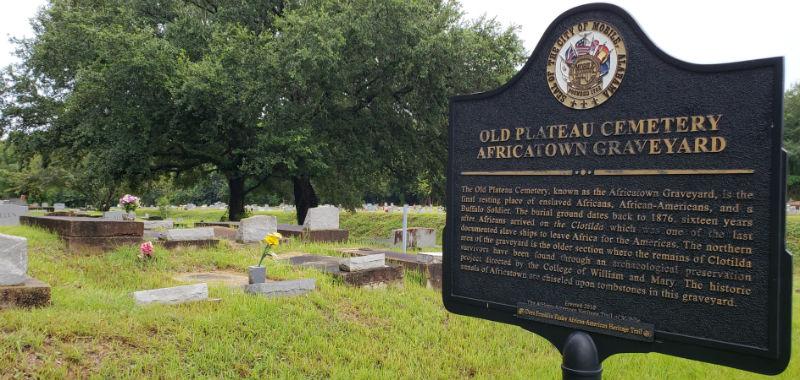
I visited Africatown, in Mobile Alabama, a couple of days ago. The remains of some of the Africans who survived the middle passage, on the Clotilda, one of the last known (documented) slaves ships, are buried here.
 1 point
 -
Here is a video of Barracoon's editor, Deborah G. Plant.1 point
-
I would argue that the work had two protagonists: Hurston herself because of her goal to keep Kossola talking and thereby transcribe his life to text, and the other being Kossola because the text was his story, and wow, what a story. There was so much grief in such a small work – loss of family, loss of community, loss of health, and the loss home. And equally as painful as the grief was Kossala’s remembering the part Africans / Dahomey played in the slave trade. Kossala’s goal was to stay alive, and his antagonist was the Peculiar Institution of American Slavery with its long reaching and lasting tentacles of racism. He was kidnapped, placed in a barracoon, a slave ship, and on an auction block (all life threatening situations) due to American slavery. I believe, the establishment of Africatown, was his strongest blow against the reaching effects of slavery; freed slaves reestablished an African community on hostile American soil; that was miraculous. Kossala didn’t die due to slavery, but he suffered during and after; the lashes of racism ripped at his spirit and his body most of his life. Kossala was never able to return to Africa, and this denial was directly linked to slavery’s tentacles. The main message the text left me with – was that culture was king. Kossala’s culture was his strongest and consistent weapon. He relied on his culture and African traditions his entire life: in the bowels of the slave ship, he and the other kidnapped youth cried through traditional songs to ease their burden, as soon as he and other recently kidnapped Africans were freed they danced a traditional dance, throughout his youth and senior days African parables and fables guided his actions. When his family was taken, his culture remained; he took on the traditional role as griot for Africatown before the loss of family and remained in the role after the loss as an elder. Motifs in the text included valuing family, adapting to change, self-sufficiency, and surviving despite oppression. The text was loaded with descriptive language but what remained me was Kossala calling his wife his eyes, and when he lost her/then he was finished. The most memorable scene was the image of the Dahomey attacking his village; woman warriors entering the village beheading elders while the men blocked the exits kidnapping those who tried to escape the carnage. I believe the work will become one of the most important slave narratives in the canon. Hurston brought the skill of a fiction writer to the task of recording a biography; she converted Kossala’s biography into a story. In addition, Plant’s editing is informational and instructional. I will continue to read both writers. https://ndigo.com/2018/06/27/barracoon-wakeup-reading-paul-king/1 point
