



richardmurray
Boycott Amazon
-
Joined
-
Last visited
Everything posted by richardmurray
-
@Pioneer1 That is a hard egg to crack in the usa. Comprehend, outside the nearly terminated native american, the indigenous people, all the other communities in the usa are for the most part, full of liars, who raised their children on lies who raised their children on the lies they were fed by their parents. White europeans killed most of the native american peoples , took their land,but they talk like they did the native american a favor for killing them. Their forebears entire wealth comes from abusing others under the law they constructed but they tell it like the usa made humanity free.Thsi comes from white homes. Black DOSers enslavement to whites predates the usa and has never completely ended by even whte accounts, yet black people talk like we came on the nina and pinta and santamaria and merely was so stupid our modern condition comes from a simple ignorance like we weren't enslaved or abused by whites. Black people act like centuries of enslavement should be reversed in less than a hundred years. That is from our homes. The non white european immigrant community, asians or latin americans or africans or caribbeans of all phenotypes left countries the usa mangled or abuse nad is usually still abusing, but talk about being a citizen of the usa while having pride for the country they left, that most never go back to. These people don't even tell their children the circumstances to why they are leaving, whether they committed crimes or backstabbed or cheated or made enemies. But present themselves as simple good workers looking to join a rainbow country not telling their children the rainbow is founded on blood. So, the majority of homes in the usa are full of liars. Who want to pass negatively. It links all the peoples in the usa, barring the native american. Whites didn't want their children to admit their wealth came from others suffering and embrace the usa as a racial country. Blacks DOSers didn't want their children to assault their enslavers and not allow a connection to the usa to be made. Immigrants didn't want their children to fight against the country that they sacrificed to bring them to and fight against the usa for the country their forebears fled. misinformation is a pillar of most usa homes or discourse or positions or views. The USA will never have a majority of honest people, that requires most people in the usa to end many of their positions. @Troy You have me confused. I admit it. If anyone ask me about racism, in my opinion, through my own definitions, racism is as old as humanity. But, your saying it is only a few hundred years old. Instead of opposing your position. The question is, in your opinion, not mine, when did racism begin? In your opinion, not mine or anything to do with me, what started racism a few hundred years ago? You can't give a blank answer to either of those questions and remain functional to your position.
-
@Troy no particular or specific accessibility concern.
-
@Jeromex Well taking out the term uncle tom or its usage... is your point black people who do not commit illegal acts, this doesn't mean said black people don't commit criminal acts, are needed more in the black community in the usa?
-
You mistitled this post. You do not provide the real meaning of the term "Uncle Tom" You dysfunctionally reinterpret the meaning of the term based on its false use towards you and then claim your interpretation of the term represents some positive or badge of honor to the larger community.
-
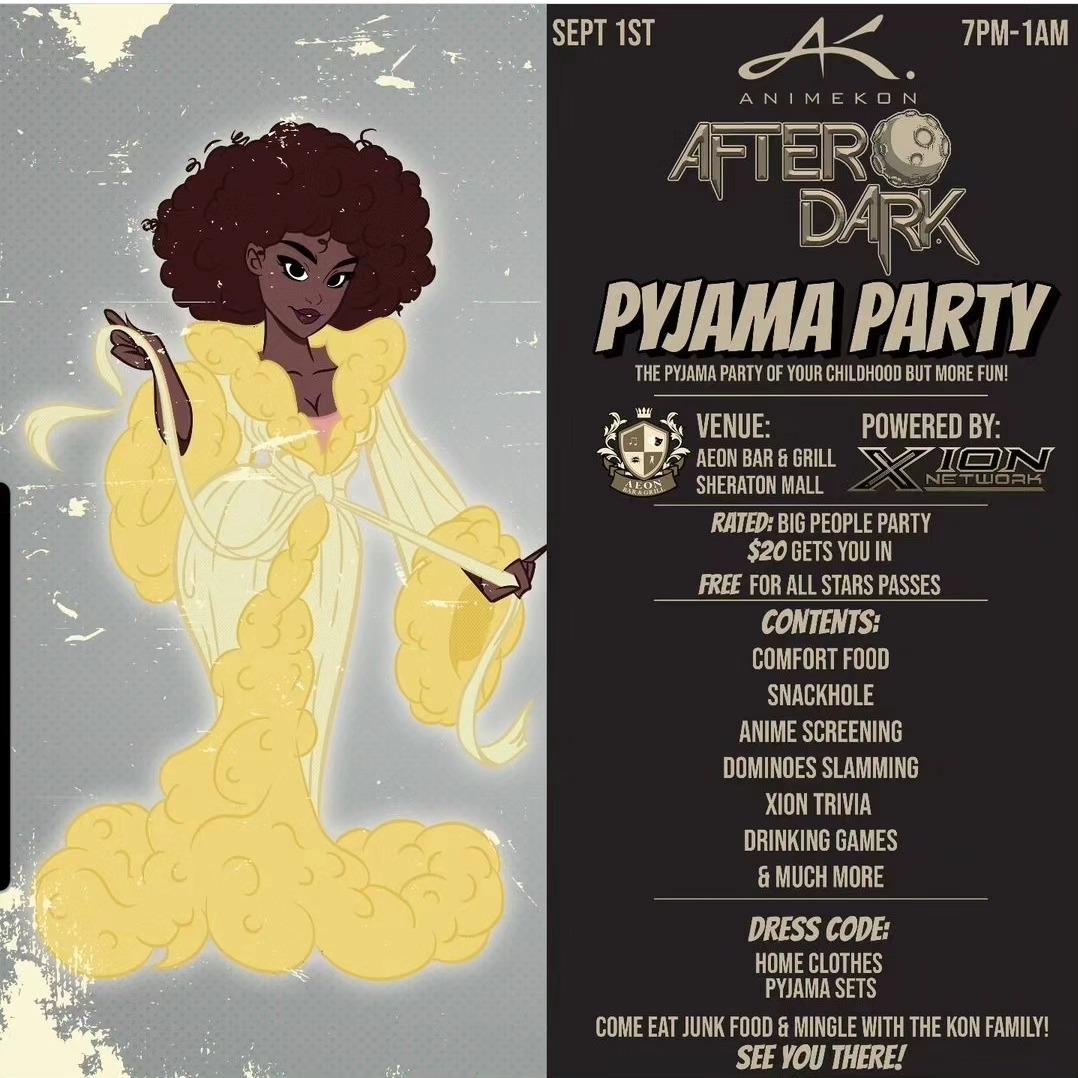
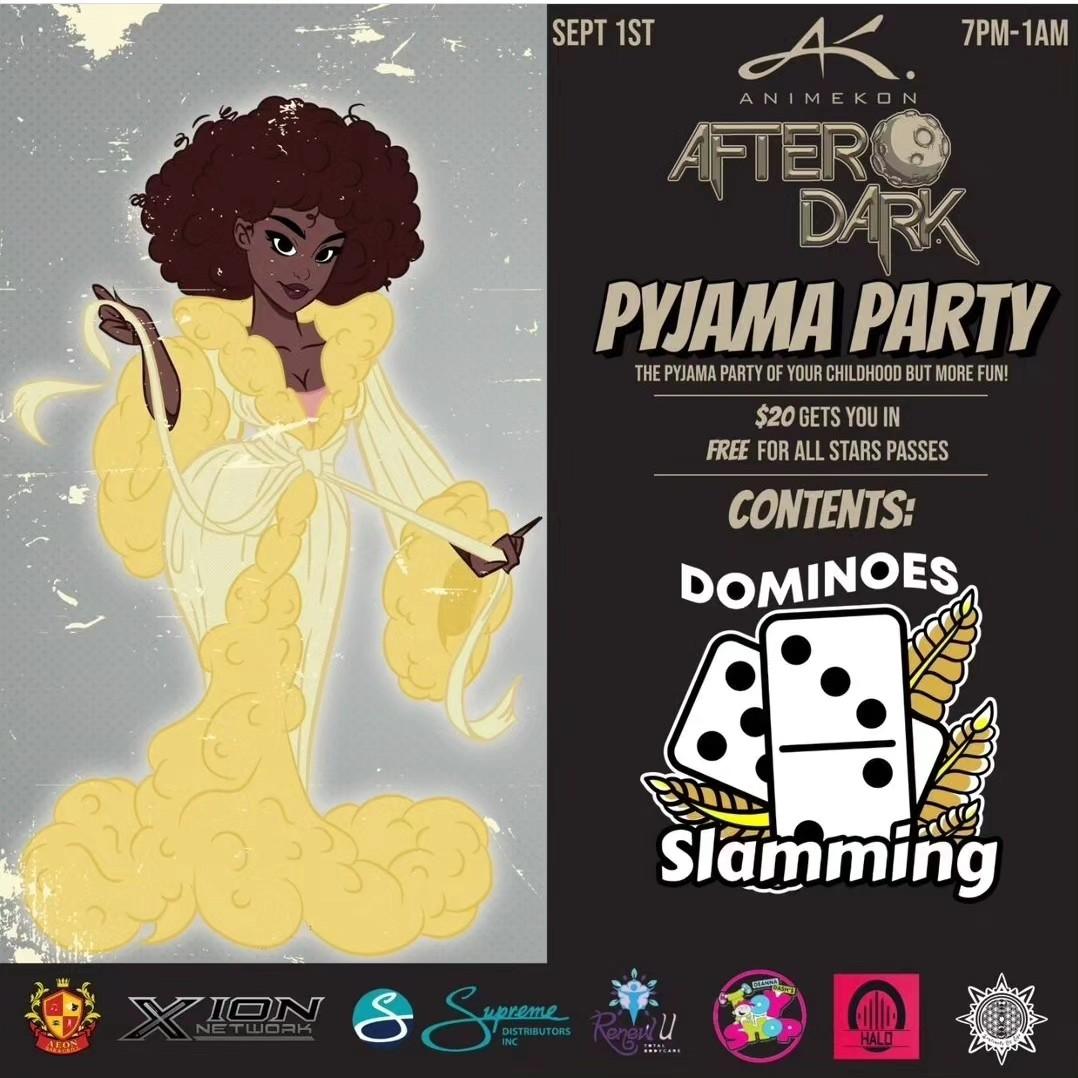
Shawn Alleyne art work https://aalbc.com/tc/search/?q=shawn&quick=1&type=core_statuses_status&updated_after=any&sortby=newest From Shawn Alleyne As Kon 2023 approaches, so does AnimeKon After Dark, the ultimate adults-only pop-culture pyjama party! Join us this Friday, September 1st from 7pm to 1am at the fantastic @aeonbarandgrill to kick off the weekend's shenanigans! Entry is only $20 BBD, and if you have the All Stars Pass, it's absolutely FREE! ACTIVITIES INCLUDE: @thexionnetwork Pop-Culture Trivia hosted by yours truly with prizes the whole night! Dominoes tournament! Massage tables Creative corner thanks to @deannadashs! where you can also unleash your inner artist at the easel station! (Feel free to bring your sketch pads, pencils and art tools as well) AND MORE!!!! Plus you can capture fun memories thanks to @halo_360rentals! All forms of sleepwear are encouraged. Trust me, you've never been to a pyjama party like this. It's gonna be a jam like no other. Who's joining us? See you on Friday, night owls! #animekonexpo #theinvasion2023 #animekonafterdark #thexionnetwork #barbadosevents #whatsoninbarbados #pyjamaparty


-
@Pioneer1 is it strange, meaning foreign or uncommonly, that the usa has policies/laws/implementations of laws or policies that have varying levels of bias based on race? I argue from history , the usa or all of its constituent states from their very infancy upholds and breeds laws that indoctrinate varying biases based on race. All the native american treaties are clearly inequally biased in their form or implementation. Am I wrong? The abortion issue in the usa has inequal bias based on religious race. The issue of immigration problem is it goes into the complicated race of origins which is elemental in the usa, ala the first three, descended of indigenous/enslaved/unwanted You use the word strange. I explain why I think that word is false to use based on usa legal history. Will you support your use of the word strange?
-
@Pioneer1 You suggest how the majority in the black community in the usa think during a certain time frame. Only three reasons exist as to why most black humans in the usa would make such a positive, though flawed assumption, to white humans in the usa. 1) Black humans in the usa don't know any history, firstly from their own elders in their bloodline and secondly from history books 2) Black humans in the usa were lied to concerning their history firstly from the older members of their bloodline or secondarily history books. 3) Black humans in the usa are simply fools that believe the best in strangers. My question Pioneer is to you. Am I wrong ? Am I missing a reason? If I am missing a reason please say so. If I am not missing a reason then the issue in my mind is what has to change in black elders communication to new generations to delete as much as possible the thinking you state from happening. @Troy I have questions for you. Why centuries? Based on what you have said about race, shouldn't you have said throughout millennia or all human history? Are you suggesting thousands of years ago, based on your views, race in any of its infinite forms wasn't a problem? I admit I don't see these events as showing a problem with race as much as how race is implemented. But humans always implement race using a bias that by default has to lead and leads to abuses or frictions.
-
@Jeromex I want to know how you define various racial types and issues. Cause you don't give your definition but your prose makes a lot of suggestions or assumptions. How do you define someone as Black? I rephrase, if you see a stranger in the street, how do you know they are black? Is it phenotype or appearance, perhaps of their skin? Is it when they tell you their geographic ancestry or a geographic ancestry you correctly discern? Is it their style of speech? Is it how they dress? Is it the food they eat? How do you define someone as Indian ? I rephrase, if you see a stanger in the street, how do you know they are indian? Is it phenotype or appearance, perhaps of their skin? Is it when they tell you their geographic ancestry or a geographic ancestry you correctly discern? Is it their style of speech? Is it how they dress? Is it the food they eat? If you define being black or indian on different aspects how do you compare them? You speak of masquerading as black from an indian but shouldn't it be masquerading as african from an indian? India is a place right? How do you define all indian? Some humans in india have chinese ancestry. Are they all indian too? What about europeans born and raised in india, are they all indian? please define all indian? The one point I derived concerning race from your prose is the weakness of non gender based interracial relationships using Kamala Harris or Barrack Obama's genetic parentage as examples. At the end of the day, both Barrack Obama's genetic parents didn't raise him. So I think in his case at least, it is less a condemnation of Black or non Black but a condemnation of interracial relationships. And I argue the problem with interracial relationships in the usa, at the least, is the various races in the human community in the usa are simply antagonistic but said antagonism doesn't have an avenue in public discourse or government while always present
-
Launch Trailer
-
topics Cento poems Around The Moon In 80 risings, fanfiction + photomanipulation Paying Attention, bettsfic writing workshop on tumblr, Poem + Stageplay How August Wilson Inspired me Books made by computer program Steven Barnes + Tananarive Due, only live stream in 2023 for scriptwriting Dates + the weather If you made it this far: stretching, harlem of yore, if the slave becomes the master, build your own website, https://rmnewsletter.over-blog.com/2023/06/08/27/2023-rmnewsletter.html
-
I am not connected to to many queer authors but if any of you are in circles with many queer authors please share this opportunity https://itgetsbetter.org/blog/queerbook-2024/
-
I do wonder what AALBC's interface is for the blind or deaf or how it can be traveled for those absent fingers for easy mouse movement or typing. Thoughts @Troy ? In my mind I assume you have considered all in the website but for the sake of multilog I will ask about accessibility in ALLBC? An interview to Kobo Writing Life that concerns accessibility in all forms https://aalbc.com/tc/profile/6477-richardmurray/?status=2416&type=status
-
fair enough @ProfD I have no problem to your communication style, I hope I remember it going forward but if I don't once or twice in the future you will comprehend:)
-
@Pioneer1 I will never say my forebears enslavement was positive in any way, cause it simply wasn't in any way, at least to me. I think too many black people word our ancestors recent past incorrectly like that. But, one of the positives in our reply to being enslaved, which to me is the delicacy i was trying to explain, is that we have figured out how to be the kind of community you have to be in a multiracial community the usa suggests it is. It hasn't been easy. Our ancestors didn't have to choose that path and not all our ancestors or an overwhelming majority of our ancestors chose that path. I am not trying to suggest the black community in the usa has acted correctly or functionally but has positives. It's delicate pioneer, a delicate tale. If you tell it bluntly like you just did, you override the negativities in enslavement, you override the many black ancestors who in choosing other paths were in many ways betrayed by the black people who chose the non violent integration. As a sister said less than a six months ago, a representative in the california district where the black family, the bruce's got a financial owed money not reparations, the black family won , but the black community didn't https://aalbc.com/tc/profile/6477-richardmurray/?status=2349&type=status @ProfD Well, I was specific, and not by accident. Black people throughout humanity outside the usa shouldn't follow the black community in the usa. The black community in the usa is a community in a very unique negative circumstance that had to battle its own desires to reach this place of nonviolent growth in the most potent white empire in modernity. And to your query. When I think about frederick douglass's position which , rightly or wrongly, became and is the philosophical standard for majority of black leaders in the usa, then the desire for ownership you speak of is anti-usa/statian . https://aalbc.com/tc/blogs/entry/357-frederick-douglass-our-composite-nation/ The simple truth is, all the communities not white european panreligious <meaning those not white european christian/jews/muslims/other religions or their descendents >in the usa complain about impotency, all of them. But, they all miss what Frederick Douglass's point was, which is why black audiences booed the speech linked above when Douglass spoke it. The USA, if it is to be a integrated multiracial place can't be a place for your communities self empowerment. Yes, asians, you don't get representation in media or in government. Yes, Blacks you don't get to own everything in your community. Only the white european community gets all aspects in the usa, but that is the point. If you are not white european and want all powers, then you have to leave the usa. Please add to your financial assessment of asians in the usa three points: 1) asians < as well as white jews> have never been blockaded from owning business completely like blacks so asians have a larger history of generational wealth than blacks in the usa or the european colonies that preceded it 2)asians as willing immigrants have always linked financially to countries in asia while black DOSersunwillingly/forced to be into the usa had all links to africa or the caribbean or elsewhere severed completely, so black dosers don't have external countries to leverage financial activity like asians, who have in asia even more potent financial markets in modernity 3) black people never owned a majority of the land in any city in which they lived in the usa, black people didn't invite asians in black communities in NYC/ LA/ Chicago or other, the cities , meaning the white community in said cities, owned that land and asians opened their businesses through the city, not because black people invited asian owned business, so the black community in all geographic sectors of the usa never owned the land in lived on to dictate who does business where it lives, that is a resultant of enslavement. I am not saying your wrong but your position lacks all the details needed to explain it fairly concerning black people. Your position makes it seem like it was some even playing field and black people were stupid. That wasn't how today became. @Troy In your proposition you didn't mention lawsuits, you didn't mention fan reaction. If black players leave the NFL 100% which never happens in humanity anywhere. 100% of jews don't support israel or have issue with jews being disrespected in media. But if 100% of black players left the NFL, the owners of teams would perform legal action , let alone will fans react in support? The thing about these kind of sccenarios is the environment isn't just the players and how do you get the owners to not make it very hard, how do you get fans to support it? You dump the situation on the players lap. if only the players/coaches or the nfl did then the NFL would merely go on without the black players, the nfl owners wouldn't use legal actions , if only the nfl black employees did then fans will simply embrace two new leagues and the black league even under duress would financially survive. .. I Don't think so Troy. I think what you say needs the nfl owners , needs the usa government- especially legally, the fanbases which is also global to change and I see the changing slower than the players. The reason it will not happen is all those you didn't mention.
-
@Pioneer1 one of the problems for black people in the usa as a community is its positives or negatives are delicate in description, none are simple. I think many black or non black people who like to speak negatively toward black people in the usa in general tend to define the positives or negatives in simple terms. Yes the black community in the usa doesn't have the financial wealth of whites in the usa. Yes the black community in the usa isn't dominating the world populace like the whites from the usa. One of the most positive elements of the black community in the usa is after all of whites enslavement plus the black communities nonviolent path's challenges aside the whites who chose to abuse us after enslaving us, the black community in the usa is where it is at. Is it ideal? no. Is it the dream of the ancestors or forebears? hell no, far far from it. But, it is something rarely positive that in a country that represents the height of white european global imperial power, the usa, you have the second most abused community in said country, the first is the native american, having reached such a place as a community in such a non violent and supportive way to said country. it's delicate. It is not ideal. It is not the dream. And, many black people's true desires have died in this path. But, through all the challenges the black community in the usa is still on a slow upswing and that is something, not simple to say like we're rich or powerful, but I think those black or non black people who like to or mostly speak ill to black people in the usa don't have the ability or desire or wisdom to articulate.
-
His voice is immortalized Art from Francoisl-artblog https://www.deviantart.com/francoisl-artblog/art/Super-Mario-Charles-Martinet-978503008
-
Mark September 23, 5-8p ET / 2-5 pm PT on your calendar! Steven Barnes and Tananarive Due are conducting our ONLY live writing workshop for 2023 – and this time it’s all about screenwriting! TEN WRITER’S SECRETS TO BREAKING INTO HOLLYWOOD This will be an intensive three- hour lecture/Q&A teaching the basics YOU need to create and build a career. The topics will include (but not be limited to): 1. The FORM and LANGUAGE of screenwriting. 2. The biggest mistakes new screenwriters make 3. Constructing a Compelling Story 3. Creating Unforgettable Characters 4. Visual symbols 5. Dialogue 6. Managing workflow 7. Breaking into Hollywood–the importance of spec scripts 8. The Art of Networking, Establishing IP 9. Giving great meeting 10. Writer's Room basics (including why the WGA went on strike) We will be pouring decades of combined writing experience into this ONE-TIME workshop - sharing the secrets we have learned as novelists who transitioned to screenwriting. Our combined television credits include The Outer Limits, Jordan Peele’s “The Twilight Zone,” Horror Noire, Andromeda and MORE. We have also sold feature scripts to Fox Searchlight, Miramax and Lifetime - and consulted studios on major releases. Be prepared to take notes and ask questions. This is hard-won wisdom designed to take you from wherever you are now to the level of skill and understanding you need to get a head start in the world's most competitive creative arena. THE SUGGESTED DONATION IS only $197. And while this is a dead bargain, no one will be turned away for lack of money, so we are trusting that those who cannot afford the full donation pay what they can, while those who have more resources will help the scholarship fund for the less fortunate. SEE YOU THERE! Participation capped at 100 students. How to sign up: Use THIS link to join our email list:https://diamondhour.aweb.page/p/ffc81123-c43a-4820-96bd-326d4e0bd1f4 Open the verification email, and click “verify” A welcome email should arrive within sixty seconds. ollow the directions on the welcome email. Get ready to have your mind blown! Lifewriting
-
Fair enough Yeah the word ban has a stigma so grand + negative that many dislike it Yes, I am a hard headed as a commentor:) my pleasure @Troy nice dialog:)
-
Great work @Troy
-
@Troy fair enough to the industry but do readers determine the commercial or creative quality in your opinion? to me readers can only determine the commercial quality @Troy I see, yeah, restrictions are a form of bans. That is first and foremost. But the word usage goes back to why I am verbose. A restriction isn't a complete ban but a restriction is any incomplete ban. In the same way, age recommendations on a book is a open restriction , or a form of banning. As well as readers taste or publishers taste being a restriction or a form of ban.
-
@nels how would I be sure to know what you are thinking? I am not. I don't know you. You are a stranger. I can only assume. But, you said https://aalbc.com/tc/topic/10460-how-many-of-these-accounts-did-i-approve/?do=findComment&comment=62691 Now, were you telling me the truth , i don't know, I am not trying to find out, but you said just noting a perspective.
-
What is the solution @Troy to changing the style of the internet ?
-
Good comment @Troy Of course, the usa has a growing ban book culture, it is inevitable. Maybe my dislike, extreme dislike, for the USA makes it easy for me. But of course Troy. IS the usa the government which has never figured out how to govern a multiracial populace where all of its races are positively growing? yes. Communities that don't like each other ban each other. Outside enslavement of black people from anywhere, all other immigration policies from the usa government have always been against the voting majority. This is historical fact. Most people in the usa didn't want ellis island. Most people in the usa didn't want the immigration act in the 1960s. Fiscally wealthy white europeans initially, later in all phenotypes or other racial categories, have always been the true engine to immigration to the usa , not the fiscally common folk, thus the banning. Anyone trying to get into government knows full well most people in the usa can't stand the stranger. They tolerate because of a complex mix of legal system /military power/complex heritage in the usa. Do you say that as an affirmation of fiscal capitalism or just in this case? Who determines the qualities of a book ? What are the qualities of a book? You mentioned the market before. The market determines the quality? The market determines the qualities that are valuable? In my mind, all art has a creative side commercial existence. The creative side is in my mind beyond judgements cause its creative. Commercially I think judgmental elements exist based on commerce results being revenue. but when people speak of qualities in the arts I think too often , the creative is mixed side the commercial nonchalantly or factly and that is dysfunctional for me. I thought she said she didn't know. I have to reread I may have gotten confused to another article. The tragedy of the internet and the tools it gives access to is most in humanity aren't connected to it while the populace that is, embraces it almost like a drug.
-
I see @nels so when you commented you weren't asking a question based on your position, you were asking a question based on a perspective you don't share? ok. @Troy I apologize I should had been clear, I am relating aalbc to the behemoths, allbc compared to the average is large:)
-
AUDIO MY LISTEN 1:37 There is never a better time to be a writer ACLS survey said that the median UK author is 8,000 pounds. But on the other said, more readers than ever. 3:12 Indie author revenue is trending higher. Trade paperback is fine. Get stories to readers who will enjoy them 4:25 he was traditionally published by mcmillan. he had two shots, no one will give him a third. Then two friends published some stuff digitally, and they made a little money and contacted readers. Then when he made more money than his day job, he cut ties and rely on his writing full time. 6:25 he waited till he made fiv eto six times more than his day job 6:59 what is the biggest change in the industry? When he started you could get away with a less tidy book. You have to have a cover designer. You have to have a blurb. You need it edited. You could upload a book, you have to advertise. No writer can find significant success absent advertising. 8:55 what made you start self publishing formula? The community of self publishers are more welcome to sharing. He could have kept it to himself but it wasn't altruistic. Self publishing formula is a business with emplouyees about the world. So SPF made money helping writers learn. 11:30 You say advertising is the way to go these day? why is advertising so important these day s and your SPF starter course? The course is free for weeks. It's a good option to learn without taking a course without financial stakes. We will teach you to invest in facebook ads and how to grow readers. 13:08 Which is the main ad platform for indie authors? Facebook, am*zon, bookbub. Which one is most important is on circumstance. If you are on am*zon, exclusive to am*zon, am*zon is most important. IF not, Facebook ads. 14:45 Do you still run all your own ads? Yes, he has looked but he hasn't found someone to do it for him. Problem with agencies is you are another line on a spreadsheet. He is a control freak which doesn't help. He enjoys it too. He likes spreadsheets. ... he does see great husband wife partnerships. he shared an example of a couple. It is a cool trend. 18:08 What is a good metric for an ad, to say that it is working? It is the turn on investment. Making more than your spending. Kobo helped in the past learn the read through rate. He has seen ads where authors have killed them but not realizing those readers were migrating to their other books through that ad. 19:38 how often should authors check ads? If you don't have a huge budget you want to be in their often. am*zon is based on clicks instead of impressions. It is time intensive. Once you have the factors nailed, it takes time to find the right spot. He checks a few times a day. For am*zon tweaking regularly. Facebook do the test for you these days. Facebook will find out the one that is best so it will find out. 21:37 Chatgpt is good at advertising. He asked it for a facebook ad. That ad is working well for facebook. As computer program services becomes more powerful it will be great for writing. 22:44 It can make Blurbs. Chatgpt can give a good stab. Better for a starting point than starting with a blank page. 23:16 Do you change ad tactic for audiobook as ebook? Translations give his most ad tactic change. But Chatgpt can speak german as well. You may not know how well it emits but it can be useful. In the end, the ad format doesn't matter much across. 24:37 What is consistent across authors with failed authors? Authors don't think ads are not when they are if you take in readership and associated purposed. and people put it tons of ads and that goes against the algorithm. Also ignoring sales , organic sales, they will have a car crash in ad data. 26:06 Do you see some authors do a month long ad campaign and they fail cause that is all their doing? He does an ad campaign all the time. I rather see an ad for book 1 than see the others. With ebook, the infinite backlist makes it safe to keep going. But he isn't well known so. Background residual ads can reach or do reach new people are remembered. It is on him as a writer to temp to go to the next one. 28:09 How did the ads in the trian tube go? He didn't pay. You can't track it. He had a life goal achieved. He will probably not doing it again. It was good for an image in social post. He has posted the image from that alot. 29:58 the richard and judy book club is huge, how did it work? He has a deal with a publisher called welbeck in the united kingdom. He doesn't comprehend why publishers don't risk indie authors with a paper publishing when they have many readers plus reviews. Now he is in every store. He had another life goal. In a store chain in england. It is a sign of things in your reach. It may not be a big money deal but validation. 32:10 How important is your newsletter list in your marketing strategy? Is offering a novella for free still helping your list? Yes. building look a like list. Focus as many avenues as readers to get the newsletters. YOu have to make it valuable to join in. 33:38 What frequency is your newsletter? It was a once a month. It is once a release. Bimonthly. He has taken inspiration from the romance authors who are usually better than anyone else. They can talk about something in their lives. Good to share readers yourself. 35:02 Marketing is heavily on indie authors or is building a newsletter good for publishing deals? Yes, publishers will ask, how many people you have in your newsletters? how many followers to your spaces? 36:01 How do you balance your schedule? Self Publishing Formula has ten people now. He doesn't have as much to do. It is delegating . He has two kids and a dog. These are all first world problems. He isn't complaigning, but it can be a juggle. 37:37 What is next and where can authors learn more about your course? Selfpublishingformula.com the url https://kobowritinglife.com/2023/08/08/kwl-323-important-tools-for-indie-authors-with-mark-dawson/