Leaderboard
-
Troy
Administrators9Points14,577Posts -

Nnamdi Azikiwe
Members2Points66Posts -

Slaise
Members1Points69Posts -
Mel Hopkins
Members1Points2,139Posts


Popular Content
Showing content with the highest reputation on 10/02/2020 in all areas
-
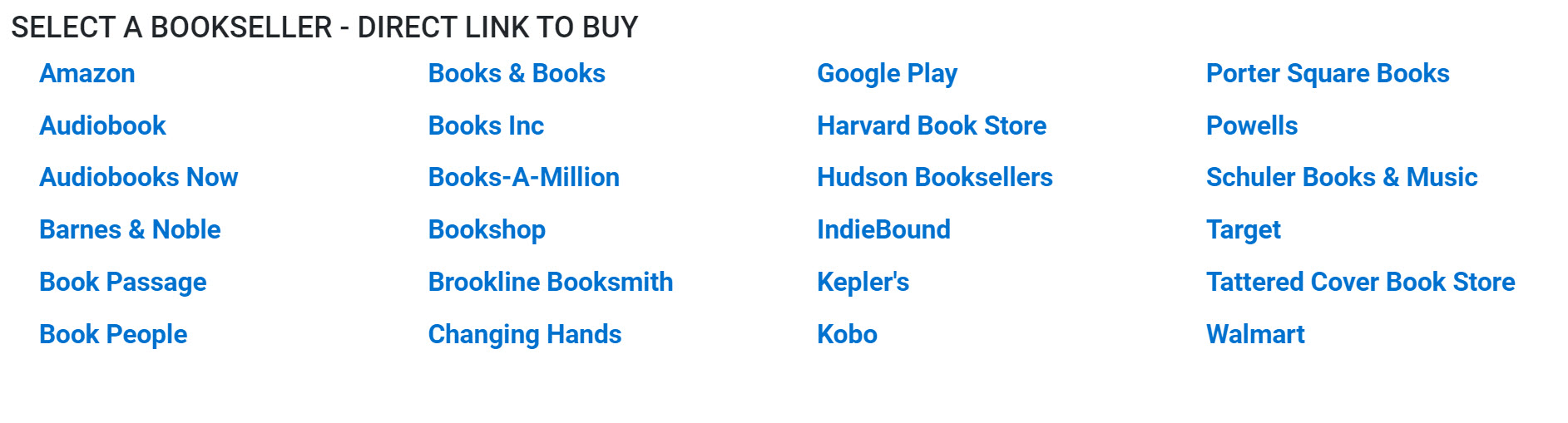
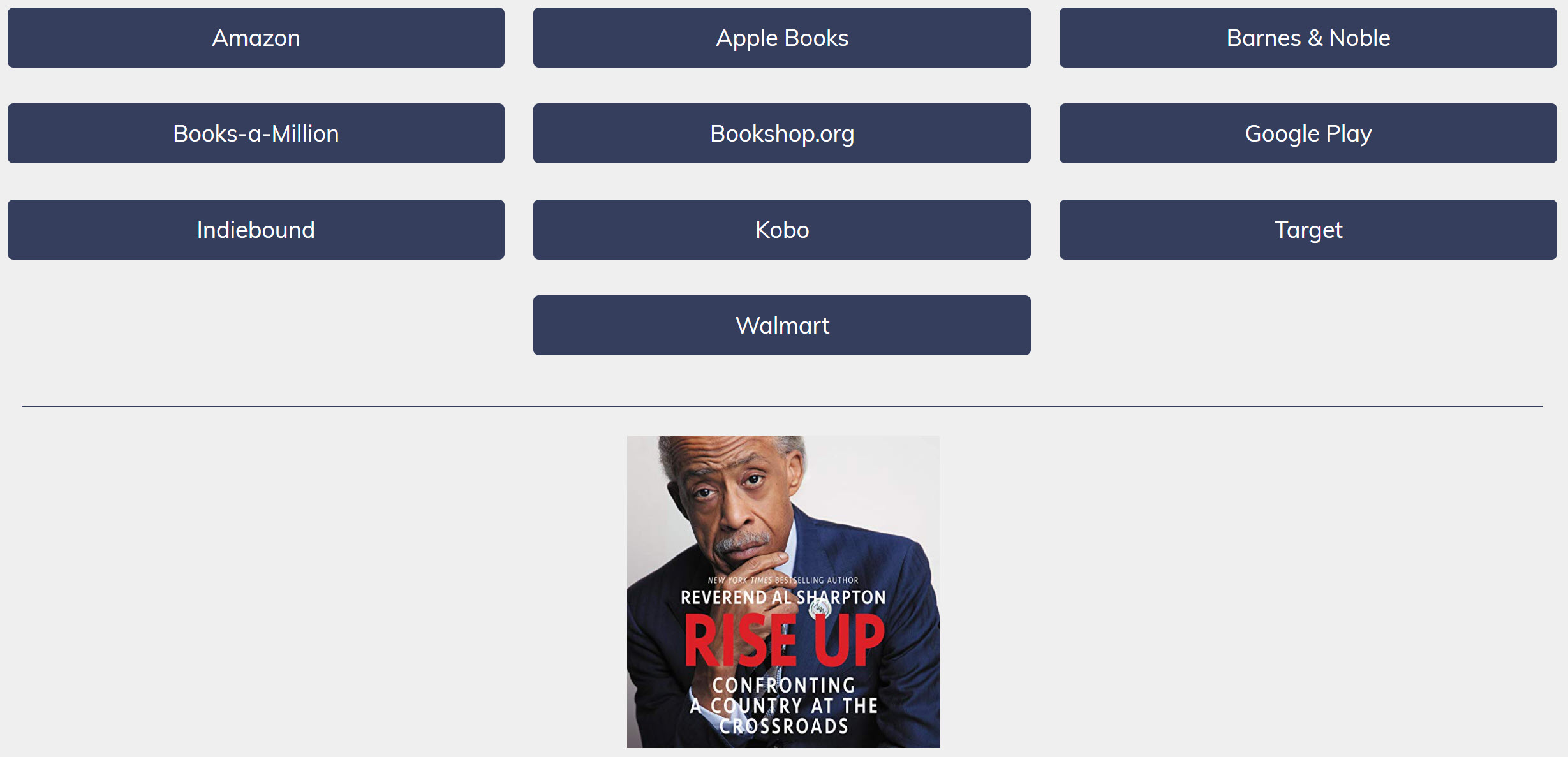
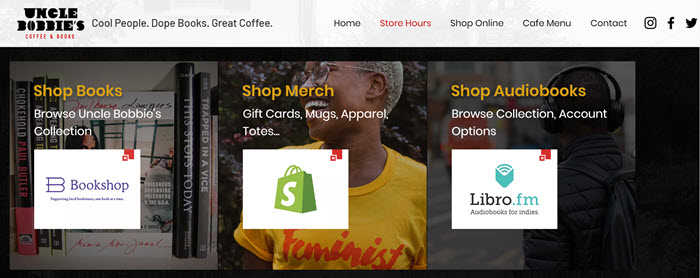
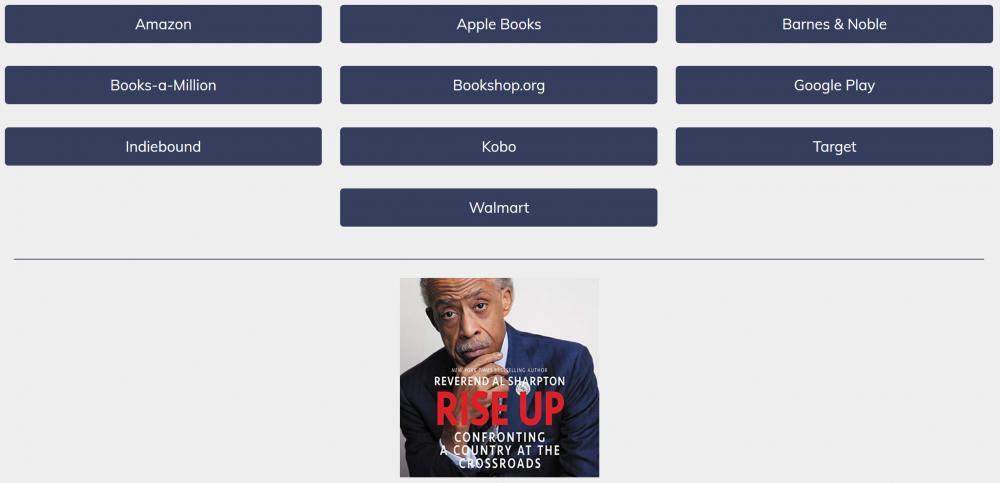
If you think certain online bookstore is a better alternative to another massive e-commerce site, think again. The following commentary is in reaction to the Black Bookstore Day conversation. We could really use a journalist to investigate this, but it highlights a common challenge: lacking platforms with the resources to conduct this type of research and explain why it matters to readers. It would be fascinating to know how much a certain online platform has earned from people who wish to support Black bookstores, on the heals of George Floyd's murder, but unintentionally ended up supporting the other business instead. For instance, mainstream media has given significant attention to a café that also sells books. This café doesn’t operate an e-commerce site but instead directs readers to another platform for book purchases (see graphic below). This isn’t a critique of the café—they’re free to run their business however they choose. But it's clear that, for anyone genuinely aiming to support a Black-owned bookstore, businesses without online book sales may not be the best primary choice. Some brick-and-mortar bookstores have also struggled to adapt to e-commerce, especially during the pandemic, which forced many stores to rely solely on online sales as their physical locations closed. Another bookstore gaining considerable media attention also directs readers to this third-party platform for online book purchases. Ultimatley this platform functions as the online bookstore for many Black-owned bookstores. Since the rise of interest in supporting Black-owned businesses, Black-owned bookstores have received more support. Unfortunately, this platform has often been the one to profit, rather than the Black-owned stores themselves -- controlling who wins and who loses. As a result, the media has increased their focus on stores without dedicated e-commerce platforms, and this third-party platform often manages online sales for these stores. There is a strong correlation between a store's media attention and this platform managing its online bookstore. Many large publishers link to this third-party site as a place to buy books, and they still act as if they’re supporting Black-owned stores. Here’s an example of how one major publisher offers book-buying options: Here is another... This was particularly notable for a book on civil rights, as it felt ironic given the book’s subject. I reached out to someone to encourage publishers to link to Black-owned stores. Although some publishers are connected with our platform, it seems they’re not fully aware of the impact of their current practices. A supporter mentioned they wouldn’t have known about a recent book by a prominent activist if it hadn’t been for our platform. How much longer would it have taken them to find out? It’s in publishers’ best interests to support Black-owned sites. As someone who avoids large e-commerce sites, I’m glad to see attention going to other platforms. But, as I once was with a different platform, I won’t be fooled by a similar setup that siphons revenue and business from the Black book ecosystem. This platform gained prominence quickly, partly due to an industry association. It has positioned itself as a more ethical alternative to larger e-commerce sites. They pay affiliates a 10% commission, which is slightly higher than what some e-commerce giants offer (currently about 4%). The platform also matches this 10% commission for independent bookstores that are members of the association. Most association-member bookstores that benefit from this revenue share are not Black-owned, and many already have their own well-established websites. For these stores, the revenue share is simply an added benefit. When customers buy books online from Black-owned stores that use this third-party platform, 10% of the sales often go to other independent bookstores, some of which may be white-owned and haven’t done anything to earn that revenue. If readers who want to support Black-owned stores knew this, would they continue to support sites using this platform? Here’s the kicker… AALBC is a member of the same industry association. However, this third-party platform has refused to include us in its revenue share program. The reasons seem clear: they aim to dominate online book sales and exploit the public’s desire to support Black-owned stores in the process. They seemingly view platforms like ours as competition to eliminate. The industry association used to support bookstore owners in running their own websites. Now, however, all of their effort supports this third-party platform. I’ve expressed dissatisfaction with the association on this issue but to no avail. I even considered running for their board to try to influence how the association supports web-based booksellers. Ultimately, I decided against it, as my time is limited, and I wasn’t confident about the impact I could have. While the association means well, there’s still much work to do, particularly regarding support for Black-owned independent bookstores. It is hard out here! LOL! NOTE 11/14/2024: This article was written to remove the names of specific businesses and industry organizations.

 1 point
 -
1 point@Nnamdi Azikiwe my guess is that Bookshop.org has siphoned millions of dollars this year away from Black-owned bookstores. I described my reasoning here. No, Black folks do not do well when it comes to the distribution and retail of Black books. Are books fail to enjoy the sales they would otherwise. Of course the readers are less enriched as a result. Books from authors like Anthony Browder, Claud Anderson, Jawanza Kunjufu, for example would enjoy a great deal more success. If there were more Black booksellers and better distribution of their titles.1 point
-
Bookshop.org has exploited the recent desire of readers to support Black-owned indie booksellers. Many Black-owned independents were unable to sell books on the web, or scale up to meet the increase in demand, by readings interested in supporting Black-owned bookstores on the heals of the George Floyd public execution. Bookshop.org; through deceptive and misleading tactics have managed to convince too many book buyers that by buying books through Bookshop.org that they are supporting Black-owned independent booksellers. One example, was the case where Oprah Magazine published an article in which 12 popular authors mentioned their favorite Black-owned bookstore. The article also mentioned books published by the authors. Orpah Magazine provided buy links for these book -- to the author's favorite bookstore -- instead the article linked to Bookshop.org -- failing to benefit a single Black-owned store with new business, but sending that business to benefit white-owned bookstores! Obviously Oprah Magazine was attempting to support the Black-owned booksellers. AALBC was one of the favorite bookstores mentioned. How did Oprah Magazine fail? It is easy to understand, because Bookshop deliberately misleads the public. They are making a of money as a result -- much of this revenue coming at the expense of web Black-owned booksellers with websites. This used to be called carpetbagging. Bookshop claims they share a portion of their revenues with indie booksellers, but the vast majority of these stores are white owned. Look, there is nothing inherently wrong with a white-owned business supporting other white owned business; this is America after all 😉 Where I have a serious problem is Bookshop.org positioning themselves as helping Black-owned booksellers. Bookshop does not help Black-owned booksellers. Bookshop is doing everything in their power to take profits from brick and mortar independents and to kill web based booksellers, like AALBC. Bookshop made their intentions crystal clear when said they would share profits from sales with ABA members, who are virtually all white, except AALBC.com! They excluded AALBC.com on the grounds that AALBC is a online only bookseller. At the time, I did not fully appreciate what this meant, because Bookshop.org was new and we were months away from the incredible show of support readers have shown Black-owned booksellers. Bookshop.org has benefited more than any Black-owned independent bookstore, during this period of social unrest, because they are slick. They preyed upon, and exploited Black-owned stores without significant web presence. I currently boycott Amazon, but Bookshop is worse than Amazon, because Amazon makes their goal plain -- maximizing profits. Bookshop's mission is based upon making the public believe they are a conscious alternative to Amazon and supportive of Black-owned independents. They are not. Bookshop.org is another web-based bookseller who has cleverly exploited a gimmick to make buyers believe they are supportive of all other indie booksellers. I will use my platforms and influence to make sure my customers (readers, authors, and publishers) understand that supporting Bookshop in NOT a substitute for support indie web-based booksellers -- certainly not AALBC.1 point
-
I'm actually working on that as we speak. My test case will be this book. https://aalbc.com/books/bookinfo.php?isbn13=9781568528403 I'm work on securing all the available copies. Amazon will only be able to sell used copies. Looking at giving affiliates 25% of sale price. When white folks wanted to support Black bookstores this summer they made it happen. I can give you numerouse examples of what they did. I can also give you examples of where we failed to step up. I've shared examples of both on these forums Some responsibility is on the reader too. If that Black college graduate was not aware there were Black owned books stores, that means she never bothered to look.1 point
-
Now I don't think that a man like Minister Farrakhan spends time connecting with family and friends on Facebook. Nor do I think he needs, or desires Facebook, anymore than you or I. I just went to Facebook and still see plenty of Farrakhan related content, so I have know idea what Facebook's banning of Farrakhan really means. I read the NY Times account and it was not illuminating. Then it dawned on me! Facebook made this announcement in desperate move to garner attention and visitors to their site. Well it worked on me, 'cause I scrolled through Facebook site for the first time in the better part of a year. My overall reaction was that there was nothing there to see, and that I was manipulated, by a platform quickly hurtling toward irrelevancy. Good riddance.1 point
-
Neither have I. Black Panther is not our story by the way. It was one of my favorite comic books until the time came when I couldn't resolve how "Wakanda" seemed so odd as a name. Latveria where Dr. Doom is from seemed like a reasonable form of a country name from Europe. When I kept stumbling over the word until wondering "what kind of..." Then I fell out of love with comic books. Briefly revisited them when I started reading again. To me Black Panther is Tarzan in Blackface/Melanin Mimicry. Just the idea you would have a country like that not only cut off from the rest of Africa, but T'challa being able to have relationships outside Africa without any within pretty much says it all.1 point
-
Some African authors are free of external influence. 2000 Seasons was the first time I ever imagined the possibility. The story begins before the Arabs arrived in Africa. I literally remember being surprised people from outside the continent were missing from the story until that point. After reading "The Palm Wine Drinkard" it became reality. A totally different world view. Struggled with my screenplay/book Keyamsha the Awakening until I went to Nigeria. That year, 1999, the movie of the year in Nigeria was "Egodo." A fantastic story. It showed me possibilities of a worldview starting from the inside out. Now a central point of Keyamsha the Awakening is the main charater leaving this world to visit another and return transformed with an expanded perspective. Sovereignty. After that I began to view things in an almost inverse way. I started to realize something. Prior to immersion in the educational system I had this sense of "connectedness." Public school took that away and replaced it with self as other. Its like most people don't realize in the USA it's as if someone is looking over our shoulder all the time. This invisible scorekeeper working to disconnect us from the rest of the world. I hear it in the words people use and don't use. Ideas people never consider. Now it might seem like I set out to go to extremes to make the view from which I speak my own. I don't think Mario Puzo had to struggle with telling the story of Vito Corleone as it is his own. I don't intend to struggle with having my own voice either.1 point
-
I was ecstatic to see @MahoganyBooks featured on CNN's Spotlight for Black, independent bookstores in Washington, D.C. I'll be stopping by soon!1 point
-
@Delano, Exactly!!! As the header says - this is a discussion forum... where people exchange ideas. I don't mind exchanging ideas or even hearing new ideas. Also commentary...I'm tired of commentary. I'm tired of talking about what other people "think" Opeds, commentary - I'll may give it a like, laugh but I'm bored with commentary. It's time for us to come up with something new or expand on something old that has NOT run its course yet.1 point
-
@Delano at the risk of coming across as debating an opinion, this sounds like you are erasing your identity -- the thing that makes you, you are your opinions. So what if others disagree with them from time to time and even try to help you see things their way or even try to get you to change your opinion. On a related note: there is science that suggests what people believe is a function of their genetics. In other words liberals and conservatives are born that way. There was an interesting program discussion this on my local NPR affiliate this week. If I can dig it up I will. Basically, our opinions have less to do with experience, or facts, and much more to with our genes. Having an "open mind" my be much harder than you think ;-)1 point
-
Man as far as Black people (the masses) are concerned social media is where it is at, if you want to impact impressionable Black folk.1 point
-
This is true. But in recent years I see less evidence of it here, as social media is where most Black people engage now. I used to get a LOT more white supremist trolls activity here and even hate mail -- including physical mail, but essentially none in the last year or two.1 point
-
@Cynique, I worship no man. But I'm also careful not to allow the likes of a Mark Zuckerberg to dictate to me who is a purveyor of hate -- especially when they are judging another Black person.1 point
-
Wow! Well, I wonder now, just what the specific statement used to justify kicking him off. But. I don't spend hardly any time on Facebook because I don't want to get drawn into it. Or maybe fear?1 point