

richardmurray
-
Posts
4,563 -
Joined
-
Last visited
-
Days Won
125
Content Type
Profiles
Forums
Blogs
Events
Everything posted by richardmurray
-

This year's Lena Baker Women's Health & Domestic Violence Summit will explore the mental health effects of continuous physical and psychological traumas that plagues American of the slavocracy system (ADOSS) through the music of Curtis Mayfield (Jun 03, 1942 - Dec 26, 1999). Mayfield was a prolific songwriter that wrote about being Black in America and black consciousness. We will explore Mayfield's most iconic songs that address internal colonization "We the People Are Darker Than Blue", Identity production "This Is My Country", and "People Get Ready". We will also explore the question, "Is there a time to heal?" with Mayfield's "Choice of Colors".
Min. Loretta Green-Williams
Summit Moderator
Postcolonial Theorist | Fd, CEO WOCPSCNSpecial Guest Speaker
Denise Jackson
COVID: Mental Health of Domestic Violence
Thursday, October, 27, 2022, 11 am est
Series One: "We Are People Darker Than Blue" When Colorism Destroys the HeartBased on the lyrics of Curtis Mayfield, this conversation will consider the difficulties of misogynoir, and colorism, among women of color.
THURSDAY, OCTOBER 27, 2022 12-noon pm est
Dr. Tamu Petra Browne
Growth & Innovation Coach for Women Entrepreneurs
Thursday, October 27, 2022Dr. LaTarsha Holden, MBA
Leadership Consultant | Author
Series Two: "This Is My Country": When They Share Their Care
This conversation will consider the physical and physiological trauma of racism and what it currently feels and looks like.FRIDAY, OCTOBER 28, 2022 12-noon est
Vaneese Johnson
Global Speaker | Author
Friday, October 28, 2022Desheen-in-the-chair-683x1024_edited.jpg
D'Sheene L. Evans
Visionarypreneur| Trauma Recovery Coach
The Trauma of Community
Friday, October 28, 2022
Series Three: "People Get Ready": When Being Sick Is When You Are Sick-n-Tired
"People Get Ready" was released the year of the voting rights act (1965), Americans that were descendants of the slavocratic system were given reason for optimism. However, with the reversal of recent American rights, and new traumatic occurrences, how do the people get ready when the train is derailed?
SATURDAY, OCTOBER 29, 2022 4:30 PM EST
Special Guest Speaker
Lola Russell, Ph.D.
Health Communications at CDC and Prevention
The Intersectionality of Trauma: Exploring the Patchwork of BeingDr. Mustafa Ansari
Dean Afro-Descendant Institute of Human Rights Chief Facilitator African Descendant NationSeries Four: "Choice of Colors": When the Horrors of History Claim We Are Still Americans
The US big city hate crimes spiked by 39% in 2021*, and with one of the more horrific racial crimes, the Buffalo shooting, the conversation will center around healing processes. Mayfield's "Choice of Colors" will be the foundation of discussion. We will consider the historic formations that has created the American construct of racism. We will discuss what components towards racial healing can be considered. We will also consider how we can move forward, "...in order to form a more perfect union,..(Preamble of the United. States of America Constitution, 1787)".
Sunday, October 30, 2022 4:30 PM EST
Joan Babiak
Moderator
Attorney |Board of Trustees Member
Sunday, October 30, 2022
Dr. Camelia Straughn
Transformational Coach | Author | International Speaker
Sunday, October 30, 2022
Lorlett Hudson FRSA
Leadership Coach | Working with African and Caribbean Leaders and Entrepreneurs-

MY COMMENTS
It is not always fear, sometimes it is desire. If a white man owns a business and has a sign, no black people, is it fear? A person has the right to want to only serve a certain people. But , the problem is, in a country that invites or publicly states it is for all people, how do you have people who don't want to be around all types side people who do want to be around all types ?
circa 10:00 It is not always fear, sometimes it is desire. If a white man owns a business and has a sign, no black people, is it fear? A person has the right to want to only serve a certain people. But , the problem is, in a country that invites or publicly states it is for all people, how do you have people who don't want to be around all types side people who do want to be around all types ?
circa 18:00 I oppose the idea of focusing on the youth. I concur to Dr. Camelia Straughn that people do not change , I amend, specifically to being bullied or pushed or canceled. But, history proves negative bias is emitted by youth when people think the youth are enlightened from the elders. I think all need to be focused on. The problem is, and you see this with the cancel culture, the youth in the usa who are supposedly liberal are very constrictive or restrictive in what they can accept being said, which means they are replacing a rigid culture to another.
circa 21:00 I concur to Loretta Green that people in the usa do not acknowledge problems. The biggest is the native american. Most liberals in the usa don't acknowledge the inability of liberalism to empower the most oppressed people in the USA or before it. Those people being the native american. But why? Like those who ancestors were enslaved, the scope of the problem is massive. So it is financially or organizationally easier to evade admitting a problem, then to admit a problem and then have to deal with healing from it. It is easier to say, all is good now.
circa 28:00 great point from Loretta, I add to her point that Black people in the USA itself are unwilling to accept the structural problem with descendents of enslaved people's having to wait later to get what other people of color: non european whites, have been able to have with an existence in the usa after 1965
circa 31:00 yes, Curtis Mayfield comprehended the complexity of a country where the peoples in it are not on the same page. James Baldwin said it simply. The world is not white, and the world is not black either. I admit, I have never felt fear walking in harlem. ... I add that Baldwin suggested the key is flexibility. His father wasn't flexible. His father was a black man who hated whites, to the bone. But couldn't retaliate or injure whites, so the hate is deep inside, and anything that has involvement from whites which means the entire government of the usa, is hated by such a black person.
circa 35:00 Maybe one day, the day a Black woman doesn't have to be strong no matter what in the USA, will be a great day
circa 41:00 great point about Loretta about the problem with speaking to doctors who are not as delicate to their role as guide. The scene in a film, as good as it gets, says it all. The female lead in the film is a mother with a child who is going to doctors constantly, but only when the male lead provides a private doctor is her son properly diagnosed. The point, doctors are business people, and if you don't have money, most will treat you as the lawyers do to the fiscal poor in a court room.
circa 44:00 Important point by Bablak, the quality of advocacy , which doesn't mean from elected officials but from community agents, has changed since the legendary 1960s. It can be argued it is less than, fro a larger perspective. But her point that it needs to be stronger from the individual is functional. I think the affordable care act, never spoke to quality of care, and focused on accesible care. So everyone can afford healthcare theoretically but the quality of healthcare that most can afford is very low quality.But quality is expensive.
Circa 48:00 Straughn speaks that people carry trauma's in them but I argue that all children reflect the negativty from their parents. If your parents in a white town in appalachia or a black town in mississippi or a native american reservation in a western state are unhappy and full of negativity or doubts then the children will reflect that in various negative ways.
circa 51:00 I concur to loretta 100% , I feel black elders in the past were done a disservice by their children or grandchildren who could write, by not getting them to tell their stories. Zora Neale Hurston was right.
IN CONCLUSION
The theme of the multiracial populace having problems handling itself in the USA is common as it was how the usa started.
I think the youth may not be the answer some suggest. But I will say that all peoples in the usa need guidance to what the usa has never been, a country where all groups or individuals are empowered.
-

My gosh, this was an awesome article.
I will try to locate the video.
It strikes a nerve to read about the purpose that the affordable Care Act serves. It really hurts, because I feel this reality all of the time now, when I go to the doctor. Before this act, my insurance was paid for and reasonable and I feel I had better care, a little better. But now, I have this low paying insurance because othe REGULAR INSURANCE is very expensive now that this affordable care act is law, and well, the medical attention I receive is awful, just awful. I now try to find other ways to get healthy and stay healthy if possible, and going to the clinic is a last resort... again, that is pathetic.
Anyway, again, love this article.
-
@Chevdoveyes, it was shared to me by a connection elsewhere.
just click on the links, I saw the videos I think it sad that the subject matter of rape demands these videos be viewed only on youtube, i think that is very silly but...
Well, in defense to the affordable care act, obama wanted to kill it, it was nancy pelosi who pushed it through. Like the student loan debt, the goal of these laws in the obama or biden era isn't betterment for all, it is betterment for minorities while majorities adjust.... whether it is people who couldn't get healthcare before the affordable care act or people who have massive student debt before debt relief. Both of those groups are minorites, not 50$ or 70% or 40% of the people in the usa. but the concept is majority make way for minority. that is the larger policy structure.
In parallel, biden or the party of andrew jackson was opposed to the another round of emergency checks which covered most people in the usa while the party of abraham lincoln supported continuing the checks.
yeah, good article,glad you liked it
-
-
Troy Johnson was Honored by the Center for Black Literature
richardmurray replied to Troy's topic in Culture, Race & Economy
Congratulations @Troy:) I hope for many morehonorings in your future -
https://rakuten.wd1.myworkdayjobs.com/Kobo
-

I worked on this story for months. After a number of offline readings, I recognized the story I wanted was structurally too variant.
So I made versions of the story in text. Remember this story is dreadful , but it isn't obvious what the dread you should feel.Audio series
Pre Race - we learn of Ila Izni and E28el's relationship and the world they are in
https://www.kobo.com/us/en/audiobook/pre-race
The Race Short - if you want to know what happens in the race, but don't want the whole race
https://www.kobo.com/us/en/audiobook/the-race-short
The Race Full - for horse racing fans
https://www.kobo.com/us/en/audiobook/the-race-full
Post Race - the results of the race
https://www.kobo.com/us/en/audiobook/post-raceLiterature
The Love To A Steed - Of E28el's love for Ila Izni
Text
https://www.deviantart.com/hddeviant/art/The-Love-To-a-Steed-934826484
Audio
https://www.kobo.com/us/en/audiobook/pre-race
https://www.kobo.com/us/en/audiobook/post-raceThe Career End - The End of Ila Izni's career in all its glory
Text
https://www.deviantart.com/hddeviant/art/The-Career-End-934827937
Audio
https://www.kobo.com/us/en/audiobook/pre-race
https://www.kobo.com/us/en/audiobook/the-race-short
https://www.kobo.com/us/en/audiobook/post-raceThe Penretirement - the complete version- longest
Text
https://www.deviantart.com/hddeviant/art/The-Penretirement-934828992
Audio
https://www.kobo.com/us/en/audiobook/pre-race
https://www.kobo.com/us/en/audiobook/the-race-full
https://www.kobo.com/us/en/audiobook/post-raceThe Last Race - For racing fans, the last race of Ila Izni by itself
Text
https://www.deviantart.com/hddeviant/art/The-Last-Race-934829492
Audio
https://www.kobo.com/us/en/audiobook/the-race-full -
Right @Pioneer1 but this was shared by people as genuine, and that to me is a problem.
-
someone shared the following who is connected to someone I am connected to, it is a video BUT I have a tiktok account and I saw this account has no bio which is odd and is private so... I think the video is designed to be shared this is a contrived account, it is private and has no bio, this was staged 100% https://www.tiktok.com/@browneyed_beautee?lang=en
-
MILTON S. J. WRIGHT (1903-1972)
POSTED ONSEPTEMBER 14, 2020BY CONTRIBUTED BY: ROBERT FIKES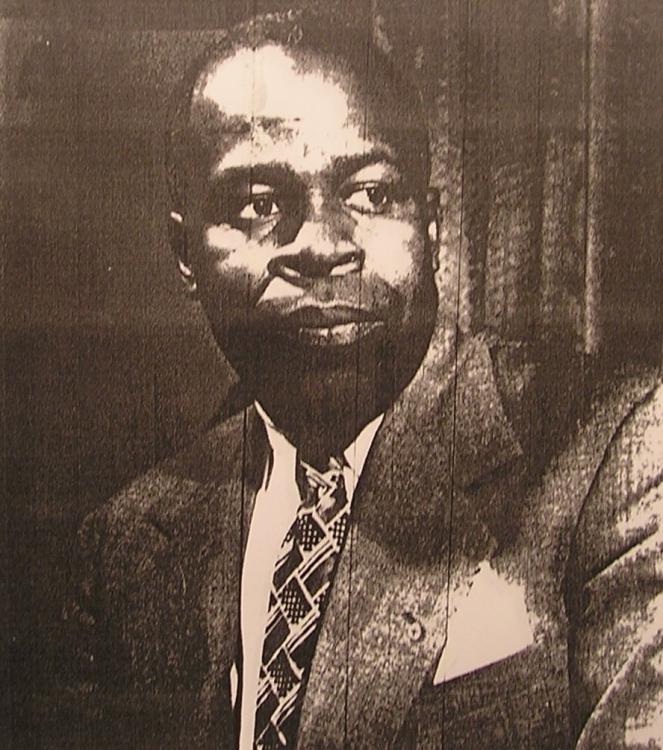
The only person of African descent known to have had a face-to-face conversation with the infamous Nazi Führer Adolf Hitler was the economist Milton Samuel J. Wright. Born in Savannah, Georgia, on June 28, 1903, the son of William Wright and Edith Burnside Wright, he graduated with a bachelor’s degree from Wilberforce University in Ohio in 1926, then earned his master’s degree from Columbia University in 1928.Like a handful of other black Americans who found graduate study in pre-World War II Europe intellectually challenging and noticeably less hostile to their presence (W.E.B. Du Bois, Alain Locke, Mary Church Terrell, Anna J. Cooper, and Mercer Cook among them), Wright pursued his doctorate in economics at the prestigious University of Heidelberg, founded in 1386. As a student leader he had earlier been invited to attend international student conferences at the University of Cologne in Germany and Oxford University in England. In 1931 he published an article in the NAACP’s magazine, The Crisis, detailing his private efforts to launch student exchange programs between historically black institutions in the United States like his alma mater Wilberforce and German universities.
In Heidelberg in the summer of 1932, after viewing a regional political rally with some German friends and hearing a typically demagogic speech by Adolf Hitler, Wright had the misfortune of being overheard joking to his friends that he would be willing to assassinate the future dictator. He was accosted by SS guards as he approached a restaurant in the Europäischer hof Hotel in Heidelberg where, coincidentally, Hitler was staying and had ordered Wright to be brought to him.
Wright, fluent in German and well aware of Nazi ideology, entered Hitler’s room with extreme trepidation and feared he might not leave alive. As recounted years later in the Pittsburgh Courier and Ebony magazine, their “conversation” was pretty much a one-way affair with Hitler asking then answering his own questions to Wright in a calm but rather loud voice. Though indicating to some extent he was aware of the history of blacks and that he respected Booker T. Washington and Paul Robeson, Hitler, less than six months away from becoming Chancellor of Germany, nonetheless asserted educated blacks like Wright were certain to be “miserable” because they were forever destined to be “a third-class people, cowardly slaves, and mere imitators of superior races.” “Your people are a hopeless lot. I don’t hate them,” he said, “I pity the poor devils.”
Wright’s ordeal lasted four hours but Hitler had been surprisingly courteous, had complimented Wright’s excellent German, suggested they meet for another session in Munich, and gave Wright an autographed photo of himself as a memento. Having survived this bizarre, improbable encounter with Hitler, Wright, who had recently finished his dissertation, titled “The Economic Development and the Natives Policy in the Former African Protected Areas of Germany from 1884 to 1918,” returned to the United States and resumed employment at Samuel Huston College in Austin, Texas. In 1934 he married the former Sue H. Hurt. For nearly four decades Wright taught and was an administrator at Wilberforce where retired in 1969 as Professor of Economics and Political Science and Vice President for Research.
Milton S. J. Wright died March 11, 1972 in Xenia, Ohio, survived by his daughter, Francine. He was 68 at the time of his death.
Article
https://www.blackpast.org/global-african-history/milton-s-j-wright-1903-1972/MY THOUGHTS
Hitler mentioned Booker T Washington and Paul Robeson by name as he was aware of them. What does this prove? Hitler isn't satan. Hitler isn't the devil. Did hitler do many negative things to some people. Yes, without question. But, no human is satan, no human is the devil. My proudest moment of Nelson Mandela's life outside prison is when he honored Khadafi, when the USA side Europe felt he should not. Mandela responded, Khadafi helped my people. No one is satan. Hitler pitied Black people in the USA. The sad truth is his pity was well placed. if you consider the existence of the Black community in the USA from between the two phases of the world war to 10-25-2022 , it warrant pity, pitiful to be honest. The black community in the USA has sacrificed its own self, to aid reaching a goal its leaders nor its people originally wanted. At the end of the day, all the Black people chastised in the Black people for wanting to harm the non blacks who harmed blacks by other black people have nothing to weigh how they were treated except a bunch of disparate distant individual examples in a community bereft of any symbol of collective or communal strength in the usa, while surrounded by various communities seemingly disinterested in reaching the goal they were chastised by their own phenotypical kin for. quite sad.
IN AMENDMENT
They Translated ‘Hamilton’ Into German. Was It Easy? Nein.
For the musical’s Hamburg premiere, a team wrestled with language and cultural differences to bring the story alive for a new audience.
https://twitter.com/BGCSinc/status/1579104699617538054 -
Chun Li in barcelona
richardmurray commented on richardmurray's blog entry in BlackGamesElite's BGE Journal
FROM Techamazing How to make a nice toy from staples https://twitter.com/TechAmazing/status/1583939861886939137?s=20&t=ByP3U2lH9-9tJauPSJr-nA FROM Tofusenshi Art - ends october 30th Running a Twitter giveaway for a free portrait commission! The only rule is to retweet, anything else is optional. :3 Enjoy:) https://twitter.com/Tofusenshiart/status/1584262972456996864 -
FROM
Olayemi Olurin (@msolurin)
2022 just became one of the deadliest year in Rikers history—a 17th man was just found hanging in his cell. We know Rikers is a human rights crisis, we know Rikers needs to close, but what can we do in the interim to stop the deaths? RECEIVERSHIP. What’s that? I’ve explained here
VIEW VIDEOsource
https://twitter.com/msolurin/status/1583885501374771201
-

Come smell my stank. I will be uploading many different aromas, including random smutt sketches, 30sec videos, and much more random adult tings.
See what a deranged middle age black woman likes to draw whenever she can. Please become a Stanky fan.
With Love,
DjDontTouchTheTrim aka DjDt3
$2 a month
https://www.deviantart.com/djdonttouchthetrim/tier/Stanky-smutty-sketches-and-stuff-896496956
-
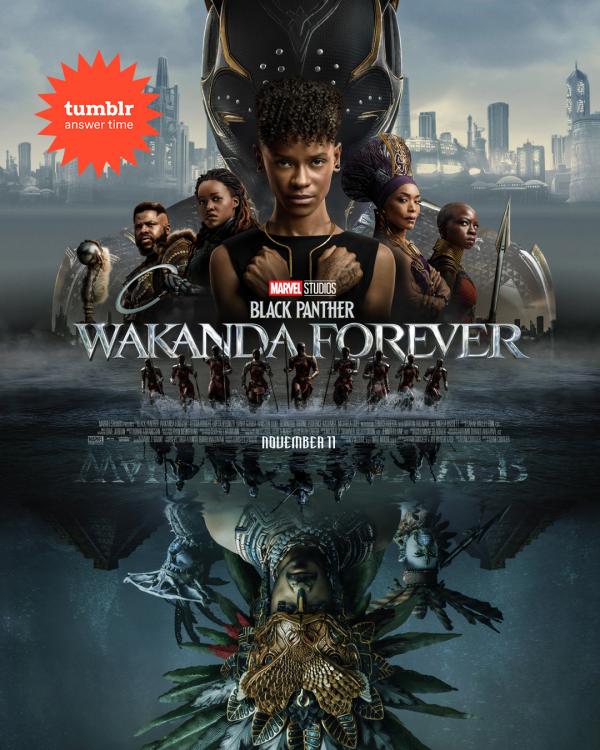
ARTICLE
https://marvelstudios.tumblr.com/post/698651825635737600/join-the-cast-of-black-panther-wakanda-forever
Join the cast of Black Panther: Wakanda Forever, and director Ryan Coogler, for an Answer Time on November 9th at 12pm PT / 3pm ET. Submit your questions here.
http://marvelstudios.tumblr.com/ask
-
Photographer: JAVIER IBAÑEZ GRAFFITIS BARCELONA 2022 GRAFFITIS BARCELONA 2022 | JAVIER IBAÑEZ | Flickr Title: SONIC in underhill brooklyn Photographer: Julia O
-
In Detroit, Why There's No Black Democrat on the Ballot for Congress
Clyde McGrady
Mon, October 24, 2022 at 2:25 PM·9 min read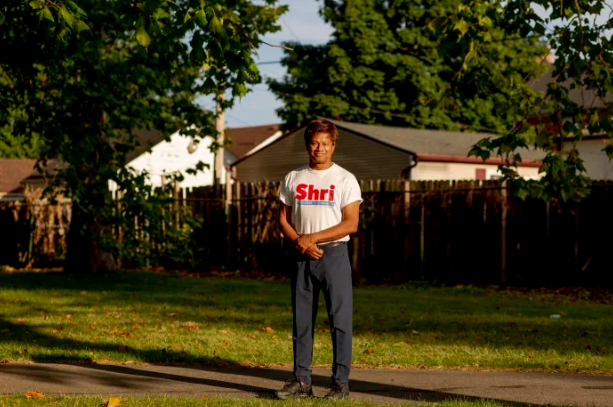
State Rep. Shri Thanedar, a 67-year-old Indian American multimillionaire and political newcomber, in Detroit, Aug. 27, 2022. (Sylvia Jarrus/The New York Times)DETROIT — On a recent sunny Saturday afternoon in a neighborhood park in the middle of this sprawling city, residents were distributing free backpacks for students heading back to school. Girls sat patiently under a pop-up tent to get their hair braided, while other children gleefully leaped and collided in an inflated bounce castle.
One person stood out in the mostly African American crowd: a slim, 67-year-old Indian immigrant in a white T-shirt and dark pants, hopping from tent to tent and chatting with parents and neighbors, who seemed excited to see him.
The man, state Rep. Shri Thanedar, had beaten eight Black candidates in a primary to become the Democratic candidate for Michigan’s 13th Congressional District — meaning that for the first time in almost 70 years, the nation’s largest majority Black city is unlikely to have a Black representative in Congress.
Sign up for The Morning newsletter from the New York Times
His victory set off waves of anxiety among Detroit’s Black political leaders, who tried desperately to prevent Thanedar from winning. (A primary win in such a heavily Democratic district is tantamount to being elected.) Black leaders describe it as “embarrassing” and “disappointing,” and argue that Detroit should have representation that reflects its population, which is 77% Black. Three-quarters of Detroit voters supported a Black candidate.
The outcome is also testing the limits of racial representation in a city with a long tradition of Black political power — at a time when that power is being challenged and drained on other fronts. In Los Angeles, the City Council was recently shaken by the release of secret recordings of racist remarks and efforts by Latino leaders to shrink Black influence in the city.
Detroit began sending two Black delegates to Congress in the 1960s, and elected its first Black mayor in 1973. By the 1980s, Black membership and status in the state legislature was rising, and half the City Council was Black.
Now, the challenge to Black political power in Detroit comes from divisions within its own leadership and from constituents. Reapportionment cost Michigan a House seat last year, and the newly redrawn district maps reduced the number of Black voters in the 13th District. After years of severe economic insecurity and a string of political scandals, some residents are showing a willingness to try something new.
In 2013, Detroit elected Mike Duggan, its first white mayor since the 1970s — the same year that a former mayor, Kwame Kilpatrick, was convicted of charges including racketeering and extortion. Five years later, Rashida Tlaib became the first woman of Palestinian descent to be elected to Congress, when she won the seat once occupied by John Conyers Jr. — a towering figure in Detroit politics who resigned over sexual harassment allegations.
Those victories and Thanedar’s point to an emerging sense among some Black constituents that the psychic, emotional and symbolic benefits of racial representation may not have materially improved their lives.
“Well, let’s go back years and years and years, and see that when we had those people in office, they all didn’t meet up to what they said they met up to,” said Kimball Gaskinsel, a 58-year-old Black man who helped organize the backpack giveaway in the park. He said of Thanedar, “Let’s give the man a chance.”
Detroit’s population has fallen by more than 1 million since 1950, and for decades, its leaders have been promising a renaissance. Since emerging from bankruptcy in 2014, the city’s core has managed an impressive revival: Its downtown sparkles with new restaurants, shops and hotels. But Detroit’s comeback is limited and uneven, highlighting racial and economic disparities that have long frustrated residents.
Between 2010 and 2020 the city lost about 93,000 Black residents, many of whom departed for metro area suburbs, while gaining slightly more Asian and white residents, and people who identify by more than one race.
In 2021, the unemployment rate among Black residents of Detroit was 20%, compared with 11% among white residents, according to research based on census data. The median Black household earned a little less than $35,000, when rising rents and inflation began to eat into family budgets.
“It kind of irritates me to see downtown being built up and the neighborhoods being neglected,” said M. Lewis Bass, a 71-year old tenant organizer.
Bass, who is Black, voted for Thanedar in the primary. He said he liked Thanedar’s tendency to pop up at community events. “It shows a genuine interest in the citizen,” he said. Bass expressed hope that Thanedar would work to curb landlord power and address rising rents and evictions.
Other Detroiters say that residents will be worse off. “It’s disgusting” for the city to be without a Black representative, said Stevetta Johnson, 73. A retired social worker who leads the Trade Union Leadership Council, Johnson said she was concerned that a representative of another race wouldn’t look out for Black Detroiters when it comes to bringing money and resources into the city.
On the surface, Thanedar, who arrived in the United States in 1979 and later started a successful chemical business, might seem to be an unlikely politician to represent the newly redrawn 13th District, whose population is now 45% Black.
He is a wealthy man who lived in Ann Arbor before moving to Detroit three years ago. He spent $10.6 million of his own money on an unsuccessful run for governor in 2018, and he has so far spent around $6 million from his own pocket on his congressional campaign.
Activists and voters in the district’s poor and working-class neighborhoods point to how Thanedar seems to show up everywhere — at jazz concerts, at tenant meetings — repeatedly, and sometimes unannounced.
At the backpack giveaway, Thanedar told a mostly Black audience that students deserve a quality education “no matter what ZIP code they live in,” because “we are all children of the same God.” He encouraged voters to hold him to his promises. “You can have my cellphone number,” he said. “Call me.”
He ended his talk with, “I love you all.” The small crowd erupted in applause.
Thanedar often reminds Detroit voters of his humble beginnings. He said he wants to increase Black entrepreneurship, close the racial wealth gap and improve the quality of education.
For Leslie Ford, 50, a born and raised Black Detroiter who runs a nonprofit group, racial representation isn’t much of a concern. “It’s all about the person that’s showing that they care for real,” she said.
Thanedar’s supporters say that financing his campaign himself shows how much he cares, and that he isn’t beholden to special interests. “He did everything with his own money,” Ford said.
Thanedar says he is not naive about the challenges he would face in representing such a diverse district. It includes part of Detroit, several white, working-class “Downriver” communities, and the wealthier suburbs of the Grosse Pointes, with tree-lined streets of brick houses with lawns as manicured as Centre Court on the first day of Wimbledon.
He said he contacted the Congressional Black Caucus about joining once he is elected, but he learned that the caucus’ bylaws allow only Black members to join, a restriction that he says he understands.
Political observers say that many factors contributed to Thanedar’s victory. The district’s newly drawn boundaries take in some whiter, more conservative communities outside Detroit. Low voter turnout and a crowded primary allowed Thanedar to squeak through with just 28% of the ballots cast. Even so, political leaders say ignoring Thanedar’s ability to appeal to Black voters would be a mistake.
“I don’t think we can say, ‘Next time, if it’s just one Black person and Shri, it’ll be different,’ said Portia Roberson, a former Obama administration Justice Department official who lost to Thanedar in the primary. “I think that’s naive on our part.”
Detroit elected Charles Diggs to be Michigan’s first Black member of Congress in 1954, and stood by him even after he was charged with taking kickbacks from employees. Since then, the city has elected Black leaders who became major figures in national and state politics, like Conyers, Carolyn Cheeks Kilpatrick and Brenda Lawrence, all of whom represented parts of Detroit. In Washington, Black leaders from Detroit became prominent in the Civil Rights movement. At home, Conyers led the political establishment, selecting candidates and wielding influence over party loyalists and voters.
But corruption scandals and years of economic stagnation left many voters disappointed with machine politics and open to letting pragmatism rather than loyalty sway their choices.
Much of that sentiment came from the downfall of former Mayor Kwame Kilpatrick, who was first elected in 2001 and resigned in 2008 following a bribery scandal.
“Kwame Kilpatrick broke my heart. I can’t take another chance,” state Sen. Adam Hollier recalled a voter telling him. Hollier, who came in second to Thanedar in the primary, said he tried to position himself as someone other young Black men could look up to.
The lack of a clear succession plan when Brenda Lawrence decided to retire from her seat in Congress led to some disarray among the city’s political establishment.
As candidates leaped into the race, competing camps backed two different contenders, in an effort to whittle the field. Only one candidate dropped out, and the endorsement process inflamed tensions over gender dynamics.
The Legacy Committee for United Leadership, a coalition of religious, business and political leaders, endorsed Hollier. But Lawrence and the local Democratic Party organization threw their support behind Roberson, the former Obama administration official.
The fracture helped Thanedar win the primary. It left the Republican nominee, Martell Bivings, as the only Black candidate for the seat in the general election.
Bivings, 35, has been making the case that Black representation matters, in ways both subtle and explicit. He poses questions on his Facebook page like “Do you play spades?” and has tweeted that he’s the only candidate who “knows what it feels like to be Black in America.”
Bivings said in an interview that his message is being well-received by Black voters, and centers on “family values, praying in schools” as well as gun rights and lower taxes. “Your auntie supports all of those,” Bivings said. He said he supports reparations for slavery (as does Thanedar) and school choice.
The odds are heavily stacked against Bivings. In 2020, both Tlaib and Lawrence beat their Republican challengers in Detroit with more than 90% of the vote.
Do any of Detroit’s Black leaders plan to back Bivings? The Rev. Wendell Anthony, a member of the committee that backed Hollier, laughed heartily at the question, before revealing that Bivings had reached out about a meeting. “I’ll talk to anybody,” Anthony said.
This month, the conservative editorial page of The Detroit News endorsed Bivings, writing: “African Americans argue that this predominately Detroit seat should be held by someone most familiar with Detroit’s challenges. We agree.”
© 2022 The New York Times Company
Article
https://news.yahoo.com/detroit-why-theres-no-black-182550365.html
MY THOUGHTS
... MLK jr would say, judge him by the content of his character
Marcus Garvey would say, leave the USA to him, and take everybody you can with you to a different place, even if it isn't better on day one.
The Free Blacks who fought for the United Kingdom against creating the USA would say, attack the USA federal government and Michigan and detroit with him in it.
My point is, depending on yourself, your relationship to the usa government, to white people, to various factors you will relate to this story, no position is wrong.
I will add one thing, It's funny how a city that the article deems is seventy seven percent Black who feels black elected officials of the party of andrew jackson or abraham lincoln has failed, don't seem to have anyone suggesting a black party in detroit.
IN AMENDMENT
What do you think of a Black party of governance LINK
-
glad you two @ProfD + @Pioneer1 enjoyed
-
A question of orgasms or fellow men we have it easy
richardmurray replied to richardmurray's topic in Culture, Race & Economy
well, I thank all of you @ProfD @Pioneer1 @Cynique for your comments, this topic, or similar are not easy. No matter what any one says, we all know the truth to ourselves. But I hope all answer privately, think on it, and share with significant others, whomever they are. -
Title: You're Fired Author: Richard Murray https://www.deviantart.com/hddeviant/art/You-re-fired-934205908
-
I will share:)
-
My entry to All Hallows Tales
Title: You're Fired
Author: Richard Murray
https://www.deviantart.com/hddeviant/art/You-re-fired-934205908Rules of entry, give it a go , last day is 10/25/2022
https://www.deviantart.com/thornyenglishrose/journal/All-Hallows-Tales-Nightmarish-New-Beginnings-931458838Gallery of entries
https://www.deviantart.com/thornyenglishrose/favourites/92967413/aht-2022 -
Lupita Nyongo truth and more
richardmurray replied to richardmurray's topic in Culture, Race & Economy
@Chevdove oh, well glad I informed:) it was a great documentary film. was fair to mom's mabley. For those who love comedians it is a gem. In my assessment of history , east africa or west africa had black people involved in stealing other black people. For me, I don't find insult in the dahomey female warriors. I have known about them since I was a kid. I knew they served the king of dahomey, who legends say, was presented as a boogeyman to the children of west africa. This is again an ancient thing, common throughout all humanity, usually unbounded. Anyone can be enslaved in dahomey, just like in the roman empire, just like in qin, just like in tenochtichlan. The American continent post 1492 was the first place that made slavery bounded. All of a sudden, a white man , no money , illiterate, alone, can not be enslaved. In the roman empire, he would be enslaved. Someone would catch him. If any group that dealt with high volumes of enslaving other individuals can not have a movie made about them then, no movie should be made concerning any history before the 1900s. And then the question is, why should the black communities old or ancient slavers be undepicted while everyone else's is? But comprehend Chevdone , I know your thinking. I am not saying I concur to your thinking but I comprehend it. Al sharpton who I strategically oppose, said a simple truth, about Black people committing violence in the USA, if you are going to preach nonviolence you have to be nonviolent yourself. it is lead by example. It means black non violent leaders chastise black people committing violence. It doesn't mean other communities follow yours or follow the black community. It means you don't just talk the talk, you walk the walk, and demand others in your community do the same, no matter the outcome. Black statians from Frederick douglass onward has always upheld the idea that government protected universal individual rights is more important than black advantages. It isn't that they hate Black collective or communal activity, but their idea is, even if Black groups are poor , if all Black individuals have a platform to positive, that can make everybody in the black community positive even if the black community collective management is poor. I comprehend why this beautiful film, in art or production, in my view, is insulting to you. It isn't just slavery, it is black people involved in it, like an everyday. You like quite a few others in this forum champion government protected universal individual rights, by default slavery allowed under any government means that government does not protected universal individual rights, and I comprehend why you have such negativity to that. -
Lupita Nyongo truth and more
richardmurray replied to richardmurray's topic in Culture, Race & Economy
@Chevdove yes and all to often independent film makers don't list the money they borrowed for a film. Which can be done against their name. When whoopie goldberg did mom's mabely film she needed crowdsourcing and people were surprised. what they didn't realize is that even though she was the executive producer she needed loan money she couldn't get for a mom's mabley film. I don't imagine many bank executives knew of mom's mabley. right and lupita is from east africa, not west africa. she has a more regional connection to the slavery activities around zanzibar or other muslim states in or around east africa. Which most black people in the usa are very unfamiliar with. -
Lupita Nyongo truth and more
richardmurray replied to richardmurray's topic in Culture, Race & Economy
@ProfDtrue words @Pioneer1 yes proves times do change for the better -
When do you think the average woman in the usa had her first orgasm? When do you think the average woman in humanity had her first orgasm? https://aalbc.com/tc/profile/6477-richardmurray/?status=2121&type=status
-
The. Woman. King. New. Movie.
richardmurray replied to harry brown's topic in Culture, Race & Economy
For anyone who didn't know, Lupita Nyongo has no problem with the woman king or the movie from natalie portman that she dropped out of. She just wants medium to smaller film projects to be a part of,independent films saying different things. That makes sense, she didn't want to be part of the Legend of the Dorie Malaj aka The Woman King. MEaning what? Lupita knows this movie is made cause of the very popular dorie malaj of black panther. Viola Davis didn't produce this movie all by herself. And like Natalie portman's movie, whatever it is, it is probably a similar theme thing, like maybe a female superhero story. https://aalbc.com/tc/profile/6477-richardmurray/?status=2120&type=status @Troy to answer your question. The Woman King will win academy awards. The fight choreography/viola davis lead female/maybe the film of the year itself, but the year is long. Everything everywhere all at once has a shot at film of the year too. Brad pitt's train film and maverick have chances too. To black people looking for wakanda in real life, I think you miss the larger question. How many black people in the usa like it? It seems in my mind an obvious question to ask , and one that is historically providing mostly a negative answer from black folk. I realize many black people have come to terms with the usa or more positively , but I find said black people have a hard time comprehending many black people are not happy in the usa and , because all the historical railroads out of the usa were never as comprehensive or as fruitful as they needed to be, black people in the usa have many members who are looking for a land to escape the usa the way the white religious outcast or fiscal poor fantasized about the usa to escape abuse in the united kingdom. Unfortunately, or maybe fortunately, for black people in the usa, all of earth has been occupied:) so, no lands to easily take from another human people's who are biologically untouched by a virus we carry or ignorant to weapons we may wield. -
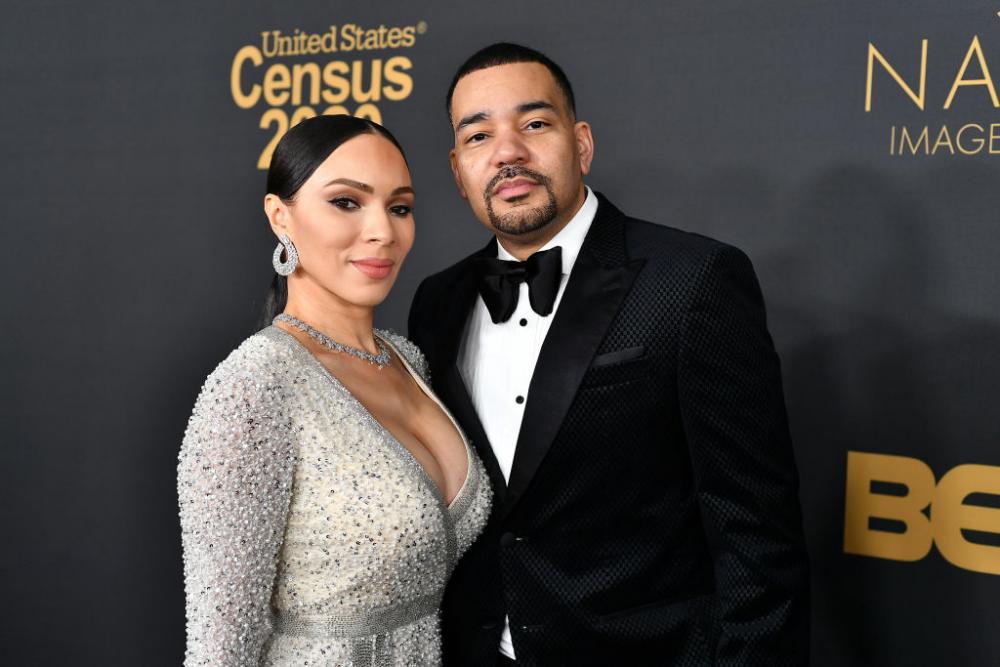
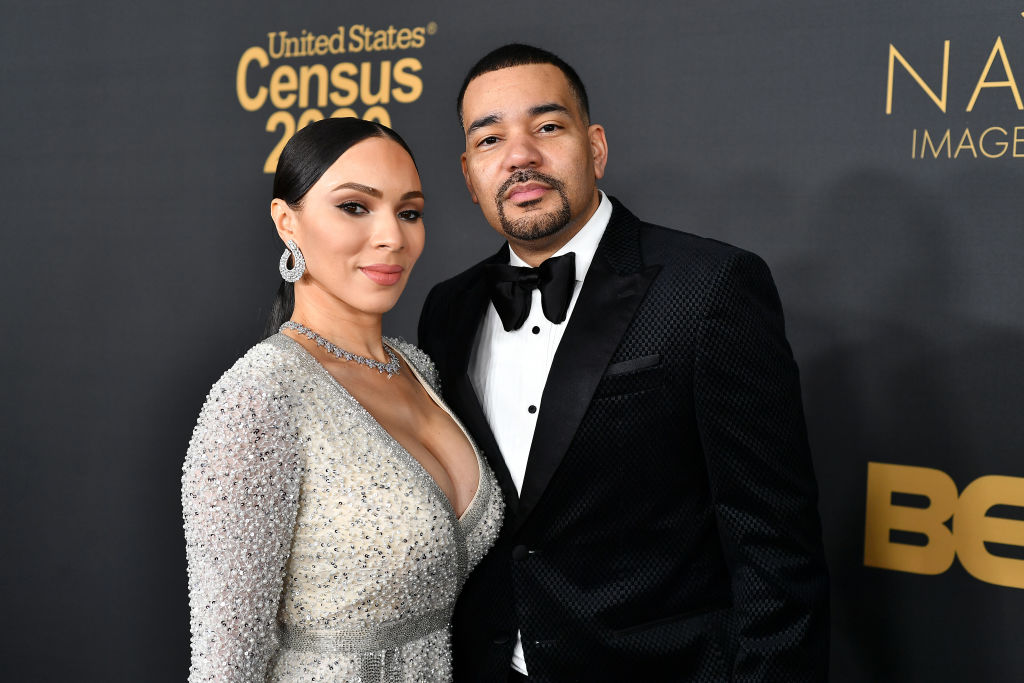
Celebrity DJ’s Wife Faked Orgasms for 10 Years of Marriage because of ‘Not Knowing Her Own Body’
(Photo by Paras Griffin/Getty Images for BET)
Popular daily radio and vlog show, The Breakfast Club co-host DJ Envy and his wife Gia Casey have been in the news lately, and not for their job. Gia has admitted she had faked orgasms for 10 years of her marriage. It was something she said she did repeatedly and consistently. The couple sat down with The Shade Room to have an intimate chat and discuss their new book Real Life, Real Love: Life Lessons on Joy, Pain & the Magic That Holds Us Together.Casey started the conversation about her struggle to reach a climax with her husband because it is a part of the book, which is available now. The radio personality, as Casey shared, was her first and only because they met in high school.
“Most young girls and even many, many, many women, I’m sure so many women can relate, don’t know how to achieve an orgasm,” she said. “A lot of women have no idea what it feels like to have an orgasm through sexual intercourse.”
“We would be intimate and he would be putting his best foot forward…he lives to make me happy. So I would see him trying and really going to work,” she continued. “You want to reward that man for that work and the only reward that you have to offer is an orgasm. But even if I didn’t feel it, I would still be performative.”
In retrospect, Casey says she realized he couldn’t help her reach orgasm because she didn’t know what she needed to get there.
“He was doing everything a man could do to please a woman. The problem was, I didn’t know my own body,” she admitted.
This is more of a common problem for women than you think.
According to the published Journal of Sex and Marital Therapy, a whopping 81.6% of women don’t orgasm from intercourse alone (without additional clit stimulation). And nearly 15% of women have never orgasmed ever!
Not reaching an orgasm makes a great number of women feel inadequate, as if her sexual equipment is broken, leading her down a path of exploration to seek and find the BIG O. After trying many positions, reading self-help books and buying dozens of toys, some women remain unaware of exactly what an orgasm is and why it is so difficult to reach one. So the question is, why is it so difficult for women to reach orgasm when men seem to be able to reach sexual bliss so easily?The answer actually consists of a few parts:
1. Women need more than entry to orgasm.
Inserting part A into slot B is the typical sexual situation that the average couple believes will enable both partners to reach a climax, but in actuality women need more than vaginal penetration in order to reach an orgasm. About 70% of women need clitoral stimulation along with penetrative sex in order to reach an orgasm. The clitoris is made up of 8000 nerve endings making it the most sensitive body part on a woman, so it needs love and attention as does the rest of the body during sex!During penetration, the clitoris is stimulated from the inside because of its legs that extend deep into the vagina, but for most women that internal stimulation isn’t enough. DIRECT contact is where it’s at! Sex positions that position the pelvises close together, oral sex during foreplay or using a clitoral vibrator during sex are great ways to ensure clitorial stimulation is achieved during intercourse.
2. Women’s sexual energy starts in the brain.
Sexual energy is a vital source of energy that gives life to every living being on the Earth. When it comes to men and women, sexual energy originates in different parts of the body. In men, sexual energy originates in the pelvis, which explains why men are ready for sex in 20 seconds as opposed to the 10 minutes it typically takes a woman’s body to be ready for intercourse. Women’s sexual energy originates in the head, so in order for the genitals to be in a state of welcoming and wanting, the energy has to travel down the spine into the pelvis, and that is some distance to travel!
This fact is one that many women are unaware of, and furthermore, many women have no idea how to move the energy from the brain into the pelvis. Through meditation, concentrated breathing and focusing the mind on the pelvis, sexual energy can move from the brain into the genitals where it belongs during sex. This technique has to be learned and it takes some time to master, but once a woman knows how to transfer that energy where it needs to be, orgasm during sex can be achieved with ease every time.3. Women live in their heads
“What should I make for dinner tomorrow?” “I wonder what the kids are doing right now.” “OMG! I s he looking at my stretch marks?” “Ew, his breath smells like Doritos!” These thoughts and more are things that can roll through the minds of women during sex. Women tend to live in their heads and think about everything but sex during sexual experiences, which causes disconnect between the brain (where sexual energy originates for women) and the genitals that need to connect with the sexual energy. When the mind is everywhere else besides the moment of sexual pleasure, the body will not respond to the typical triggers that should send it into an orgasmic frenzy.
In order to bring the body closer to a climax, the mind needs to be cleared and freed of anything that isn’t sex within that moment. Meditation, a pre-performance massage, stretching or even a hot bath or shower are all great ways to mellow out before the fun begins. Leave all of the thoughts about work, children and body issues at the door. Leave the mind open to register touch, smells, sounds and every other sensation associated with the sexual rendezvous taking place in the moment. Live in the moment!Every woman has the parts necessary to orgasm and can learn how to achieve the greatest climax of her life; it just takes dedicated and focused intention and a little practice to get there.
April 27, 2022 by Tamara Gibson
ARTICLE
https://blackdoctor.org/dj-envy-wife-fake-orgasm/
MY THOUGHTS
I said the following a trillion times and I will say it a trillion and one, If you define virginity by first orgasm, most women are virgins into their 30s. ... I want to state other, most women in the usa are virgins based on the stated elemental into their 30s but outside the usa into their late 40s.
What is telling? Somehow this isn't common knowledge.
When a woman orgasm what happens? The vaginal walls pulse rapidly. This is to coax the penis to ejaculate. Saying the vagina will aid in pushing the sperm to the egg.
Why are vaginas tight? Lack of use. Girls, meaning any female who never was head of household, have no experience fornicating, thus tightness. Usually , women , meaning any female who lived or lives as head of household, has tightness if she has not fornicated in a long time, side another or with a tool. Tightness of vagina has nothing to do with vixen qualities. Think of the vagina like your leg. Have you ever sat down to o long and your leg started to cramp. Well that is something like a vagina unused for months. If someone told you to start running as fast as you can after sitting down without moving for hours it will hurt right? that is what happens when a vagina has a penis rummaging in it. The better thing for your leg is a massage to prepare to run. The vagina needs the same patient care when unused.
In the article the woman in question states a simple truth. No matter how much a man is gentle or caring, a woman may not orgasm. It isn't about being loved it is about knowing oneself. This knowing requires experimentation with one self.An eventually side the partner. Being great in bed as a couple demands the two learn what will make them great in bed. It can not be assumed or forced.
In terms of pleasure, everyone is unique in what gives them pleasure and how two people find pleasure is also unique, but in either case it takes time, trial and error to know.