


Leaderboard


.jpg.473e1f1051552796800f1e62b10321ca.jpg)
.thumb.jpg.3bf9f25532a7944736ddb02aa1b64269.jpg)

Popular Content
Showing content with the highest reputation on 05/30/2016 in all areas
-
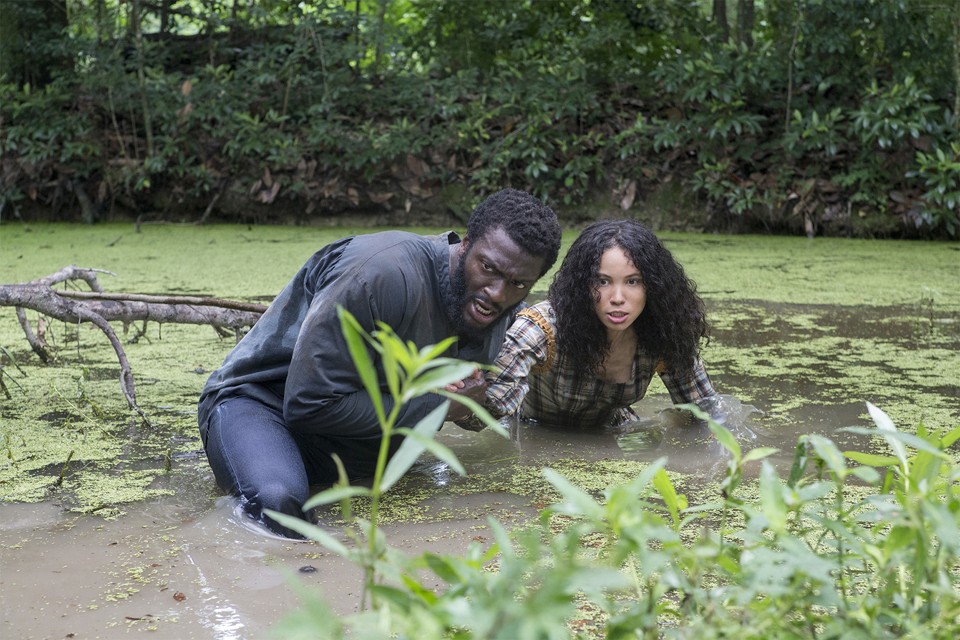
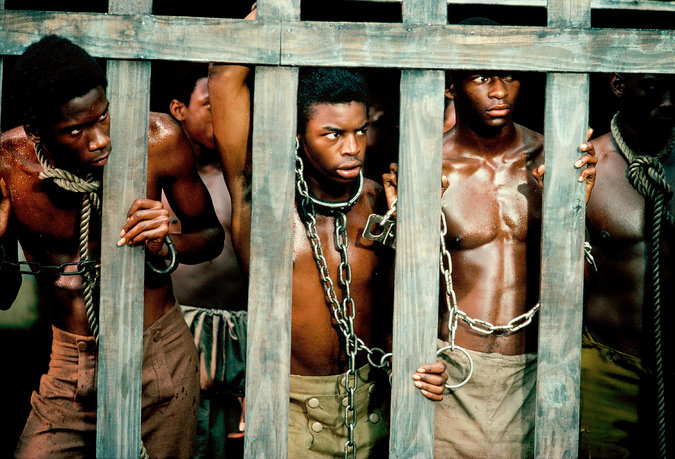
This is picking up on the Roots conversation started by Harry which segued into a conversation about Race. I still don't think remaking Roots was necessary given, as we've discussed the great many other stories which have yet to make it to the screen. It is curious The Atlantic failed to mention the fact the Alex's story was largely fictional, as if this does not matter. When Roots broadcast it was presented as truth. (@Sara, do you think Haley would have paid over $500,000, in an out of court settlement, for plagiarizing a single paragraph?) The Atlantic did mention Nate Parker’s record-breaking Birth of a Nation. I heard something about a film being made sometime ago, but I have heard nothing about a finished film until now. I own the original Roots novel and DVD. Over the years I've tried to get my own 20 something daughters the watch the Roots miniseries, but they have no interest in seeing it. I have not spoken to them at all about this new version. I will watch it. i will try to keep an open mind and manage my expectations. Why the Roots Remake Is So Important by STEPHANE DUNN The Atlantic, May 29, 2016 In an age of remakes and reboots, it’s no surprise that A&E announced that it was “reimagining” the epic drama in an effort to appeal to a new generation of viewers. The four-part miniseries, which begins airing Monday, is executive produced by Mark Wolper, whose father David Wolper helped create the original Roots with Haley. While it may be easy to question the worth of a remake given the original’s masterpiece status, A&E’s Roots has the kind of high production values that can better translate the visual power of its predecessor to younger audiences. But more importantly, the new series brings new light to the misperception that popular culture has done a good job telling stories about slavery and black history in the decades since Roots first gripped the U.S. To date, America’s most defining chapter, slavery—with all of its complexity, contradictions, and endless fictional and true narrative possibilities—has been under-treated by Hollywood. The recent visibility of films such as the Oscar-winning 12 Years a Slave, Nate Parker’s record-breaking Birth of a Nation, the intriguing, savvy WGN series Underground, and Django Unchained, Tarantino’s fantastical slave era-cowboy hero flick—might make it appear otherwise. (BET’s unusual but laudable 2015 effort, The Book of Negroes miniseries, failed to widely engage American viewers.) read the full article Why America Forgot About ‘Roots’ By MATTHEW F. DELMONT The New York Times, May 27, 2016 But “Roots” fell out of favor almost as quickly as it rose, in part because Haley’s story started to unravel as soon as it was in print. He relied heavily on an editor to finish the book and later paid over half a million dollars to settle a plagiarism suit. Other people were upset with the way ABC, Haley and Doubleday, his publisher, seemed to be wringing money from the history of slavery. It was also hard for people to pin down “Roots.” Was it fact or fiction? Haley, who died in 1992, said it was a bit of both, a mix of archives, oral traditions and imagination in a composite narrative he called “faction.” The television version complicated matters further, insisting that the production was based on a true story while billing the series as an “ABC novel for television.” If “Roots” was too fictional for most historians, its version of historical fiction was not literary enough for English departments. “Roots” is notably absent from The Norton Anthology of African American Literature, which runs to nearly 3,000 pages. The literary critic Arnold Rampersad described “Roots” as being “so innocent of fictive ingenuity that it seldom surpasses the standards of the most popular of historical romances.” read the full article
 1 point
 -
Sara it would be a less cluttered and easier to follow your points if you did not quote everything others wrote in your responsest. Your response to me is more difficult to parse than necessary because me quoted text and your response is formatted exactly the same. If you are reply to a question I posted a few hours ago it is not necessary to quote me, I'll remember what I wrote. I did post the link to the Times article. Sorry if I come across snippy, but you know you never move from a position once you've asserted it. You wrote only one paragraph was plagiarized, emphasising only one. Because it was absurd on it's face I challenged on on it. But once it became clear that there was obviously more than one paragraph copied you called into question the journalism of the paper of record and shifted the argument to focus on whether Haley intended the book to be pure fiction versus an account of his family's story. Unfortunately I don't really care enough to hunt down a link to determine when/if haley flipped flopped on his description of roots. Besides, despite popular belief, not everything can be found in a Google search. To properly establish the chronology of statement would require some good old fashion research to establish a timeline. We do know Haley's genealogy as presented in Roots can't be substantiated. Is the book worthless--compared to what? Compared to a well written historical fiction novel--yes. What made Roots so very compelling (at least for me) was that is was presented as truth. Once it was revealed for what it is, the novel is was down on my list, and is only interesting as far a fraudulent literature is concerned. But again you assert that the book was always presented a fiction, but that is not my recollection and you apparently have no memory of the period and are relying on the echo chamber of lies bouncing around the web. In fact, all of Haley work is suspect as far as I'm concerned including the biography of Malcolm X.1 point
-
1 pointI'm not doing any research on this, but by "most" maybe a quarter are homeless and vets. Okay I did some research just now: " In January 2014, communities across America identified 49,933 homeless veterans during point-in-time counts, which represents 8.6 percent of the total homeless population. This represents a substantial decrease (67.4 percent) in the number of homeless veterans counted only five years previously in 2009.i Though veterans continue to remain overrepresented in the homeless population in America,ii these recent decreases demonstrate the marked progress that has been made in ending veteran homelessness. " http://www.endhomelessness.org/library/entry/fact-sheet-veteran-homelessness I would explain this by saying (because I served for a total of 8 years, my sister served 10, her husband served, 20, and I can go down the list of veterans I know for my own evidence) the homeless vets failed to actually choose a school or a skill. A lot of guys go into the service without knowing what is available. After the first tour/duty station, you become aware of opportunities and at this point you can do what is called striking in the Navy/Marines. You can choose a school. I've seen first hand guys say, "F That" and just finish and get out. Without a doubt those guys are often infantrymen or guys without jobs so they leave without a skill and worse they are the guys who spend the majority of time in the trenches. I am sure that the number drops considerably in the homeless ranks when you begin looking at those who had training/jobs and school. Once again, being in the military gives you a certain amount of clarity when discussing this. Your being the family member has it's own "qualities" that are a factor and should be discussed, but in no way qualifies you to speak with the same certainty that a person who served can speak.1 point
-
1 pointI went to the military because it offered an alternative to the path I was heading. Most of the guys that were in my boot camp company (they came from all walks of life) chose for a variety of reasons. There are too many reasons to list, but every one of us by the end of boot camp were proud of what we accomplished and felt an attachment to this country that I haven't lost. It's probably why I see so many positives in the country where a lot of people don't see the same positives. My service has influenced me to say on many occasions that all kids should serve in some capacity. I know this is a thought that is very confrontational and creates a ton of arguments, but the camaraderie and learning that is available surpasses any college instruction that a person can get on many levels. Particularly when I measure it against an AA or Bachelors. There are different levels in the military of course. Officers hold degrees Warrant Officers can have a degree, but it's not a necessity. Non commissioned officers can pursue a degree and have a degree, but aren't commissioned officers. An enlisted guy can apply for Officer Candidate school while he is enlisted. It's rare to be accepted but it happens. A kid straight out of high school typically has to get an appointment to one of the Officer programs. This appointment typically comes from a congressman. The military is an incredible opportunity for any person interested in serving. When I was 23 after I got out of the military my training allowed me to become a QA Analyst at Square D. I was earning right at 20 an hour or 50K a year without a college degree. I was sent to South Carolina for training and had I stayed with the company for 24 months, my pay would have increased to a salaried 60K and I could have topped out at about 80-100K throughout a 20 year career. Instead I went to college got an AA, BA, and MFA so that I could make a base salary of 30K as a college professor (50K as a high school teacher). Most of the guys I served with, I'm still in contact with and they are living very good lives post military. I think it's very hard for those who didn't serve to talk about the military. If you ask a guy with PTSD or who was hurt in the military if they would do it again, I think the majority would say yes.1 point
-
1 pointThe military is still considered a great opportunity by most observers. Many people have benefited from their tours of duty. Ask Chris Burns. Obviously you don't have to be in the military to be in jeopardy. Civilian life is full of dangerous jobs and situations during war and peace time1 point
-
1 pointTroy I know I spend the day challenging everything you wrote today, but I know you welcome your ideas being challenged and are not treated by it or take it personally Lol....((shakes head)) I figured you were just bored. So you disagree with Muhammad Ali's position on serving in Vietnam? No, I actually agree with it because: 1. He was making a political statement revolving around the legal condition of AfroAmericans at that time. 2. He was confronting the policy of drafting people against their will. If there were another military draft, do you think Black boys should be compelled to go? Despite my firm belief that Black people should be well represented in all branches and at all levels of the U.S. military....I don't support a military draft policy. One shouldn't be FORCED to take another's life except in direct self-defense. Do you think America has been completely justified in all of the military campaigns (killing) that has taken place in your life time? If not do you think Black people are better off participating in these campaigns? Ofcourse not. Especially with regard to the wars in Iraq and Afganistan. However I think the fact that men and women of all races are forced to participate in unjust wars says more about the public and what they allow their leaders to do than it does about the men and women in uniform doing the bidding of corrupt politicians. When you write: "I know a lot of Black men and women who did and most of them came out better for it." I'm forced to ask better than what? Better than what they were before they went in, or better than what they would have been if they, say, went to college, gotten a decent job, or learned a trade. All of thee above. Most Black men and women I know who were in the military (and came out....as many have stayed and made a career out of it) came out with college education, skilled trades they wouldn't have learned in civilian life like being helicopter and air plane mechanics. Even inside the miltary structure itself I've heard over and over again on how much fairer it seems to be and less racist than the "outside world". Atleast in the miltary it's more about performance and whether you can get the job done or not than race or socials status. It's the proverbial "equal playing field". I'm sure CD Burns can bear me witness to much of this.1 point
-
 1 pointNot just a story teller but a very good jazz vocalist & composer. His daughter Maggie is still out here performing & carrying on in the grand tradition of her dad. Last summer there was a "revival" of The Freedom Now Suite that he & Max Roach collaborated on here in Chicago.1 point