


Jump to content

richardmurray

Boycott Amazon
  • Posts

    4,563
  • Joined

  • Last visited

  • Days Won

    125

Everything posted by richardmurray

  1. @Chevdove yeah I am a fan of st louis jazz yeah, it is a favorite among our folk, but others as well. That is the east side one. They have two in manhattan. Tried for three but had to let the third go for the city's fiscal environment during the sars-cov-2 response.
  2. Some ideas for Juneteenth given by a Black person elsewhere. Maybe an intellectual debate. Subject matter, I don't know. A skype maybe. The following are Juneteenth events, share your local ones.
  3. An Impossible Proof Of Pythagoras Presenting Authors Ne’Kiya D Jackson St. Mary's Academy Calcea Rujean Johnson St. Mary's Academy Saturday, March 18, 2023 9:00 AM - 9:30 AM 423 (Clough Undergraduate Learning Commons) Abstract In the 2000 years since trigonometry was discovered it's always been assumed that any alleged proof of Pythagoras’s Theorem based on trigonometry must be circular. In fact, in the book containing the largest known collection of proofs (The Pythagorean Proposition by Elisha Loomis) the author flatly states that “There are no trigonometric proofs, because all the fundamental formulae of trigonometry are themselves based upon the truth of the Pythagorean Theorem.” But that isn’t quite true: in our lecture we present a new proof of Pythagoras’s Theorem which is based on a fundamental result in trigonometry—the Law of Sines—and we show that the proof is independent of the Pythagorean trig identity \sin^2x + \cos^2x = 1. URL https://meetings.ams.org/math/spring2023se/meetingapp.cgi/Paper/23621 URL- timeing 9 am https://meetings.ams.org/math/spring2023se/meetingapp.cgi/Session/6131 Referral- thanks to a friend https://theblackwallsttimes.com/2023/03/28/new-orleans-teens-solve-impossible-mathematical-equation/ While in India India drops the periodic table, Pythagorean theorem and evolution from school textbooks Story by Sushmitha Ramakrishnan, Deutsche Welle • ... On June 1, India cut a slew of foundational topics from tenth grade textbooks, including the periodic table of elements, Darwin's theory of evolution, the Pythagorean theorem, sources of energy, sustainable management of natural resources and contribution of agriculture to the national economy, among others. ... A small section explaining Michael Faraday's contributions to scientific understanding of electricity and magnetism has also been removed. ... India's National Council of Educational Research and Training (NCERT) -- the public body that designs curriculum and textbooks --...expanding its list of omitted topics. ... tenth grade is the last year mandatory science classes are offered in Indian schools. Proof https://ncert.nic.in/pdf/Rationalisation-of-textbook/NCERT_Response-Periodic_Table_and_Evolution.pdf Referral https://www.msn.com/en-us/health/wellness/india-drops-the-periodic-table-pythagorean-theorem-and-evolution-from-school-textbooks/ar-AA1c2vDV PROOF - URL is above NCERT’s response to news related to rationalised content on Evolution and Periodic Table in Science Textbooks During the COVID -19 pandemic, students and teachers across the school stages were at home and managing teaching-learning using alternative modes. NCERT attempted to rationalise the contents of the textbooks in 2021 considering following criteria: a. Overlapping with similar content included in the other subject area in the same class. b. Similar content included in the lower or higher class in the same subject. c. High difficulty level d. Content, which is easily accessible to children and does not require much intervention from the teachers and can be learnt through self-learning or peer-learning. e. Content, which is not relevant in the present context or is outdated. f. Learning outcomes already developed across the classes are taken care of in this rationalization exercise. With respect to the removal of the concepts of periodic table and evolution are concerned, the same has not been removed from the school education curriculum but in fact are available in appropriate detail in classes 11 and 12. Regarding rationalization of the concept of evolution: As far as the rationalisation of the content of evolution is concerned, the same has been dealt in appropriate details in classes 12 as stated above. A considered opinion emerged based on the feedback received from various stakeholders, including practising teachers, that children may not have to study same concepts at different stages and it needs to be done at appropriate stage. Therefore the same has been rationalized at this stage, more so considering the Covid pandemic situation. Regarding rationalization of the periodic table: Discussion about basic concepts such as elements, symbols, formation of compounds, atoms and molecules have been dealt with in class 9. In class 10, chemical reaction; acids, bases & salts; metals & non-metals; carbon & its compounds have been covered. Students pursuing science in classes 11 and 12 will study the details of Periodic Classification of elements (Periodic table). The content placed in the periodic table again have been made more age appropriate, more so considering the Covid pandemic situation.
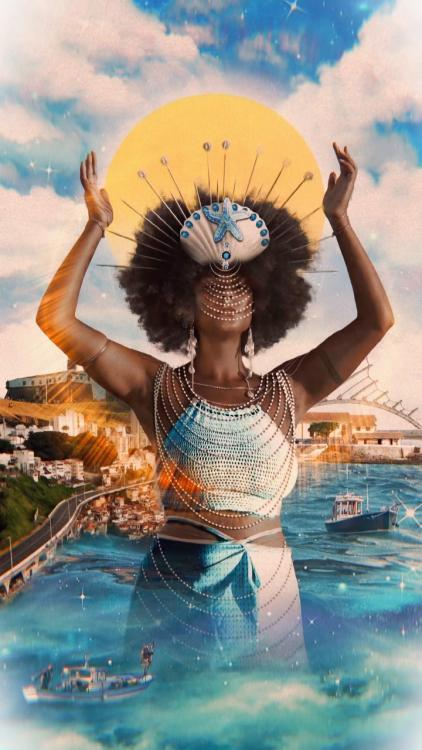
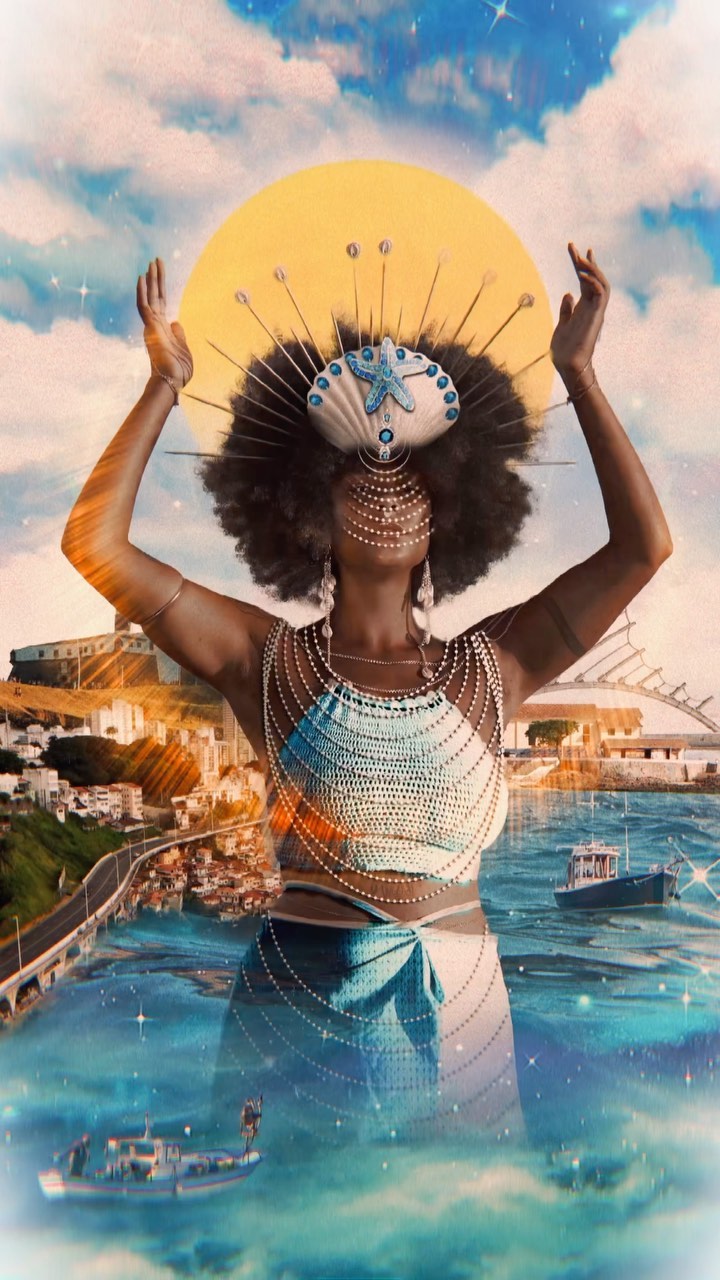
  4. @Chevdove skettel is being made, the screenplay is made, the first image is the thespian who will be the female lead. Criblore was made already but it is on a site. excerpts are on Moon Ferguson's video sharing , Filled with magic is the name of the company wait @Chevdove you never heard of the american black film festival before. I thought I shared it last year at the least in a post. welll, glad you know now. It tends to be in the south, if you live around, give it a go, it will be cool to have someone from aalbc there
  5. topics Cento poetry series , part 2 Select my Faux Volumetric for a 3d contest, free poll Center for Black Literature at Medgar Evers College book club Skettel + Criblore news , works from Moon Ferguson What is or can be a unique Juneteenth celebration? Black people at the end of the war between the states Per un Pugno di Dollari theme Black sitcom art 3D fabrication in the future https://rmnewsletter.over-blog.com/2023/05/06/04/2023-rmnewsletter.html
  6. We have some exciting news! We have officially cast our lead role! Marley will be played by the talented upcoming actress, Alicia Pilgrim! https://www.kickstarter.com/projects/moonferguson/skettel/posts/3824274?ref=ksr_email_backer_project_update_registered_users Criblore is an official selection for this year's American Black Film Festival! We will be screening our episode, Florida Water, starring Terayle Hill and Brittany S. Hall. https://www.kickstarter.com/projects/moonferguson/criblore-a-horror-anthology/posts/3824304?ref=ksr_email_backer_project_update_registered_users
  7. @Pioneer1 Only one thing , it isn't mysterious entities. Nippon/China/Russia/many other governments bought the debt. They bought it cause the usa is the safest currency. The problem is, said countries also trade in this debt, the biggest being nippon. which means if the usa was to default, Nippon would now sell all that debt in a storm as the evaluation of the debt bought will go negative and that will begin a cascade of intergovernmental problems. The USA will be safe but the global system the usa set up will collapse and that will mean many governments or wealthy in every part of humanity will be damaged.
  8. @Pioneer1 well, yes, it doesn't seem wise to invest in a secret:) but the name comes from cryptography, literally the study of secrets, but functionally the study of private information in electronic devices. The hashtag and more importantly its utilization is what made crypto from a technical point of view and thus the name Cryptocoins. The reason why crypts are attached to graves is that in early christianity, when it was illegal or an impotent community, christian places had to be kept safe from authorities or others, thus crypts.
  9. @Pioneer1 cool ,any ideas on a unique way to celebrate juneteenth?
  10. @Pioneer1 Statistics are not known but I can say this having been fortunate to speak to black people who actually lived back then. These things did happen but it wasn't common or a plague. Remember the USA in itself in the 1950s is miscomprehended. There is an idea that people didn't know about debauchery or sexual activities. This isn't true. It wasn't some wild rampant as some suggest but it was also present. It connect to the next point. Well drugs have been common throughout the entirety of human history. But when he speaks of getting high he is refereing to high as in jubilation. Remember the black community in the usa was a much more christian community and still had remnants of our enslaved days where black people treated being high as being free from this world of enslavement. Be careful reading in modern sentiments into the past. And to that, Black people were mostly moonshine drinkers, tobacco smokers. These are drugs but they are common. Like Marijuana today, most black people have never been hard drug takers. But the reason is simple, most hard drugs require money. Cocaine isn't cheap, ala why black people were able to afford crack, its derivative. Most hard drugs are too expensive for black folk. Now comprehend, moonshine is potentially a hard drug in that moonshine can be over 90 proof which is strong alcohol content, near 50 but moonshine can be 110 or 120 proof, that is damn near pure alcohol. So when you say common drugs, well, Alcohol is ever present in the usa in general, all communities. I hope your not suggesting black people should be beyond taking any drugs. The kings of the nile sold wine. Well, I can tell you for sure that the NYPD has to get a cut of all crimes, as we speak right now at hunts point where the women walk naked around at 1am , the pimps are paying law enforcement in one way or the other. So why? why is to make sure the underworld comprehends who has to get their cut. Remember the NYPD was started by Bos Tweed as a place for Irish street gangs. And excuses were not given. What people consider legal oversight for law enforcement is a relatively new creation. In NYC something called the Nap commission <a msispelling> was started in the 1970s by mayor lindsey to begin managing law enforcement in nyc. we all do:)
  11. @Pioneer1 When you ask what do I mean, you didn't grow up with stories about High John? Well, High John is what I will label a Black DOS myth. He was a black character in the same vein as Anansi or Brer Rabbit. But Brer Rabbit/Anansi/High John are not the same. High John's nemesis was literally Massah. Growing up as a kid my parents read some of his tales and I would read them. The book is on the shelf. Most of the High John stories have one common theme, he always succeeds in outwitting massah. His plans always work out. I am a huge High John fan from my youth.
  12. @ProfD thank you for saying that the bill can't be called in. If you give your life savings to the local mob boss and get a deal to get interest, the mob boss will not be afraid of you even if he stop paying interest. The USA military is the answer , positively or negatively. @Pioneer1 In NYC many people still have years of unpaid rent. The problem Pioneer is the usa has an unlimited budget and can't have its debts called in, but it also wants to keep the illusion of financial honesty or sincerity.
  13. great answer @ProfD I am near many actually. TO be specific, Black Eateries are the primary small black business in the area and most make money and get non black clients, even before the last twenty years. BEcause I saw this friday, friday fishday , I will choose , Lighthouse One is east side one is west side in manhattan, the oldest is the west side https://www.lighthousefishmarket.com/8th-ave-menu And I have to play the song I always think about whenever fish is on the meny, any day, whether home cooked or out there
  14. @Troy thanks for sharing your personal journey with crypto. I could had did similar. I just didn't. But I want to say the people I know offline who invested in crypto did just like yourself. They didn't put in rent money so to speak.
  15. yes it is @Troy thank you for your ownership + work in this website
  16. I shared https://www.tumblr.com/richardmurrayhumblr/719045703705493504/list-of-important-book-fairs-festivals-and?source=share
  17. @Stefan Can you provide a link of when i ever said crypto was a viable investment for black people ? I will help you. The following is a link to all post from me with the word crypto in it, in aalbc. https://aalbc.com/tc/search/?&q=crypto&quick=1&author=richardmurray&search_and_or=or&sortby=newest The only truly credible proof is a private financial investment ledger which I am not privy too. Cause I repeat , I have never personally supported investing in crypto. And if I was privy to such information I doubt i would display it without the permission of the people it relates to. Now, I have never suggested I can provide irrefutable proof on anything. And regardless of my offline information, which I wouldn't convey online anyway, that isn't proof. I wanted you to help me write something. I don't recall I ever wrote anything like that. Here is one half of my proof , these are all the posts with frank james concerning me. Never once did I ask or desire you to help me write anything. You like proof, check yourself. https://aalbc.com/tc/search/?&q=frank james&quick=1&author=richardmurray&search_and_or=and&sortby=newest The following is the other half. I don't usually submit a private multilog, but your lies force this. If you notice, you started this private message, not me. I never asked you for... anything. I never wanted anything from you. And I refuted your view toward me. You kept suggesting your assisting me by communicating to me. Now, for your next positions Again, I never said ideal. I have never said offline or online that at any moment in the history of the usa or the european colonies that proceeded it that anything was ideal concerning black people, no plans no situation no ideas have ever been ideal for black people in the usa. What I said, and here is your proof https://aalbc.com/tc/search/?&q=black political party&quick=1&author=richardmurray&search_and_or=and&sortby=newest is the following I want you to quote when I said anything was ideal some of my earliest quotes, say nothing about ideal situations. And you can use the link above if you want more proof. I messaged in a public post that it is a Black party of Governance. And I never said one existed , I said one was needed, and hasn't been tried. And for the historical record, so many black men were lynched , black women raped, black towns burned completely, I don't comprehend why a Black party of governance would had made more of a negative difference, when even whites will admit that violence against black people after slavery in those early years was worse than during slavery. https://aalbc.com/tc/blogs/entry/194-richard-murray-creative-table/page/5/?tab=comments#comment-495 https://aalbc.com/tc/blogs/entry/194-richard-murray-creative-table/page/5/?tab=comments#comment-496 https://aalbc.com/tc/blogs/entry/194-richard-murray-creative-table/page/5/?tab=comments#comment-498 https://aalbc.com/tc/topic/5787-black-party-to-governance-after-listening-share-your-thoughts/ https://aalbc.com/tc/blogs/entry/194-richard-murray-creative-table/page/8/?tab=comments#comment-898 https://aalbc.com/tc/topic/9211-the-black-community-in-the-usa-need-an-alternative-to-black-officials-from-the-party-of-andrew-jackson-or-abraham-lincoln/ And lastly, your position of black ignorance of the past. The articles are all cited. And clearly show the idea that black people were ignorant to their condition in the past is a lie, or that they were disengaged. I repeat, black leadership made a choice and that choice led to the changes black leadership wanted in the black community but they had other options that I think were better and still today, the black community in the usa has elements it lacks which its leadership isn't supporting. https://aalbc.com/tc/profile/6477-richardmurray/?status=2346&type=status My only problem was I went against what I said and I replied to you. That was my mistake. I will not make it again.
  18. @ProfD No I meant luck. Inside knowledge isn't luck, that is a cheat. Which always occurs . but I meant true luck. Some people made fortunes in crypto without inside knowledge Prof.
  19. @ProfD yeah:) and the usa has seen this story many times: The gold rush or the oil rush in the late 1800s early 1900s, the original stock market boom in 1920s, the dot com boom, the crypto boom, the usa is the home of get rich quick schemes. the luckiest invest a lot before the stampede but get most out before the winter. the lucky invest the same way with affordable funds. while most, overwhelming majority, have bad timing or investment and lose money. I imagine extraterrestrial mining will have a similar fate.
  20. My comment based on the articles, and my own comprehension beforehand. Many people had the idea for a memorial day at the end of that war. Who originated it is functionally a hard question cause that will require knowing who was the first to make plans as many celebrations at the end of the war between the states to memorialize the soldiers was present. But, while the first conceived is hard or near impossible to answer, the first on record can be achieved. Early Post Reconstruction articles https://aalbc.com/tc/profile/6477-richardmurray/?status=2346&type=status A QUESTION to the modern Juneteenth
  21. Decent reading concerning the activity of black people at the end of the war between the states https://aalbc.com/tc/profile/6477-richardmurray/?status=2346&type=status
  22. now06.png

    An illustration of the Union prisoners’ cemetery in Charleston, published in Harper’s Weekly two years after the May 1865 celebration.
    © Alfred R. Waud/New York Public Library


    Black people may have started Memorial Day. Whites erased it from history.
    Story by Donald Beaulieu • Yesterday 6:00 AM

    On May 1, 1865, thousands of newly freed Black people gathered in Charleston, S.C., for what may have been the nation’s first Memorial Day celebration. Attendees held a parade and put flowers on the graves of Union soldiers who had helped liberate them from slavery.

    The event took place three weeks after the Civil War surrender of Confederate Gen. Robert E. Lee and two weeks after the assassination of President Abraham Lincoln. It was a remarkable moment in U.S. history — at the nexus of war and peace, destruction and reconstruction, servitude and emancipation.

    But the day would not be remembered as the first Memorial Day. In fact, White Southerners made sure that for more than a century, the day wasn’t remembered at all.

    It was “a kind of erasure from public memory,” said David Blight, a history professor at Yale University.

    The contested Confederate roots of Memorial Day
    In February 1865, Confederate soldiers withdrew from Charleston after the Union had bombarded it with offshore cannon fire for more than a year and began to cut off supply lines. The city surrendered to the Union army, leaving a massive population of freed formerly enslaved people.

    Also left in the wake of the Confederate evacuation were the graves of more than 250 Union soldiers, buried without coffins behind the judge’s stand of the Washington Race Course, a Charleston horse track that had been converted into an outdoor prison for captured Northerners. The conditions were brutal, and most of those who had died succumbed to exposure or disease.

    In April, about two dozen of Charleston’s freed men volunteered to disinter the bodies and rebury them in rows of marked graves, surrounded by a wooden, freshly whitewashed fence, according to newspaper accounts from the time.

    Then, on May 1, about 10,000 people — mostly formerly enslaved people — turned out for a memorial service that the freed people had organized, along with abolitionist and journalist James Redpath and some White missionaries and teachers from the North. Redpath described the day in the New-York Tribune as “such a procession of friends and mourners as South Carolina or the United States never saw before.”

    The day’s events began around 9 a.m. with a parade led by about 2,800 Black schoolchildren, who had just been enrolled in new schools, bearing armfuls of flowers. They marched around the horse track and entered the cemetery gate under an arch with black-painted letters that read “Martyrs of the Race Course.” The schoolchildren proceeded through the cemetery and distributed the flowers on the gravesites.

    Other attendees entered the cemetery with even more flowers, as the schoolchildren sang songs including “The Star-Spangled Banner” and “John Brown’s Body.”

    “When all had left,” Redpath wrote, “the holy mounds — the tops, the sides, and the spaces between them — were one mass of flowers, not a speck of earth could be seen; and as the breeze wafted the sweet perfume from them, outside and beyond, to the sympathetic multitude, there were few eyes among those who knew the meaning of the ceremony that were not dim with tears of joy.”

    In 1865, thousands of Black South Carolinians signed a 54-foot-long freedom petition < look after the first image below >

    The dedication ended with prayers and Bible verses from local Black ministers, followed by speeches from Union officers and Northern missionaries, a picnic on the racecourse and drills by Union infantrymen, including some African American regiments. The observance didn’t end until sundown.

    And then, Blight said, the event was forgotten. Not right away — but within a few decades, any recollection persisted merely as rumor, in verbal anecdotes.

    The reason, he said, is that “by the middle and end of Reconstruction, the Black folks of Charleston were not creating the public memory of that city.”

    The Southern generals who stuck with the Union in the Civil War
    The portrayal of the Civil War and its aftermath was controlled in the South by groups such as the United Daughters of the Confederacy and the Ladies’ Memorial Association, as well as Confederate veterans, Blight said.

    “The Daughters of the Confederacy were the guardians of that narrative,” said Damon Fordham, an adjunct professor of history at The Citadel, a military college in Charleston. “And much of that was skewed toward the Confederate point of view.”

    Blight chronicled the 1865 Charleston ritual in his 2001 book “Race and Reunion: The Civil War in American Memory,” based on evidence that Fordham helped him uncover. Blight had been researching the book in 1999, in an archive of the Houghton Library at Harvard University, when he found a collection of papers written by Union veterans that contained a description of the May 1, 1865, events in Charleston.

    If the description was accurate, Blight said, he knew that “that event in Charleston deserves its own full commemoration, just because of the poignancy of it, the sheer scale of it.”

    But first he had to corroborate it. One of the first places he contacted was the Avery Research Center for African American History and Culture at the College of Charleston. “I called up the curator there,” Blight recalled, “and I said, ‘I just found this in a collection of veterans materials. Have you ever heard of this story?’ And the guy said, ‘No. That never happened.’”

    The “guy” was Fordham, who at the time was a graduate student at the college and a research assistant at Avery. Despite his doubts, Fordham knew the center had microfilm of the Charleston Courier, a daily newspaper from that time, so he checked it.

    “About two hours later, he called me back, and he said, ‘Oh my God, here it is,’” Blight said. It was a Courier article from May 2, 1865, “describing this extraordinary parade on the old planters’ racecourse.”

    Blight went on to find more proof, including an illustration of the fenced cemetery that was published in Harper’s Weekly in 1867. “Pretty soon I had all these sources that no one had ever bumped into, so one thing kept leading to another,” he said. “But even people in Charleston said, ‘No, never heard of it.’ That shows the power of the erasure of public memory over time.”

    In the book, Blight describes a 1916 letter written by the president of the Ladies’ Memorial Association in Charleston, replying to an inquiry about the May 1, 1865, parade. “A United Daughters of the Confederacy official wanted to know if it was true that blacks and their white abolitionist friends had engaged in such a burial rite,” he wrote. “Mrs. S.C. Beckwith responded tersely: ‘I regret that I was unable to gather any official information in answer to this.’”

    In the 1880s, the bodies of the Union soldiers, the “Martyrs of the Race Course,” were exhumed and moved to Beaufort National Cemetery. The horse track closed shortly after that, and the 60 acres of land became Hampton Park, named for Wade Hampton III, a Confederate general and Charleston native who became governor of South Carolina in 1876. Hampton enslaved nearly 1,000 people before the war, and his governorship was supported by the Red Shirts, a White paramilitary group that violently suppressed the Black vote.

    After slavery, Black people desperately searched for family through newspaper ads <look after second image below>
    By the end of the century, no vestige of the racecourse, the cemetery or the 1865 parade remained.

    More spring graveside memorials followed the one in Charleston. Several occurred in towns across the country in the spring of 1866, and many of these places — such as Columbus, Miss., whose commemoration became annual — claim to have held the original Memorial Day observance. Officially, the nation recognizes Memorial Day as having started in Waterloo, N.Y.

    In Charleston, the freed people didn’t have the power to develop an annual tradition after 1865. But the city now recognizes itself, regardless, as the holiday’s birthplace.

    “On May 1, 1865, a parade to honor the Union war dead took place here,” reads a state historical marker erected in Hampton Park in 2017. “The event marked the earliest celebration of what became known as ‘Memorial Day.’”


    URL

    https://www.msn.com/en-us/news/us/black-people-may-have-started-memorial-day-whites-erased-it-from-history/ar-AA1bPFSs?ocid=msedgntp&cvid=07a93f22676c4438d2e3eafde7baa12e&ei=5


    now05.png

    This 54-foot-long petition bears the signatures of hundreds of men who participated in the State Convention of Colored People of South Carolina in 1865. (Gwenanne Edwards/Library of Congress, Conservation Division)


    In 1865, thousands of Black South Carolinians signed a 54-foot-long freedom petition
    It goes on display Friday for the first time at the African American history museum in Washington.

    By Michael E. Ruane
    September 23, 2021 at 7:43 p.m. EDT


    In November 1865, eight months after the end of the Civil War, a group of African Americans formed a convention in Charleston, S.C., drew up a petition demanding their civil rights and sent it to Congress in Washington.

    “We the undersigned colored citizens of South Carolina, do respectfully ask … in consideration of our unquestioned loyalty [that in the] re-establishment of civil government in South Carolina, our equal rights before the law may be respected,” the handwritten document begins.

    What followed were 3,740 signatures, then-Sen. Jacob M. Howard (R-Mich.) told his Senate colleagues after receiving the petition — on a document that was 54 feet long.

    It was a striking appeal from the newly freed, and previously free, African Americans, asking that they not be forgotten in the country’s postwar reconstruction. Never displayed publicly before, it goes on exhibit Friday at the Smithsonian’s National Museum of African American History and Culture.

    “The petition is a real touchstone for the expectations and the will of … African Americans …[who saw] this moment in the county’s history as a new beginning,” said Katy Kendrick, exhibitions curator at the museum. It’s a “very powerful and very direct claiming of full rights of citizenship.”

    The petition is part of a new exhibit of 175 objects at the museum entitled “Make Good the Promises: Reconstruction and Its Legacies.”

    The exhibit covers the turbulent postwar era of Reconstruction as the vanquished Southern states sought to recreate prewar racial oppression, and African Americans fought, ultimately in vain, to prevent it.

    And it examines the legacy of that struggle today.

    It includes a frightening Ku Klux Klan head mask with horns, made of cloth and animal fur, owned by a Confederate army officer in North Carolina and used to terrorize Black residents.

    It includes a document from the Freedmen’s Bureau, the federal agency set up to help the 4 million people newly freed, that tells of a mother’s attempt get her two children back from their former enslaver.

    Caroline Atkinson went to the bureau’s office in Vicksburg, Miss., in September 1867, two years after slavery had been abolished in 1865.

    But her daughters Elizabeth, 10, and Mary Jane, 11, were still in the hands of one William Atkinson, who had refused to return them unless he was paid $100 — roughly $1,600 today.

    She signed the document with an X. The bureau investigated and ordered the children returned to their mother, according to the museum.

    There’s an old pew from a former Black church, as well as the stained glass windows picturing Confederate generals that was removed from Washington National Cathedral in 2017.

    The Cathedral announced Thursday that the windows would be replaced with racial justice-themed windows created by Black artist Kerry James Marshall.

    The exhibit also includes a Bible and nine-page Bible study guide loaned by a survivor of the massacre at Charleston’s Emanuel African Methodist Episcopal Church, where nine African Americans were murdered on June 17, 2015.

    That church is across the street from the site of the old Zion Presbyterian Church, where the freedom petition was drawn up 150 years before. (Zion Presbyterian was demolished in 1960, according to a study by the College of Charleston.)

    “Reconstruction was a pivotal moment … when the nation had an opportunity to make amends for the injustices of slavery and rebuild itself on a new foundation of racial equality,” Kevin Young, the museum director, said in a statement.

    “While some gains were made, this was also a period of voter suppression … violence and unlawful incarceration,” he said. “Because of the work left unfinished … and the decades of discrimination that followed, the struggle … continues in society today.”

    The signers of the petition to Congress met at the “State Convention of the Colored People of South Carolina” over six days in late November 1865 at Zion Presbyterian, according to an account of the proceedings printed by a local newspaper. At the time, Zion Presbyterian was the biggest church in Charleston and a center for the Black community.

    In addition to the petition, the convention issued a number of resolutions, including:

    “That in the death of the late President of the United States, ABRAHAM LINCOLN, this nation has sustained an irreparable loss and we, as a race, deprived of a noble friend. We sympathize with his afflicted family and will ever hold his name in grateful remembrance.”

    Lincoln had been assassinated the previous April.

    The convention resolved: “That we hereby object to a ‘negro code’ [of law]. … In our humble opinion a code of laws for the government of all, regardless of color, is all that is necessary for the advancement of the interests and prosperity of the state.”

    Oppressive state laws restricting the lives of African Americans, called “Black Codes,” soon became a grim hallmark of Reconstruction.

    The convention issued an address to the people of South Carolina:

    “Heretofore we have had no avenues opened to us or our children — We have had no firesides that we could call our own. … The laws that have made white men great have degraded us because we are colored. …

    “But now that we are free, now that we have been lifted up by the providence of God … we have resolved to come forward, and … speak and act for ourselves.”

    And it resolved:

    “As the old institution of slavery has passed away … we cherish in our hearts no hatred or malice toward those who have held our brethren as slaves, but we extend the right hand of fellowship to all and make it our special aim to establish unity, peace and love amongst all men.”

    URL

    https://www.washingtonpost.com/history/2021/09/23/african-american-freedom-petition-museum-reconstruction/


    now07.png


    Mary Bailey searches for her children. Her ad ran Nov. 24, 1866, in the Daily Dispatch newspaper in Richmond.


    ‘My mother was sold from me’: After slavery, the desperate search for loved ones in ‘last seen ads’

    By DeNeen L. Brown
    September 7, 2017 at 7:30 a.m. EDT


    Ten months after the Civil War ended, an enslaved woman who had been ripped away from her children started looking for them.

    Elizabeth Williams, who had been sold twice since she last saw her children, placed a heart-wrenching ad in a newspaper:

    “INFORMATION WANTED by a mother concerning her children,” Williams wrote March 17, 1866, in the Christian Recorder newspaper in Philadelphia. Her ad was one of thousands taken out by formerly enslaved people looking for lost relatives after the Civil War.

    Those ads are now being digitized in a project called “Last Seen: Finding Family After Slavery,” < https://informationwanted.org/ >which is run by Villanova University’s graduate history program in collaboration with Philadelphia’s Mother Bethel AME Church.

    In four column inches, the mother summed up her life, hoping the rich details would help her find the children. She listed their names — Lydia, William, Allen, and Parker — and explained in a few words that she last saw them when they were “formerly owned together” by a man named John Petty who lived about six miles from Woodbury, Tenn.

    She explained how her family was split apart when she was sold again and taken farther south into captivity.

    “She has never seen the above-named children since,” the ad said. “Any information given concerning them, however, will be gratefully received by one whose love for her children survives the bitterness and hardships of many long years spent in slavery.”

    The “Last Seen” ads started appearing around 1863. By 1865, when the Civil War ended, they were coming out in streams. Black people torn away from family members by slavery placed thousands of “Information Wanted” notices in black-owned newspapers across the country, seeking any help to find loved ones.

    In the ads, mothers looked for their children; children looked for their mothers; fathers placed ads for lost sons; sisters looked for sisters; husbands sought their wives; wives tried to find their husbands. The ads showed in real time the destruction slavery wrought on black families, tearing people apart and scattering generations like leaves in the wind.

    The ads often gave detailed physical descriptions of the missing, names of former slave owners, locations subscribers “last saw” family members and sometimes maps, tracing how many times they were sold from one owner to the next until they so far from family members all they had to cling to was sketchy memories.

    Many of the Last Seen ads, dating from 1863 to 1902, were placed in the Christian Recorder, the official newspaper of the African Methodist Church. Others ads were placed in the Black Republican in New Orleans, the South Carolina Leader in Charleston, the Colored Citizen in Cincinnati, the Free Men’s Press in Galveston, Texas, and the Colored Tennessean in Nashville.

    Judy Giesberg, the graduate program director at Villanova’s History Department, began noticing the newspaper ads while researching the story of Emilie Davis, a free black woman who lived in Philadelphia during the Civil War and kept a diary while there.

    “Emilie Davis would write about a lecture she would see or some event in Philadelphia,” Giesberg said. “If she said she went to see Frederick Douglass, we would look in the newspaper to see where he was. It was hard to overlook these ads.”

    Sometimes the ads took up columns and columns that would make up whole pages, which captured the weight of the missing and the desperation of subscribers to find them.

    Giesberg started collecting the ads with the intention of one day making them available to people online. “I started with the AME Church newspaper,” Giesberg said. “It was the first place I noticed the ads. When I started looking in other black newspapers, I found this was a common phenomenon to include ads taken by people who were one step out of slavery.”

    Last August, Giesberg created the “LAST SEEN: FINDING FAMILY AFTER SLAVERY” website, where genealogists and other researchers can search for specific names and locations. Two graduate students — Margaret Strolle and James Byrd — read microfilm to find the material. The site uses volunteers to help transcribe the ads. There are now more than 2,000 ads on the site, of which 1,500 have been transcribed. Since January, the site has been visited by more than 1 million unique visitors.

    “There are comparable projects that have collected runaway slave ads,” Giesberg said. What is unique about Last Seen ads, she added, “is they were taken out from the other perspective. They were taken out by the enslaved people.”

    The Last Seen ads break down what genealogists and researchers call the “1870 Census Wall.” Before the 1870 Census, there were very few official records of black people.  Enslaved black people were often listed as property, by a check mark, a number or by a gender. They were often listed on bills of sale, like chattel. When researchers try to get information on enslaved black people, they often hit a brick wall when searching for information before 1870.

    “What the ads do is reach from the other side of the 1870 Census Wall,” Giesberg said. “The ads place people together in a time before 1870.”

    The ads tell real stories of real people with real names, humanizing enslaved people, something slave owners often tried to prevent.

    “Slave owners often painted a portrait of enslaved people as part of a happy family in which white men were patriarchs,” Giesberg said. The ads go “beyond that myth, the myth of the benign slaveholder who believes he was a good slaveholder and all the slaves belonged to him. These ads are where real truth lies.”

    Enslaved people lived with the constant fear that they or a family member would be sold.

    “Slave owners’ wealth lay largely in the people they owned, therefore, they frequently sold and or purchased people as finances warranted,” according to a report by the National Humanities Center, a nonprofit that collects primary historical resources. “An enslaved person could be sold as part of an estate when his owner died, or because the owner needed to liquidate assets to pay off debts or because the owner thought the enslaved person was a troublemaker.”

    An exhibit entitled “The Weeping Time” at the Smithsonian’s African American Museum of History and Culture explains the circumstances that often split families apart.

    “Night and day, you could hear men and women screaming … ma, pa, sister or brother … taken without any warning,” according to a witness account in the exhibit. “People was always dying from a broken heart.”

    Another witness described an emotional scene at a slave auction. A mother clings to her baby while being whipped with a lash because she refused to put her baby down and climb an auction block.

    The woman pleaded for God’s mercy, Henry Bibb recounted.

    “But the child was torn from the arms of its mother amid the most heart rending-shrieks from the mother and child on the one hand, and the bitter oaths and cruel lashes from the tyrants on the other,” Bibb recalled. “Finally, the poor child was torn from the mother while she sacrificed to the highest bidder.”

    In a “Last Seen” ad placed on April 17, 1902, in the Christian Recorder newspaper in Philadelphia, a woman seeks information about “my people.”
    “My mother was sold from me when I could but crawl,” the woman writes.

    Since the sale, “I never saw any of my people. I was about 39 years old last March and am married and living at Panama, Vernon Co., Mo. My name is Mary Delaney; it used to be Mary Long. Address me at Post office: Panama, Vernon county, Mo.”

    In a “Last Seen” ad placed on April 17, 1902, in the Christian Recorder newspaper in Philadelphia, a woman seeks information about “my people.”
    “My mother was sold from me when I could but crawl,” the woman writes.

    Since the sale, “I never saw any of my people. I was about 39 years old last March and am married and living at Panama, Vernon Co., Mo. My name is Mary Delaney; it used to be Mary Long. Address me at Post office: Panama, Vernon county, Mo.”

    Some of the ads were intentionally vague, masking details, and  mysteriously leaving out specific names and locations. These ads showed mental calculations of a people one step out of slavery. Even after Lincoln declared enslaved people in Confederate states to be freed, they were suspicious about the terms of that Emancipation, fearing that at any time they could be pulled back into slavery.

    In a June 7, 1883, ad placed in the Southwestern Christian Advocate in New Orleans, an unnamed man searched for his son. The ad is brief: “Mr. EDITOR,” the man wrote, “I desire to hear from my son. His name was Tony Jones. I have not seen him since the war. He lived with Thomas Jones. His mother was Julia Jones.”

    If anyone should know Tony Jones — the enslaved man with the same name as his “master”— he asks them to write to him care of P.P. Brooks in Shelbyville, Tex.
    The ad is unsigned.

    Other ads gave insight into how people lived, their aspirations and successes.

    In an ad placed June 28, 1883, in the Southwestern Christian Advocate newspaper in New Orleans, Betty Davis inquires “for my people.” Davis explained that she was separated from her mother when she was three years old.

    “I am now 55 years of age,” she wrote. “I learned how to read when I was 50. I take and read the SOUTHWESTERN, it is food for my soul. I am anxious and would be glad to hear something of my mother or my brother Henry. Someone help me.”

    Sometimes, the ads led to happy endings.

    In an Aug. 26, 1886, ad that ran in the Southwestern Christian Advocate newspaper, which did not charge for publishing letters from subscribers, Alcy Boone wrote a letter to the editor saying she found who she was looking for:

    “I have found my mother through the dear SOUTHWESTERN. God bless you and your paper; it resurrects the forgotten, the lost can be found.”

    URL

    https://www.washingtonpost.com/news/retropolis/wp/2017/09/07/my-mother-was-sold-from-me-after-slavery-the-desperate-search-for-loved-ones-in-last-seen-ads/

  23. some more tutorials https://makezine.com/projects/make-an-iron-on-textile-circuit-and-learn-all-about-wearables/ https://makezine.com/projects/beautiful-led-pendant-in-three-steps/
  24. Imagine if we all made a firework with what we learn in this book referring to a game for juneteenth. Fashion tech tutorials are linked later in the post, if you get any ideas share. Just put your email FREELY and in comes in your email https://make.co/making-fireworks-premium-download/ AND wearable tech tutorials, maybe make a game out of clothes, any ideas? Wearable tech tutorials https://www.wearabletutorials.com/ and some others https://www.hackster.io/kitty-yeung/custom-wearable-organic-solar-films-asca-c9358d https://www.hackster.io/kitty-yeung/light-up-raincoat-no-code-no-solder-nliten-bekonix-a340a0 https://www.hackster.io/anouk-wipprecht/light-up-kitty-ears-fee08d https://www.hackster.io/AmieDD/lego-dots-cyberpunk-belt-c52016 https://www.hackster.io/AmieDD/revenge-of-the-sith-glow-pcb-necklace-6571be https://www.hackster.io/AmieDD/cyberpunk-3d-printed-fabric-light-up-corset-25c7bd
×
×
  • Create New...