

Leaderboard
-

daniellegfny
Members2Points1,305Posts -

Pioneer1
Members1Points13,486Posts -
Troy
Administrators1Points14,729Posts -

Dee Miller
Members1Points127Posts



Popular Content
Showing content with the highest reputation on 09/06/2020 in all areas
-
We still aren’t communicating properly yet and this is leading to major challenges. 1. We are continuously reinventing the wheel. 2. We are building stables supply lines. 3. We are continuing to hop from one White Platform to Another. I would like to look at ways to break this cycle.1 point
-
1 point
-
Over the years I’ve asked many authors, whose work I've been extremely supportive of, through book sales and promotion, to provide a link to AALBC, or any Black-owned bookseller's site, as an option for visitors to buy their books. This simple action does not typically occur to most authors, and certainly to no publisher. Usually when I ask an author to add a buy link to AALBC, they do it, and express embarrassment for not doing it sooner. Sometimes however, the request is denied, and some variation of, "I don't want to show favoritism to any given bookstore," is given as the reason. One author told me, recently, that their publisher advised them against linking to a specific store. All of the authors I've ever asked to link to a Black-owned bookstore, were already sending readers to Amazon's website to buy books. I always found it curious that none of these authors considered they were explicitly showing favoritism to Amazon. Recently the most "woke" authors and publishers believe linking to Bookshop.org provides readers with a good substitute, or alternative, to linking directly to a Black-owned bookstore's website. While linking to Bookshop is marginally better than linking to Amazon (who AALBC Boycotts), lets be be clear: Linking to bookshop.org DOES NOT help Black-owned booksellers. If you truly want to support a Black-owned bookseller — send readers to their websites, because the bookstores will make MUCH more money selling the books directly rather than linking to bookshop.org, who, like Amazon, collects the majority of profits from those sales. Today I discovered, author Robin DiAngelo, whose book, White Fragility, the #1 selling book on AALBC for August 2020, links to three (count 'em) Black-owned booksellers from her website! Now I've sold Black books on the web for the better part of 25 years. There are few, if any who have done this for as long as I have. I have also visited countless author websites during this time, easily more than 10,000. So when I say something is surprising this comes with an incredible amount of experience. Robin DiAngelo surprised me. DiAngelo is also white. Why does a highly-visible, bestselling, white author link to multiple Black-own bookstores. When Black authors, of the same stature do not? Lets look a few websites of Black authors with books that are have similar prominence as Robin's White Fragility, and see where these author's send visitors to buy their books. By the way, AALBC links to all of these author's websites and the books cited are all AALBC bestsellers. None of these authors link to AALBC or any other Black-owned bookseller. Ibram X. Kendi, author of How to Be an Antiracist, sends book buyers to Bookshop Ijeoma Oluo, author of So You Want to Talk About Race, links to her publisher's website (who in turn links to, Amazon, Barnes & Noble, Walmart, Target, Books-A-Million, Powell's, Indiebound, Hudson Booksellers, and Bookshop) Layla Saad, author of Me and White Supremacy send readers to (in the US) Amazon, Barnes & Noble, Indiebound, and Bookshop Isabel Wilkerson, author of Caste: The Origins of Our Discontents, tell readers to go to Amazon, Barnes & Noble, Walmart, Target, Books-A-Million, Powell's, Indiebound, and Hudson Booksellers Michelle Alexander, author of The New Jim Crow, links to Amazon, Barnes and Noble, Powell’s Books, and Bookshop.org Sadly, I can do this all day... The point is not to beat up on any given author but to illustrate how pervasive this problem is. Recently Oprah Magazine published an article, “12 Authors Share Their Favorite Black-Owned Bookstores.” The article also shared books that were recently published by the authors, but when linking to places to buy these books Oprah Magazine did not send readers to any of the Black owned stores mentioned; instead readers were to a white owned bookseller! We universally support white-owned booksellers and act as if Black-owned booksellers are being boycotted. Why? Whenever a Black person would buy an identical product from a white-owned store, over a Black-owned on, we would say that was because they believed, "The white man's ice is colder." That phrase, along with the insight to recognize it as appropriate, is long gone. In 2020 the white man's ice must indeed be colder, at least based upon our collective behavior. If you want to support a Black-owned bookstore it is easy. Send readers to our stores too! Your actions speak MUCH more loudly than your words and the discrepancy is felt by the Black-owned bookstores you say you support. I think DiAngelo is on to something. Hopefully it will catch on!1 point
-
Houston, the only problem I see is that we keep letting people get in our head. I bet none of us can even count the number of inventions, millionaires, discoveries, break-throughs, successes, this-because-of-that accomplishments, heroes, champions, etc.... in which we've contributed, spear-headed, and brought to life so we've got the skills, knowledge, money, intellect, soul, dedication, work ethic, means.... In other words, we have ALL of the ingredients to do what ever it is we want - we just have to <TRUST >each other and stop letting them continue to seep into our head. Yes, we've been stripped, whipped, killed, degraded, brainwashed, branded, labeled and all of the other oppressive verbs you can think of, but still we stand. I want to spend my money in Little Africa, Chocolate City, an area of our own. Hey, I trust, I believe, I know, I support and I follow as often as I can. Admittedly, I've fallen for the okey-doke more times than I'd like to admit, but you do better when you know better and you stand in your commitment - so let's stop giving everyone else all of the attention cause we don't have to. In other words.... How do you know if and when we've achieved success as a community? *We know that we've succeeded as a community when we stay the course and stop letting people get in our heads, when we TRUST and when we take action in spite of. It will be a hill to climb, but we've been there, done that. History proves it. And by the way, let's not forget that there are already lots of success stories out there! I'm very proud of the blood, sweat, tears, dedication, commitment, focus and drive that has made them the success that they are!! I will continue to support however and whenever I can! SO PROUD OF YOU!! Baby steps yield big accomplishments, commitment yields attention, support yields trust and perseverance, in spite of, yields success. I look forward to buying from and strolling through Little Africa, Chocolate City, G.A.P, The town that Blacks made. YES WE CAN!1 point
-
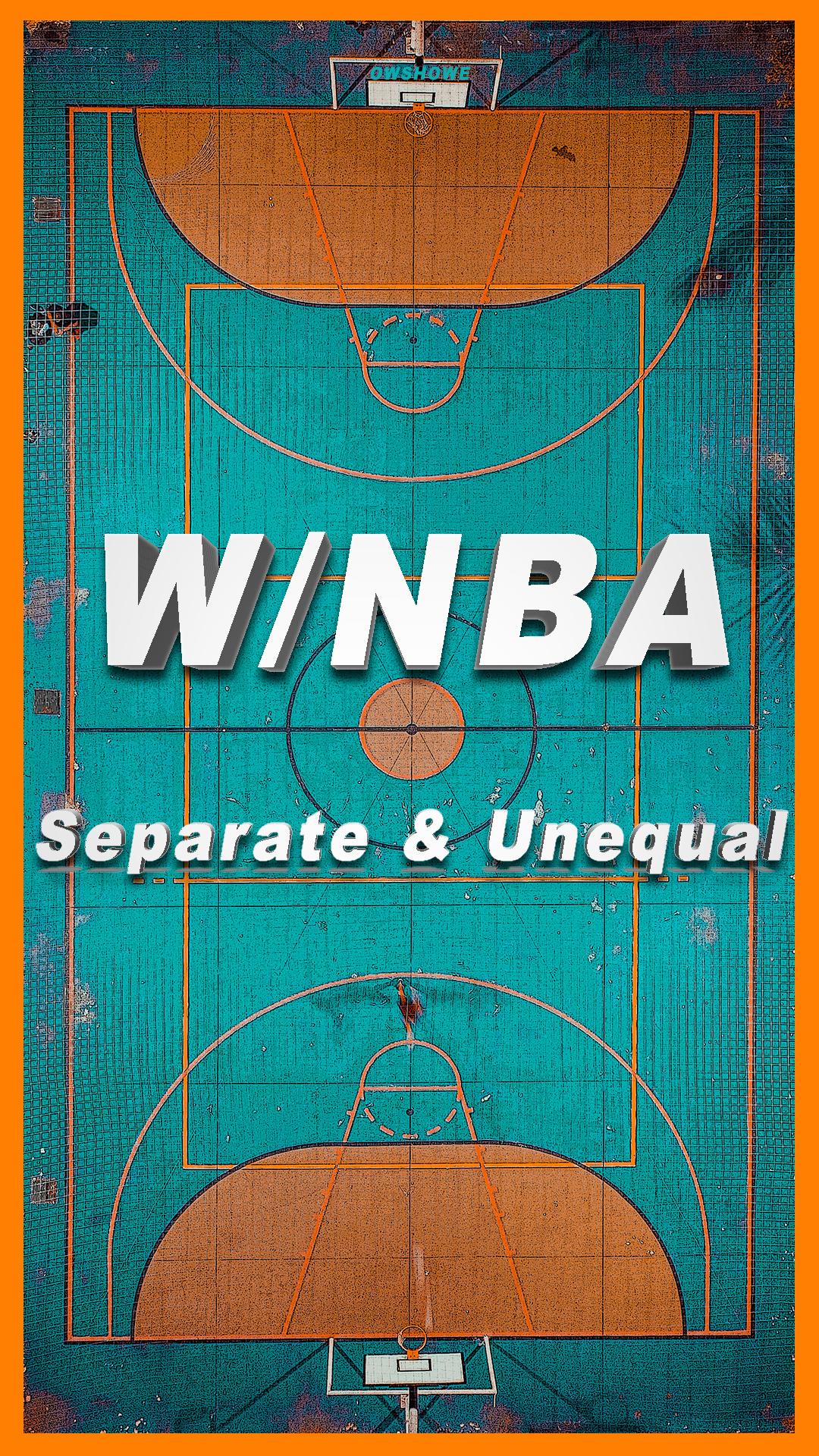
For years, people have asked why I walked away from the WNBA, after being selected in the 2nd round of the 2000 draft. Here's your answer... Art. Culture. Creativity. (owshowe.com)
 1 point
 -
1 pointA towering episode. Reminds me of RadioLab and that late night NPR show, but way more spiritual.1 point
-
I'll admit that I often use excessive words to try to get people to understand a point I'm trying to make. It's a habit from years of having advisory and executive roles in community organizing where I often had to keep repeating myself or use numerous examples to get the same relatively simple points across so that the average person in the community could understand them. But some of the ways to break the cycle is by: -Establishing our own AfroAmerican owned and controlled NATIONALY BROADCAST media in order to speak to each other freely and without permission by Caucasian platforms. - ESTABLISH AN ACTUAL CULTURE among ourselves as AfroAmericans. By culture I mean a SET pattern of diet, music, marriage customs, language, etc.....that doesn't change from generation to generation. A strong culture is the GLUE to keep any community stable. It also keeps our traditions and values from being corrupted from outside forces. - Promoting more SKILLED TRADES professions in our community so that those who can't or won't go to college can learn how to build up and maintain the physical infrastructure of their neighborhoods instead of allowing them to crumble. Everyone should have OPTIONS to make a living for themselves instead of being bottle-necked into one particular direction. Is that short and sweet enough for you?1 point
-
@Wendy JonesIf Standard brand then or Kraft today never registered for a copyright (work for hire also requires a separate filing too) - they can't sue the publishing company for copyright infringement. That US Supreme Court ruling came down in 2019 and I wrote about on my blog (melhopkins.com : https://melhopkins.com/2019/03/04/copyright-registration-first-then-sue/ ) If a registration exist I hope you can get permission to use the photographs at least for fair us https://www.copyright.gov/fair-use/more-info.html and get a grant from the foundation to offset the cost of publishing your book - plus get a distribution deal with them too. I can only imagine how Kraft Heinz would love to support your book!!! If you follow this path - got through the KraftHeinz company foundation - check out their Corporate Social Responsibility report and consider back door your request through this department - (NOT legal ) https://www.kraftheinzcompany.com/pdf/KHC_CSR_2017_Overview.pdf So excited for this book!1 point