

Leaderboard
-
Stefan
Members3Points1,244Posts -

daniellegfny
Members2Points1,305Posts -
nels
Members1Points458Posts -

Delano
Members1Points6,052Posts



Popular Content
Showing content with the highest reputation on 02/19/2022 in all areas
-
1 pointI had a conversation about the word Mulatto. This brought me to revisit these essays.1 point
-
So true. @richardmurray. But after I saw the actor, I was happy to see him later featured in other enriching films. He portrayed an historical figure, T'saint L'overture [sp?].1 point
-
1 pointNot for me, although not everyone feels the same. Language warning1 point
-
These are the same arguments made Europeans, which wasn’t Europe at the time. Who is venerating Jews? The God head is a Mystery. Have you physically seen Jesus? John 20:29 Then Jesus told him, “Because you have seen me, you have believed; blessed are those who have not seen and yet have believed.” Your are making the same errors that critics have made against Christianity since American slavery. It is meaningless when it comes to the questions of sin and redemption. The heart of Christianity is how humanity reconciles itself with God. The Jews have been a demonstration that man cannot achieve salvation on their own.1 point
-
An expression used to highlight perceived insensitivities that cannot reasonably be substantiated or controlled.1 point
-
Somewhere else online I commented the many I thought of , no rank. I will use the following as my entry. My reason is not for ranking, but it is self contained, it isn't in the context of a feature length film so any of you can watch the whole things. Directed: Oliver Schmitz <a white man> Lead Thespians: Aïssa Maïga side Seydou Boro @Chevdove fatgirlz is a great shout, very uncommon romance on screen in many ways1 point
-
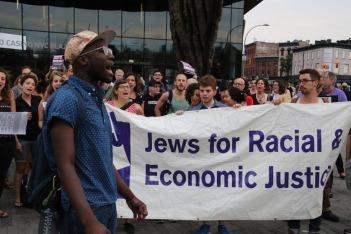
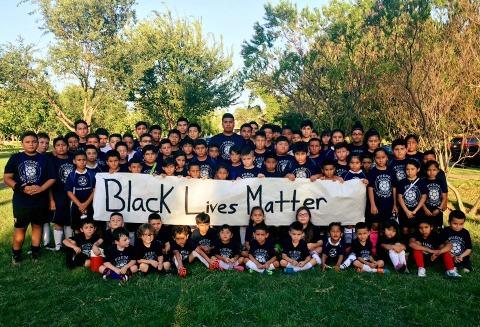
@Chevdove Thank you. In the early morning of Feb. 4, 1999, four White New York City undercover cops from the Street Crimes Unit encountered young West African immigrant Amadou Diallo outside of his Bronx home. They later claimed that Diallo was a rape suspect and when they approached, they thought he was a firing a gun at them. Which was nonsense. But Amadou didn’t understand what they were saying and trying to show his I.D., he simply pulled out his wallet. The four cops fired 41 shots, hitting Amadou 19 times as he stood in the doorway of his own home. The 23-year-old's body was riddled with bullets. He even had a bullet hole in the bottom of his foot. Amadou didn't have a gun. Just the wallet. Like everyone else in New York City, I was furious. So, I went to a rally in memory of Amadou outside the U.N. building and was standing in a huge multi-racial crowd on First Avenue in Manhattan. Rev. Al Sharpton was preparing to speak and I turned to a tall Jewish father next to me who was balancing his young son atop his shoulders and thanked him for coming. He looked at me with big smile and told me: "I had to be here for Amadou. Because I know this will never work as a protest if it's just Black people." We bumped fists. After Rev. Sharpton spoke, he asked us not to march. But the crowd was so energized and angry, we did. All the way down to City Hall, chanting "Police Training 101. It's a wallet - not a gun!" My nieces called me later that night to tell they saw me on TV. In the aftermath of Amadou's death, the Street Crime Unit was disbanded. Facing an upsurge in street crime and shootings, Eric Adams, the new Mayor of NYC and a former police captain, is about to reconstitute the Street Crime Unit. Here are additional images to prove Black people are not alone in these police brutality protests.
 1 point
 -
1 pointThe Left has not divided or hurt Black America. Blacks who have fully adopted "The Right Wing White Man is great" attitude have. Bernie Sanders, the Socialist, truly divided the Left and he knows it. However, apart from the stubborn believers that Socialism is going to save America (when it's failed as an economic system practically everywhere else), most on the Left have steadily moved away from the Vermont Senator who has proven he is just as deluded as Trump fans who claim 45 won the 2020 election. Politically, Black Americans are not a monolith. And rarely have been. Blacks who have decided to lie and fulminate against their own people are the actual ones who are hurting Black America. Because they rarely see any value in Black individuals who are overwhelmingly regarded as heroes by our own kind and others. This is why we've been treated to near demonic attacks on Whoopie Goldberg, Oprah Winfrey, Cardi B and anyone else Black who might have taken issue with Trump's alleged criminal acts. Our people have always been a collection of Haves and Have Nots. And our main detractors have always been White Supremacists and immigrants who have arrived in the U.S. and birthed offspring who believe that U.S. Blacks are unworthy, are beneath them and therefore, undeserving of respect. Former South Carolina Governor Nikki Haley comes to mind. But now, we have a new enemy to contend with. Black people here in the U.S. who look down at anyone who does not share their adulation for Right Wingers or their policies. There is little most Black people can do about them except to patiently and politely refute their nonsensical rantings. And hopefully, without resorting to the same childish and angry taunts many unhinged Black Trump fans are known for. Look at where this constant unproven criticism of Black people in the U.S. is coming from. Is it emanating from highly educated Black individuals? Is it coming from a majority of Black executives in the corporate or business worlds? Is it coming from a Black spokesperson who has been a guest on any highly touted national radio or TV talk show? Is the whining individual a noted author, actor or scholarly luminary? No. It's usually the same folks who perennially complain about those Blacks they cannot match in word or deed or accomplishments. But will blow their top at anyone who points this out. Colin Powell describes this situation best:
.jpg.86fa0176f49805aef475037d7a291df4.jpg) 1 point
1 point